
电商物流

Search documents
国际视野:中外云仓模式比较与跨境供应链构建
Sou Hu Cai Jing· 2025-12-13 10:24
Core Insights - Understanding the differences between domestic and international cloud warehouse models is essential for building an efficient cross-border supply chain in today's integrated global e-commerce landscape [1] Comparison of Models - The ideal cross-border supply chain for Chinese outbound enterprises is often a "hybrid cloud warehouse" model, contrasting with the "platform-driven" model exemplified by Amazon FBA in the U.S. [3] - The platform-driven model offers significant advantages through deep integration with platform traffic and membership systems, leading to increased sales but also creates high dependency on the platform, exposing sellers to risks from rule changes and high long-term storage costs [3] - In China, the market is characterized by a large number of independent third-party cloud warehouse service providers, which excel in service flexibility, cost control, and customized solutions due to intense market competition [3] Key Strategies for Building Resilient Cross-Border Supply Chains - Integration of first-mile and trunk logistics by utilizing specialized cross-border logistics services to consolidate transportation via sea, air, or rail to the destination country [3] - Strategy for overseas warehouse selection involves a combination of "FBA + third-party overseas warehouse," where popular and urgent products are stored in FBA to leverage traffic benefits, while long-tail, large, and seasonal products are stored in more cost-effective and flexible third-party warehouses [3] - Use of "virtual warehouses" as a buffer and testing tool during market entry phases, allowing for a light-asset approach to gauge market response before transitioning to physical overseas warehouses [3] - Choosing service providers that offer integrated cross-border supply chain management systems to achieve full visibility and data unification from domestic collection, international trunk, overseas storage, to last-mile delivery, which is crucial for improving management efficiency and reducing errors [3]


美团、京东放大招:给骑手快递员“安家”,背后有这些考量
Di Yi Cai Jing· 2025-12-12 11:29
Core Insights - The initiatives by Meituan and JD.com to provide housing are strategic choices aimed at stabilizing core human resources and enhancing fulfillment capabilities amid intense competition [1][5] - The housing programs are seen as a response to the needs of gig economy workers, addressing their living conditions and contributing to their sense of belonging [2][3] Group 1: JD.com Initiatives - JD.com has announced the provision of 28,000 housing units for frontline employees, with plans to invest 22 billion over the next five years to offer 150,000 "JD Home" units through various methods including leasing and self-construction [2] - The housing provided by JD.com is reported to be at least 50% lower than market rates, significantly improving the living conditions for delivery personnel [2] Group 2: Meituan Initiatives - Meituan plans to invest 10 billion over the next five years to build a comprehensive rider support system, including the launch of "Rider Apartments" in cities like Beijing, Shenzhen, and Chongqing [3] - The "Rider Apartments" offer affordable living options, with a reported monthly rent of 700 yuan for a single room, which includes utilities covered by Meituan [3] Group 3: Industry Implications - The housing initiatives by both companies are viewed as a form of "welfare innovation" that enhances the stability of core operational resources, directly impacting service quality and market competitiveness [5] - This competitive "welfare race" is expected to drive the industry towards quality improvement and create a more sustainable ecosystem for gig economy workers [5]



南财快评|广东首创骑手学院,打开骑手职业升维通道
2 1 Shi Ji Jing Ji Bao Dao· 2025-12-11 11:47
Core Viewpoint - The establishment of the "Modern Rider Academy" in Guangdong marks a significant milestone in the transformation of the rider profession, elevating it from a perception of mere physical labor to a respected and skilled role within the e-commerce industry [2][4]. Group 1: Academy Establishment and Goals - The first "Modern Rider Academy" was inaugurated on December 11 at Guangzhou Vocational and Technical University, focusing on the career development of riders and couriers, aiming to create a dual pathway for "education + skills" enhancement [2]. - The academy plans to provide skill training for over 100,000 full-time riders and frontline workers in Guangdong over the next three years [2]. Group 2: Skills and Career Development - The academy aims to redefine the skill set of riders, moving beyond basic navigation and riding skills to include modern logistics competencies such as smart scheduling, drone delivery, and warehouse management [2][3]. - It offers a clear career progression path from operational roles to management and technical positions, establishing a sustainable career development trajectory for riders [3]. Group 3: Societal and Corporate Implications - The establishment of the academy reflects a shift in the relationship between platforms and riders, moving from a simplistic "algorithm and execution" contract to a more collaborative "talent cohabitation" approach [3]. - A high-quality, stable, and recognized workforce of riders will be crucial for enhancing service quality, customer experience, and operational efficiency in the e-commerce sector [3]. Group 4: Broader Educational Initiatives - The Guangdong Provincial Education Department and JD Group's strategic collaboration includes plans to establish seven JD Industry Colleges, explore ten JD Super Campus Comprehensive Operation Centers, and build multiple industry technology innovation centers and joint laboratories [3]. - These initiatives aim to ensure the credibility, systematic approach, and sustainability of school-enterprise cooperation, creating a replicable model for future educational partnerships [3].
上海电商云仓:双引擎驱动的智能仓配一体化解决方案
Sou Hu Cai Jing· 2025-12-10 10:13
Core Insights - The rapid development of the e-commerce industry is challenging traditional logistics models, leading to a demand for improved fulfillment efficiency, supply chain cost optimization, and enhanced consumer experience [1] - Intelligent e-commerce cloud warehouse solutions are redefining industry standards and providing more efficient and professional supply chain services [1] Group 1: Technological Innovation - The competitiveness of modern e-commerce cloud warehouses lies in their digital operational capabilities, with proprietary WMS systems enabling digital and intelligent transformation of warehouse management [2] - The WMS system developed by Feijin Cloud Warehouse significantly enhances operational efficiency and ensures accuracy and traceability in warehouse operations [2] Group 2: Specialized Storage Solutions - E-commerce cloud warehouse services demonstrate a high degree of specialization in storage capabilities for different product categories, particularly for items like daily chemicals and cosmetics that require strict storage conditions [3] - Feijin Cloud Warehouse has a specialized storage area of 50,000 square meters for daily chemicals and cosmetics, along with a 73,000 square meter high-standard storage area, meeting high storage standards for specific industries [3] Group 3: Fulfillment Assurance - Fulfillment speed is a key factor affecting consumer experience in a competitive e-commerce environment, with cloud warehouse service providers optimizing processes to enhance operational efficiency [4] - Feijin Cloud Warehouse has committed to same-day dispatch for orders placed before 5 PM, significantly improving fulfillment efficiency for e-commerce businesses [4] Group 4: Integrated Service System - Modern e-commerce cloud warehouse services have evolved beyond simple storage functions to integrated warehousing and distribution, providing comprehensive supply chain solutions [5] - Shanghai Feijin Logistics has established a distribution network covering 23 major cities, ensuring broad and deep service capabilities for clients [5] Group 5: Customized Logistics Solutions - There is a growing demand for personalized logistics solutions, especially in the fields of mixed cargo and special large-item logistics, where standard services often fall short [6] - Professional logistics providers are forming specialized teams to offer customized solutions, from planning to door-to-door delivery, addressing complex logistics challenges [6] Group 6: Transparent Fulfillment Management - Transparency in the fulfillment process is crucial in complex logistics scenarios, with dedicated customer service teams ensuring service quality and enhancing customer trust [7] - Shanghai Feijin Logistics provides over 80 specialized transport vehicles and dedicated customer service teams for stable and transparent fulfillment support [7] Group 7: Dual-Engine Strategy - In a competitive market, a single service model may not sustain a competitive advantage; a dual-engine strategy integrates capabilities from different fields to offer superior service solutions [8] - Shanghai Feijin Logistics, as a rare provider with full logistics transport qualifications and e-commerce intelligent warehousing capabilities, focuses on integrated warehousing and distribution as well as specialized logistics for mixed cargo [8] Group 8: Future Outlook - The continuous development of digital technologies and expanding application scenarios are driving e-commerce cloud warehouse services towards greater intelligence and specialization [10] - Professional logistics service providers are supporting supply chain efficiency upgrades, becoming trusted strategic partners for businesses [10] - Shanghai e-commerce cloud warehouses will continue to play a vital role in industry development and meeting enterprise needs, contributing to a more efficient and professional modern logistics system [10]
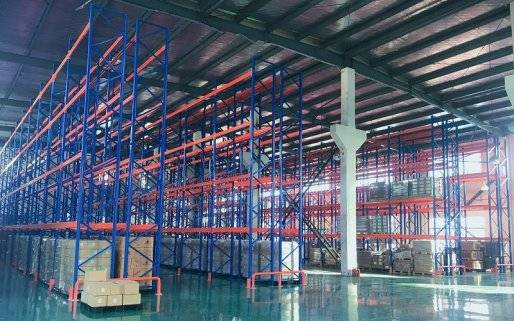
中国物流与采购联合会:11月份电商物流指数为113.1点 与上月持平
Zhi Tong Cai Jing· 2025-12-10 09:20
Core Insights - The e-commerce logistics index for November 2025 in China is reported at 113.1 points, remaining stable compared to the previous month [1] - The total business volume index for e-commerce logistics decreased to 132.4 points, down by 0.5 points from the previous month, with all four major regions experiencing a decline [1][2] - The rural e-commerce logistics business volume index saw a significant drop of 2.6 points, reaching 130.4 points, with most regions reporting a decrease [1][2] Supply and Demand Dynamics - The inventory turnover rate index increased by 0.3 points, while the cost index decreased by 0.1 points, marking six consecutive months of decline in costs [2] - The demand side shows that the promotional effects of the "Double Eleven" sales event were less pronounced this year, leading to a cooling of traditional sales [2] - Instant retail services, represented by platforms like Meituan and JD, have emerged as new growth points in e-commerce consumption [2] Service Quality and Efficiency - E-commerce logistics companies have maintained robust service capabilities and efficiency despite a slowdown in demand, with improvements in logistics timeliness, fulfillment rates, satisfaction, and load rates reaching new highs for the year [2] - The overall service quality is steadily improving, supported by increased capacity reserves and a smooth delivery network [1]
11月份电商物流指数保持快速发展势头
Zheng Quan Ri Bao· 2025-12-09 15:41
Core Insights - The e-commerce logistics index in China remained stable at 113.1 points in November 2025, unchanged from October [1] - The total business volume index for e-commerce logistics decreased by 0.5 points to 132.4 points in November, with all four major regions experiencing a decline [1] - The rural e-commerce logistics business volume index fell significantly by 2.6 points to 130.4 points, with only the Northeast region showing a slight increase [1] Demand and Supply Analysis - The "Double 11" promotional activities led to a sustained promotional effect from October, but the price advantages diminished, resulting in a decrease in both total business volume and rural business volume indices [2] - Categories such as sports and outdoor, pets, and trendy toys saw continued high growth, with instant retail platforms like Meituan and JD's quick delivery becoming new growth points in November [2] - E-commerce logistics companies maintained service capabilities and efficiency despite the demand slowdown, with improvements in logistics timeliness, fulfillment rates, satisfaction rates, and load rates reaching new highs for the year [2] Inventory and Cost Metrics - The inventory turnover rate index increased by 0.3 points in November, while the cost index decreased by 0.1 points, marking six consecutive months of decline [1] - The effects of cost reduction measures are becoming evident, contributing to the overall stability in the logistics sector [1]
穿越风雨 又见彩虹——老工业基地咸阳迎来产业新生
Zhong Guo Jin Rong Xin Xi Wang· 2025-12-02 03:08
Core Insights - The city of Xianyang has transformed from a historical industrial hub to a diversified economy, achieving significant economic growth and becoming the third city in Shaanxi province to surpass a GDP of 300 billion yuan [1] Group 1: Economic Transformation - Xianyang's economy has shifted from a single-industry focus to a multi-faceted approach, emphasizing innovation and resource optimization [1] - The city has seen a resurgence in economic growth, becoming the fastest-growing city in Shaanxi province last year [1] Group 2: E-commerce Development - Wugong County has developed a robust e-commerce sector, with the company Xiyu Meinan generating nearly 1 billion yuan in annual revenue, evolving from a small online store to a comprehensive e-commerce leader [2][3] - The e-commerce industry in Wugong has grown significantly, with over 420 e-commerce companies and more than 500 local brands established [3] Group 3: Industrial Clusters - Xianyang has formed several industrial clusters, including clean energy, equipment manufacturing, and e-commerce logistics, with multiple clusters exceeding 10 billion yuan in output [4] - The county's leading industries contributed to a total output value of 579 billion yuan by the third quarter of 2025, accounting for 70.6% of the city's GDP [4] Group 4: Traditional Industry Upgrades - Traditional industries in Xianyang, such as energy and chemicals, are undergoing significant upgrades, with a projected output value of 1,582 billion yuan in 2024, representing 67% of the city's industrial output [9] - The high-end energy and chemical park in Binzhou is attracting numerous high-tech projects, with an expected investment of over 17 billion yuan by 2025 [7] Group 5: High-tech Industry Growth - Xianyang is revitalizing its electronics sector, with the Rainbow Group successfully transitioning to high-generation LCD glass production, breaking foreign monopolies [10][11] - The city aims to establish a modern industrial system with a focus on electronic displays, biomedicine, and new materials, targeting a scale of 27.44 billion yuan for key industries by 2024 [11] Group 6: Innovation and Collaboration - Xianyang High-tech Zone is fostering innovation through financial support and collaboration with local universities, enhancing the region's technological capabilities [12] - The establishment of a 30-square-kilometer innovation corridor aims to integrate various sectors, promoting deep collaboration among innovation, industry, and talent [12]

菜鸟海外仓迎“黑五”首波订单洪峰
Zheng Quan Ri Bao Wang· 2025-12-01 04:09
Group 1 - The "Black Friday" shopping frenzy has significantly impacted global cross-border e-commerce, marking a crucial period for the industry [1] - According to Adobe for Business, online sales during Black Friday are projected to grow by 8.3% year-on-year, reaching $11.7 billion by 2025, indicating its importance as a growth engine for cross-border merchants [1] - Cainiao has prepared for the sales surge by expanding overseas warehouses and conducting multiple stress tests, customizing logistics solutions for different e-commerce platforms [1] Group 2 - Cainiao's overseas warehouses have seen a peak daily shipment volume that has increased by three digits compared to the average daily volume, reflecting the heightened demand during the Black Friday period [1] - The company has implemented a comprehensive promotion elasticity and early warning assurance plan, utilizing intelligent forecasting systems for capacity planning and staffing [1] - Since the start of the Black Friday promotions, Cainiao's order processing capacity has increased nearly threefold, with a 24-hour outbound timely rate of 99% [1] Group 3 - During the year-end promotional season, Cainiao is fully prepared to tackle the global logistics peak, leveraging its international logistics and technological capabilities [2] - The company offers exceptional logistics experiences such as "Global Five-Day Delivery," "G2G Core Area Three-Day Delivery," and "Overseas Warehouse Next-Day Delivery" [2]
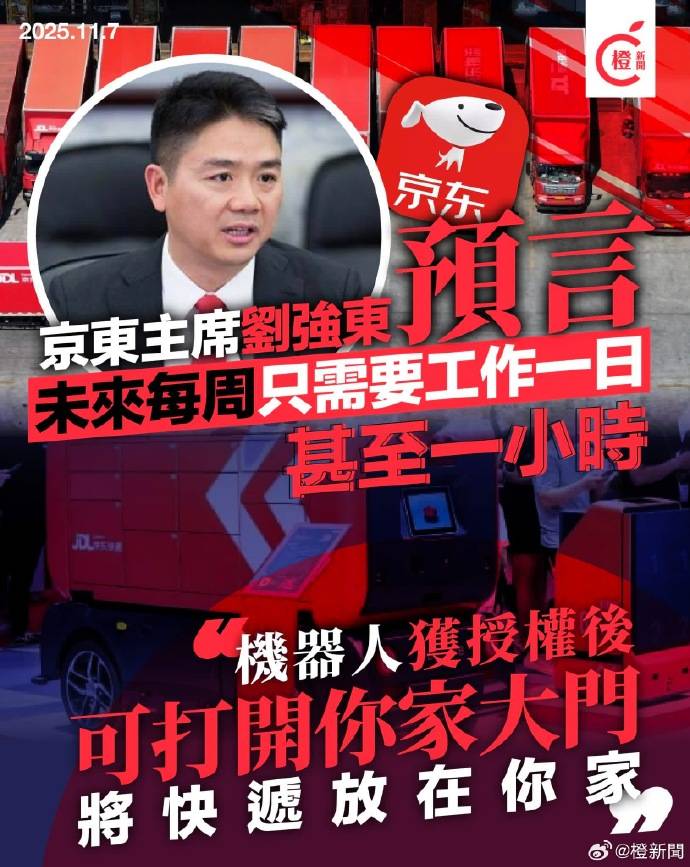
刘强东:未来机器人会完成所有工作!网友:技术垄断或加剧贫富分化
Sou Hu Cai Jing· 2025-11-29 22:36
Core Insights - Liu Qiangdong's statement about "robots completing all work" signifies JD's commitment to automation in logistics and sparks societal discussions on employment and wealth distribution in the automation era [2][3] - JD Logistics has achieved 90% automation in warehousing and sorting, with over 700,000 kilometers of testing for unmanned trucks and over one million kilometers for last-mile delivery vehicles [2] - Aiming for a fully automated delivery station by April 2026, JD plans to procure 3 million robots, 1 million unmanned vehicles, and 100,000 drones over the next five years [2] Automation and Employment - Liu predicts that automation will significantly reduce working hours, with employees potentially working only one day a week or even one hour, allowing a shift towards creative fields [3] - While positions like couriers face replacement risks, JD claims that modular design will enable workers to transition to technical roles such as equipment maintenance and scheduling [3] - Critics argue that the notion of working one day a week is unrealistic, especially for low-skilled laborers who may face structural unemployment [3] Wealth Distribution and Societal Impact - Liu has suggested that the wealth generated by robots could lead to a form of communism, where the government redistributes resources to eliminate wealth gaps [3] - This vision raises questions about the fair distribution of wealth created by automation, with concerns that without institutional safeguards, technological monopolies could exacerbate wealth inequality [3] - The discussion emphasizes the need for policies like "excess profit tax" to reinvest in education and social welfare [3] Technological Utopia vs. Social Reality - The advancement of unmanned delivery is seen as irreversible, yet the ideal of "robots supporting humanity" requires institutional innovation to ensure equitable benefits [3] - Historical patterns indicate that technological revolutions will eventually create new balances, but the transitional pains necessitate shared responsibility between companies and society [3] - Public sentiment reflects a desire for equitable distribution of automation's benefits, highlighting concerns that ordinary people may not share in the wealth generated by robots [3]

阿里启动“千问”项目,全面对标ChatGPT; 京东物流三季度总收入551亿元|未来商业早参
Mei Ri Jing Ji Xin Wen· 2025-11-14 00:00
NO.1 滴滴自动驾驶出海首站落户中东阿布扎比 11月13日消息,滴滴自动驾驶宣布与阿布扎比投资办公室(ADIO)达成战略合作。滴滴自动驾驶加入 阿布扎比智能和自动驾驶汽车产业集群SAVI,双方将在自动驾驶技术创新应用、AI人才培养、生态建 设等领域开放合作,共同支持阿布扎比建设领先的智慧出行和可持续交通生态,并逐步将合作拓展至更 广泛的中东地区。滴滴自动驾驶和广汽埃安合作的具有全球化适配能力的新一代自动驾驶车,将于年底 交付。 点评:全球自动驾驶赛道已从技术研发转向场景落地的攻坚期,中东地区凭借雄厚的石油资本和对智慧 城市建设的迫切需求,正成为国际自动驾驶企业的必争之地。 点评:2025年,AI大模型市场已完成初步洗牌,字节、阿里、百度等巨头凭借技术、资金与生态优势 占据主导,而"AI六小龙"等初创企业生存空间被挤压,行业焦点从模型研发转向C端产品落地与全球市 场争夺。上百名工程师的专项投入与专属办公区域的设置,凸显了阿里将AI视为"必答题"的战略决心。 NO.4 菜鸟服务淘宝闪购仓配"小时达"已覆盖重点12城 11月13日,《每日经济新闻》记者从菜鸟获悉,自10月菜鸟加入淘宝闪购以来,伴随"双11"加快推 ...
