
自然资源管理

Search documents
普法创新实践案例|山东省自然资源厅 深入推进“双基”法治建设 持续擦亮“法润自然”品牌
Zhong Guo Zi Ran Zi Yuan Bao· 2025-12-03 03:17
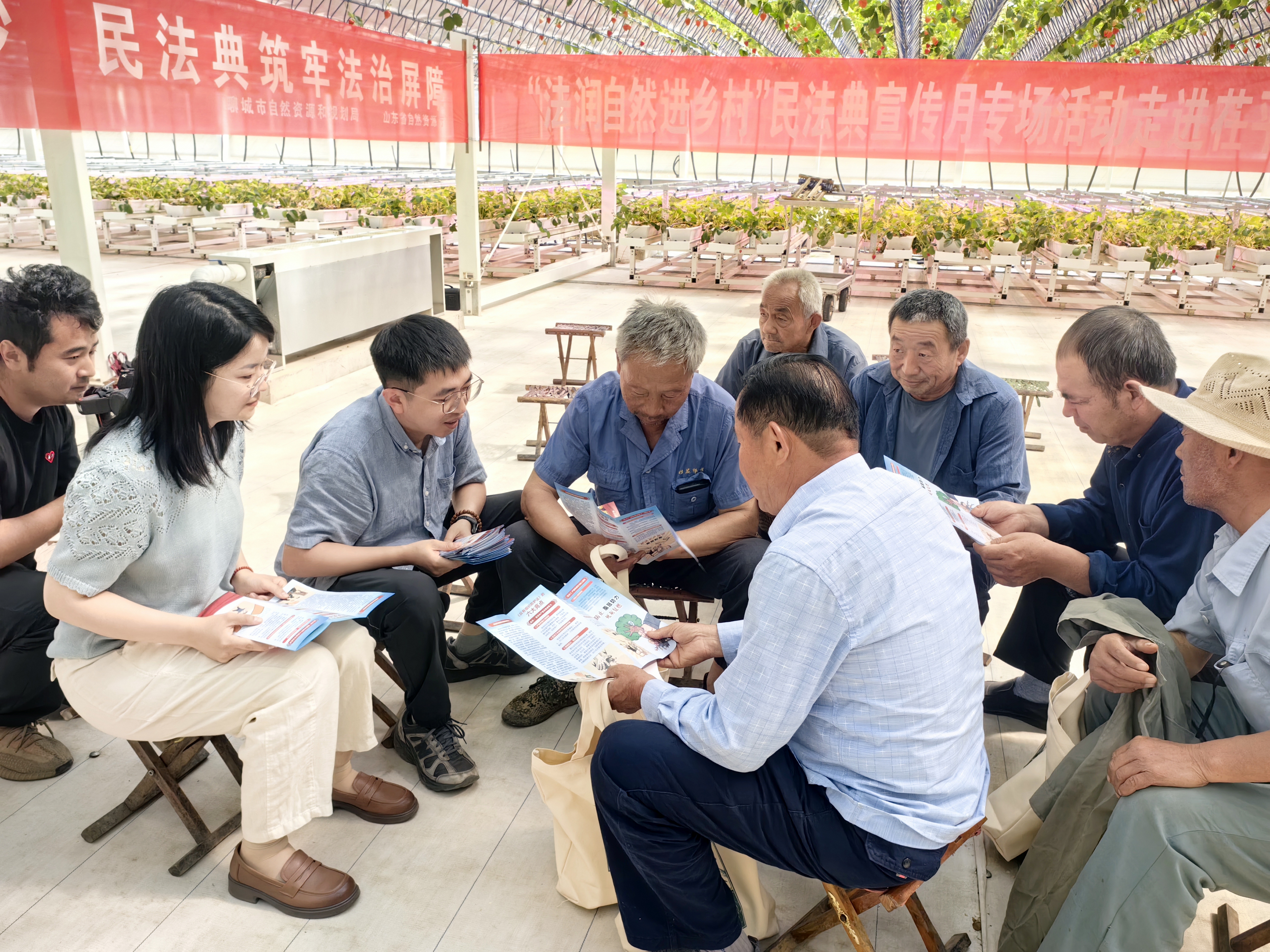
Core Viewpoint - The Shandong Provincial Natural Resources Department is implementing Xi Jinping's ecological civilization and rule of law thoughts, focusing on grassroots and foundational construction to enhance the legal governance capabilities of its staff, thereby providing strong legal support for the high-quality development of natural resources in the province [1]. Group 1: Legal Culture Development - The department aims to create the "Law Enriches Nature" legal culture brand over the next three to five years, establishing it as a recognizable symbol for legal education in the natural resources sector across Shandong [9]. - Key measures include unifying the branding of legal education activities, launching two platforms for legal education, and establishing various teams and bases for promoting legal knowledge [9]. Group 2: Practical Legal Education - The department has initiated several campaigns such as "Legal Education Year" and "Legal Culture Enhancement Year," focusing on integrating legal education with major national and provincial strategies [10]. - Collaborative efforts with media outlets have led to the creation of short video campaigns and legal education programs, significantly increasing public engagement and awareness [10]. Group 3: Brand Influence and Community Engagement - Local units are encouraged to develop sub-brands under the "Law Enriches Nature" umbrella, creating a diverse legal culture brand matrix that serves as a model for national legal culture development [10]. - The department has successfully utilized social media platforms to disseminate legal knowledge, with significant viewership and engagement metrics reported [10]. Group 4: Insights and Mechanisms - The establishment of a quantifiable legal construction indicator system is a key innovation, transforming soft tasks into hard constraints for better governance [11]. - The department emphasizes targeted legal education strategies, ensuring that legal information is tailored to different audiences, thereby enhancing the effectiveness of legal outreach [11].

普法创新实践案例|安徽厅 “六项宣传工作机制”打通普法服务“最后一公里”
Zhong Guo Zi Ran Zi Yuan Bao· 2025-12-03 03:16
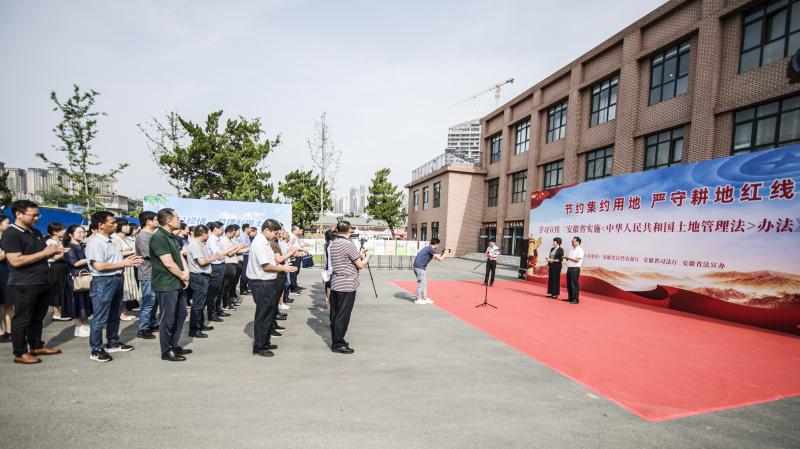
八五"普法规划实施以来,安徽省自然资源厅创新建立政策发布、解读、宣讲、推送、培训、服务"六项宣传工作机制",通过"下沉式"宣讲、"皖企 通"服务平台推送、"一问一答"手册释疑和"一网汇集"在线查询等创新举措,构建省市县三级"政策法规宣传网格",打造立体化普法服务平台。畅通自然资 源政策信息渠道,主动回应企业群众关切,释放政策红利,打通普法服务"最后一公里"。 安徽省自然资源厅在全国土地日期间开展送法下乡活动。 举办《安徽省实施〈中华人民共和国土地管理法〉办法》主题展。 Le Production 1 E s/20 PARTY A-ST-MOS 7月15 t 2011 07:50 11 HERE Thems the state t and the the first the state 开展线上旁听庭审活动。 创新实践 0 1 建立发布机制,畅通政策传导渠道 安徽厅通过厅长信箱、信访、政策咨询热线等,积极回应群众关于土地征收与补偿、集体经营性建设用地入市等政策法规咨询。安徽各级自然资源主管 部门通过创建"创新服务室""法治工作室",设立"办不成事"反映窗口、营商环境首席服务代表,普法志愿队进企入村等方式主动向企 ...
贵州厅持续健全依法行政工作机制
Zhong Guo Zi Ran Zi Yuan Bao· 2025-11-21 09:54
《通知》明确,要建立多机构法治工作会商剖析机制。全省各级自然资源主管部门在办理跨部门、 跨行业、跨领域业务,包括审计、督察、耕地保护考核反馈重大问题整改时,有牵头机构组织本级各相 关业务机构、事业单位,共同会商该业务涉及的部门、行业、领域法律法规适用问题,按照上位法优于 下位法、特殊法优于一般法的原则,梳理新旧法衔接,正确引用法律法规依据破解业务难题和问题。建 立多机构案例剖析机制,各级自然资源主管部门法治工作领导机构通过组织案例剖析会,由主办机构梳 理被纠错、败诉理由,举一反三,找准问题症结,总结经验教训,属于制度漏洞的,及时建章立制,堵 塞漏洞;属于有法不依、执法不严的,通过深刻剖析吸取教训,避免今后再犯类似错误,实现剖析一个 案例,解决一类问题,纠错一人,提醒一群的良好效果。 《通知》强调,要加强全省自然资源系统法治人才队伍建设。构建"统一管理、按需调配、动态优 化"的人才工作体系,建立省、市、县三级法治人才库。人才库实行分类登记、动态管理,按专业领域 和业务特长进行标注,根据人员调动等情况及时更新。人才库的法治工作者承担本部门依法履职问题研 究、会审会商、案例剖析、法治培训等工作任务。厅法治办负责厅法 ...
安徽蚌埠局优化工作机制提升执法质效
Zhong Guo Zi Ran Zi Yuan Bao· 2025-10-31 02:59
Core Viewpoint - The Bengbu Natural Resources and Planning Bureau has implemented innovative inspection mechanisms and strengthened law enforcement collaboration to enhance the quality and efficiency of law enforcement work in response to higher regulatory demands in the new era [1][2]. Group 1: Inspection Mechanisms - The bureau has introduced a "supervisory inspection" model primarily at the municipal level, issuing daily inspection notifications for infrastructure projects and intervening in annual key project land use plans [1]. - A professional inspection team has been organized to conduct unannounced inspections across three designated areas, focusing on transportation and water conservancy infrastructure, resulting in over 190 inspections and tracking 38 key projects covering a total of 24,811.82 acres [1]. - The bureau has issued early warnings for 13 projects, totaling 3,304.55 acres, through a dual regulatory framework of "daily inspections + key inspections" [1]. Group 2: Talent Development - The bureau emphasizes talent development by integrating law enforcement personnel and establishing a personnel database for natural resources law enforcement [2]. - A "Law Enforcement 5:30 Classroom" has been launched for regular specialized training, combining theoretical instruction with practical exercises, with a total of 230 participants across four training sessions [2]. - New recruits are encouraged to take law enforcement qualification exams to ensure full participation and responsibility in law enforcement activities [2]. Group 3: Cross-Inspection Mechanism - The bureau has established a cross-inspection mechanism to enhance the quality and effectiveness of law enforcement, organizing inter-regional inspections among law enforcement personnel [2]. - Inspection teams verify case handling, inspection records, and rectification implementation according to unified standards, improving the objectivity and seriousness of law enforcement checks [2]. - This initiative has led to the deployment of over 120 personnel for cross-inspections, identifying 67 suspected issues [2].
人大常委会|守好“家底” 深化改革——国有资产管理晒出“成绩单”
Xin Hua She· 2025-10-26 13:48
Core Insights - The report highlights the latest achievements in the management of state-owned assets in China, emphasizing the importance of safeguarding and effectively utilizing these assets for the benefit of the public [1][3]. Group 1: State-Owned Asset Management Overview - As of the end of 2024, the total assets of state-owned enterprises (excluding financial enterprises) amount to 401.7 trillion yuan, with state capital equity at 109.4 trillion yuan [1]. - The total assets of state-owned financial enterprises reach 487.9 trillion yuan, with state financial capital equity at 33.9 trillion yuan [1]. - Administrative and public service state-owned assets total 68.2 trillion yuan, with net assets of 55.4 trillion yuan [1]. - The total area of state-owned land is 52,413 million hectares, and the total water resources for 2024 are projected at 31,123 billion cubic meters [1]. Group 2: Growth Metrics - Over the past five years, the total assets of state-owned enterprises, total liabilities, and total state capital equity have grown at average annual rates of 11.4%, 11.7%, and 11.0%, respectively, while maintaining a debt-to-asset ratio below 65% [2]. Group 3: Management and Reform Initiatives - The report outlines new trends in asset management and reform, including the establishment of a robust supervision system for state-owned assets and enterprises, and the enhancement of the modern enterprise system with Chinese characteristics [3]. - There is a focus on strengthening the management of state financial capital and improving financial services for the real economy [3]. - Future initiatives include deepening reforms of state-owned enterprises, optimizing the structure of state-owned economy, and enhancing the management of natural resource assets [3].
黑龙江佳木斯局成立行政争议调解中心
Zhong Guo Zi Ran Zi Yuan Bao· 2025-10-24 02:33
Core Viewpoint - The establishment of the Administrative Dispute Mediation Center in Jiamusi City, Heilongjiang Province aims to effectively resolve disputes in the natural resources and planning sector, serving as the "first line of defense" for administrative disputes [1] Group 1: Administrative Dispute Mediation Center - The center integrates litigation and non-litigation dispute resolution methods, combining natural resource management functions with the court's dispute resolution role [1] - The center focuses on common disputes in areas such as land acquisition, planning permits, and property rights disputes, aiming for efficient resolution and prevention at the source [1] Group 2: Objectives and Mechanisms - The core goals include "efficient dispute resolution and source prevention," with a mechanism established to connect administrative mediation with litigation and administrative reconsideration [1] - The center aims to simplify processing procedures and reduce the cost of rights protection for parties involved [1] Group 3: Professional Support - A professional mediation team will provide precise and standardized services to reduce administrative disputes from the source and enhance the level of lawful administration [1]
安徽六安局“以案促学”提升依法行政能力
Zhong Guo Zi Ran Zi Yuan Bao· 2025-10-24 02:33
Core Viewpoint - The Anhui Province Lu'an City Natural Resources and Planning Bureau is enhancing the legal literacy and government transparency capabilities of its staff through immersive legal education by attending a court hearing related to government information disclosure [1] Group 1: Legal Education Initiatives - The bureau organized staff to observe a court case involving a citizen's request for public disclosure of construction project planning, emphasizing the importance of legal compliance in administrative duties [1] - The court hearing allowed participants to witness the litigation process, including evidence presentation and legal debates, thereby gaining a practical understanding of administrative litigation procedures [1] Group 2: Responsibilities and Compliance - The bureau's head actively participated in the court proceedings, highlighting the necessity of fulfilling legal responsibilities regarding information disclosure and asserting that the bureau has complied with relevant laws [1] - The initiative aims to instill a legal mindset among staff, reinforcing the principle that "legal duties must be fulfilled, and actions without authorization are prohibited" [1] Group 3: Future Plans - The bureau plans to continue promoting legal governance through various methods such as court observation, case discussions, and specialized training to integrate legal awareness into all business processes [1]
宁夏耕地面积超过1818万亩
Zhong Guo Xin Wen Wang· 2025-10-23 02:33
Core Points - Ningxia's cultivated land area has reached 18.18 million acres by the end of 2024, an increase of 163,600 acres compared to 2020, indicating a gradual formation of a "three-in-one" protection pattern for quantity, quality, and ecology [1] Group 1: Land and Ecological Resources - As of the end of 2024, Ningxia's forest land, grassland, and wetland areas are 14.84 million acres, 29.16 million acres, and 381,400 acres respectively, with forest land increasing by 514,000 acres since 2020 [1] - The ecological system status in Ningxia is continuously improving, with damaged ecological areas gradually being restored [1] Group 2: Ecological Resource Management - Ningxia has completed a comprehensive ecological resource baseline survey nationwide and has pioneered a "9+45" ecological resource classification system, establishing an ecological baseline database [1] - A total of 56 evaluation indicators have been developed to achieve a "precise portrait" of ecological status, exploring a collaborative governance path of "investigation-evaluation-restoration-development" [1] Group 3: Land Utilization - Ningxia has intensified efforts to address land that has been allocated but not supplied, as well as idle land, with a total of 379,100 acres disposed of [1] - In 2024, Ningxia ranked 6th nationwide in terms of idle land disposal rate [1]
标准引领 创新驱动
Zhong Guo Zi Ran Zi Yuan Bao· 2025-10-23 01:53
Core Viewpoint - The natural resources standardization work has achieved new progress and established a new framework since the "14th Five-Year Plan," guided by Xi Jinping's thought and the National Standardization Development Outline [1][3]. Group 1: High-Quality Standard System - The Ministry of Natural Resources, in collaboration with 18 departments, has issued the "Action Plan for Implementing the National Standardization Development Outline (2024-2025)" to advance standardization tasks in various fields such as resource conservation, ecological restoration, and rural revitalization [3]. - A comprehensive natural resources standard system has been established, covering 13 standard sub-systems and 52 professional categories, focusing on integrated management, resource categories, and information technology [3][4]. - The establishment of a new "1+4+15" organizational system aims to enhance the integration of standardization efforts across departments, with a focus on cross-sectoral standards in natural resources [4]. Group 2: Key Standards Supply - During the "14th Five-Year Plan," there has been a strong emphasis on urgent standard supply, enhancing support capabilities in key areas such as land space planning and natural resource protection [5][6]. - Standards have been published to improve natural resource management, including guidelines for natural resource asset accounting and ecological restoration [6][7]. - The focus on energy and resource security has led to the development of standards for food, energy, and geographic information safety [7][8]. Group 3: International Standardization - The Ministry of Natural Resources is actively involved in international standardization, with four units participating in ISO technical organizations, and has converted 41 international standards into national standards [9][10]. - China has led the development of 23 international standards, marking a 50% increase compared to the "13th Five-Year Plan," and has published 34 foreign versions of standards [10]. Group 4: New Mechanisms and Quality Improvement - The Ministry has issued measures to enhance the quality of natural resource standards and improve service capabilities, focusing on problem-oriented approaches and refined management [12][13]. - A new mechanism for joint development and publication of standards across departments has been established to ensure consistency and effectiveness [17]. Group 5: Future Directions - Looking ahead to the "15th Five-Year Plan," the focus will be on optimizing the standard system, supporting high-quality development, and enhancing international influence in standardization [15][16]. - The emphasis will be on urgent needs, with advanced standards supporting green development and resource security [16][17].
四川厅面对面会商推进存量违法占用耕地问题整改
Zhong Guo Zi Ran Zi Yuan Bao· 2025-10-21 07:17
Core Points - The Sichuan Provincial Natural Resources Department held a meeting to address the issue of illegal occupation of arable land, focusing on rectification progress from 2018 to 2024 [1] - The meeting involved direct communication with 21 cities (prefectures) to discuss rectification methods and timelines for addressing illegal land use [1] - The department emphasized the need for targeted goals and effective measures to ensure the rectification of remaining illegal land use issues [1] Group 1 - The meeting aimed to analyze the progress of rectification efforts and identify challenges, proposing actionable paths for improvement [1] - The department called for a clear "clean-up" target and a structured timeline for rectification, urging decisive actions to advance the process [1] - Policies such as the "Permanent Basic Farmland Protection Red Line Management Measures" will be utilized to facilitate the rectification process [1] Group 2 - A strict quality control approach is mandated to ensure genuine rectification, avoiding superficial or false corrections [1] - The department warned against oversimplified or one-size-fits-all solutions to prevent negative public sentiment [1] - For cases that cannot be rectified by 2025 due to special circumstances, a detailed plan and timeline must be established and approved by the provincial government [1]