
Lithium Battery

Search documents
ETF日报:创业板有望继续在未来的结构性行情中保持强势 关注创业板50ETF 、科创创业ETF
Xin Lang Ji Jin· 2025-09-15 13:25
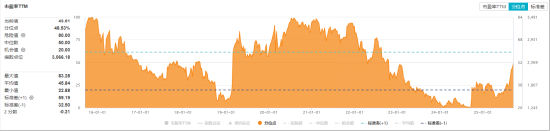
Market Performance - A-shares showed mixed performance today, with the Shanghai Composite Index closing at 3860.50 points, down 0.26%, and the Shenzhen Component Index reaching a new high at 13005.77 points, up 0.63% [1] - The ChiNext Index continued its strong performance, rising 1.51% to close at 3066.18 points, with a notable increase of over 9% for CATL, which reached a historical high [2] Economic Data - August economic data indicated a weakening trend in industrial production, investment, and consumption, with real estate investment down 12.9% year-on-year [4] - Industrial production growth slowed from 5.7% to 5.2% year-on-year, while retail sales growth decelerated to 3.4% [4] Policy and Industry Trends - A series of favorable policies were announced, including a target of 180 million kilowatts for new energy storage installations by 2027, which is expected to stimulate demand for storage and power batteries [6] - The domestic market is entering a traditional peak season, with a reported 60% penetration rate for new energy vehicles in the first week of September [6] Company Performance - Recent earnings reports from lithium battery companies showed significant improvements in revenue, profit, and cash flow, with leading battery manufacturers achieving a capacity utilization rate of 89.9% [7] - The gaming industry is experiencing growth, with new products and existing titles performing well, supported by an increase in game license approvals [8] Investment Recommendations - Investors are advised to focus on the ChiNext 50 ETF (159375) and the Sci-Tech Innovation and Entrepreneurship ETF (588360) due to the favorable valuation and growth prospects in the ChiNext market [3] - In the bond market, the 10-year government bond yield is expected to return to a downward trend, presenting good investment value around 1.80% [5]


坚定看好固态电池产业趋势
2025-08-31 16:21
Summary of Solid-State Battery Industry Conference Call Industry Overview - The focus is on the solid-state battery industry, highlighting its growth potential and technological advancements [1][2][3]. Key Points and Arguments 1. **Investment Focus**: Investors should concentrate on companies with new technologies in incremental processes or materials, such as dry electrode technology and new anode/cathode materials [2][3]. 2. **Market Valuation**: When assessing lithium battery companies, it is crucial to use a uniform time scale for evaluations, avoiding discrepancies between 2030 demand projections and current valuations of traditional leaders [4]. 3. **Supply and Demand Dynamics**: The lithium battery industry is currently experiencing a shift away from internal competition, with a focus on capacity utilization and the pace of new capacity expansion, which is expected to improve profitability [5]. 4. **Recent Growth Factors**: The recent surge in solid-state battery interest is attributed to good production schedules, equipment bidding guidance, and a significant government subsidy of 6 billion yuan [6][7]. 5. **Subsidy Potential**: The subsidy for solid-state batteries may increase to 7-8 billion yuan, contingent on the results of a mid-term review by the Ministry of Industry and Information Technology [8]. 6. **Market Development**: The solid-state battery market is expected to see significant developments in 2025, with major companies planning to establish large-scale pilot lines and enter the order delivery phase [9]. 7. **Investment Directions**: Key investment areas in the solid-state battery supply chain include equipment and materials, particularly focusing on sulfide electrolytes and anode materials transitioning from silicon-carbon to lithium metal or no anode [10][12]. 8. **Electrolyte Challenges**: Sulfide electrolytes face challenges such as toxicity when exposed to moisture, but advancements like the addition of lithium iodide can enhance their environmental stability [14]. 9. **Anode Material Trends**: The trend is shifting from silicon-carbon anodes to lithium metal or no anode technologies, which are expected to dominate by 2026 due to their advantages in cycle life [13]. 10. **Regulatory Impact**: Environmental regulations are expected to tighten production in the electrolyte and lithium hexafluorophosphate sectors, potentially leading to supply constraints [19]. Additional Important Insights - **Price Transmission Mechanism**: The establishment of a price transmission mechanism in the upstream materials sector is crucial for improving profitability and negotiating power with downstream customers [18]. - **Focus on Equipment**: The solid-state battery equipment market is characterized by significant value and margin improvements compared to liquid batteries, with a focus on companies that can provide comprehensive solutions [21][23]. - **Post-Processing Equipment Importance**: The post-processing equipment in solid-state battery production is critical due to the higher pressures and longer processing times required, leading to increased value per unit of equipment [24]. - **Emerging Companies**: Companies like Jiangcheng Ultrasonic and Lianying Laser are making notable advancements in solid-state battery technologies and are worth monitoring for investment opportunities [26][27]. This summary encapsulates the key insights and developments in the solid-state battery industry as discussed in the conference call, providing a comprehensive overview for potential investors and stakeholders.

小鹏新P7最新情况
数说新能源· 2025-08-26 03:38
Group 1 - The core viewpoint of the article emphasizes the balance between performance and cost in battery cell procurement for automotive manufacturers [2] - Daily average invitations for test drives exceed 20 batches, with some test drives scheduled until late at night [2] - Average sales orders range from 20 to 25, which is higher than last year's P7+ model [2] - The new Xiaopeng P7 is being produced in a new factory, with an expected capacity of 7,000 to 8,000 units per month in the first two months [2] Group 2 - BYD is expanding its presence in Southeast Asia [5] - CATL's growth in the energy storage market is outpacing that of the power market [5]


中国电池行业-关于 “反内卷” 的事实、进展及影响-China Battery Sector_ Facts, Developments and Impacts about Anti-involution, we prefer Yuneng & Hyperstrong
2025-08-18 01:00
Summary of the Conference Call on the China Battery Sector Industry Overview - The conference call focused on the **lithium battery sector** in China, particularly in the context of the government's **anti-involution** policies aimed at reducing excessive competition and promoting sustainable growth [1][3]. Key Points and Arguments Current State of the Lithium Battery Sector - The lithium battery supply chain shows **divergent margin profiles** between upstream and downstream segments, with the upstream LFP cathode sector under significant stress, operating at approximately **70% cash cost levels** for the past three years [2][8]. - The **battery cell sector** downstream is healthier, with around **70% of capacity** operating above breakeven levels, indicating less immediate need for policy intervention [8]. Recent Developments - There have been no formal policy announcements regarding anti-involution; however, industry associations are promoting **self-discipline** among suppliers to stabilize prices and address capacity issues [4][5]. - Meetings among battery dry separator manufacturers and LFP cathode makers are being held to discuss price stabilization and capacity expansion suspension, reflecting a proactive industry response to government initiatives [5][9]. Impacts and Outlook - The **anti-involution initiative** is expected to lead to a comprehensive price recovery across the battery supply chain, with potential mid-high teen price hikes in battery average selling prices (ASP) if supply chain margins recover [15]. - A shift from **supply surplus to supply shortage** is anticipated by 2026, which could drive significant price increases and improve the financial health of Tier 2 competitors [20]. Investment Opportunities Hunan Yuneng - Hunan Yuneng is highlighted as a **key beneficiary** of the LFP cathode upcycle, with an estimated **34% market share** in 2024. The company is expected to deliver an **EPS CAGR of ~180%** from 2024 to 2026 [16][26]. - The target price for Yuneng is set at **Rmb62.0**, with a valuation methodology based on a near-term P/E of **17.5x** and a long-term P/E of **15x** for 2030 [24][25]. Hyperstrong - Hyperstrong, a leading BESS supplier with approximately **12% market share** in 2024, is expected to benefit from the surge in BESS installations, projecting a **38% EPS CAGR** from 2024 to 2027 [18][29]. - The target price for Hyperstrong is set at **Rmb106.0**, with a long-term P/E of **12x** for 2030 [27]. Additional Insights - The **demand for LFP cathodes** is projected to grow at a **volume CAGR of 24%** from 2024 to 2026, driven by the growth in Energy Storage Systems (ESS) and increased LFP penetration in the EV market [20]. - The **competitive landscape** is expected to evolve, with Hyperstrong's market share projected to decline from **12% in 2024 to 6% in 2030**, indicating potential challenges ahead [18][29]. Conclusion - The lithium battery sector in China is at a pivotal moment, with government policies aimed at stabilizing the market and promoting sustainable growth. Companies like Hunan Yuneng and Hyperstrong are positioned to capitalize on these trends, making them attractive investment opportunities in the evolving landscape of the battery industry [1][15][29].

免费领取!2025年全球锂电产业链分布图
鑫椤锂电· 2025-08-13 07:50
Group 1 - The article presents a detailed distribution map of the global lithium battery industry, covering the entire supply chain from raw materials to end applications [3] - The distribution map includes major lithium battery industry clusters in regions such as China, North America, Europe, Japan, and Southeast Asia [3] Group 2 - The distribution map measures 1.5 meters by 1 meter, providing a comprehensive visual representation of the lithium battery ecosystem [3] - The map is available for free to those who share the article on their social media, with specific instructions for obtaining it [4][5]
免费领取!2025年全球锂电产业链分布图
鑫椤锂电· 2025-08-06 07:03
Group 1 - The article presents a detailed distribution map of the global lithium battery industry, covering the entire supply chain from raw materials to end applications [3] - The distribution map includes major lithium battery industry hubs in regions such as China, North America, Europe, Japan, and Southeast Asia [3] Group 2 - The distribution map is available for free to those who share the article on their social media and contact the editor [4] - The distribution of the maps is being carried out in order of registration [5]
免费领取!2025年全球锂电产业链分布图
鑫椤锂电· 2025-08-05 08:05
Group 1 - The article presents a detailed distribution map of the global lithium battery industry, covering the entire supply chain from raw materials to end applications [3] - The distribution map includes major lithium battery industry hubs in regions such as China, North America, Europe, Japan, and Southeast Asia [3] Group 2 - The distribution map is available for free to those who share the article on their social media and contact the editor [4] - The distribution of the maps is being carried out in order of registration [5]
免费领取!2025年全球锂电产业链分布图
鑫椤锂电· 2025-08-04 08:35
Group 1 - The article presents a detailed distribution map of the global lithium battery industry, covering the entire supply chain from raw materials to end applications [3] - The distribution map highlights four major lithium battery industry clusters located in China, North America, Europe, and East Asia [3] Group 2 - The distribution map is available for free to those who share the article on their social media and contact the editor [4] - The distribution map is being dispatched in order of registration [5]
免费领取!2025年全球锂电产业链分布图
鑫椤锂电· 2025-07-23 07:04
Group 1 - The article presents a detailed distribution map of the global lithium battery industry, covering the entire supply chain from raw materials to end applications [2] - The distribution map includes major lithium battery industry clusters in regions such as China, North America, Europe, Japan, and Southeast Asia [2] Group 2 - The distribution map is available for free to those who share the article on their social media and contact the editor [3] - The distribution map is being dispatched in order of registration [4]
中国股票策略:供给侧改革 2.0_这次可能不同-China Equity Strategy_ Supply side reform 2.0_ This time may be different
2025-07-21 14:26
Summary of Key Points from the Equity Research Report Industry Overview - The report discusses the potential for a new round of supply-side structural reforms in China, referred to as Supply-Side Structural Reform 2.0 (SSSR2.0), following a call from the Central Commission for Financial and Economic Affairs (CCFEA) to address price competition and eliminate obsolete capacity [2][11]. Core Insights 1. **Differences from Previous Reforms**: - SSSR1.0 focused on upstream industries like coal, steel, cement, and glass, while SSSR2.0 is expected to encompass both traditional industries (e.g., steel) and new industries (e.g., solar, auto, lithium batteries) [3][13]. - The current reforms may be driven by self-regulating industry associations and market players rather than solely by government mandates, which characterized SSSR1.0 [3][13]. - Economic conditions differ significantly; SSSR1.0 coincided with a boost from infrastructure projects, whereas the current economy faces challenges in property and consumption sectors [3][13]. 2. **Urgency of Reform**: - The solar industry is identified as having the highest urgency for reform due to low capacity utilization rates (73.5%) and negative return on equity (ROE) among top players [5][24]. - Other industries in need of reform include steel, lithium batteries, and auto [5][24]. 3. **Potential Outcomes**: - The pace of capacity elimination may be slower in SSSR2.0 compared to SSSR1.0 due to the different measures and types of enterprises involved (state-owned vs. private) [4][26]. - It may take longer for Producer Price Index (PPI) growth to return to positive territory due to weaker demand and less stringent supply-side controls [4][26]. Key Beneficiaries - The report highlights five stocks that could benefit from the anticipated supply-side measures: - **Tongwei** (Hold) - **Longi Green** (Hold) - **First Applied Material** (Buy) - **Lead Intelligent** (Buy) - **Bank of Jiangsu** (Buy) [7][35]. Additional Insights 1. **Historical Context**: - SSSR1.0 led to significant improvements in capacity utilization and ROE for industry leaders, suggesting that similar outcomes could be expected for leading firms in SSSR2.0 [30][31]. - During SSSR1.0, industries involved in reforms outperformed the CSI300 benchmark, with large caps generally outperforming small caps [31][33]. 2. **Current Economic Indicators**: - The report notes that PPI has been in contraction for 33 months since October 2022, indicating ongoing economic challenges [14][26]. - Capacity utilization rates have declined across various sectors, with electrical equipment and auto industries experiencing significant drops [16][29]. 3. **Regulatory Measures**: - Recent measures include standardized conditions for solar manufacturing and initiatives to curb price wars in the auto industry, indicating a proactive approach by regulatory bodies [21][22]. 4. **Market Sentiment**: - Investor expectations for SSSR2.0 are fueled by recent government discussions and publications highlighting the need for structural reforms to address overcapacity and competition issues [2][12]. This comprehensive analysis provides insights into the potential impacts of SSSR2.0 on various industries and highlights key stocks that may benefit from these reforms.



