Mining

Search documents
Bunker Hill on Track for June 2026 US Mine Restart Launches Exploration Program and Provides Project Update
Globenewswire· 2026-03-16 10:15
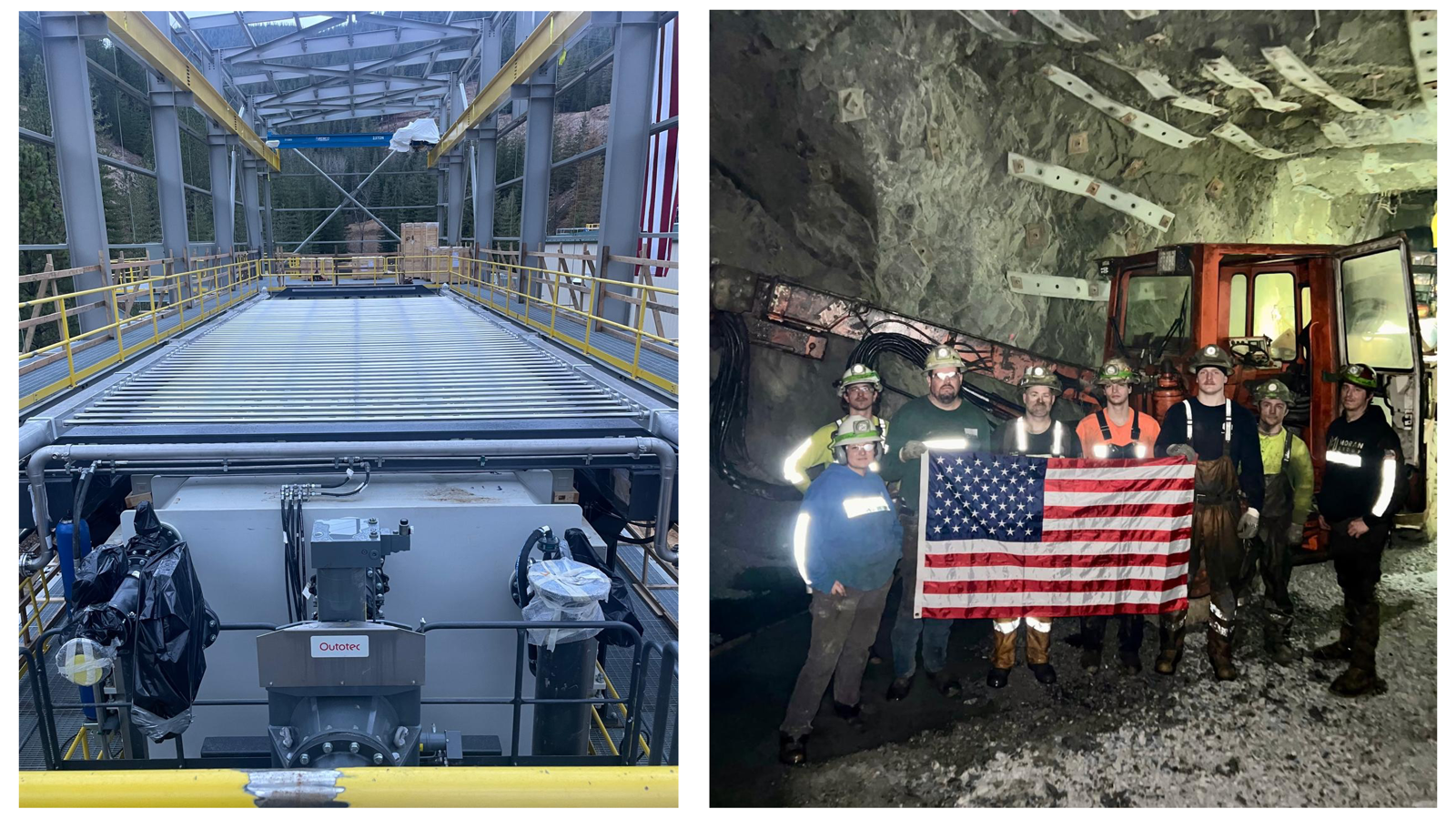
Core Viewpoint - Bunker Hill Mining Corp. is progressing towards the planned restart of the Bunker Hill Zinc-Silver-Lead Mine in June 2026, with significant advancements in construction, operational readiness, and exploration activities [1][3][23]. Project Progress - The project has achieved 40 months without lost time injuries, indicating a strong safety record [6]. - Construction and commissioning are 85% complete, on track for the restart of operations and first concentrate production in June 2026 [6]. - The processing plant is operational, with commissioning ahead of schedule and new team members being hired [6]. - The filter plant has completed 100% of mechanical installations, with electrical and piping installations progressing ahead of schedule [6]. - Underground preparations are advancing rapidly, with sufficient stockpiles to support the first three months of operations and development encompassing all stopes in the initial six-month mine plan [6]. Exploration Activities - Timberline Drilling has been contracted to conduct 25,000 feet of drilling targeting high-grade silver at both Bunker Hill and Ranger Page properties starting in April 2026 [10]. - This drilling campaign is the largest since the mine's closure in 1981 and marks the beginning of a multi-phase exploration initiative [4][10]. Equipment and Team Expansion - The mining team has received the first batch of new vehicles from Caterpillar, Inc., which will support full-time mining operations starting in June 2026 [8]. - The team is expanding daily, with new members integrating into positions as per the operational readiness schedule [3]. Company Outlook - The company remains focused on advancing construction and development activities to support the planned restart of operations, with ongoing updates as key milestones are achieved [23].

S&P/ASX 200 falls ahead of rate decision meeting as Middle East hostilities keep investors cautious; check top gainers and losers
The Economic Times· 2026-03-16 09:26
Market Overview - The S&P/ASX 200 index closed lower, dropping 33.70 points or 0.39% to 8,583.40 on March 16, 2026, influenced by weaker commodity prices and investor caution ahead of a central bank rate hike [1][10] - The index is down 1.50% year-to-date, although it remained virtually unchanged over the last five days [1][10] Economic Factors - Investors are focused on geopolitical risks, particularly in the Middle East, which has affected trading volumes [2][10] - Australia is expected to stand out among central banks, with 23 out of 30 economists predicting a quarter-point rate hike in the upcoming meeting [3][10] - Rate-sensitive financial stocks rose by 0.4%, with the Commonwealth Bank of Australia increasing by 1% to its highest level in over two weeks [3][10] Stock Performance Top Gainers - Reliance Worldwide Corporation Limited (RWC) led the gainers, closing at $3.120, up $0.200 or 6.849% [5][10] - Karoon Energy Ltd (KAR) finished at $1.925, rising $0.085 or 4.619% [5][10] - Other notable gainers included AMP Limited (AMP) at $1.220, up $0.050 or 4.273%, and Challenger Limited (CGF) at $7.680, an increase of $0.300 or 4.065% [6][10] Top Losers - IperionX Limited (IPX) experienced the steepest decline, dropping to $4.090, down $1.170 or 22.244% [7][10] - Deep Yellow Limited (DYL) closed at $1.775, a decline of $0.225 or 11.250% [7][10] - Additional losses were seen in Silex Systems Limited (SLX), which ended at $5.230, down $0.590 or 10.138%, and Regis Resources Limited (RRL) at $7.040, a decrease of $0.640 or 8.334% [8][11]


X @Bloomberg
Bloomberg· 2026-03-16 08:38
RioZim lost its operating license in Zimbabwe after the miner failed to develop a 2,800 megawatt coal-fired power plant https://t.co/4PLDg68RYP ...
Armory Mining To Conduct Airborne Geophysics Surveys At The Ammo Gold-Antimony Project
Thenewswire· 2026-03-16 07:05
Core Viewpoint - Armory Mining Corp. is advancing its exploration efforts at the Ammo antimony-gold project in Nova Scotia, Canada, by preparing to conduct airborne geophysical surveys to identify mineral potential and refine exploration strategies [1][4][5]. Group 1: Project Overview - The Ammo Project covers approximately 3,020 hectares and is located near the historic West Gore antimony-gold mine, which has historical production data supporting its exploration potential [6][9]. - The project is part of a partnership with Castello Q Exploration Corp. to execute a comprehensive Phase One work program, focusing on identifying prime drilling targets [2]. Group 2: Survey Plans - The planned airborne geophysical surveys include magnetic, electromagnetic (EM), and radiometric surveys to gather data on geological characteristics and mineralization [3][8]. - These surveys are expected to be completed in the coming months, following the spring break-up, with preliminary results to inform future drilling campaigns [7]. Group 3: Market Context - The demand for antimony is increasing due to its critical applications in military technologies, renewable energy, and advanced manufacturing, making the Ammo Project a significant exploration opportunity [4]. - The importance of securing domestic supply chains for critical minerals is emphasized, aligning with global trends [4].

Global Markets | Australian shares fall ahead of rate decision meeting
The Economic Times· 2026-03-16 07:03
Market Overview - The benchmark S&P/ASX 200 index closed 0.4% lower at 8,583.4 points, with thin trading as Gulf hostilities continued into a third week [1][5] - Investors are focused on risks to Middle East oil facilities despite U.S. calls to safeguard the Strait of Hormuz, a key global oil route [1][5] Sector Performance - Rate-sensitive financials rose 0.4%, with Commonwealth Bank of Australia increasing by 1% to its highest in over two weeks [1][6] - Energy stocks finished 0.5% higher, marking a fourth consecutive session of gains [1][6] - Miners fell 2.4%, reaching their lowest level since early January as iron ore prices retreated from two-month highs [2][6] - Rio Tinto and Fortescue dropped 2% and 3.9%, respectively, while BHP slid 1.2%, touching its lowest since February 6 [2][6] - South32 fell 5.7% after announcing its Mozal aluminium smelter was placed on care and maintenance [2][6] - Lynas Rare Earths rose 1.4% following its U.S. unit signing a binding letter of intent for a U.S. rare earth oxide supply deal [2][6] Economic Indicators - In New Zealand, the benchmark S&P/NZX 50 slipped 0.2% to 13,164.58 points as investors await quarterly GDP data for a clearer view of the economy [3][6]
钨价一年暴涨逾500%
财联社· 2026-03-16 06:48
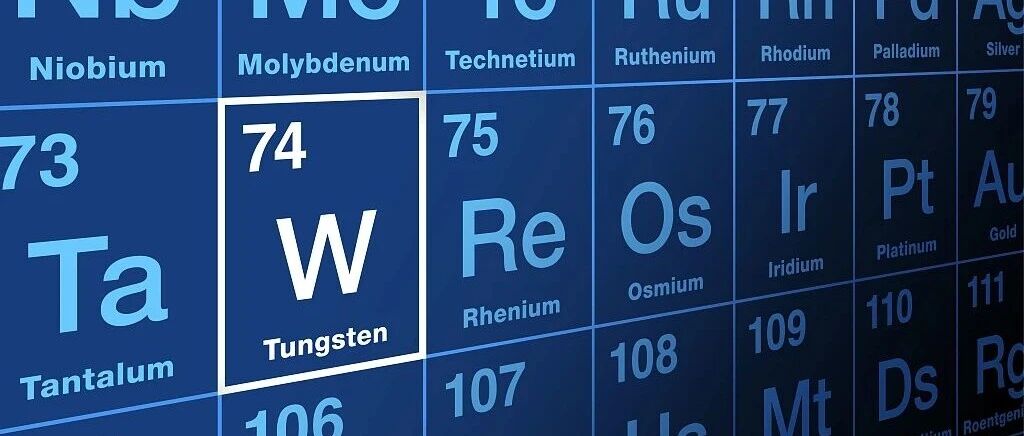
Core Viewpoint - Tungsten, a metal widely used in weaponry and semiconductor production, has become a focal point amid current geopolitical tensions, with prices skyrocketing over 500% in the past year, reaching $2,250 per ton [3][6]. Group 1: Price Dynamics - The price of tungsten has more than doubled this year, driven by depleting buyer inventories and increased military demand due to escalating conflicts in the Middle East [6]. - Recent market conditions have led to unprecedented demand for tungsten, with some traders expressing astonishment at the current supply shortages [6][7]. - The market for tungsten is estimated to be around $16 billion, which is approximately 5% of the copper market, highlighting its relatively small size despite the significant price increase [7][9]. Group 2: Supply and Demand Factors - The U.S. government has reached out to companies like Almonty Industries regarding urgent material supply issues, indicating a strong demand for tungsten in military applications [7]. - The consumption of tungsten for military purposes is expected to grow by 12% this year, driven by its use in missiles, aircraft, and ammunition [9][10]. - Despite its strategic importance, the majority of tungsten demand comes from broader economic sectors, with about 60% of U.S. tungsten consumption used in construction and metalworking industries [9][10]. Group 3: Market Outlook - Experts suggest that the current supply crisis may be temporary, with predictions that it could last no more than 24 months [11]. - The geopolitical landscape, particularly conflicts like the Iran war, underscores the critical role tungsten plays in modern warfare, further intensifying demand [11].
Japan mines Pacific seabed to loosen China's grip on rare earths | FT #shorts
Financial Times· 2026-03-16 05:00
Japan is embarking on an ambitious push to extract rare earth elements from the ocean floor, betting that deep sea resources could strengthen its economic security. The effort is expected to accelerate under Prime Minister Sai Takayichi, who describes deep sea mining as the first step towards domestically industrializing rare earths. In 2011, Japan discovered resources near Minami Toishima, an atal 1,900 km southeast of Tokyo that is part of the country's exclusive economic zone.Following her landslide elec ...

航天-航天金属:支撑航天经济的关键矿产-Space-Space Metals The Critical Minerals Enabling the Space Economy
2026-03-16 02:26
Summary of Space Metals: The Critical Minerals Enabling the Space Economy Industry Overview - The focus is on the space economy, particularly the critical metals required for the rocket and satellite industry, highlighting the potential supply constraints that could impact growth [1][2] Key Insights - **Supply Chain Challenges**: The supply of critical metals is concentrated and geopolitically sensitive, posing risks as demand for rockets and spacecraft increases. The industry may face bottlenecks in securing necessary materials [2][4] - **Launch Activity Growth**: In 2025, there were 330 orbital launch attempts, a 26% increase year-over-year. The cumulative number of objects launched into space rose by 136% from 2020 to 2025 [2][7] - **Metal Demand**: Approximately 7,000 metric tons of metals were required for spacecraft launched in 2025, which is modest compared to global metal demand but critical due to the specialized nature of these materials [2][9] Critical Metals Categories 1. **Structural Metals**: - Key Metals: Aluminum, Titanium, Steel/Iron, Vanadium, Chromium - Used in primary structures, tanks, and load-bearing components [15][36] 2. **High-Temperature Metals**: - Key Metals: Tungsten, Nickel, Cobalt, Rhenium, Niobium, Hafnium, Platinum - Essential for propulsion systems and rocket engines [17][69] 3. **Power & Electronics**: - Key Metals: Gallium, Arsenic, Copper, Tantalum, Gold, Silver - Used in electrical systems and solar cells [17] 4. **Optics & Sensors**: - Key Metals: Beryllium, Germanium - Critical for optical and sensing systems [17] 5. **Rare Earths/Permanent Magnets**: - Key Metals: Samarium, Neodymium, Dysprosium, Praseodymium, Terbium - Important for electric motors and guidance systems [17] Notable Companies in Space Metals - **Rhenium**: Major producers include Molibdenos y Metales (Chile), Freeport-McMoRan (USA), and KGHM Polska Miedz (Poland) [28][95] - **Hafnium**: Produced by Framatome (France) and ATI Inc (USA) [27] - **Beryllium**: Materion Corporation (USA) and NGK Insulators (Japan) are key suppliers [32] - **Gallium**: Dominated by China, with notable producers including Aluminum Corporation of China and Dowa Holdings [35][33] Geopolitical and Supply Risks - Many critical metals are produced in limited geographic areas, leading to supply risks. For example, 76% of cobalt production comes from the Democratic Republic of Congo, and 99% of gallium production is controlled by China [81][33] - The concentration of production in a few countries raises concerns about supply chain stability and potential geopolitical tensions [20][22] Conclusion - The space economy's growth is heavily reliant on a small group of critical metals, which face significant supply chain challenges. Investors should be aware of these dynamics as they explore opportunities in the sector [2][4]
大宗商品_短期抬升动力煤与铝价-Commodities_ Lift near-term Thermal coal & Aluminium prices
2026-03-16 02:20
Summary of Key Points from the Conference Call Transcript Industry Overview - **Commodities Impacted**: The conference call discusses the thermal coal and aluminium markets, particularly in relation to the ongoing conflict in the Middle East (ME) which has led to supply risks and price increases for these commodities [2][4][7]. Core Insights and Arguments - **Thermal Coal Prices**: - The forecast for 2026 thermal coal prices has been raised by 10% to $126 per ton due to increased gas prices and potential gas-to-coal substitution [4][13]. - Since the onset of the Iran conflict on February 28, European gas prices have risen by approximately 50%, Brent crude by 30%, and NEWC thermal coal prices by 15% [4]. - **Aluminium Prices**: - The 2026 LME aluminium price forecast has been increased by 13% to approximately $3,250 per ton, driven by supply disruptions from the ME conflict [7][13]. - The ME supplies about 25% of aluminium imports to Europe and the US, and disruptions could lead to higher premiums in these markets [7]. - **Alumina Prices**: - The 2026 alumina price forecast has been cut by 5% to around $320 per ton due to oversupply risks exacerbated by ME disruptions [7][13]. - The potential for 'dumping' in the spot market could further pressure alumina prices, although China may reduce refinery output to limit price declines [7]. Additional Important Content - **Equity Impacts**: - **Norsk Hydro (NHY)**: Expected to see a 13% increase in EBITDA for 2026 due to higher aluminium prices, with a price target raised to NOK 110 per share [10][14]. - **Alcoa (AA)**: EBITDA for 2026 is expected to rise by 40% due to LME price increases, with a price target raised from $48 to $70 per share [10][14]. - **Glencore**: Benefits from higher thermal coal prices, with a 9% increase in FY26 EBITDA forecasted [10][14]. - **Market Outlook**: - The ongoing conflict in the ME is expected to create a higher risk premium for energy prices, supporting elevated coal prices in the near term [2][12]. - Despite the uncertainty, medium-term fundamentals for copper and aluminium remain strong due to supply constraints and energy transition demand [12]. - **Price Changes Summary**: - A summary table indicates various commodity price changes, including a 13% increase for aluminium and a 9% increase for thermal coal for 2026 [13]. Conclusion - The conference call highlights significant upward revisions in commodity price forecasts due to geopolitical tensions, particularly in the thermal coal and aluminium markets. The potential for supply disruptions from the Middle East is a critical factor influencing these forecasts, with implications for various equities in the sector.




Australia's Syrah, Tesla extend deadline to resolve alleged default in graphite supply deal
Reuters· 2026-03-15 23:21
Core Viewpoint - Syrah Resources and Tesla have agreed to extend the deadline for resolving an alleged default in their graphite supply agreement to June 1, 2026, following Tesla's notice regarding Syrah's failure to provide conforming graphite samples [1]. Company Summary - Syrah Resources, an Australian graphite miner, is involved in a supply agreement with Tesla for natural graphite active anode material (AAM) from its Vidalia facility in Louisiana [1]. - The original contract with Tesla, established in 2021, is valued at 8,000 tons annually for four years, which is crucial for Syrah's strategy to become a significant U.S. supplier of non-Chinese graphite [1]. - Syrah's shares increased by 2.9% to A$0.175 following the announcement of the deadline extension [1]. Industry Context - Tesla issued its first default notice in July 2025, citing Syrah's failure to deliver the required AAM samples for electric vehicle batteries [1]. - The extension of the deadline is subject to approval from the U.S. Department of Energy, indicating regulatory involvement in the supply chain [1].