
信托

Search documents
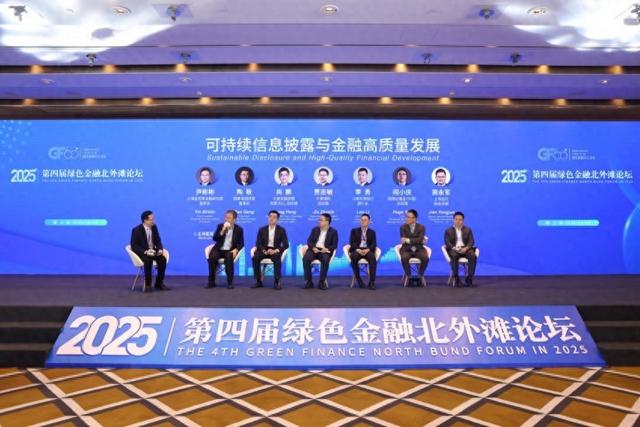
迈向“十五五”:以高质量信息披露驱动绿色金融提质增效
Guan Cha Zhe Wang· 2025-12-26 02:49
Core Viewpoint - The article emphasizes that green finance has become a core strategy for financial institutions, driven by sustainable information disclosure, which guides funds towards low-carbon sectors and promotes high-quality development in the industry [1]. Group 1: Sustainable Information Disclosure - Sustainable information disclosure is effectively driving financial institutions to integrate green development concepts and implement green innovation practices [1]. - There is a need for a systematic and mandatory information disclosure system to enhance transparency and comparability in ESG disclosures, which are currently mostly voluntary [5]. - The future focus of ESG work should revolve around institutionalizing information disclosure, integrating international standards, and leveraging technology to address data quality issues [5]. Group 2: Green Investment Practices - Companies like Guotai Junan Asset Management have integrated ESG indicators into their investment research systems across various financing businesses, achieving recognition in green financial innovation [5]. - ICBC-AXA Asset Management has seen significant growth in green investment, focusing on sectors like energy storage and renewable energy, while also expanding their green product offerings [7]. - Huaxia Wealth Management has incorporated ESG principles into their product design, ensuring that at least 80% of the underlying assets in green financial products are genuinely green [10]. Group 3: Risk Management and Innovation - Roadmap for risk assessment frameworks is crucial, as identifying and managing risks associated with ESG and climate transition is a key challenge for fund management companies [13]. - Jiangnan Rural Commercial Bank has developed a green finance risk management system to support business expansion and enhance risk control through innovative credit products [16]. - Shanghai Trust emphasizes the flexibility of trust systems in supporting green industries, with a focus on long-term capital and sustainable returns [19]. Group 4: Industry Collaboration and Future Directions - The forum highlighted the need for continuous breakthroughs in information disclosure, standard integration, risk management, and technological empowerment to direct financial resources efficiently towards green low-carbon sectors [21]. - Collaboration with various organizations, including NRDC and WBCSD, indicates a collective effort to advance sustainable finance practices [21].

非银机构差异化发展稳健前行
Jin Rong Shi Bao· 2025-12-26 02:37
Core Insights - The non-banking financial institutions (NBFIs) have achieved a record asset scale of 32.43 trillion yuan, contributing long-term funds to industrial chain finance and pension security as the "14th Five-Year Plan" approaches its conclusion [1] - The consumer finance sector has surpassed 1 trillion yuan in loan balances, providing inclusive financial services to over 80 million rural customers [1] - The financing leasing market for high-end equipment manufacturing has exceeded 20 trillion yuan, indicating steady growth in emerging leasing business scenarios [1] Group 1: Industry Development - NBFIs are focusing on their core businesses during the "14th Five-Year Plan" period, with financial companies targeting internal capital flow for enterprises, consumer finance stimulating domestic consumption, and leasing companies addressing equipment financing challenges [2] - Financial leasing companies are introducing flexible financing solutions for manufacturing equipment, while financial companies are providing precise funding for key projects through centralized capital management [2] Group 2: Consumer and Social Impact - Consumer finance companies are embedding services in various consumption scenarios, offering small loans with low interest rates to activate consumer potential [3] - Trust companies are innovating in areas such as pension security and charitable trusts, with the number of registered charitable trusts reaching 2,676 and total assets surpassing 10.632 billion yuan [3] Group 3: Risk Management and Compliance - Compliance and risk management are emphasized as key components of NBFIs' development, with a focus on establishing comprehensive mechanisms for credit issuance, related transactions, and liquidity management [4] - NBFIs are leveraging technology to enhance risk control, with various systems developed to predict and identify fraud and other risks [4] Group 4: Future Directions - NBFIs are aligning with national strategies and trends to better serve the real economy, focusing on optimizing traditional industries and fostering new and future industries [6] - The consumer finance sector is adapting to new consumer demands, while financial leasing is deepening its involvement in sectors like aviation and renewable energy [6] Group 5: Policy Support - Recent policies have been introduced to strengthen business development and risk control, including fiscal subsidies for consumer finance and revised regulations for trust companies [7] - The new management measures for financial leasing companies outline specific requirements for due diligence and risk assessment [7]

银行保险机构资管产品信息披露管理办法出炉
Xin Hua Wang· 2025-12-26 00:25
办法立足"同类业务、相同标准",统一明确三类产品信息披露的基本原则、责任义务、共性内容及内部 管理要求,提升监管一致性。同时,充分尊重三类产品市场定位、客群基础等客观差异,作出针对性安 排。一方面,区分公募和私募产品要求,对公募产品信息披露总体要求更严,披露内容更多,以提升透 明度;对私募产品则参考同业监管实践,在基本披露要求之外,尊重合同约定。另一方面,制定三类产 品各自的信息披露自律规范。 此外,为保障产品业绩比较基准的连贯性,办法要求产品管理人原则上不得调整业绩比较基准。确需调 整业绩比较基准的,产品管理人应当严格履行内部审批程序,并在定期报告和更新产品说明书时披露业 绩比较基准历次调整情况。考虑到部分存量产品历史生命周期较长,办法施行前的历史业绩基准对当前 投资者参考价值相对较小,银行保险机构可以只披露办法施行后的历次业绩比较基准调整情况。 国家金融监督管理总局12月25日对外发布《银行保险机构资产管理产品信息披露管理办法》,规范资产 管理信托产品、理财产品、保险资管产品的信息披露行为,强化投资者合法权益保护。 国家金融监督管理总局有关司局负责人介绍,当前,资产管理信托产品、理财产品、保险资管产品均无 ...
金融监管总局有关司局负责人就《银行保险机构资产管理产品信息披露管理办法》答记者问
Xin Lang Cai Jing· 2025-12-25 12:40
资产管理业务的本质是"受人之托、代人理财"。充分保障投资者的知情权和选择权,是资产管理机构履 行信义义务的必然要求。当前,资产管理信托产品、理财产品、保险资管产品均无专门的信息披露监管 制度,现行要求分散在不同制度中,存在标准不完全一致等问题,亟需构建适合三类资产管理产品特点 的信息披露制度,统一监管规则,强化信息披露行为监管。 登录新浪财经APP 搜索【信披】查看更多考评等级 来源:上海证券报·中国证券网 上证报中国证券网讯 据金融监管总局消息,金融监管总局近日发布《银行保险机构资产管理产品信息 披露管理办法》(以下简称《办法》),有关司局负责人回答了记者提问。 一、《办法》公开征求意见情况如何? 2025年5月23日至6月23日,《办法》向社会公开征求意见。金融机构、专家学者和社会公众积极研提意 见建议。金融监管总局对反馈意见逐条认真研究,充分吸收合理建议。比如,完善产品信息披露渠道有 关表述,便于机构执行和投资者查询;结合机构业务实践,优化现金管理类产品信息披露内容;适当精 简有关表述,对于《关于规范金融机构资产管理业务的指导意见》以及金融监管总局现行制度中的已有 规定,《办法》不再展开重复;优化过渡期 ...
偏爱信托!上市公司认购外贸、百瑞、云信···
Xin Lang Cai Jing· 2025-12-25 12:23
Core Viewpoint - Listed companies are increasingly favoring trust products for managing idle funds, indicating a trend towards stable and risk-controlled investment options in the trust sector [3][9]. Group 1: Company Actions - Zhengqiang Co. announced the use of 30 million yuan of idle funds to subscribe to the Foreign Trade Trust - Xinrui Phase 6 collective trust plan, which offers a fixed annual return of 2.15%-2.75% over a six-month term [3][10]. - Tianyi Co. invested 120 million yuan and 50 million yuan in Yunnan Trust's "Yunxinbao No. 6" and "Yuxiang Seasonal Enjoyment No. 1" collective trust plans, reflecting a strong belief in trust management [5][13]. - Fangda Special Steel successfully redeemed its investment of 300 million yuan in the Foreign Trade Trust - Xincheng No. 8 collective trust plan, recovering the full principal and earning 7.5333 million yuan in investment returns [4][12]. Group 2: Trust Companies - Foreign Trade Trust, with over 2.15 trillion yuan in managed assets, is a leading player in the industry, particularly noted for its securities trust business, which accounts for 85.25% of its total assets [7][14]. - BaiRui Trust, a state-owned enterprise under the State Power Investment Corporation, has built a strong reputation in fixed-income investment products, showcasing the trust of listed companies in state-owned financial institutions [7][14]. - Yunnan Trust, one of the earliest trust companies involved in the securities market, has attracted significant investments from Tianyi Co. due to its innovative product offerings and long-standing market presence [7][14]. Group 3: Market Trends - The trend among listed companies to invest in fixed-income trust products highlights a preference for standardized net value products, which are perceived as stable and reliable [6][13]. - The collaboration between listed companies and leading trust firms like Foreign Trade Trust, BaiRui Trust, and Yunnan Trust indicates a growing synergy that benefits both parties, enhancing investment opportunities and financial returns [7][14].


云南信托副总裁许荣华:探索绿色信托差异化特色发展之路 未来可期
Zheng Quan Ri Bao Wang· 2025-12-25 12:19
Core Viewpoint - Yunnan Trust's "Yunxin Yunci - Green Base - Yunnan Rare and Endangered Species Protection Charity Trust" has been selected as one of the top ten green trust cases for 2025, highlighting the company's commitment to ecological restoration and endangered species protection [1][2]. Group 1: Green Trust Development - Yunnan Trust aims to develop a differentiated green trust path by aligning with the national "dual carbon" strategy, focusing on risk control and ecological co-construction [2][4]. - The company prohibits funding for industries that are phased out by the state or violate environmental policies, establishing a robust risk control framework for green finance [2]. - In 2023, Yunnan Trust launched Yunnan's first industry assistance green charity trust, supporting cattle breeding and forage planting, which has improved local vegetation coverage and provided stable income for struggling farmers [2]. Group 2: Biodiversity Protection - The selected charity trust has implemented nine specialized projects focusing on the habitat protection of endangered species like the Yunnan golden monkey, creating a comprehensive protection system that includes vegetation restoration and species conservation [2][3]. - Yunnan Trust has pioneered the first direct investment trust products in the carbon trading market, contributing to the development of green finance [3]. Group 3: Future Opportunities - The "14th Five-Year Plan" period is crucial for achieving carbon peak goals, with stricter requirements for green low-carbon development in key industries [4]. - Yunnan Trust sees significant opportunities in green transformation, planning to deepen its services in green trust loans, asset securitization, and green equity investments [4]. - The company aims to integrate family governance and green charity trusts for high-net-worth clients with philanthropic intentions, providing customized green public participation solutions [4].
云南信托慈善信托项目赋能自闭症儿童的艺术疗愈
Zheng Quan Ri Bao Wang· 2025-12-25 10:14
慈善信托的本质是"信任"。每一份托付,都承载着改变的期待。站在聚光灯下的此刻,看到的是更远的 路。荣誉是加油站,而非终点站。前行路上,愿永远保持初心的温度、专业的精度,不负每一份厚重的 信任。慈善是一场马拉松,今天的掌声属于昨天,目光必须坚定地投向那些仍需光照的角落。在公益慈 善的道路上,云南信托将步履不停、笃行不辍。 云南信托联合善源慈善安心驿站开设了"艺起成长·星光点亮计划"自闭症青年艺术疗愈公益课堂。在专 业疗愈师们的引导下,孩子们从触觉感知训练开始,逐步经历图形构建、手部肌肉激活等系列过程。这 一循序渐进的干预路径,不仅帮助他们提升了生活自理与社交表达能力,更使来自困境家庭的孤独症儿 童在身体机能、心理状态与社会交往三方面获得系统赋能。目前,课程项目已累计开展17期,支持45组 家庭,服务400余人次,创作艺术疗愈作品85件。 近日,云南信托"善本信托-云慈-艺苑慈善信托"项目,先后荣获两大公益慈善类奖项。12月12日,被华 夏时报评选为"2025年度金融助残优秀案例";12月16日,被上海证券报评选为"诚信托·最佳公益慈善信 托产品奖"。两大殊荣体现了行业主流媒体对云南信托慈善信托业务实践的高度认可 ...
云南信托科技金融项目积极服务科创类上市公司
Zheng Quan Ri Bao Wang· 2025-12-25 09:16
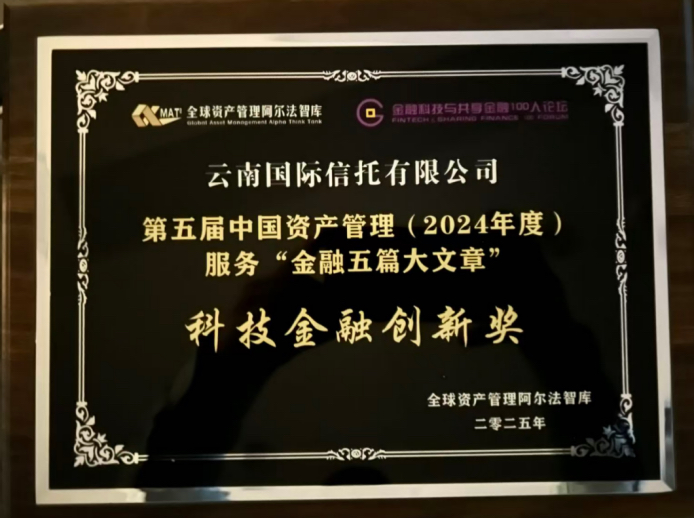
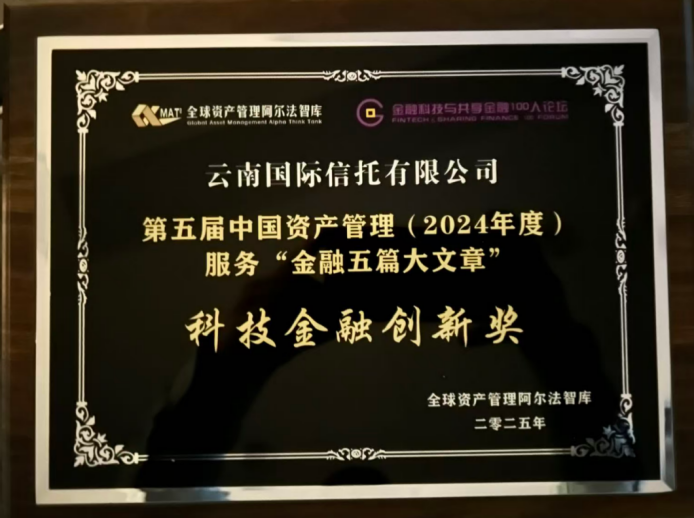
本报讯 (记者袁传玺)2025年12月15日,云南信托服务科创类上市公司的科技金融项目荣获科技金融 创新奖。 荣获本次科技金融创新奖的项目为云南信托联合信银理财助力科创类上市公司产业升级发展的特色服 务,为企业发展提供了涵盖"上市前—上市中—上市后"三个阶段的一站式综合服务支持,展现了信托机 构在支持科技创新与绿色制造中的独特价值:打破传统金融机构的边界,以"在场、懂客户、懂节奏"的 综合能力,助力企业产能扩张,成为信托服务实体经济的标杆案例。该项目以机制创新为核心,以资源 协同为纽带,重新定义了信托机构在科技金融中的角色——从"融资支持者"升级为"战略共建者"。 未来,云南信托将持续深化"全周期+定制化"服务能力,为科技创新与产业升级注入更多金融动能。 本届评选在于引导资管机构将自身发展融入国家发展大局。金融"五篇大文章"不仅是政策要求,更是资 管行业实现差异化竞争、培育新质生产力的关键路径。 ...
云南信托荣获科技金融创新奖
Jin Rong Jie· 2025-12-25 06:21
未来,云南信托将持续深化"全周期+定制化"服务能力,为科技创新与产业升级注入更多金融动能。 信托频道更多独家策划、专家专栏,免费查阅>> 责任编辑:栎树 2025年12月15日,由鸿儒金融教育基金会和《当代金融家》杂志组织的"资管金泉奖・第五届中国资产 管理(2024 年度)领军榜"颁奖典礼成功举办。云南信托服务科创类上市公司的科技金融项目荣获科技 金融创新奖。 本届评选在于引导资管机构将自身发展融入国家发展大局。金融"五篇大文章"不仅是政策要求,更是资 管行业实现差异化竞争、培育新质生产力的关键路径。 荣获本次科技金融创新奖的项目为云南信托联 合信银理财助力科创类上市公司产业升级发展的特色服务,为企业发展提供了涵盖"上市前—上市中— 上市后"三个阶段的一站式综合服务支持,展现了信托机构在支持科技创新与绿色制造中的独特价值: 打破传统金融机构的边界,以"在场、懂客户、懂节奏"的综合能力,助力企业产能扩张,成为信托服务 实体经济的标杆案例。该项目以机制创新为核心,以资源协同为纽带,重新定义了信托机构在科技金融 中的角色——从"融资支持者"升级为"战略共建者"。 ...
新高教集团:云爱集团与中原信托订立合作协议 涉资约4.3亿元
Zhi Tong Cai Jing· 2025-12-25 03:53
Group 1 - The core point of the article is that New Higher Education Group has entered into a cooperation agreement with Zhongyuan Trust, involving a total payment of up to RMB 430 million [2] - The agreement aims to provide New Higher Education Group with comprehensive and convenient differentiated trust services and financial advisory services [2] - The board believes that this cooperation will optimize the efficiency of capital allocation and provide long-term financial support to improve the quality of education at its affiliated institutions, contributing to the group's high-quality development [2]