
资管新规

Search documents
骤降超1400亿!上市公司理财规模“腰斩”,为何突然 “降温”?
证券时报· 2026-03-26 11:58
Core Viewpoint - The scale of financial product subscriptions by listed companies has significantly decreased in 2026 compared to 2025, influenced by various macroeconomic and regulatory factors [1][5]. Group 1: Subscription Scale and Comparison - As of March 25, 2026, over 460 listed companies subscribed to financial products, with a total subscription amount close to 1391.70 billion RMB, a decrease of over 1400 billion RMB compared to the same period in 2025 [1][3]. - In 2025, 810 listed companies participated in subscriptions, with a total amount reaching 2819.19 billion RMB, indicating a near halving in the number of companies and a significant reduction in the overall scale of subscriptions [3][5]. Group 2: Reasons for Decrease in Subscription - The reduction in large financial product subscriptions is attributed to changes in market conditions, company operational needs, and stricter regulatory policies [5]. - Companies are increasingly prioritizing cash retention over long-term financial investments due to declining yields on financial products and a focus on reducing financial costs by repaying debts [5]. - The implementation of new asset management regulations has led to the withdrawal of guaranteed financial products, further constraining the scale of subscriptions [5][8]. Group 3: Changes in Financial Product Structure - Despite the overall decline in subscription amounts, the structure of financial products is becoming more diversified, with a shift towards asset management products and bank financial products [7][8]. - The amount subscribed to asset management products increased from 9.11 billion RMB in 2025 to 13.97 billion RMB in 2026, indicating a trend towards more varied investment strategies [7]. - Companies are moving away from solely relying on structured deposits to a more diversified approach that includes bank and securities company financial products, reflecting a fundamental shift in cash management strategies [8]. Group 4: Some Companies Increasing Financial Investment - Certain companies, such as Ningde Times and Shanghai Jahwa, have announced increases in their financial investment limits for 2026, indicating a strategic move to optimize fund usage and enhance returns [10]. - Ningde Times plans to use up to 1800 billion RMB for financial investments, significantly higher than the previous year's limit of 800 billion RMB [10]. - Shanghai Jahwa intends to increase its financial investment from 30 billion RMB in 2025 to 40 billion RMB in 2026, focusing on high-security, liquid low-risk financial products [10].


理财公司监管评级政策点评:债市热点聚焦
GF SECURITIES· 2026-03-20 11:34
Report Industry Investment Rating No information provided regarding the report industry investment rating. Core Viewpoints of the Report - The newly - introduced "Interim Measures for the Regulatory Rating of Wealth Management Companies" aims to implement differentiated supervision on wealth management companies of different risk levels, guiding the industry towards standardized transformation and stable development [3][8]. - The implementation of the regulatory rating will accelerate the differentiation of the industry pattern, forcing institutions to return to the origin of net - value operation, optimize business models, and promote the unification and standardization of the large asset management industry's regulatory standards [3][37]. - The wealth management market has experienced a cycle of "transformation pain, scale expansion, short - term callback, and stable growth". The proportion of fixed - income products has increased, and the industry is facing challenges in product diversification [3][25][32]. Summary by Directory I. Core Content of the "Measures" and the Evolution of Wealth Management Industry Supervision (1) Core Framework: Six - Dimension Scoring and Differentiated Graded Supervision - The "Interim Measures for the Regulatory Rating of Wealth Management Companies" constructs a rating system focusing on risk management and asset management capabilities. As of December 2025, 32 wealth management companies' outstanding wealth management products accounted for 92% of the market [8]. - The rating system includes six elements: corporate governance, asset management ability, risk management, information disclosure, investor rights protection, and information technology. The weights of asset management ability and risk management are both 25%, with a total of 50% [9]. - The regulatory rating uses both positive incentives and negative constraints. Higher - rated companies receive more support and are encouraged to innovate, while lower - rated companies face stricter supervision [12]. (2) Regulatory System Iteration: From Framework Building to Refined Supervision - Since 2018, the wealth management regulatory system has taken the "New Asset Management Regulations" as the top - level design, forming a closed - loop regulatory framework from products to institutions and from business to entities [14]. - Key policies include the "New Asset Management Regulations" in 2018, the "Measures for the Supervision of Commercial Bank Wealth Management Business" in 2018, and the "Interim Measures for the Regulatory Rating of Wealth Management Companies" in 2026 [15][18][19]. (3) Wealth Management Rating: Inheriting Common Features and Implementing Precise Policies According to Industry Attributes - The regulatory rating of wealth management companies is highly consistent with the rating logic of industries such as trusts, insurance asset management, and banks, and is an important complement to the unified financial regulatory framework [21]. - Different industries' ratings have different orientations. For example, trust company ratings focus on risk resolution and transformation, insurance asset management ratings focus on asset - liability matching, and commercial bank ratings focus on core indicators such as capital, assets, and liquidity [22]. II. Re - shaping of the Wealth Management Market Pattern and Outlook on the Impact of Rating Policies (1) Market Pattern Evolution: Stable Scale Growth and Concentration towards Fixed - Income Products - The wealth management market has experienced a cycle of "transformation pain, scale expansion, short - term callback, and stable growth". The number and proportion of broken - net products of bank wealth management subsidiaries have fluctuated cyclically since 2018, reaching a peak in 2022 and then declining [25][26]. - The number of wealth management products decreased from 2018 to 2021 and then stabilized, while the market scale bottomed out in 2019 and then increased. As of March 17, 2026, the total market scale reached about 30.9 trillion yuan, with 47,000 products [26][29]. - Fixed - income products have become the dominant force in the wealth management market, with their proportion rising from about 60% in 2018 to about 97% in 2026. The industry is facing challenges in product diversification [32]. (2) Industry Pattern Outlook: Coexistence of Opportunities and Challenges, Promoting the Survival of the Fittest - The implementation of the regulatory rating will accelerate the differentiation of the industry pattern. Leading bank - affiliated wealth management companies are likely to obtain high - level ratings and gain more advantages, while small and medium - sized companies may face restrictions [37]. - The era of small - scale product marketing and valuation smoothing mechanisms is over. The rating system will force wealth management companies to return to the origin of net - value operation, optimize business models, and improve information disclosure [39]. - The rating will guide the optimal allocation of funds, standardize the order of the large asset management market, and promote the unification of regulatory standards among different asset management industries [40].

”税费改革五部曲“系列报告之四:公募基金三十年:发展脉络与机构配置策略
Changjiang Securities· 2026-03-04 09:45
Group 1 - The report highlights the evolution of the public fund industry over the past 30 years, emphasizing the role of regulatory policies in promoting high-quality development through tax incentives and fee reforms [4][15][17] - The bond fund sector has grown significantly since the introduction of the first bond fund in 2002, filling a critical gap in the market for low-risk investment options [7][20][21] - The report notes that the asset allocation behavior of major institutional investors such as banks, insurance companies, and wealth management firms shows significant differences, with banks primarily favoring bond funds, while insurance companies have a more diversified approach [9][59] Group 2 - The transition to net asset value management initiated by the asset management regulations in 2018 has created a specific development window for amortized cost bond funds, which have seen limited new approvals since then [8][25][28] - The report discusses the structural changes in the bond market, particularly the shift in holdings from policy financial bonds to credit bonds, reflecting the changing needs of institutional investors [10][35] - The analysis of recent market adjustments indicates a trend of funds flowing from short-term and medium-term pure bond funds to mixed secondary bond funds, with a notable shift from interest rate bonds to credit bonds and convertible bonds [10][21][35] Group 3 - The report provides insights into the differentiated fund allocation strategies among banks, with a significant concentration in bond funds, particularly medium to long-term pure bond funds, which account for 87.70% of their total fund holdings [43][44] - Insurance funds exhibit a more diversified allocation, with 58% of their holdings in equity funds and 31% in bond funds, reflecting their operational characteristics and regulatory guidance [59] - The report identifies three distinct categories of customized funds, highlighting their characteristics and the concentration of holdings by single institutions, which can lead to liquidity risks [55][58]

“税费改革五部曲”系列报告之四:公募基金三十年:发展脉络与机构配置策略
Changjiang Securities· 2026-02-27 05:01
Core Insights - The report highlights the evolution of the public fund industry over the past 30 years, emphasizing the significant role of bond funds since their inception in 2002, which filled a critical market gap for low-risk investment options [4][8][18] - The report indicates that the public fund industry has undergone a fee reform process lasting over two years, culminating in new sales fee regulations that took effect at the end of 2025, aimed at promoting high-quality development [4][17] - It notes a divergence in fund allocation strategies among major institutional investors such as banks, insurance companies, and wealth management firms, with banks primarily favoring bond funds, while insurance companies adopt a more diversified approach, including equities [10][62] Industry Development - The public fund industry began in 1998 with the establishment of two closed-end funds, leading to the launch of the first bond fund in 2002, which provided a low-risk, stable return investment alternative [8][22] - The bond fund market has experienced several growth phases, notably during the 2008 financial crisis and subsequent market fluctuations, with significant increases in bond fund assets observed in 2010-2011 and 2015 [23][24] Regulatory Evolution - Regulatory measures have consistently focused on tax incentives and fee reforms to support the industry's growth, with key policies introduced from 1998 to 2025 aimed at enhancing investor protection and promoting high-quality development [19][21] Bond Fund Characteristics - The report discusses the transition to net asset value (NAV) management for bond funds, particularly the amortized cost method bond funds, which have seen limited new approvals since 2022 due to stricter regulatory requirements [9][30] - It highlights that the majority of existing amortized cost bond funds have issuance sizes not exceeding 8 billion, with a significant number of institutions holding no more than two such funds [30][33] Institutional Allocation Behavior - Banks dominate the bond fund market, holding approximately 5.83 trillion in total fund assets, with bond funds accounting for 87.70% of their holdings, primarily in medium to long-term pure bond funds [46][47] - Insurance companies exhibit a more diversified fund allocation, with 58% of their holdings in equity funds and 31% in bond funds, reflecting their longer-term liabilities and regulatory encouragement to increase equity investments [62] Market Adjustments and Trends - The report notes that the bond market has experienced significant adjustments in 2025, with a noticeable shift in fund flows from short- and medium-term pure bond funds to mixed secondary bond funds, indicating changing investor preferences [11][38] - It also mentions that the asset allocation within bond funds is shifting from policy financial bonds to credit bonds, reflecting the evolving market environment and institutional needs [11][38]
中信建投:本轮存款搬家转向标准化资本市场工具 居民财富配置走向多元化投资组合
智通财经网· 2026-02-04 02:25
Group 1 - The core viewpoint is that the asset management new regulations have shifted residents' financial logic from reliance on "guaranteed returns" to a focus on "risk-return matching" [1] - The current trend of "deposit migration" reflects a passive defensive behavior in response to declining guaranteed deposit yields, with residents reallocating assets from non-standard to standardized capital market tools [2] - The transition from non-standard to standardized assets is driven by the need for diversified investment portfolios, indicating a deepening trend in financial market development [1] Group 2 - Financial institutions are adapting to the trend of low-risk preference by constructing differentiated systems to meet diverse investor needs [3] - Banks are increasing the supply of "fixed income plus" strategies and flexible term products to cater to the demand for stable returns [3] - Public funds and distribution agencies are transforming from "seller-driven sales" to "buyer-focused advisory" to guide long-term rational investment through comprehensive product matrices and account services [3]

从私行专属到“1元起购”,银行理财子掘金港股IPO
Di Yi Cai Jing· 2026-01-27 13:02
Core Viewpoint - The surge in Hong Kong IPOs has attracted bank wealth management subsidiaries, which are increasingly participating in the market to enhance their equity investment capabilities and offer new products to investors [2][8]. Group 1: Market Trends - The Hong Kong IPO market has seen significant growth, with 12 new listings as of January 27, raising a total of HKD 34.747 billion, a year-on-year increase of 480.89% [3]. - Major companies such as Wallen Technology and MiniMax have successfully launched IPOs, indicating a strong interest in hard technology sectors [3][4]. Group 2: Bank Participation - Bank wealth management subsidiaries, such as ICBC Wealth Management, have become active participants in Hong Kong IPOs, with ICBC participating in over 80% of the projects it locked in, achieving a 100% success rate with a maximum single investment return of 165.45% [4][5]. - ICBC Wealth Management has focused its investments on hard technology and high-end manufacturing sectors, including semiconductor and AI companies [5]. Group 3: Product Development - Wealth management subsidiaries are embedding Hong Kong IPO capabilities into their product offerings, with ICBC launching "fixed income + Hong Kong IPO" strategy products aimed at private banking clients [6][7]. - The minimum investment thresholds for these products are set at RMB 200,000 and RMB 1 million, respectively, while some banks are working to lower barriers for retail investors [7]. Group 4: Industry Dynamics - The shift of wealth management funds towards Hong Kong IPOs is driven by the need for higher returns in a low-interest-rate environment, as traditional fixed-income assets are no longer sufficient [8]. - Participation in Hong Kong IPOs allows wealth management firms to enhance their equity investment capabilities and potentially achieve excess returns through strategic investments [8]. Group 5: Challenges Ahead - Despite the opportunities, wealth management firms face challenges in project acquisition, research capabilities, and risk management, necessitating the establishment of a robust primary market research system [9]. - Firms must navigate competition for quality cornerstone shares, enhance cross-market research capabilities, and manage risks associated with market volatility and currency fluctuations [9].
这家券商陷3.5亿“通道”迷局漩涡!谁该为“假公章”买单?
券商中国· 2026-01-25 23:25
Core Viewpoint - The article discusses a legal dispute involving Jinlong Co., Ltd. and Zhongshan Securities, stemming from a channel business transaction that occurred a decade ago, highlighting the ongoing risks and responsibilities associated with such financial arrangements [2][3][4]. Group 1: Background of the Dispute - The dispute originated from a 3.5 billion yuan transaction where Everbright Bank's Changchun branch claims its funds were misappropriated through fraudulent activities involving employees and the actual controller of the financing party [2][4]. - The lawsuit seeks a total of 489 million yuan, including damages for the occupied funds, as Everbright Bank alleges that the involved parties should bear joint liability for the losses incurred [4][11]. Group 2: Legal Proceedings and Historical Context - This is not the first lawsuit; Everbright Bank previously sued the Wuxi branch of China Merchants Bank in 2015 over the same issue but lost the case [6][8]. - The Supreme Court ruled that the agreements involved were fraudulent and did not reflect the true intentions of Everbright Bank, leading to a dismissal of their claims [8][9]. Group 3: Implications for Channel Business - The article emphasizes the ongoing scrutiny of channel business practices, particularly after the introduction of asset management regulations aimed at curbing such activities [11][12]. - Judicial precedents indicate that channel providers may be held liable for losses, as seen in cases where trust companies were required to compensate investors for negligence in managing channel business [10][12].





37万亿的基金圈,“摩擦”越来越多了
Sou Hu Cai Jing· 2026-01-23 04:13
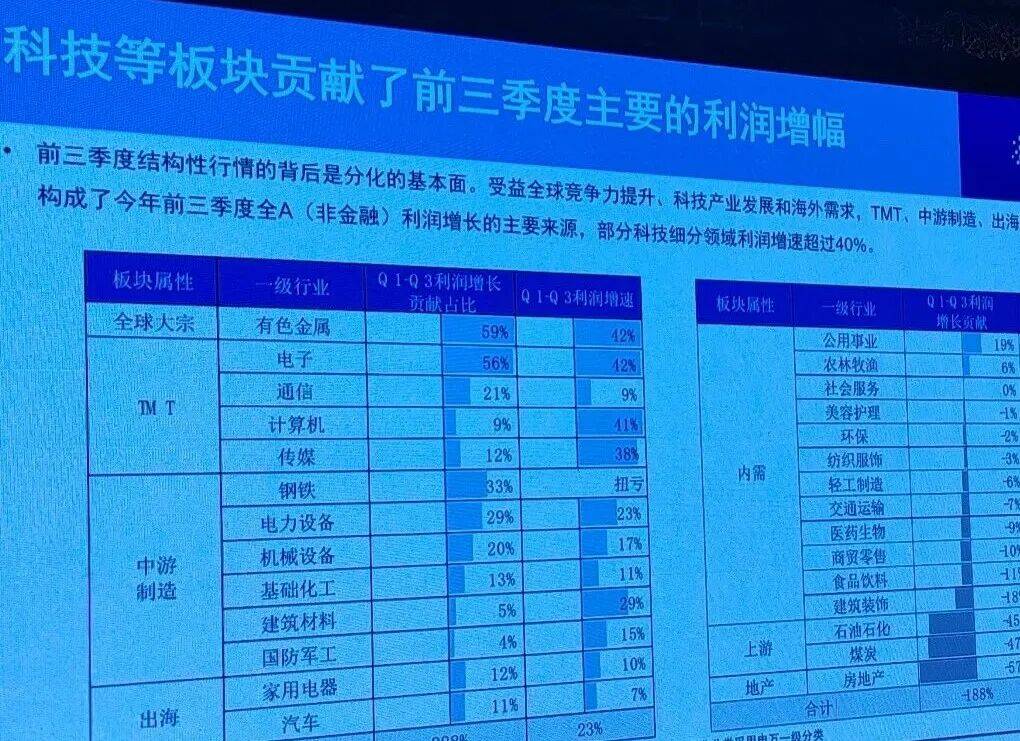
Group 1 - The core viewpoint of the article highlights the significant differentiation and friction within the public fund industry, despite its seemingly prosperous appearance, with a notable disparity between the number of fund managers and the number of listed companies in the A-share market [1][2] - The article mentions that the management scale of public funds has increased by 37 trillion, while the number of industry professionals remains around 33,000, indicating a potential inefficiency in resource allocation [1][2] - The article points out that while the market index has risen to 4,100 points, the main profit growth has come from technology sectors, with domestic demand remaining weak and the real estate sector continuing to decline [1][2] Group 2 - The article discusses a recent legal case where a fund manager is being sued by investors, which reflects the growing trend of litigation in the asset management sector [3][9] - It emphasizes that in asset management disputes, investors often struggle to claim compensation based solely on market downturns or product value declines, as the principle of "buyer beware" has become prevalent post-regulatory reforms [4][6] - The article highlights the importance of compliance and the obligation of fund companies to provide adequate risk warnings, while also urging investors to understand the nature of high-volatility strategies [6][24] Group 3 - The article introduces a specific case involving a fund manager who previously managed over 100 billion but faced significant performance declines, leading to investor lawsuits [12][18] - It discusses the concept of "style drift," where a fund's investment focus shifts significantly, potentially leading to investor dissatisfaction if the performance does not meet expectations [15][20] - The article notes that the recent regulatory changes regarding style drift may provide investors with new grounds for litigation, reflecting a shift in the legal landscape for fund management [18][24] Group 4 - The article outlines the shared responsibility of fund managers and sales institutions in ensuring suitability obligations, emphasizing the need for proper risk assessment and matching products to investors' risk profiles [24] - It highlights the challenges faced by the industry, including exaggerated marketing claims and the potential for investors to purchase products beyond their risk tolerance [24][25] - The article concludes with insights on the impact of fee reductions on the asset management ecosystem, affecting the revenue of distribution channels and their ability to provide value-added services [25]
江苏国信营收持续承压,信托子公司25亿元债权追索路漫长
Xin Lang Cai Jing· 2026-01-21 08:29
Core Viewpoint - Jiangsu Guoxin (002608.SZ) is experiencing a decline in revenue across all quarters of 2025, with profit growth heavily reliant on non-core business support, indicating significant pressure on its operational fundamentals [1][7]. Group 1: Revenue and Profitability - Jiangsu Guoxin's revenue for Q1 2025 was 77.60 billion yuan, a substantial decrease of 14.54% year-on-year; the half-year report showed revenue of 156.9 billion yuan, down 11.75% year-on-year; and the first three quarters reported revenue of 261.5 billion yuan, a decline of 6.56% year-on-year [2][8]. - The company's net profit attributable to shareholders increased by 10.52% in the first three quarters of 2025, but this growth was not due to improvements in core business, instead relying on cost control and increased investment income [2][8]. - In the first half of 2025, the company's period expenses were 8.03 billion yuan, a decrease of 515.72 million yuan year-on-year, with a period expense ratio of 5.26%, up 0.33 percentage points year-on-year [2][8]. Group 2: Financial Risks - The company's accounts receivable increased by 21.39% year-on-year, significantly outpacing revenue growth, indicating potential risks in revenue recognition quality [3][9]. - The coverage ratio of cash to current liabilities was 86.99%, raising concerns about short-term debt repayment capabilities [3][9]. - The interest-bearing debt ratio reached 37.5%, with the scale of debt continuing to rise, exacerbating market concerns regarding cash flow pressure [3][9]. Group 3: Subsidiary Performance and Legal Risks - Jiangsu Trust, a core asset of Jiangsu Guoxin's financial sector, reported a slight decline in revenue to 3.13 billion yuan, down 0.11% year-on-year, and a net profit of 2.567 billion yuan, a decrease of 9.64% year-on-year [4][11]. - The net interest income for Jiangsu Trust has been negative for two consecutive years, with a figure of -31.63 million yuan in 2025, reflecting pressure on asset quality [4][11]. - Jiangsu Trust is involved in a legal dispute over a 2.5 billion yuan trust loan, with the defendant facing liquidity issues, complicating the recovery of funds despite a favorable court ruling [5][11]. Group 4: Management Changes and Future Outlook - The management team of Jiangsu Guoxin underwent a significant restructuring at the end of 2025, with new leadership tasked with revitalizing the core business, transforming the trust operations, and addressing legal risks [6][12]. - The company faces uncertainties due to recent personnel changes, including the resignation of key executives amid a corruption investigation, raising concerns about internal governance [6][12].

金价强劲开局 国有银行率先上调个人黄金投资门槛
Nan Jing Ri Bao· 2026-01-07 23:35
Core Viewpoint - The Industrial and Commercial Bank of China (ICBC) has announced an increase in the risk assessment requirements for personal customers engaging in gold accumulation business, reflecting a proactive approach to risk management in response to market volatility and regulatory requirements [1][5]. Group 1: Announcement Details - Starting from January 12, 2026, personal customers must achieve a risk assessment result of C3 (balanced) or higher to engage in gold accumulation activities, which includes account opening and investment plans [2]. - Existing customers with valid risk assessment results and signed risk disclosure documents are exempt from re-evaluation [2]. - The announcement raises the entry threshold for personal customers in the gold accumulation business, which previously allowed those with a C1 (conservative) rating to participate [2]. Group 2: Industry Trends - ICBC is the first major commercial bank this year to raise the investment threshold for personal gold investments, following similar adjustments by other banks last year [3]. - Other banks, such as Ningbo Bank and Citic Bank, have also implemented higher risk assessment requirements for gold accumulation business, indicating a trend in the industry towards stricter investment criteria [3]. - The minimum investment amount for gold accumulation has been consistently increasing across various banks, with many now setting the threshold at one thousand yuan [3]. Group 3: Rationale Behind Adjustments - The adjustments are seen as a response to regulatory requirements aimed at ensuring that financial products are sold to appropriate investors, thereby preventing potential disputes arising from risk mismatches [5]. - The current high volatility in gold prices necessitates a shift in banks' risk management strategies from reactive to proactive measures [5]. - The move is expected to guide rational investment behavior among the public and maintain stability in the financial market [5][6].
