饰品

Search documents
潮宏基(002345):公司信息更新报告:2025年归母净利润预计高增,渠道拓展、品牌升级
KAIYUAN SECURITIES· 2026-01-13 14:53
Investment Rating - The investment rating for the company is "Buy" (maintained) [1] Core Insights - The company is expected to achieve a significant increase in net profit attributable to shareholders in 2025, with a forecasted growth of 125% to 175%, resulting in a net profit of 436 million to 533 million yuan [5] - The company has successfully expanded its store network, reaching a total of 1,668 stores by the end of 2025, with a net increase of 163 stores during the year [6] - The company is enhancing its international presence, particularly in Southeast Asia, demonstrating the cross-cultural appeal of its designs [6] - The company is focusing on product differentiation and has launched new products that blend traditional culture with modern fashion [7] - The financial projections indicate a steady increase in revenue and net profit over the next few years, with expected revenues of 8.52 billion yuan in 2025 and 10.46 billion yuan in 2026 [9] Financial Summary - The company’s revenue is projected to grow from 5.9 billion yuan in 2023 to 12.56 billion yuan in 2027, reflecting a compound annual growth rate (CAGR) of approximately 20.1% [9] - The net profit attributable to shareholders is expected to rise from 333 million yuan in 2023 to 960 million yuan in 2027, with a notable increase of 148.2% in 2025 [9] - The earnings per share (EPS) is forecasted to increase from 0.38 yuan in 2023 to 1.08 yuan in 2027, indicating strong profitability growth [9] - The price-to-earnings (P/E) ratio is projected to decrease from 34.6 in 2023 to 12.0 in 2027, suggesting an attractive valuation over time [9]

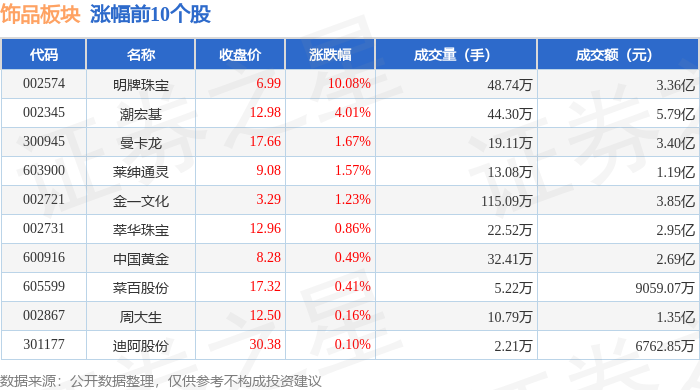
饰品板块1月13日涨0.69%,明牌珠宝领涨,主力资金净流出3446.03万元
Zheng Xing Xing Ye Ri Bao· 2026-01-13 09:00
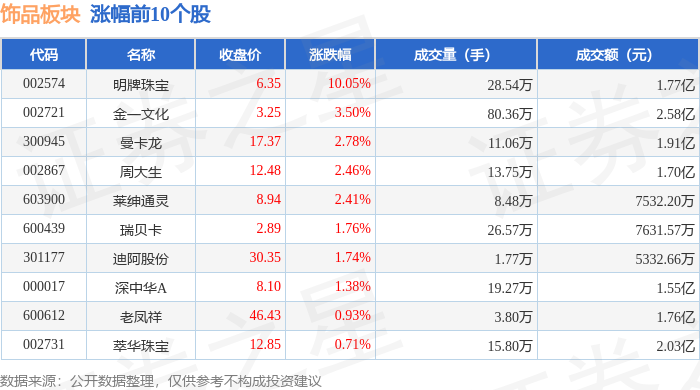
Market Overview - The jewelry sector increased by 0.69% on January 13, with Mingpai Jewelry leading the gains [1] - The Shanghai Composite Index closed at 4138.76, down 0.64%, while the Shenzhen Component Index closed at 14169.4, down 1.37% [1] Individual Stock Performance - Mingpai Jewelry (002574) closed at 6.99, up 10.08% with a trading volume of 487,400 shares and a transaction value of 336 million [1] - Chao Hong Ji (002345) closed at 12.98, up 4.01% with a trading volume of 443,000 shares and a transaction value of 579 million [1] - Mankalon (300945) closed at 17.66, up 1.67% with a trading volume of 191,100 shares and a transaction value of 340 million [1] - Other notable performances include Ying Shen Tong Ling (603900) up 1.57%, Jin Yi Culture (002721) up 1.23%, and Benhua Jewelry (002731) up 0.86% [1] Capital Flow Analysis - The jewelry sector experienced a net outflow of 34.46 million from institutional investors, while retail investors saw a net inflow of 28.50 million [2] - The overall capital flow indicates that retail investors are more active in the sector compared to institutional investors [2] Detailed Capital Flow for Key Stocks - Mingpai Jewelry had a net inflow of 52.62 million from institutional investors, but a net outflow of 34.70 million from retail investors [3] - Mankalon saw a net inflow of 13.14 million from institutional investors, with a net outflow of 20.44 million from retail investors [3] - Jin Yi Culture had a net inflow of 8.88 million from institutional investors, while retail investors experienced a net outflow of 15.44 million [3] - Other stocks like China Gold (600916) and Lao Feng Xiang (600612) also showed mixed capital flows with varying levels of institutional and retail investor activity [3]



饰品板块1月12日涨1.19%,明牌珠宝领涨,主力资金净流出2954.31万元
Zheng Xing Xing Ye Ri Bao· 2026-01-12 09:04
证券之星消息,1月12日饰品板块较上一交易日上涨1.19%,明牌珠宝领涨。当日上证指数报收于 4165.29,上涨1.09%。深证成指报收于14366.91,上涨1.75%。饰品板块个股涨跌见下表: 以上内容为证券之星据公开信息整理,由AI算法生成(网信算备310104345710301240019号),不构成投资建议。 | 代码 | 名称 | 收盘价 | 涨跌幅 | 成交量(手) | 成交额(元) | | --- | --- | --- | --- | --- | --- | | 600735 | ST新华锦 | 5.77 | -4.94% | 27.94万 | 1.68亿 | | 002345 | 潮宏基 | 12.48 | -1.03% | 20.15万 | 2.53亿 | | 665569 | 菜自股份 | 17.25 | -0.29% | 5.00万 | 8641.85万 | | 000026 | 飞亚达 | 17.41 | 0.06% | 16.90万 | 2.94亿 | | 600916 | 中国复学 | 8.24 | 0.49% | 25.83万 | 2.13亿 | | 002731 | 幸华 ...
饰品板块1月9日涨0.98%,ST新华锦领涨,主力资金净流出2201.27万元
Zheng Xing Xing Ye Ri Bao· 2026-01-09 08:54
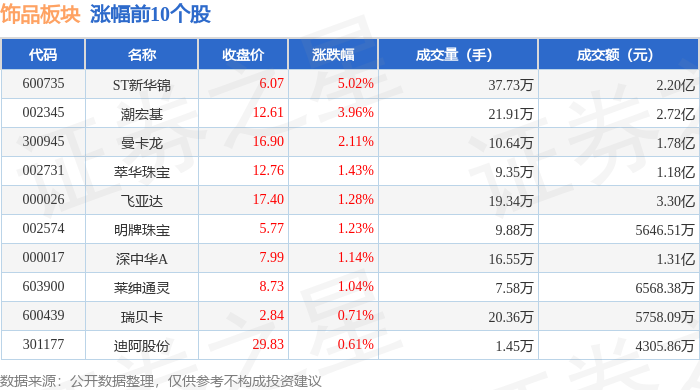
| 代码 | 名称 | 收盘价 | 涨跌幅 | 成交量(手) | 成交额(元) | | | --- | --- | --- | --- | --- | --- | --- | | 600735 | ST新华锦 | 6.07 | 5.02% | 37.73万 | | 2.20亿 | | 002345 | 測宏基 | 12.61 | 3.96% | 21.91万 | | 2.72亿 | | 300945 | 曼卡龙 | 16.90 | 2.11% | - 10.64万 | | 1.78亿 | | 002731 | 幸华珠宝 | 12.76 | 1.43% | 9.35万 | | 1.18亿 | | 000026 | 飞亚达 | 17.40 | 1.28% | 19.34万 | | 3.30亿 | | 002574 | 明牌珠宝 | 5.77 | 1.23% | 9.88万 | 5646.51万 | | | 000017 | 深中华A | 7.99 | 1.14% | 16.55万 | | 1.31亿 | | 603900 | 英细通灵 | 8.73 | 1.04% | 7.58万 | 6568.38万 | | | ...

银价飙涨,有设计师告别银饰做铜饰,商家频繁换价签
Qi Lu Wan Bao· 2026-01-09 04:44
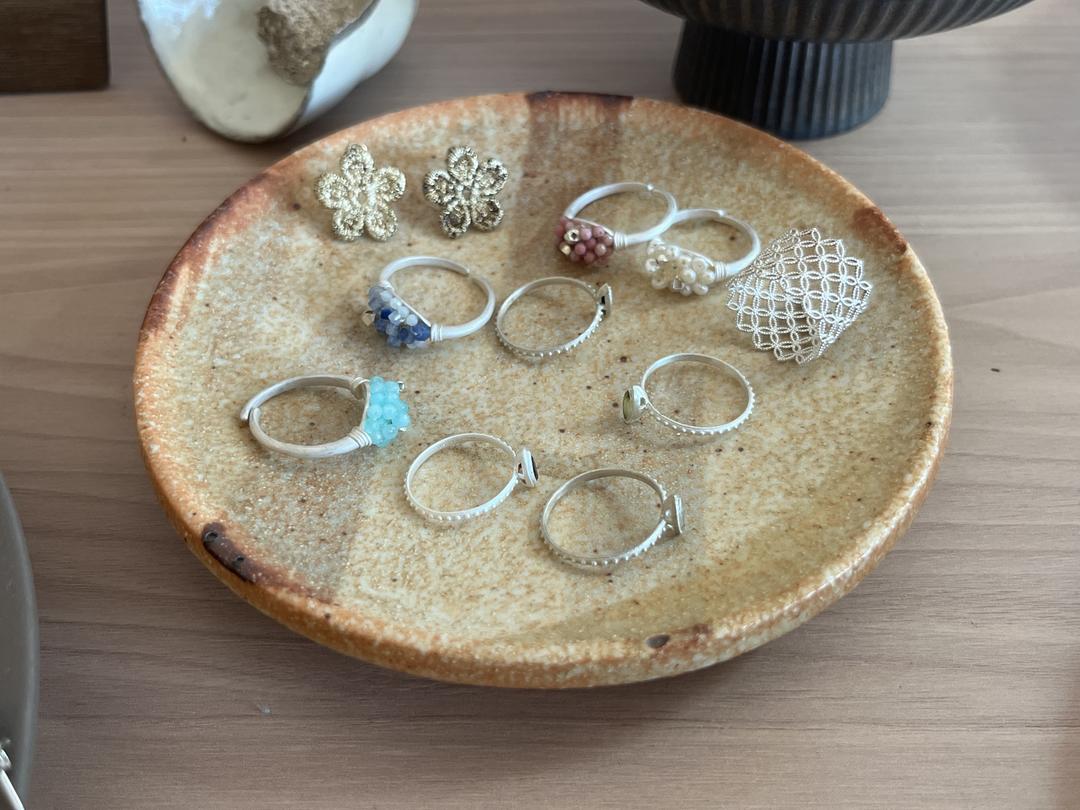
Core Viewpoint - The recent surge in silver prices, rising from approximately 7 yuan per gram at the beginning of 2025 to nearly 20 yuan per gram, has significantly impacted the silver jewelry industry, prompting designers to adapt by exploring alternative materials like copper [1][2]. Group 1: Price Surge Impact - The rapid increase in silver prices has exceeded many industry professionals' expectations, completing a "triple jump" in raw material costs within just six months [2]. - Designers, particularly those using casting techniques, face challenges in pricing due to the volatility of raw material costs, leading to price increases of 15%-20% for certain designs [2][4]. - Retailers are experiencing frequent price adjustments, with some needing to change price tags multiple times a week due to ongoing supplier notifications [4]. Group 2: Material Substitution - The rise in silver prices has created a new market for copper jewelry, which offers similar physical properties at a lower cost, transitioning from a niche alternative to a mainstream option [5]. - Copper jewelry is gaining popularity due to its affordability and versatility, with designs now commonly available in both silver and copper, allowing consumers to choose based on budget [7][9]. - While copper has some drawbacks, such as being heavier than silver, many consumers prioritize style and price, making copper an attractive option [9]. Group 3: Market Behavior and Trends - The silver market is currently characterized by high volatility, with significant price fluctuations observed, including a recent drop in international silver prices [9]. - In response to market instability, businesses are adopting more rational pricing strategies, focusing on lightweight designs and controlling material weight to maintain price stability [9]. - Consumers are becoming more discerning, with core customers valuing the investment aspect of silver jewelry, while price-sensitive buyers are increasingly turning to copper and other alternative materials [9].
饰品板块1月8日涨0.36%,ST新华锦领涨,主力资金净流入4597.94万元
Zheng Xing Xing Ye Ri Bao· 2026-01-08 08:51
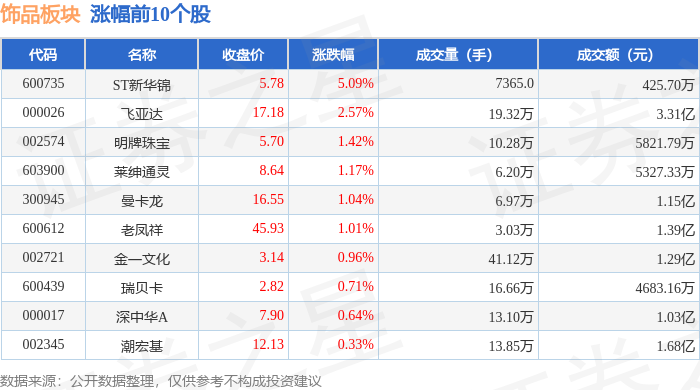
Market Overview - The jewelry sector increased by 0.36% on January 8, with ST Xinhua Jin leading the gains [1] - The Shanghai Composite Index closed at 4082.98, down 0.07%, while the Shenzhen Component Index closed at 13959.48, down 0.51% [1] Individual Stock Performance - ST Xinhua Jin (600735) closed at 5.78, up 5.09% with a trading volume of 7365 lots and a transaction value of 4.257 million yuan [1] - Feiya (000026) closed at 17.18, up 2.57% with a trading volume of 193,200 lots and a transaction value of 331 million yuan [1] - Mingpai Jewelry (002574) closed at 5.70, up 1.42% with a trading volume of 102,800 lots and a transaction value of 58.218 million yuan [1] - Other notable performers include Laizitongling (603900) up 1.17%, Mankalon (300945) up 1.04%, and Laofengxiang (600612) up 1.01% [1] Capital Flow Analysis - The jewelry sector saw a net inflow of 45.9794 million yuan from main funds, while retail funds experienced a net outflow of 9.506 million yuan [2] - Main funds showed significant net inflows in stocks like Chaohongji (002345) with 21.8855 million yuan and China Gold (600916) with 16.5952 million yuan [3] - Conversely, stocks like Caizai Co. (605599) and Mingpai Jewelry (002574) experienced net outflows from main and retail funds [3]


饰品板块1月5日涨0.95%,ST新华锦领涨,主力资金净流入1405.4万元
Zheng Xing Xing Ye Ri Bao· 2026-01-05 08:59
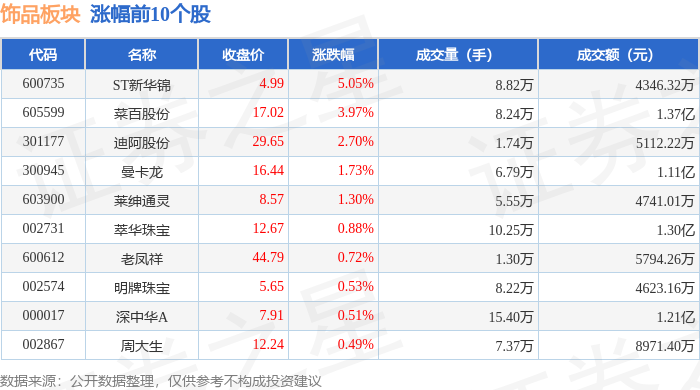
Market Overview - The jewelry sector increased by 0.95% on January 5, with ST Xinhua Jin leading the gains [1] - The Shanghai Composite Index closed at 4023.42, up by 1.38%, while the Shenzhen Component Index closed at 13828.63, up by 2.24% [1] Individual Stock Performance - ST Xinhua Jin (600735) closed at 4.99, with a rise of 5.05% and a trading volume of 88,200 shares, totaling a transaction value of 43.46 million yuan [1] - Cai Zi Co. (605599) closed at 17.02, up by 3.97%, with a trading volume of 82,400 shares and a transaction value of 137 million yuan [1] - Di A Co. (301177) closed at 29.65, increasing by 2.70%, with a trading volume of 17,400 shares and a transaction value of 51.12 million yuan [1] - Other notable stocks include Man Ka Long (300945) at 16.44 (+1.73%), Lai Xi Tong Ling (603900) at 8.57 (+1.30%), and Xin Hua Jewelry (002731) at 12.67 (+0.88%) [1] Capital Flow Analysis - The jewelry sector saw a net inflow of 14.05 million yuan from institutional investors, while retail investors experienced a net outflow of 22.39 million yuan [2] - Major stocks with significant net inflows include Zhou Dazheng (002867) with 22.52 million yuan from institutional investors, and ST Xinhua Jin (600735) with 9.66 million yuan [3] - Conversely, retail investors showed a net outflow from Zhou Dazheng of 19.59 million yuan and from ST Xinhua Jin of 5.32 million yuan [3]

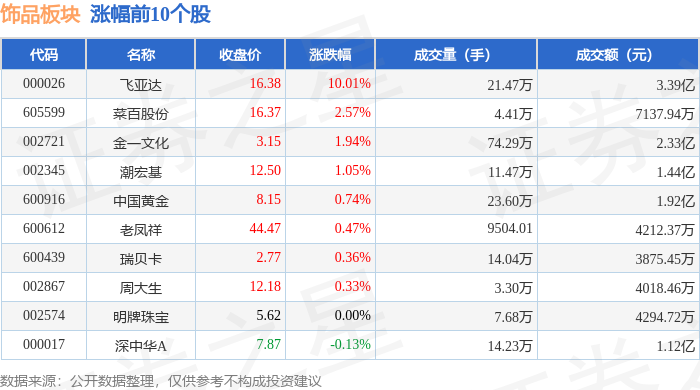
饰品板块12月31日涨1.01%,飞亚达领涨,主力资金净流入7106.77万元
Zheng Xing Xing Ye Ri Bao· 2025-12-31 08:59
Core Viewpoint - The jewelry sector experienced a rise of 1.01% on December 31, with Feiya leading the gains, while the overall market showed mixed results with the Shanghai Composite Index up by 0.09% and the Shenzhen Component Index down by 0.58% [1]. Group 1: Market Performance - The jewelry sector's performance on December 31 showed a notable increase, with Feiya's stock price rising by 10.01% to close at 16.38, leading the sector [1]. - The overall market indices reflected mixed results, with the Shanghai Composite Index closing at 3968.84 and the Shenzhen Component Index at 13525.02 [1]. Group 2: Individual Stock Performance - Key performers in the jewelry sector included: - Feiya (000026) with a closing price of 16.38 and a trading volume of 214,700 shares, resulting in a transaction value of 339 million [1]. - Cai Zi (665560) closed at 16.37, up by 2.57%, with a trading volume of 44,100 shares [1]. - Jin Yi Culture (002721) saw a 1.94% increase, closing at 3.15 with a trading volume of 742,900 shares [1]. - Other notable stocks included: - China Gold (600916) closed at 8.15, up by 0.74% with a trading volume of 236,000 shares [1]. - Lao Feng Xiang (600612) closed at 44.47, up by 0.47% with a trading volume of 9,504 shares [1]. Group 3: Capital Flow Analysis - The jewelry sector saw a net inflow of 71.07 million in main funds, while retail investors experienced a net outflow of 53.85 million [2]. - Main fund inflows were led by Feiya, which had a net inflow of 93.68 million, representing 27.60% of its trading volume [3]. - Other stocks like Jin Yi Culture and China Gold also experienced positive net inflows, while several stocks faced net outflows from retail investors [3].


一月策略及十大金股:新的主线浮出水面
SINOLINK SECURITIES· 2025-12-31 00:55
Group 1: Strategy Overview - The report indicates that the market is gradually shifting focus from a single narrative around AI to a broader range of sectors, suggesting that a new investment theme for 2026 is emerging as the market stabilizes and industry rotation accelerates [5][12][15] - The report highlights that the recent rally in the market is driven by a recovery in global risk assets, with expectations of a cross-year market trend starting to take shape [5][12] Group 2: Metal Industry Insights - The report notes that the sharp rise in non-ferrous metals is likely driven by increased demand from high-margin and growth-oriented sectors, which are more tolerant of price increases [5][13] - It emphasizes that the relationship between metal prices and AI investments is similar to the past dynamics between coal/power and new energy sectors, indicating a potential for significant price movements in metals due to AI-related consumption [5][13] Group 3: Currency and Trade Dynamics - The report discusses a new cycle of RMB appreciation, driven by changes in export structure and settlement methods, suggesting that the impact of RMB appreciation on export competitiveness may be less severe than previously thought [6][14] - It highlights that the current high-value export sectors in China possess significant market share and production capacity, which enhances their resilience against trade protectionism [6][14] Group 4: Investment Recommendations - The report recommends focusing on industrial resource products that resonate with AI investments and global manufacturing recovery, including copper, aluminum, tin, lithium, crude oil, and oil transportation [7][15] - It also suggests investing in Chinese equipment export chains that have confirmed cyclical bottoms, such as power grid equipment, energy storage, lithium batteries, photovoltaics, and engineering machinery [7][15] Group 5: Company-Specific Insights - For Yun Aluminum Co. (000807.SZ), the report recommends a long-term investment due to favorable conditions for aluminum exports and potential price increases driven by supply-side reforms and low inventory levels [17] - For Hengli Hydraulic (601100.SH), the report highlights the company's growth potential due to rising global market share and collaboration with leading companies in robotics [18] - For China Southern Airlines (1055.HK), the report notes the expected improvement in industry supply-demand dynamics and the company's large fleet size as key growth drivers [21] - For Li Ning (2331.HK), the report points to management improvements and the upcoming Olympic cycle as catalysts for growth [24] - For Blue Special Optics (688127.SH) and Shengyi Technology (600183.SH), the report emphasizes strong demand in downstream sectors and the potential for price increases due to supply constraints [26][27] - For Te Bao Biological (688278.SH), the report highlights the expected commercial success of its growth hormone product and the potential for new indications to drive revenue growth [28]





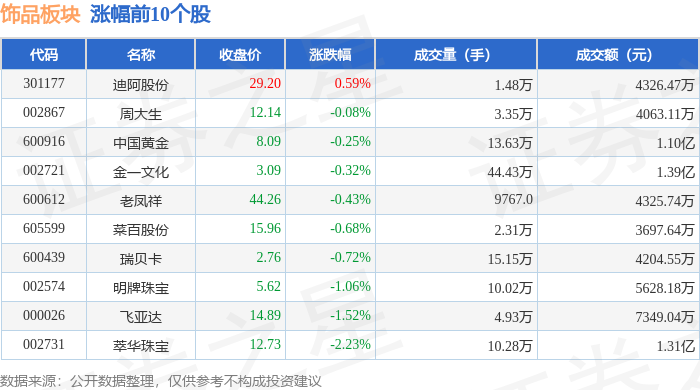
饰品板块12月30日跌1.12%,潮宏基领跌,主力资金净流出9375.17万元
Zheng Xing Xing Ye Ri Bao· 2025-12-30 09:00
| 代码 | 名称 | 收盘价 | 涨跌幅 | 成交量(手) | 成交额(元) | | | --- | --- | --- | --- | --- | --- | --- | | 301177 | 迪阿股份 | 29.20 | 0.59% | 1.48万 | | 4326.47万 | | 002867 | 周大生 | 12.14 | -0.08% | 3.35万 | | 4063.11万 | | 600916 | 中国黄金 | 8.09 | -0.25% | 13.63万 | | 1.10亿 | | 002721 | 金一文化 | 3.09 | -0.32% | 44.43万 | | 1.39亿 | | 600612 | 老凤祥 | 44.26 | -0.43% | 9767.0 | | 4325.74万 | | 605599 | 菜自股份 | 15.96 | -0.68% | 2.31万 | | 3697.64万 | | 600439 | 瑞贝卡 | 2.76 | -0.72% | 15.15万 | | 4204.55万 | | 002574 | 明牌珠宝 | 5.62 | -1.06% | 10.02万 ...