
黄酒

Search documents
行业点评报告:黄酒复兴趋势持续,期待2026年有新突破
KAIYUAN SECURITIES· 2026-01-30 11:44
Investment Rating - The industry investment rating is "Overweight" (maintained) [1] Core Insights - The report highlights the ongoing revival of the yellow wine industry, with a clear growth logic and significant price increases for premium products [3][4] - The trend of product premiumization is effectively taking shape, with leading companies optimizing their structures and upgrading their offerings [4] - The yellow wine sector is making strides towards national expansion, although it still faces challenges in breaking regional perceptions [6] - The report anticipates sustained growth in the yellow wine industry, driven by product, channel, and marketing upgrades [7] Summary by Sections Industry Overview - The yellow wine sector has shown a remarkable price increase, with stocks like Kuaijishan rising approximately 90% in 2025, significantly outperforming other alcoholic beverages [3] - The market is expected to benefit from the upcoming national standards for prepared dishes, which may enhance market concentration [3] Product Development - The high-end product strategy is yielding results, with successful transitions from "meal wine" to "social/banquet wine" [4] - Young consumers are becoming a core growth segment, with innovative products like "one day one smoke" sparkling yellow wine gaining popularity [5] Market Expansion - The current market share of yellow wine in regions outside Jiangsu, Zhejiang, and Shanghai is low, indicating potential for growth as companies push for national penetration [6] - Leading firms are adopting a multi-faceted approach to overcome regional barriers, focusing on product innovation and cultural empowerment [6] Future Trends - The report identifies three key trends that will continue to support the yellow wine industry's revival: stable growth among leading companies, conversion of short-term hits into long-term loyalty, and cultural value integration into consumer habits [7]


二锅头也不好卖了!顺鑫农业去年亏损最多近2亿元
Sou Hu Cai Jing· 2026-01-30 11:10
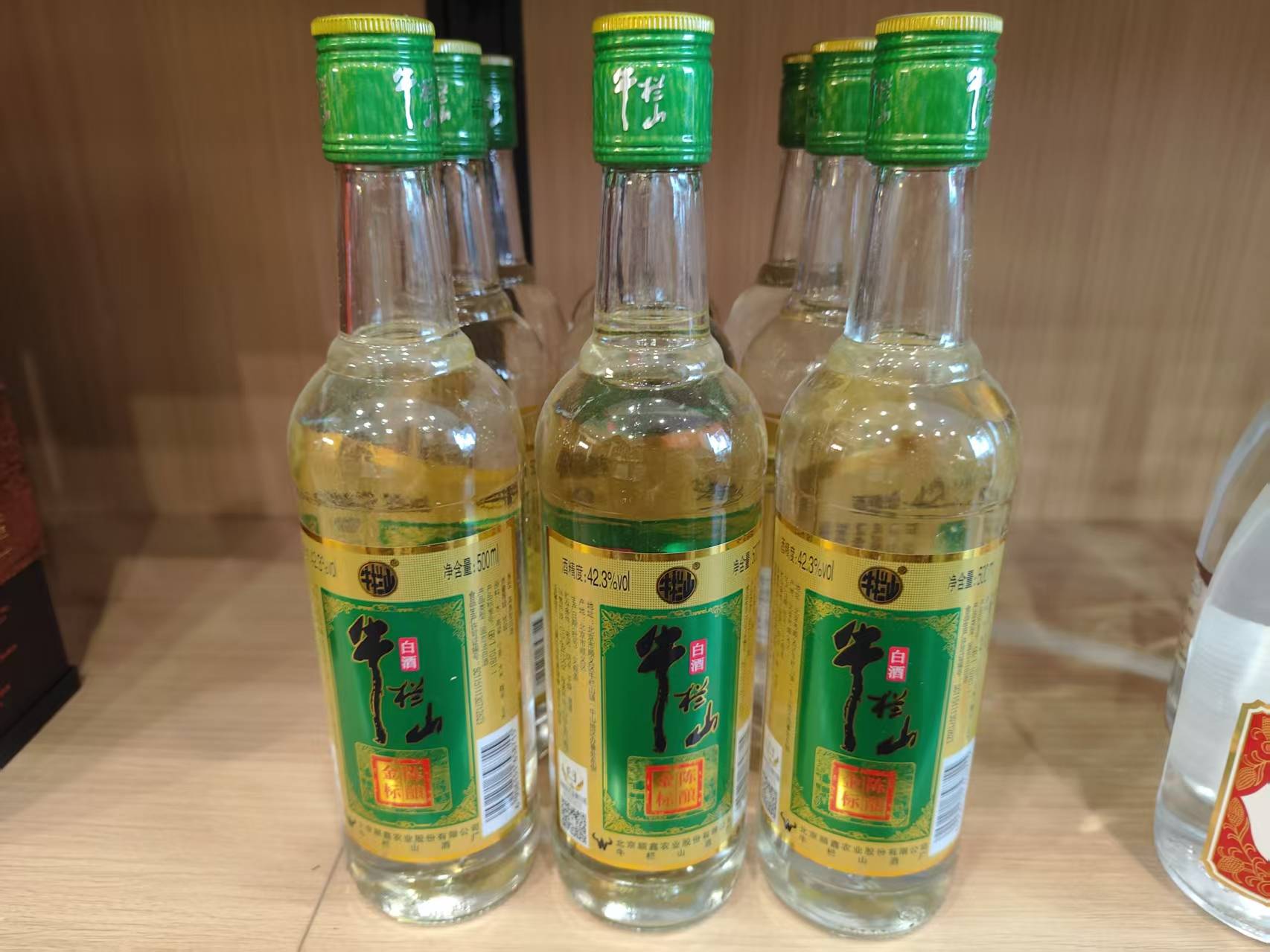
Core Viewpoint - Shunxin Agriculture's stock price dropped by 6.6% on January 30, following the announcement of a projected net loss of 116 million to 188 million yuan for 2025, marking a significant decline of 150.18% to 181.33% year-on-year due to intensified competition and a downturn in the liquor industry [1]. Company Summary - Shunxin Agriculture attributes its performance decline to a deep adjustment in the liquor industry and increased market competition, particularly affecting its core product, the "Niulanshan" series, which saw a decrease in sales [1]. - The company launched a new product, the "36% Jinbiao Niulanshan" white liquor, priced at 78 yuan per bottle, aiming to enter the high-end market [2]. - The "Niulanshan" brand, known for its affordable products, has struggled to maintain its previous sales levels, with the flagship product "Bai Niu Er" experiencing over a 40% decline in sales since being reclassified as a flavored liquor under new national standards [4]. Industry Summary - The low-end liquor market is becoming increasingly competitive, with major brands like Fenjiu and Wuliangye entering the light bottle liquor segment, leveraging their brand strength and distribution channels to capture market share [6]. - Young consumers are shifting towards more cost-effective and health-oriented alternatives, such as domestic red wine and yellow wine, which are gaining popularity in the market [7]. - The liquor industry is transitioning from a focus on scale expansion to value cultivation, with the low-end market now requiring a comprehensive approach to consumer psychology, scene adaptation, and brand storytelling [7].


白酒基本面更新及后市展望
2026-01-30 03:11
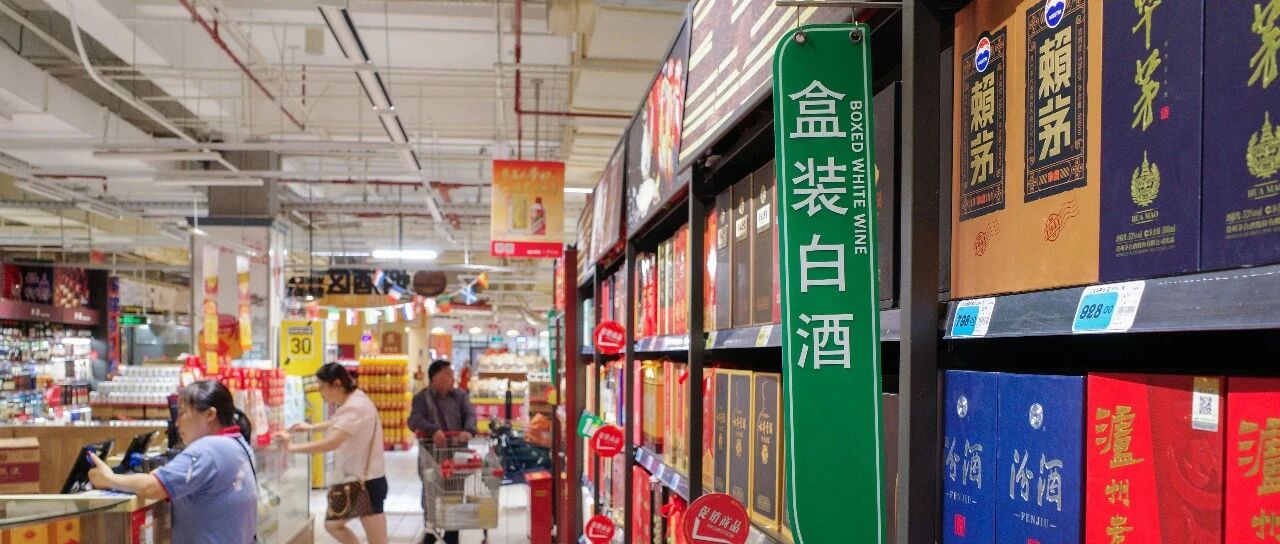
Summary of Key Points from the Conference Call Industry Overview - The conference call primarily discusses the **Chinese liquor industry**, focusing on **Moutai** and the **huangjiu (yellow wine)** sector, highlighting market dynamics and future expectations. Core Insights and Arguments - **Moutai Pricing Dynamics**: Moutai's direct sales platform launched a price of **1,499 RMB**, which has been well-received by consumers, contributing to a positive market outlook. The price is seen as a significant driver for Moutai's performance, with expectations that it will serve as a price floor for 2027 [1][7]. - **Sales Performance**: During the Spring Festival, Moutai's sales are expected to increase, although a post-holiday demand drop is anticipated but deemed manageable due to the established price support [1][4]. - **Market Sentiment**: The market is optimistic about Moutai's pricing strategy, with many believing that the **1,499 RMB** price point will bolster confidence in the brand and the overall sector [1][7]. - **White Liquor Sector Trends**: The white liquor sector's performance is influenced by inventory levels, consumer demand, and channel dynamics. The current inventory is reported to be around **20%-30%** of the annual target, indicating a manageable situation [1][8]. - **Huangjiu Sector Growth**: The huangjiu sector is performing well, with companies like **Kuaijishan** and **Guyue Longshan** actively expanding their product lines and undergoing organizational reforms to enhance market competitiveness [1][12][14]. Additional Important Insights - **Risk Factors**: The primary risks in the white liquor industry include potential policy disruptions and inventory issues. However, recent policy changes have eased concerns, and inventory levels are currently stable [1][8]. - **Consumer Behavior**: There is a notable increase in consumer demand for Moutai, driven by gifting needs and a favorable perception of price-to-value ratio [2][3]. - **Future Market Outlook**: The white liquor market is expected to experience a rebound similar to post-pandemic trends, with a focus on both Moutai and other strong regional brands like **Gujing Gongjiu** and **Yingjia** [1][10]. - **Investment Strategy**: Investors are advised to focus on leading companies like Moutai and those with strong brand power and financial health for stable returns [1][5]. Company-Specific Developments - **Kuaijishan**: The company has seen significant growth in its product lines, achieving over **50%** growth in key series, and plans to enhance product quality and marketing strategies in the coming years [12][13]. - **Guyue Longshan**: The company is undergoing significant organizational changes aimed at improving operational efficiency and market adaptability, which could enhance its future performance [12][14]. This summary encapsulates the key points discussed in the conference call, providing insights into the current state and future expectations of the liquor industry, particularly focusing on Moutai and the huangjiu sector.

当前时点如何看酒类投资
2026-01-30 03:11
Summary of Key Points from Conference Call Records Industry Overview: Baijiu (Chinese Liquor) - **Strong Sales Performance**: Moutai's sales velocity is robust, with prices recovering to over 1,600 RMB, exceeding market expectations. From January 1 to January 9, over 400,000 transactions occurred, with an average daily supply exceeding 50 tons, indicating strong market demand [1][2]. - **Market Bottom Indicators**: The baijiu industry is showing signs of bottoming out, with the 1,499 RMB Moutai indicating clear volume and price bottom characteristics. Historical data suggests that Moutai and Wuliangye's volume increases signal industry recovery [1][6]. - **Investment Recommendation**: Guizhou Moutai is the preferred investment target, historically outperforming in price, stock performance, and earnings when the industry enters a recovery phase. Revenue growth rates exceeded 20% in 2016 and over 50% in 2017 [1][7]. - **Valuation of Other Baijiu Companies**: Leading baijiu companies like Wuliangye, Luzhou Laojiao, Fenjiu, and Gujing Gongjiu are currently undervalued, with valuations around 15 times earnings or lower. These companies also have high dividend yields, making them attractive for investment [1][10]. Yellow Wine Sector - **Market Expansion**: The yellow wine sector is expanding through price increases, new product launches, and innovative marketing strategies. Leading companies like Kuaijishan are performing well, and Guolongshan is actively pursuing high-end, youth-oriented, and national strategies [1][12]. Beer Industry Insights - **Resilience in Sales**: The beer industry is showing resilience with positive sales growth, particularly as the restaurant sector recovers, which is expected to positively impact beer consumption. Yanjing Beer has high expectations for operational improvement, with significant profit contributions from its health product line [1][4][14]. - **Investment Opportunities**: Yanjing Beer is recommended due to its improving operational metrics and expansion into health products, with projected profit growth. Qingdao Beer and China Resources Beer are also noteworthy, with attractive dividend yields and low valuations [1][15]. Cost Factors - **Cost Management**: The cost of aluminum cans is under control, and there are signs of improvement in malt costs. The overall impact on ton costs is minimal, suggesting a focus on revenue recovery and price increases is essential [1][16]. Conclusion - **Overall Market Sentiment**: The baijiu industry is at a critical juncture, with Moutai leading the recovery. Other sectors like yellow wine and beer are also showing potential for growth, driven by strategic initiatives and market recovery trends. Investors are encouraged to consider both Moutai and other leading brands for their strong fundamentals and growth prospects [1][9][10].



金枫酒业股价跌5.04%,金元顺安基金旗下1只基金重仓,持有292万股浮亏损失87.6万元
Xin Lang Cai Jing· 2026-01-30 02:12
1月30日,金枫酒业跌5.04%,截至发稿,报5.65元/股,成交4728.77万元,换手率1.24%,总市值37.80 亿元。 资料显示,上海金枫酒业股份有限公司位于上海市普陀区宁夏路777号(海棠大厦内),成立日期1992年6 月19日,上市日期1992年9月29日,公司主营业务涉及黄酒生产经营。主营业务收入构成为:黄酒 96.85%,其他(补充)3.12%,食品及其他0.03%。 从基金十大重仓股角度 数据显示,金元顺安基金旗下1只基金重仓金枫酒业。金元顺安元启灵活配置混合(004685)四季度持 有股数292万股,占基金净值比例为1%,位居第九大重仓股。根据测算,今日浮亏损失约87.6万元。 金元顺安元启灵活配置混合(004685)成立日期2017年11月14日,最新规模15.64亿。今年以来收益 5.28%,同类排名4852/8872;近一年收益51.43%,同类排名2016/8126;成立以来收益601.93%。 金元顺安元启灵活配置混合(004685)基金经理为缪玮彬。 截至发稿,缪玮彬累计任职时间9年48天,现任基金资产总规模15.64亿元,任职期间最佳基金回报 605.63%, 任职期间最差 ...

古越龙山:公司始终重视与广大投资者的深度联结
Zheng Quan Ri Bao Wang· 2026-01-29 13:12
证券日报网讯 1月29日,古越龙山(600059)在互动平台回答投资者提问时表示,公司始终重视与广大 投资者的深度联结,公司领导积极借助东方财富(300059)等互动平台,以黄酒文化为核心设计多元互 动,致力将投资者交流平台打造为品牌与投资者、消费者之间的情感纽带。未来公司将继续坚守文化赋 能的核心思路,持续创新互动形式,深化与投资者的情感连接与价值共识,不断传递黄酒文化魅力与品 牌核心价值,以更有温度的沟通回馈广大投资者的信任与支持。 ...
白酒股爆发,午后17股涨停,茅台大涨8.6%
第一财经· 2026-01-29 09:57
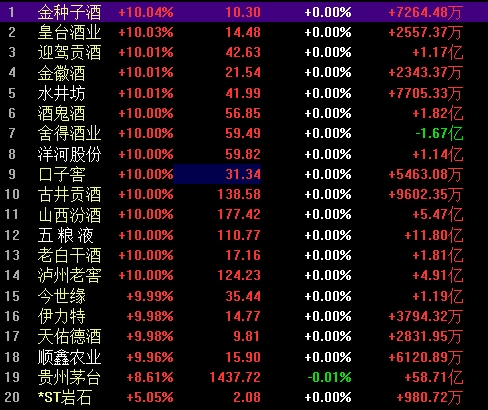
Core Viewpoint - The recent surge in Chinese liquor stocks, particularly after a period of poor performance, is attributed to a combination of market sentiment changes and capital seeking safer investments [3][5]. Group 1: Market Performance - On January 29, 2026, 17 liquor stocks, including Kweichow Moutai, experienced a collective surge, with Kweichow Moutai rising by 8.61% [3]. - The afternoon trading session saw a significant shift, with liquor stocks rapidly hitting their daily price limits [3]. - Alongside liquor stocks, yellow wine and beer stocks also saw notable increases, indicating a broader positive trend in the alcoholic beverage sector [3]. Group 2: Recent Trends and Challenges - Since the third quarter of 2025, liquor stocks have faced challenges, with many companies reporting significant declines in earnings growth [4]. - Several liquor companies have issued profit warnings, indicating a substantial impact on their annual performance [4]. - For instance, Jinzhongzi Liquor is expected to report a net loss of between 150 million to 190 million yuan for 2025, yet it also saw a price surge on the same day [5]. Group 3: Market Dynamics - The collective rise in liquor stocks is seen as less related to individual company fundamentals and more influenced by broader market dynamics, including a strong performance in defensive sectors like liquor, resources, and banking [5]. - The current bullish sentiment in the stock market, coupled with the upcoming Spring Festival, is expected to boost liquor consumption, contributing to a more optimistic investor outlook [5]. - Additionally, there is a noted correlation between liquor stocks and the real estate sector, which also experienced a collective rise due to recent news [5].

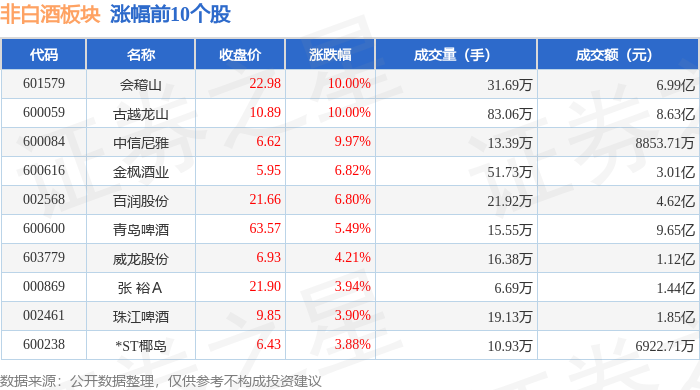
非白酒板块1月29日涨5.18%,会稽山领涨,主力资金净流入3.51亿元
Zheng Xing Xing Ye Ri Bao· 2026-01-29 09:03
Group 1 - The non-white liquor sector increased by 5.18% on January 29, with Kuaijishan leading the gains [1] - The Shanghai Composite Index closed at 4157.98, up 0.16%, while the Shenzhen Component Index closed at 14300.08, down 0.3% [1] - Kuaijishan's stock price rose to 22.98, marking a 10.00% increase, with a trading volume of 316,900 shares [1] Group 2 - The non-white liquor sector saw a net inflow of 351 million yuan from main funds, while retail investors experienced a net outflow of 253 million yuan [2] - The stock of Guhua Longshan also increased by 10.00%, closing at 10.89, with a trading volume of 830,600 shares [1][2] - The trading data indicates that Kuaijishan had a main fund net inflow of 91.30 million yuan, representing 13.06% of its total trading [3]


20只白酒股中19只涨停,贵州茅台大涨8.61%,“老登”酒类股重回A股舞台中央!白的、黄的、啤的、红的全线大涨,超过600亿元资金疯狂涌入白酒板块
Jin Rong Jie· 2026-01-29 08:45
Core Viewpoint - The liquor sector, including core liquor stocks, yellow wine, beer, and red wine, has experienced a significant surge, with many stocks hitting their daily limit up, indicating a strong market interest and potential recovery in the sector [1][2]. Liquor Sector Performance - On the afternoon of the 29th, the core liquor stocks continued to rise, with multiple stocks such as Shui Jing Fang, Shanxi Fenjiu, Wuliangye, and others reaching their daily limit up. Kweichow Moutai saw an increase of over 9% at one point [1]. - A total of 19 out of 20 core liquor stocks hit the daily limit up, while Kweichow Moutai, which did not, still rose by 8.61%. Over 600 billion yuan flowed into the liquor sector, with total trading volume reaching 614.2 billion yuan [2][3]. Price Movements - The price of Feitian Moutai has risen above 1,600 yuan per bottle, with the price on January 29 showing an increase of 20 yuan to 1,610 yuan per bottle. This price increase is attributed to strong demand during the upcoming Spring Festival [5]. Market Sentiment and Future Outlook - Analysts from CITIC Securities suggest that the liquor sector is poised for a recovery as the Spring Festival marketing activities approach, with stable sales expected. The report indicates that the current stock prices reflect market expectations, and the sector's valuation is relatively low, making it an attractive investment opportunity [6]. - The report from Guotai Junan Securities highlights that the current public fund holdings in the liquor sector are at a historical low of 3.93%, suggesting that the conditions for a new cycle in the sector are in place [6]. Broader Market Trends - The real estate sector also saw a significant rise, with stocks like Dayuecheng and Sanxiang Impression hitting their daily limit up, indicating a rotation in market interest towards liquor and real estate sectors [4]. - The A-share indices showed divergent trends, with the Shanghai 50 Index rising over 1% while the Sci-Tech 50 Index fell over 3% [4]. Investment Perspectives - Notable investor Duan Yongping commented on Kweichow Moutai, suggesting that while short-term fluctuations are uncertain, the long-term outlook remains positive, indicating that the current price is not expensive when viewed over a decade [8].
白酒股今日情绪爆发午后17股涨停 茅台大涨8.6%
Di Yi Cai Jing· 2026-01-29 08:29
Group 1 - The core viewpoint of the news is that the recent surge in liquor stocks, particularly in the white liquor sector, is attributed to a combination of capital seeking safety and changes in market sentiment [1][2] - On January 29, 17 white liquor stocks collectively hit the daily limit, with Kweichow Moutai rising by 8.61%. Other notable stocks like Wuliangye, Luzhou Laojiao, and Yanghe also reached their daily limits [1] - The performance of white liquor stocks has been poor since the third quarter of 2025, with many companies reporting significant declines in earnings growth. For instance, Jinzhongzi Liquor expects a net profit loss of 150 to 190 million yuan for 2025 [1] Group 2 - The collective rise in white liquor stocks is not closely related to the fundamentals of individual companies, as observed by Shen Meng from Xiangsong Capital. The strong performance of white liquor, resource, and banking stocks contrasts with the noticeable pullback in the technology and small-cap sectors [2] - The current bullish sentiment in the stock market is favorable for liquor consumption during the upcoming Spring Festival, contributing to optimistic investor sentiment [2] - Real estate stocks also experienced a collective surge due to news influences, highlighting the strong correlation between the liquor and real estate sectors [2]
