种植业

Search documents
黑龙江省嘉荫县乌云镇胜利村农民李长青:从“老把式”到新农人
Xin Lang Cai Jing· 2026-01-11 05:54
(来源:经济日报) 转自:经济日报 我的家乡黑龙江省嘉荫县乌云镇胜利村,是一个坐落于黑龙江畔的小村庄。金秋十月,阳光缓缓铺洒在 一望无际的黑土地上,整齐的田垄如诗行般延伸向远方。今年,又是一个丰收年。在嘉荫县坔坤种植家 庭农场,农机作业的阵阵轰鸣声传来——这是我多年来与土地打交道的回响。 我叫李长青,今年53岁。打小在田埂上长大,同农业打了39年交道。很多年前,种地全靠人力畜力,辛 苦一年也攒不下几个钱。眼看着村里的年轻人一个个外出闯荡,我不禁反复思量:地,将来由谁来种? 又怎样才能种得好? 转机出现在2019年。那一年,我去兰西县、巴彦县等几个省内开展农业生产托管较早的县市参观学习, 第一次接触到"农业生产全程托管"这个新词。看到人家用大农机统一耕种,成本降了、产量高了,我一 下子开了窍——这不正是咱们这儿需要的吗? 经过慎重考虑,我于2020年8月注册成立了嘉荫县坔坤种植家庭农场。起初,不少乡亲心里没底:"万一 地种坏了怎么办?""托管费会不会太贵?"为了打消大家的顾虑,我又开办了一家种子商店,承诺凡在 农场托管的农户,均可享受低于市场价的农资,从而有效降低了整体托管成本,让乡亲们得到实实在在 的优惠。 ...
【四中全会精神在基层】【乡村新风貌】定西高标准农田建设铺就丰收路
Xin Lang Cai Jing· 2026-01-11 01:44
新甘肃·甘肃日报记者 张燕茹 杨唯伟 "以前的旱地变水浇地,小地块连成大地块,种地再也不用愁了!"团结镇寒水村村民王勤难掩欣喜。他 将15亩远地流转给合作社,家里留种的11亩近地也完成了平整,"现在种地能半托管给农机服务组织, 种收全程不用麻烦孩子们,我和老伴就能应付,每亩地还能多收200元流转费!" 团结镇镇长莫负能表示,项目建设中坚持保障群众自主种植需求,预留20%至30%土地供村民自行耕 种,其余统一流转给合作社等经营主体。这一举措让村民既获稳定流转收益,农闲时还能就近务工,更 依托经营主体产销渠道破解了农产品销路难题,实现"一地多收"。 冬日的定西黄土塬,寒意渐浓却生机暗藏。大型推土机沿着等高线稳步推进,履带碾过之处,昔日零碎 分散的坡耕地渐渐连成连片平整的田块。在安定区团结镇高标准农田高效节水灌溉项目施工现场,一垄 垄精心修整的土地透着蓄势待发的干劲,田埂边各类输水管道错落堆放,即将接入田垄,为这片曾十年 九旱的黄土丘陵注入"水动力"。 地处二阴山区的团结镇,"卡脖子旱"曾是农业发展最主要的制约因素。为扭转"靠天吃饭"的被动局面, 该镇紧抓引洮工程引水上山的契机,以高标准农田及高效节水灌溉工程为牵引 ...
组织化护航 减产不减收
Xin Lang Cai Jing· 2026-01-10 20:33
Core Insights - The core point of the article is that despite a reduction in the yield of grass fruit in Fugong County due to adverse weather conditions, the total income of grass fruit growers is expected to increase by 100 million yuan in 2025, driven by organized efforts in production, transportation, and sales [1][2]. Group 1: Organized Production and Income Growth - Grass fruit is a key industry for poverty alleviation in Fugong County, with a planting area of 560,000 acres and a fresh fruit output of 50,000 tons in 2025, leading to a total output value exceeding 1.8 billion yuan [1]. - The county has established an industrial development consortium involving 56 village party branches, various cooperatives, 11 enterprises, and 16 drying factories to address challenges such as disorganized early harvesting and low prices [1][2]. Group 2: Harvesting and Transportation Innovations - Fugong County has implemented a "graded harvesting by altitude" model to improve fruit quality and has organized mutual assistance for harvesting to address labor shortages [2]. - A comprehensive transportation network combining ground vehicles and drones has been developed, significantly reducing the loss rate of fresh fruit from 15% to below 2% [2]. Group 3: Integrated Purchasing and Processing - The county has created an organized purchasing system that ensures farmers receive full payment upon delivery, with a fund of 25 million yuan allocated for advance payments [4]. - A processing alliance has been formed among 15 processing enterprises, enhancing processing efficiency and increasing the profit per ton of grass fruit by 3,300 yuan [5]. Group 4: Market Expansion and Brand Development - The county has established a marketing platform to consolidate sales efforts, resulting in long-term cooperation with four major purchasing enterprises and an expected sale of over 3,000 tons of dried fruit [6]. - Efforts to promote the "Fugong Grass Fruit" brand through online marketing and packaging have been initiated to enhance market presence [6]. Group 5: Community and Organizational Strength - The grassroots party organizations in Fugong County have strengthened their cohesion, leading to efficient organization and sales of grass fruit among local farmers [7]. - Future plans include further enhancing organizational structures in harvesting, purchasing, transportation, processing, and sales to support high-quality development of the grass fruit industry [7].
东方证券农林牧渔行业周报(20260105-20260111):12月猪企出栏延续增量降重-20260110
Orient Securities· 2026-01-10 14:56
Investment Rating - The report maintains a "Positive" investment rating for the agricultural industry [5] Core Insights - The report highlights a structural shortage in the pig market, with expectations for a price turning point in Q2 2026 due to ongoing capacity reduction and favorable policies [3][9] - The report emphasizes the potential for long-term performance improvement in the pig farming sector, driven by policy and market forces [3][9] Summary by Sections Investment Recommendations - The report recommends focusing on the pig farming sector, anticipating a price recovery in Q2 2026, with suggested stocks including Muyuan Foods (002714, Buy), Wens Foodstuff Group (300498, Buy), and Shennong Group (605296, Not Rated) [3] - It also suggests looking at the animal health sector, which may benefit from profit transmission down the supply chain, with recommended stocks including Haida Group (002311, Buy) and Reap Bio (300119, Not Rated) [3] - In the planting chain, the report notes a confirmed upward trend in grain prices, highlighting investment opportunities in large-scale planting, with suggested stocks including Suqian Agricultural Development (601952, Not Rated) and Beidahuang (600598, Not Rated) [3] - The pet food sector is also highlighted, with growth driven by increasing domestic brand recognition and overseas market expansion, recommending stocks such as Guibao Pet (301498, Not Rated) and Zhongchong Co. (002891, Not Rated) [3] Industry Fundamentals - The report indicates that December saw a continued increase in pig output, with 13 listed pig companies collectively reporting an output of 18.72 million heads, a month-on-month increase of 7.11% and a year-on-year increase of 6.8% [13] - The average selling price for pigs in December remained low, with a range from 10.66 yuan/kg to 12.54 yuan/kg, and an overall average around 11.5 yuan/kg [15] - The average weight of pigs sold in December was 124.85 kg, reflecting a decrease of 1.8 kg from the previous month, indicating a trend of accelerated inventory reduction [15][16] Market Trends - The report notes that the natural rubber market is experiencing price strength, with futures prices reaching 16,030 yuan/ton, a week-on-week increase of 2.72% [47] - The report also highlights a stable upward trend in grain prices, with corn and wheat prices showing slight declines while soybean meal prices have increased [37]





98万元→2129万元!老凌的年终奖咋越发越多?
Xin Lang Cai Jing· 2026-01-10 10:12
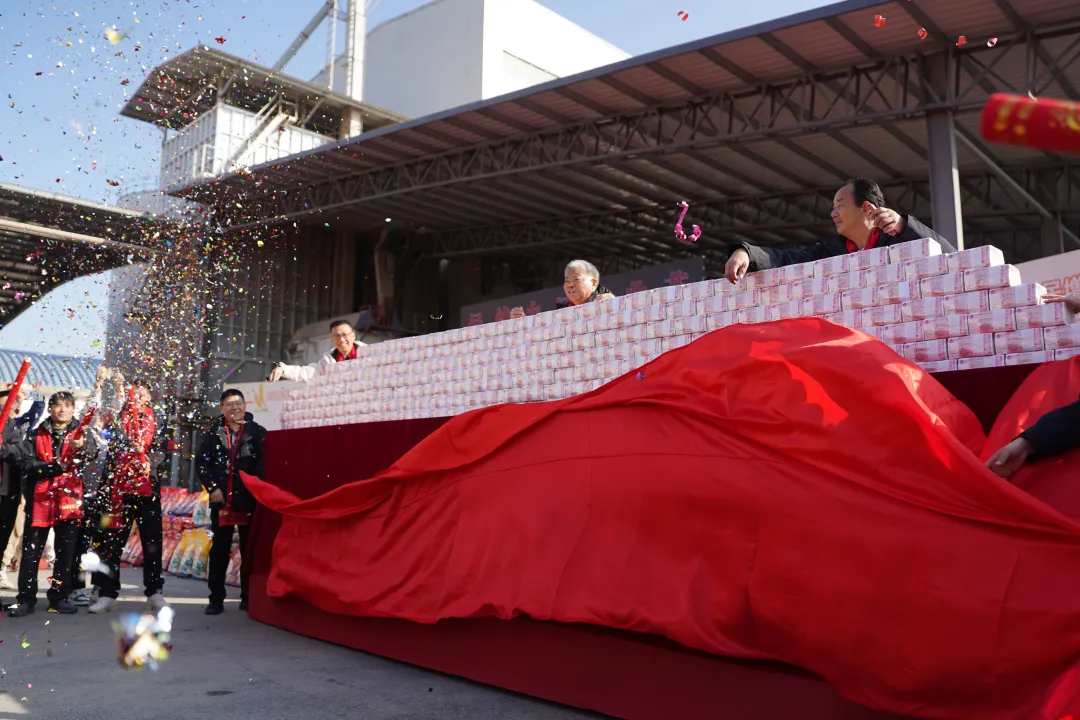
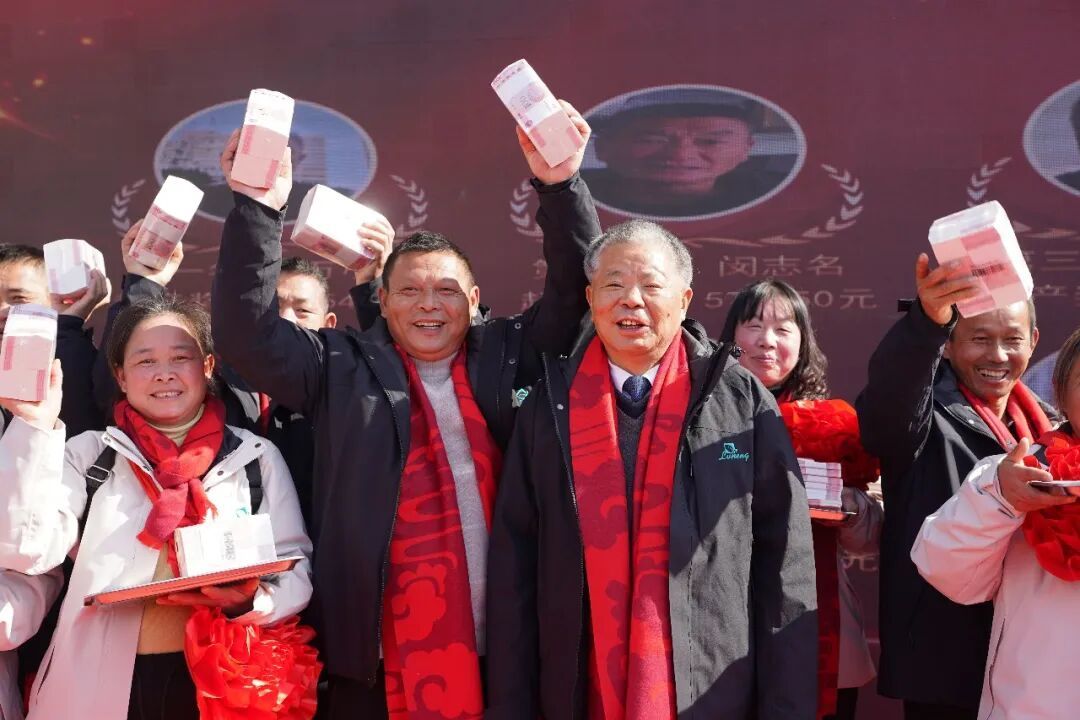
转自:新华社 1月9日上午,江西南昌市安义县鼎湖镇的一个大院里,成捆百元钞票堆成一座齐整的"钱山",这是当地种粮大户老凌连续第15年给农民发年终奖。 "跟着老凌种田8年,奖金越拿越多。"54岁的"年度冠军"刘平香笑得合不拢嘴。 老凌名叫凌继河,今年65岁。2025年他流转种植8万多亩农田,粮食产量达1.27亿斤。 从2012年的98万元增长到今年的2129万元,他坚持每年给农民发放年终奖,多年来累计给农民发年终奖9099万元。 1月9日,种粮能手在领取奖金后与凌继河(前左三)合影。 2018年,老凌组建了专业的农业社会化服务队,像工厂生产一样组织种田,分工日益精细,育秧、机插、飞防、收割、烘干都实现了机械化。因为规模 大,农药、种子、肥料等都能直接从厂家拿货,省去了中间环节,采购价明显降低。 跟着老凌种田10多年的聂仪平说,现在农民的主要精力集中在管好田上,大家全力提高亩均效益。 十多年来,每年凌继河都有"新思路":引进先进技术和优质品种,建试验田,改造升级农业设施,加快高标准农田建设;与科研机构合作,组建农民进修 学校,培养一批新型职业农民…… 2026年,老凌打算走出江西,前往广东、湖北等地承包农田,带领 ...

2129万元!种田也能收到年终奖
Xin Lang Cai Jing· 2026-01-10 07:06
大家满脸笑容上台领奖 这是奖金发放现场(1月9日摄) 2025年凌继河流转了8万多亩农田 得益于好年成和精细化管理 全年粮食产量达到1.27亿斤 产量越高 种粮户的年终奖也就越多 今年发放的金额首次超过2000万元 达到2129万元 来源:新华网 凌继河又发年终奖了! 1月9日 在江西省安义县鼎湖镇 一摞摞现金堆垒在桌面上 这是凌继河连续第15年 给农民兄弟发放年终奖 领到年终奖的种粮农户笑逐颜开(1月9日摄) 在发奖现场 "种粮能手"闵尊贵三步并两步 跑上领奖台 他抱起奖金交给自己的爱人 "跟着老凌种田十多年,奖金越拿越多" 这些年闵尊贵跟着凌继河种田 不仅还清了负债 还在县城买了房添置了小汽车 种粮农户闵尊贵(右二)向大家展示奖金(1月9日摄) 在发奖现场还有很多年轻的面孔 "00后"王业盛就是其中一位 三年前他在合作社的技术服务队 从事无人机飞防作业 去年他开始尝试转型 种了370多亩水稻 "只要懂技术、会经营, 回乡种田也有奔头。" 新的一年 凌继河准备走出江西 前往广东、湖北等地承包农田 带领更多农民增收致富 让中国人的饭碗都装满中国粮 记者:范帆、黄浩然、彭菁、周密 这是奖金发放现场(1月9日摄) ...
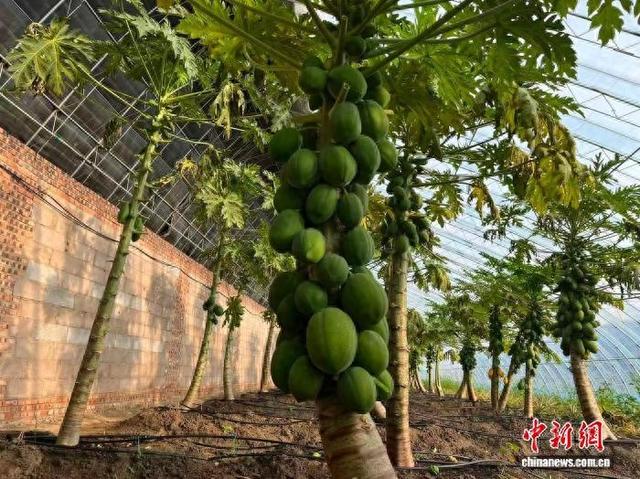
(走进中国乡村)科技赋能 北方盐碱地变身“热带果园”
Xin Lang Cai Jing· 2026-01-10 06:06
Core Insights - The article highlights the transformation of saline-alkali land in northern China into a thriving tropical fruit farm through modern agricultural technology and practices [1][3][5] Group 1: Agricultural Innovation - The Xionglong Ecological Farm in Panjin, Liaoning Province, has successfully cultivated southern fruits like longan, mango, and guava in a previously barren area by utilizing advanced climate control systems [3][4] - The farm maintains optimal growing conditions with a temperature close to 28 degrees Celsius in winter, despite external temperatures dropping below zero [3][5] - The introduction of 16 types of southern fruits allows for nearly year-round availability of tropical flavors in the northern region [3][4] Group 2: Soil Improvement Techniques - The farm has transformed its soil from heavily saline and alkaline to a suitable environment for tropical fruit trees through the use of earthworm compost, which enhances organic matter and neutralizes salinity [4][5] - A dedicated 200-acre earthworm breeding base converts agricultural waste into valuable organic fertilizer for the farm [4][5] Group 3: Economic and Social Impact - The farm spans approximately 1,020 acres and features over 80 greenhouses, providing nearly 100 stable jobs and seasonal employment for over 200 individuals, with an average annual income increase of over 30,000 RMB per person [7] - The farm promotes rural tourism and educational activities through initiatives like "adopt-a-greenhouse" and study classes, contributing to local economic development [7] - Collaboration with research institutions aims to create a replicable model for high-value facility agriculture in similar northern regions, enhancing the overall agricultural landscape [7]
广东清远伦洲岛黄金蜜薯迎丰收 成“致富金果”
Zhong Guo Xin Wen Wang· 2026-01-10 00:51
Core Insights - The article highlights the successful harvest season of the 80-acre Golden Sweet Potato experimental base in Lunzou Island, Qingyuan City, attracting local visitors for experiential activities and tasting local flavors [1] Group 1: Agricultural Development - The unique sandy soil formed by the Beijiang alluvial deposits enhances soil fertility, providing a natural advantage for high-quality crop growth [1] - The base has achieved a stable yield of approximately 2,000 pounds per acre, maintaining unique flavor and taste due to the island's significant day-night temperature difference and scientific management practices [2] Group 2: Economic Impact - The base generates an annual production of 160,000 pounds of sweet potatoes, with annual sales exceeding 480,000 yuan [1] - Local villagers participate in planting and management through a labor cooperation model, resulting in an average annual income increase of 3,000 yuan per person [2] Group 3: Community and Infrastructure - The "strong village benefits the people" market-oriented operation model reinvests 60% of the industry profits into infrastructure and public services, creating a positive cycle that enhances rural development [3] - Future plans include establishing stable direct supply partnerships with catering enterprises and exploring e-commerce sales and contract farming models to expand the market reach of "Lunzou Sweetness" [3]
江西种粮大户连续十五年给农户发年终奖 累计共发9099万元
Zhong Guo Xin Wen Wang· 2026-01-09 14:56
江西种粮大户连续十五年给农户发年终奖 累计共发9099万元 1月9日上午,江西南昌安义县的种粮大户凌继河把成捆的百元钞票垒成一面"城墙",用这些现金给农民 在现场发放年终奖。这已经是他连续第十五年给农民发奖金。 凌继河坦言,之所以每年都会以现金的形式给农民发放年终奖,就是想让更多人对种田有信心,让更多 人看到种田也能赚钱,从而增强大家对农业的信心,激发年轻人和周边农户的种粮积极性,吸引更多人 投身农业。 凌继河表示,2026年,他计划走出江西,前往广东、湖北等地承包农田,带领更多农民致富增收。(记 者 华山) 本文为转载内容,授权事宜请联系原著作权人 中新经纬版权所有,未经书面授权,任何单位及个人不得转载、摘编或以其它方式使用。 关注中新经纬微信公众号(微信搜索"中新经纬"或"jwview"),看更多精彩财经资讯。 今年65岁的凌继河在2025年流转种植了8万多亩农田,粮食产量达1.27亿斤。从起初2012年的98万元增 长到今年的2129万元,他坚持每年给农民发放年终奖,截至当天,累计发给农民的年终奖高达9099万 元。 来源:中国新闻网 编辑:张嘉怡 广告等商务合作,请点击这里 ...
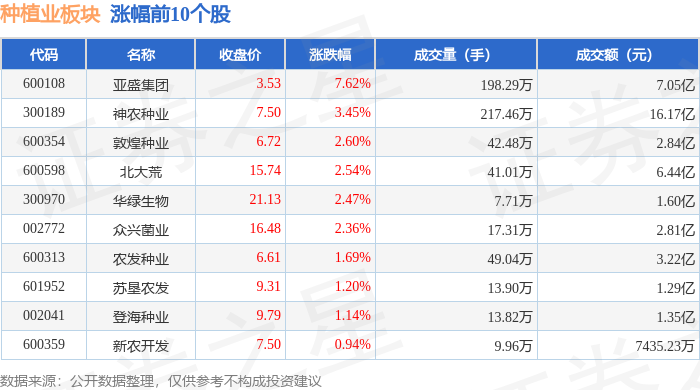
种植业板块1月9日涨0.78%,亚盛集团领涨,主力资金净流入1.6亿元
Zheng Xing Xing Ye Ri Bao· 2026-01-09 08:52
Group 1 - The planting industry sector increased by 0.78% on January 9, with Yasheng Group leading the gains [1] - The Shanghai Composite Index closed at 4120.43, up 0.92%, while the Shenzhen Component Index closed at 14120.15, up 1.15% [1] - Yasheng Group's stock price rose by 7.62% to 3.53, with a trading volume of 1.9829 million shares and a transaction value of 705 million yuan [1] Group 2 - The planting industry sector saw a net inflow of 160 million yuan from main funds, while retail investors experienced a net outflow of 177 million yuan [2] - The stock of Jingyin Gaoke decreased by 7.96% to 10.76, with a trading volume of 946,100 shares and a transaction value of 102.5 million yuan [2] - The stock of Shennong Seed Industry increased by 3.45% to 7.50, with a trading volume of 2.1746 million shares and a transaction value of 1.617 billion yuan [2] Group 3 - Yasheng Group had a net inflow of 1.13 billion yuan from main funds, representing 16.05% of its total trading [3] - Jingyin Gaoke experienced a net outflow of 75.64 million yuan from retail investors, accounting for 7.38% of its total trading [3] - Shennong Seed Industry had a net inflow of 35.56 million yuan from main funds, while retail investors saw a net outflow of 101 million yuan [3]