Home Appliances

Search documents
解放双手!小米推出首款三区洗衣机,衣服、内衣、袜子各占一个筒
Qi Lu Wan Bao· 2025-09-26 03:20
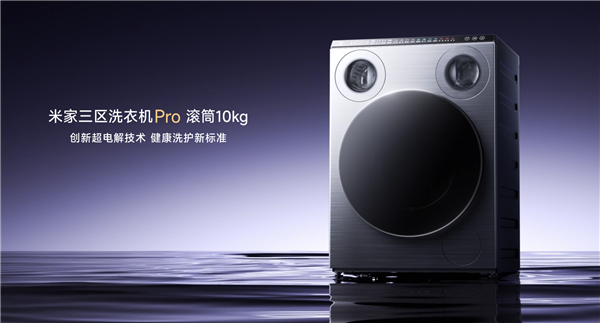
产品采用三筒独立水路系统与独立悬挂结构,有效降低运行时的震动与噪音,提升运行稳定性。 针对精细化洗护需求,小筒配备专属洗涤程序,涵盖内衣、内裤、棉袜等私密衣物清洗模式,可有效去除血渍、汗渍等顽固污渍, 并具备除螨、除病毒功能。结合活水漂洗技术,洗衣液残留量减少22%,提升洗涤纯净度。 此前,有网友在雷军抖音评论区留下的一张手绘图,说想要分区洗衣机,不用占很大体积。今天,这张"许愿图"终于实现了。 9月25日,在年度演讲暨秋季新品发布会上, 小米推出了首款三区洗衣机——米家三区洗衣机Pro 滚筒10kg,售价3999元。 据介绍,米家三区洗衣机Pro 滚筒10kg体积尺寸与标准10kg滚筒洗衣机相当, 轻松嵌入主流标准橱柜,不需要改造家装。 (齐鲁晚报·齐鲁壹点客户端编辑 石卉 综合小米发布会、都市快报城市互动、网友评论等) 网友评论称"直接解放了我的双手""三区洗真的一下子实现了啊"...... ...


Does SharkNinja (SN) Have a Long Runway For Growth?
Yahoo Finance· 2025-09-25 13:30
Group 1 - Parnassus Mid Cap Growth Fund reported a return of 13.29% (net of fees) for Q2 2025, underperforming the Russell Midcap Growth Index which returned 18.20% [1] - The fund's performance was negatively impacted by stock selection in the Industrials and Information Technology sectors, while holdings in the Financials sector contributed positively [1] - The fund highlighted SharkNinja, Inc. (NYSE:SN) as a key investment, noting its innovative product design across multiple consumer categories [2][3] Group 2 - SharkNinja, Inc. (NYSE:SN) experienced a one-month return of -7.41% and a 52-week gain of 1.55%, with a market capitalization of $15.192 billion as of September 24, 2025 [2] - The company is recognized for its potential growth driven by market share gains, expansion into new categories, and international growth opportunities [3] - SharkNinja, Inc. was held by 65 hedge fund portfolios at the end of Q2 2025, a decrease from 69 in the previous quarter, indicating a shift in hedge fund interest [4]

新华网调查家用净水器市场:繁荣景象藏隐忧
Bei Jing Ri Bao Ke Hu Duan· 2025-09-25 02:01
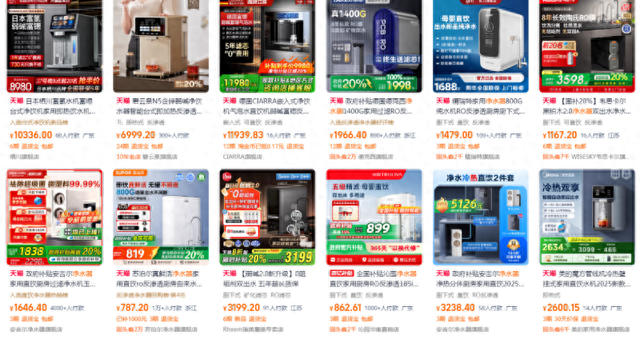
Core Viewpoint - The water purifier market in China is experiencing significant growth driven by increasing consumer health awareness and the introduction of new government policies that support the industry [3][9]. Market Overview - The retail sales of water purifiers reached 14.08 billion yuan from January to August 2025, marking a year-on-year growth of 21.1%, with sales volume and average product price increasing by 16.6% and 3.9% respectively [3]. - The price range for water purifiers varies from several hundred yuan for basic models to over ten thousand yuan for high-end versions, indicating a diverse market catering to different consumer needs [1]. Industry Challenges - The industry faces issues such as intense competition, marketing chaos, and a lack of innovation, with many brands engaging in repetitive specifications and misleading performance claims [4][5]. - A high volume of consumer complaints, totaling 11,869, highlights problems related to unclear filter lifespan, false advertising, and misleading sales tactics targeting vulnerable groups [3]. Regulatory Developments - New national standards for water treatment filters will be implemented in February 2025, prohibiting misleading claims about health benefits and requiring transparency in advertising [5]. - Industry associations are working to promote traceability standards to combat counterfeit products and enhance consumer trust [5]. Consumer Guidance - Consumers are advised to focus on filter performance rather than just price, as the filter is the core component determining purification effectiveness [7][9]. - It is essential for consumers to consider brand reputation, service quality, and compliance with health regulations when selecting water purifiers [9]. Future Outlook - The industry is expected to evolve from a focus on basic survival needs to enhancing quality of life, driven by collaborative efforts among government, industry associations, and enterprises [9].

SharkNinja's Obsession With Winning Drives Growth, Says Analyst
Yahoo Finance· 2025-09-23 19:17
Core Insights - SharkNinja is focusing on growth through innovative product launches, expanded distribution, and direct-to-consumer initiatives, aiming to drive sales momentum into 2026 [1] - Bank of America maintains a Buy rating on SharkNinja with a price target of $140, based on a 2026 EPS estimate of $5.75 [1] Product Innovation and Strategy - The company aims to "win with every SKU, every week," emphasizing consumer-focused innovation and rigorous product testing [2] - Innovation will focus on outdoor appliances, with the Ninja Fireside360 Firepit set to launch through direct-to-consumer channels and select retailers [4] - The beauty segment is expected to contribute significantly, with Cyroglow projected to generate $100 million this year [4] Distribution and Market Challenges - SharkNinja is transitioning from a distributor model to a direct-to-consumer model in Mexico, facing challenges but aiming to build direct relationships with top retailers [5] - Domestically, grocery stores are identified as an underserved channel, with early success reported at Wegmans [6][7] - A consolidated direct-to-consumer site will launch on October 1, unifying various product lines and expected to see significant growth [6][7] Pricing and Tariff Strategy - The company has learned to absorb significant price increases, with plans to initially price higher to meet retailer expectations for predictability in 2026 [8]
中国 A 股策略 -“三江汇流,水涨船高”China A-share strategy_ Three rivers, one rising tide
2025-09-22 01:00
Summary of Key Points from the Conference Call Industry Overview - The report focuses on the **China A-share market** and its liquidity dynamics, particularly in relation to macroeconomic indicators and investment flows. Core Insights and Arguments 1. **Liquidity Indicators**: A key macro indicator, the M2-TSF growth spread, is currently positive, suggesting an improving liquidity backdrop for capital markets. This spread has been climbing since March 2025 and reached zero in August 2025, indicating potential for sustained equity market strengthening [1][2][19]. 2. **Historical Context**: The positive growth spread has historically preceded bull markets in A-shares, notably in 2005 and 2015. The current environment shows a similar pattern, although previous concerns over geopolitical tensions and domestic property issues diverted liquidity into bonds [2]. 3. **Insurance Sector Dynamics**: The "Big Four" insurers in China (Ping An, China Life, China Pacific, New China Life) reported a significant increase in their other comprehensive income (OCI) accounts, growing by CNY40.82 billion in the first half of 2025. This indicates a shift towards high-dividend central SOEs, making the banking sector's current dividend yield attractive [3][14]. 4. **Equity Holdings Growth**: Despite the growth in OCI accounts, many small and medium-sized insurers have not significantly increased their equity holdings. The overall allocation to equity and fund assets in the insurance industry has only recovered to 13.1%, below historical peaks [4][20]. 5. **Wealth Management Products (WMPs)**: The WMP market, valued at CNY30 trillion, is seen as a more probable source of market liquidity compared to the CNY160 trillion in deposits. A sustained A-share rally could lead to a reallocation of WMPs towards equities, with potential inflows estimated at CNY700 billion if allocations return to previous peaks [5][8][29]. 6. **Passive Investing Trends**: Passive funds have emerged as the primary channel for off-market capital inflows, with total shares in equity ETFs reaching 2.01 trillion as of September 2025. This shift is altering the pricing ecology of the A-share market, favoring index heavyweights [9][23]. Additional Important Insights 1. **Investment Strategy**: The report recommends that investors focus on index heavyweights with solid fundamentals while being cautious of market volatility. A long-term strategy suggests a shift from dividend-focused investments towards technology and growth sectors [10][11]. 2. **Emerging Themes**: Opportunities are identified in sectors such as **Chinese new consumption** and **high-end smart manufacturing**, with a focus on companies that can leverage global market trends [12]. 3. **Market Risks**: Potential risks include a broad market downturn, increased volatility, and economic slowdown, which could impact the liquidity environment and investor sentiment [11]. This summary encapsulates the key points from the conference call, highlighting the dynamics of the China A-share market, liquidity flows, and investment strategies moving forward.
Jim Cramer Thinks Whirlpool Corporation (WHR) CEO Is Doing A Good Job
Yahoo Finance· 2025-09-20 19:06
Core Viewpoint - Whirlpool Corporation (NYSE:WHR) has faced significant challenges in 2025, with a year-to-date share price decline of 26%, largely attributed to poor earnings performance and market competition from Chinese and Korean electronics companies [2][3]. Group 1: Company Performance - The company's shares dropped by 12% in July following a dividend cut and a negative earnings forecast [2]. - Despite the implementation of tariffs intended to protect Whirlpool, the stock performance has not reflected any recovery, leading to concerns about the company's market position [3]. Group 2: Market Dynamics - The influx of Chinese and Korean electronics into the market has negatively impacted Whirlpool, with expectations that the company could perform significantly better without this competitive pressure [2][3]. - Jim Cramer has highlighted the potential for Whirlpool to thrive if anti-competitive practices were addressed, suggesting that the current market conditions are hindering its growth [2].

美的集团与华为签署战略合作协议
Di Yi Cai Jing· 2025-09-20 12:43
Core Viewpoint - Midea Group and Huawei have signed a strategic cooperation agreement to collaborate in various fields including enterprise management, AIGC, ICT infrastructure, green low-carbon initiatives, cloud services, product development, and internationalization [1] Group 1: Areas of Collaboration - The partnership will focus on building the Star Flash and Open Source Harmony ecosystem [1] - A special working group will be established to research the application of AI in smart home and smart manufacturing sectors [1]

卢伟冰回应大家电友商喊话:今天开始小米空调正式推出十年保修服务
Xin Lang Ke Ji· 2025-09-19 12:44
Core Viewpoint - The home appliance sector is experiencing intense price competition this year, yet the company has managed to achieve both volume and price growth in its sales [1] Group 1: Company Strategy - The company has officially launched a ten-year warranty service for all its air conditioning products, including wall-mounted, floor-standing, and central air conditioners [1] - The introduction of the ten-year warranty is seen as a strategic move to position the company as a benchmark in the industry, indicating that it is being recognized and followed by competitors [1] Group 2: Market Position - The company's president highlighted that the competitive landscape has led to increased attention from peers, suggesting that the company has become a role model in various aspects of the home appliance market [1]
中国消费家电行业_市场反馈与关键争论_ China Consumer Appliances Sector _Marketing feedback and key...__ Marketing feedback and key debates
2025-09-18 13:09
Summary of Key Points from the Conference Call Industry Overview - **Industry**: China Consumer Appliances Sector - **Current Sentiment**: Investors are cautious about the white goods sector, anticipating a downcycle due to recent policy changes and high retail sales bases [2][3] Core Insights - **Investor Sentiment**: - Interest in high-growth niche categories like robot vacuum cleaners, action cameras, and camera drones [2] - Mixed feedback on Roborock, with some investors optimistic about its operational performance management (OPM) recovery [4] - Concerns about the white goods sector's performance, with expectations of declining retail sales starting September 2025 [3] - **Company-Specific Insights**: - **Midea**: Seen as a potential buy on dips due to attractive shareholder returns projected at low-to-mid-teens percentage in 2026, alongside a strong execution track record [3] - **Gree**: Expected to face significant share losses in the air conditioning market due to pricing competition, despite a 7% dividend yield providing some support [3] - **Roborock**: Positive outlook due to strategic downsizing of loss-making products and easing competition, although skepticism remains about OPM improvement in Q3 2025 [4] - **Arashi (Insta360)**: Gaining investor interest for its growth potential in the We-Media Era, particularly with its camera drone product [4] Investment Recommendations - **Top Picks**: - **Roborock** and **Arashi** are favored for their growth potential in the robotic vacuum cleaner and action camera segments, respectively [5] - **Midea** and **Haier** are preferred for their overseas growth potential and resilience against new entrants [5] - **Gree** is rated as a sell due to its domestic focus and competitive pressures [5] Risks Identified - **Home Appliances Sector**: Risks include a downturn in the property market affecting demand, high raw material prices, and global supply chain constraints [7] - **Robotic Vacuum Cleaner Sector**: Risks involve intensifying competition, raw material price increases, and foreign exchange losses [8] - **Small Appliances Sector**: Risks include economic downturns leading to weak consumption and price competition [8] Additional Insights - **Market Dynamics**: The competitive landscape is expected to intensify, particularly with Midea's focus on market share over profitability and the entry of new competitors [5] - **Investor Caution**: Overall, there is a cautious outlook on the appliance sector, with expectations of a post-subsidy downcycle from Q3 2025 to 2027 [5]
至高能省2000元!苏宁易购老板电器品牌节加码焕新补贴
Zhong Jin Zai Xian· 2025-09-17 11:06
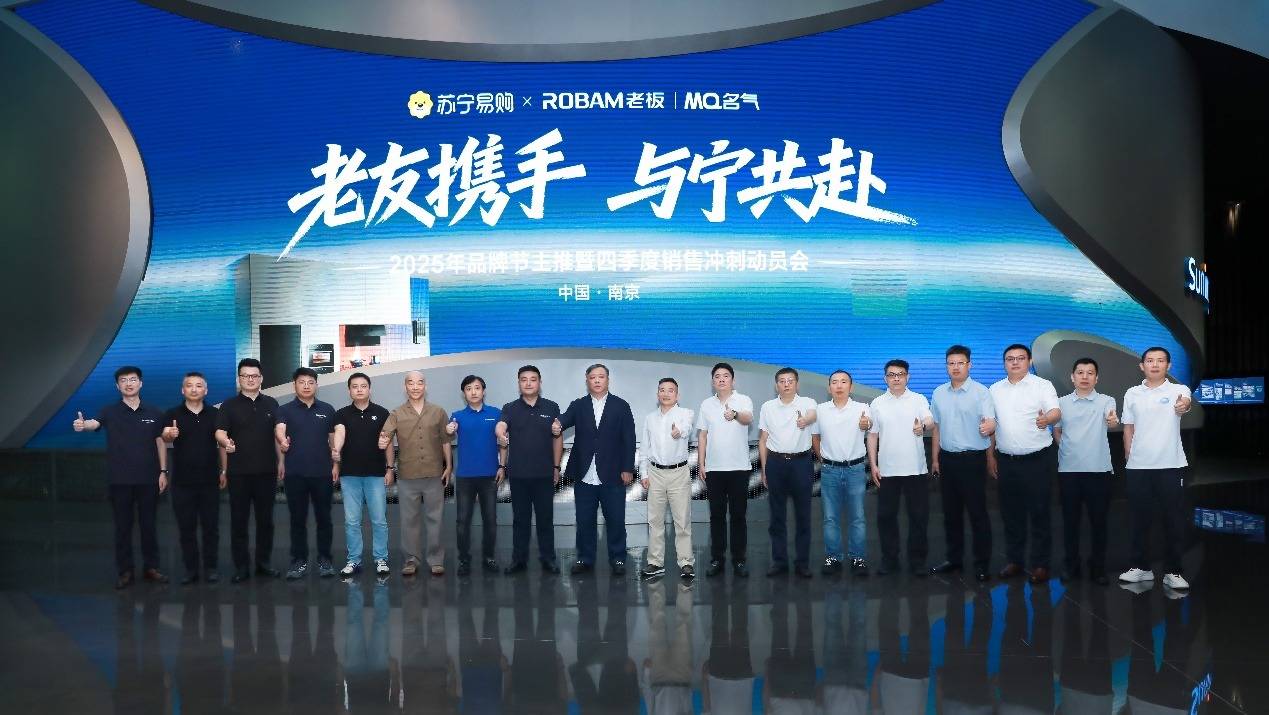
Group 1 - Suning.com and Robam Appliances have launched a joint promotion for the fourth quarter, featuring over ten new smart kitchen appliances from Robam available at Suning.com stores [1][3] - The collaboration aims to enhance the shopping experience by upgrading store images and creating a digital kitchen appliance workshop, focusing on quality products and user experience [1][3] - The promotion includes various consumer benefits such as renovation subsidies and free cleaning services, alongside nationwide culinary tasting events [1][6] Group 2 - Consumer preferences in kitchen appliances are shifting from cost-effectiveness to quality experiences, with AI and ultra-thin designs becoming key factors in purchasing decisions [3] - The new product lineup includes AI digital kitchen appliances and ultra-thin range hoods, designed to meet diverse cooking needs with features like voice control and extensive recipe databases [3][5] - The flagship stores at Suning.com will provide an immersive shopping experience, showcasing the latest products through events like product launches and live streaming [3][5] Group 3 - The kitchen appliance market is now in a phase of deep cultivation, focusing on user engagement and market expansion through diverse store formats and community services [6] - The partnership will implement a one-stop service covering pre-sale kitchen renovation design, in-store reception, and post-sale appliance maintenance to enhance customer confidence [6] - During the peak shopping seasons, promotional offers include up to 2000 yuan in renovation subsidies and bundled gifts with purchases of digital kitchen appliances [6]