
Retail

Search documents
Lincoln National: Valuation And Fundamentals In Sync Outweigh Technical Caution
Seeking Alpha· 2026-02-25 03:54
Core Insights - The logistics sector has seen significant engagement from investors, particularly in the ASEAN and US markets, highlighting its growth potential and diversification opportunities [1] Investment Focus - The company has diversified its investments across various sectors including banking, telecommunications, logistics, and hotels, indicating a strategic approach to portfolio management [1] - The entry into the US market in 2020 reflects a growing interest in international investments, particularly in sectors like banks, hotels, and logistics [1] Market Trends - The popularity of insurance companies in the Philippines since 2014 suggests a shift in investment preferences among local investors, moving towards more diversified financial products [1] - The trend of using platforms like Seeking Alpha for analysis indicates a growing reliance on data-driven insights for investment decisions in both the ASEAN and US markets [1]



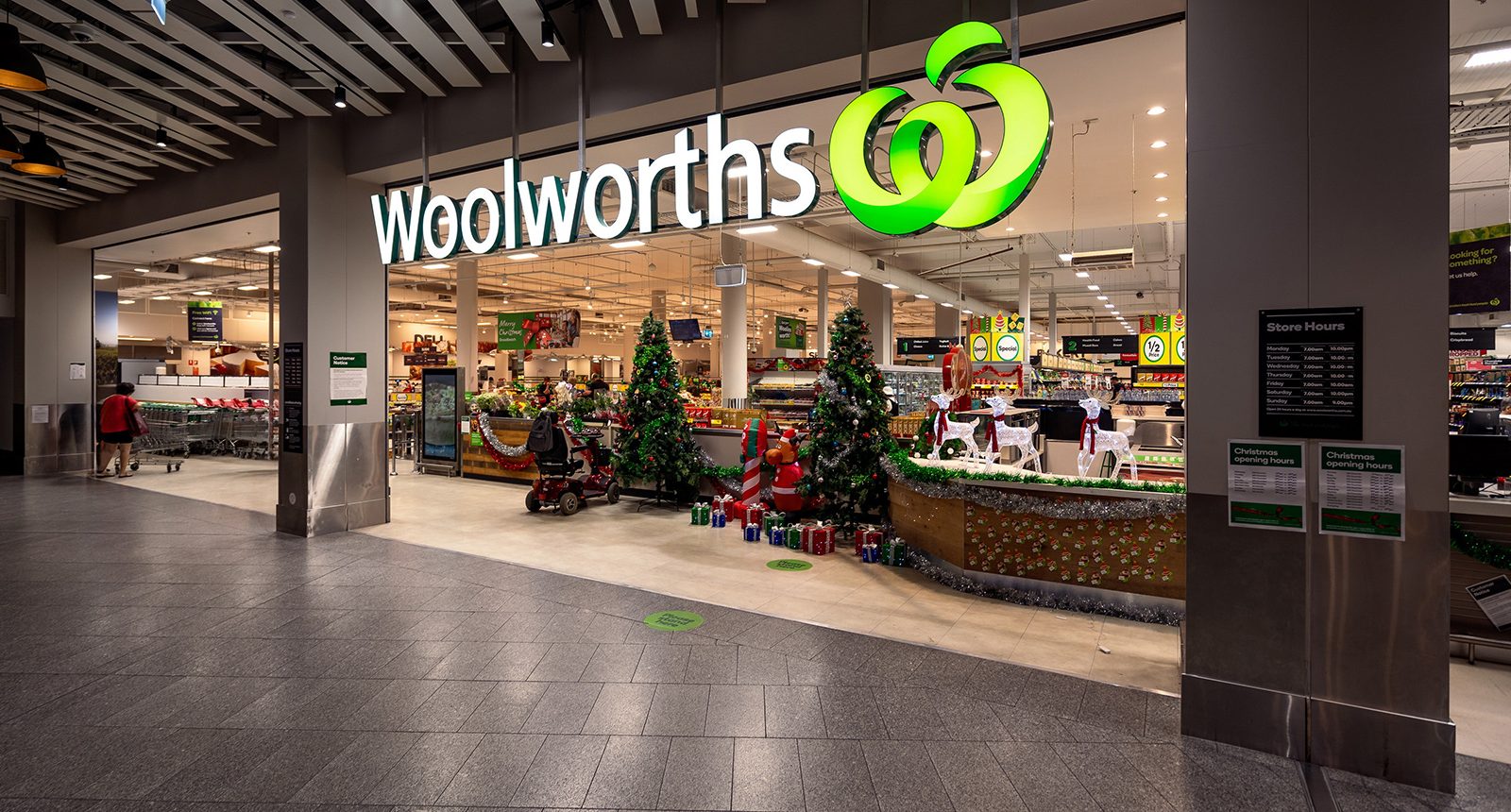
Woolworths surges to 17mth high of $35/sh on earnings – just don’t ask about tobacco
The Market Online· 2026-02-25 03:10
Core Viewpoint - Woolworths has experienced a significant increase in share price despite a substantial expense related to a Federal Court wage ruling, with investors focusing on the company's strong net profit after tax (NPAT) growth [1][2]. Financial Performance - Group NPAT (pre-significant items) rose by 16.4% compared to the previous corresponding period (pcp), reaching $859 million [1]. - After accounting for the wage payout, group NPAT fell nearly 50% compared to pcp, indicating a temporary setback that investors are willing to overlook [2]. - Woolworths announced a dividend of 45 cents per share, which is a 15% increase from pcp [2]. Sales and Market Trends - Australian food sales increased by 3.6% in the first half, with Woolworths Food Retail sales (excluding tobacco) climbing by 4.3% [3]. - The company's food EBIT for the first half jumped by 9.9%, with margins improving by 32 basis points [3]. - Big W reported a more profitable half, driven by clothing and petware sales, although customers are increasingly focused on finding the best deals due to the cost of living crisis [4]. Consumer Behavior - The Australian consumer is exhibiting bargain-hunting behavior, reflecting ongoing economic pressures, particularly among mortgage holders facing higher interest rates [5]. - Woolworths has introduced 800 products under its 'Lower Shelf Price' program, indicating a strategic response to consumer demand for value [6]. Challenges - Tobacco sales remain a persistent issue for Woolworths, contributing to gross margin increases, but overall margin growth could be negatively impacted if black market tobacco continues to divert customers [7].

新华社记者 周圆 胡林果
Xin Lang Cai Jing· 2026-02-25 00:30
Group 1 - The core viewpoint of the article highlights the significant increase in consumer activity and investment during the extended Spring Festival holiday, reflecting a robust domestic demand [1][7]. - Key retail and catering enterprises experienced a daily sales increase of 5.7% compared to the 2025 Spring Festival, with over 28 billion people traveling across regions and a total domestic travel expenditure of 803.48 billion yuan [1][4]. - The travel and tourism market saw a surge, with an average of 5.96 million domestic travelers and a notable increase in long-distance travel orders, indicating a shift towards longer vacations [2][6]. Group 2 - New consumption models and activities, such as the "movie + market" concept in Changsha, have emerged, enhancing consumer engagement and diversifying holiday experiences [3][4]. - Government policies have been implemented to boost consumer spending, including subsidies and consumption vouchers, resulting in a 6.7% increase in foot traffic and a 7.5% increase in sales in monitored shopping districts compared to the previous year [4][6]. - The introduction of visa-free policies for travelers from Canada and the UK has led to a 28.5% increase in foreign visitors during the holiday, further stimulating domestic consumption [5][6].
Stocks Rebound After AI Selloff; Health Care Slips Before SOTU | The Close 2/24/2026
Youtube· 2026-02-24 23:59
Group 1: Market Overview - The Federal Reserve speakers expressed caution over inflation, impacting expectations for future rate cuts and affecting two-year Treasury yields [1][12] - The Japanese Prime Minister's comments on potential rate hikes have led to a weakening of the yen, which is the most significant decline among G10 currencies [2] - The NASDAQ saw a recovery in tech stocks, with AMD being a notable winner due to Meta's announcement of a significant investment in the company [3][65] Group 2: Sector Performance - Software stocks are experiencing a rally, particularly after a livestream by Anthropic that framed AI as a collaborator rather than a disruptor, boosting stocks like Salesforce by 6% [5][17] - Despite the rally, software stocks remain in a bear market, with significant declines in application stocks like DocuSign and Workday, which were downgraded by analysts [6][18] - The healthcare sector is under pressure ahead of the State of the Union address, with insurers like UnitedHealth and Humana facing scrutiny [4][41] Group 3: Company-Specific Developments - AMD's stock rose over 9% following Meta's announcement of a multi-billion dollar investment in chips and stock [3][84] - Workday reported earnings that were above estimates, but the stock has been down 39% year-to-date, indicating ongoing challenges in the software sector [86] - The CEO of Saks Global discussed the company's recovery efforts post-bankruptcy, highlighting a 29% increase in receipts compared to the previous year [30][31] Group 4: Investment Trends - Investors are becoming more discerning, focusing on companies with resilient business models and proven cash flow generation capabilities [7][9] - The concept of "halo stocks," which are heavy assets with low obsolescence, is gaining traction, with companies like ASML and Corning seeing significant gains [6][69] - There is a notable shift in investor sentiment towards quality and value, with a record start to the year in ETF flows, indicating a tactical approach to portfolio positioning [15][16]



Jim Cramer's simple framework for identifying winners in a market fearful of AI disruption
CNBC· 2026-02-24 23:22
Group 1 - The current market is influenced by the threat of artificial intelligence disruption across various industries, including software and commercial real estate [1] - Companies that produce tangible products and have understandable business models are preferred, while those that are complex or difficult to comprehend are to be avoided [2][3] - The concept of "HALO" stocks, which are characterized by heavy assets and low obsolescence, is gaining attention in this fragile market [3] Group 2 - Demand for products, especially those facing shortages, is a critical consideration; companies like Sandisk and Micron, which produce memory chips for AI computing, are highlighted [4] - Companies that facilitate logistics, such as FedEx, and value-oriented retailers like Walmart and Costco are recommended for investment due to their straightforward business models [5] - Caution is advised in sectors such as finance, and those dependent on fluctuating beef prices and steelmakers affected by lower tariffs [6]


The AI love-hate trade roars as Meta-AMD $100 billion deal cheers traders’ spirits after doom spiral
Fortune· 2026-02-24 22:08
Market Overview - U.S. stocks experienced a rise, with the S&P 500 climbing 0.8%, the Dow Jones Industrial Average adding 370 points (0.8%), and the Nasdaq composite gaining 1% [1] - The market recovery followed a previous sharp drop, indicating a potential rebound in investor sentiment [1] Company Highlights - Advanced Micro Devices (AMD) saw a significant rally of 8.8% after announcing a multiyear deal to supply chips to Meta Platforms for AI initiatives, which includes an option for Meta to purchase up to 160 million shares of AMD at 1 cent each [2] - IBM's stock rose 2.7%, recovering from a 13.1% drop the previous day, marking its worst performance since 2000 [3] - Blue Owl Capital's stock increased by 2.8%, reducing its year-to-date loss to 28.2% amid concerns over loan repayments from software companies [4] - FactSet Research Systems' stock jumped 5.9% after the introduction of new AI tools by Anthropic, despite being down 30.6% for the year [5] - Keysight Technologies experienced a 23.1% increase, the largest gain in the S&P 500, after exceeding profit and revenue expectations, with projected revenue growth of approximately 30% for the current quarter [7] - Home Depot's stock rose 2% after reporting stronger-than-expected profits and revenue, despite ongoing consumer uncertainty [7] Industry Insights - Concerns about AI potentially replacing existing software have been deemed overblown, with analysts suggesting that new AI tools will complement rather than replace current software ecosystems [5] - Companies like Salesforce and AppLovin also saw their stocks recover, with increases of 4.1% and 3.3% respectively, as they trimmed losses attributed to AI competition fears [6] - The private-equity industry is facing challenges due to fears regarding loan repayments from software companies reliant on recurring revenue [4]


Par Pacific Reports Fourth Quarter and 2025 Results
Globenewswire· 2026-02-24 21:15
Financial Performance - Par Pacific reported a net income of $369.4 million, or $7.16 per diluted share, for the year ended December 31, 2025, a significant recovery from a net loss of $(33.3) million, or $(0.59) per diluted share, for 2024 [2][9] - Adjusted net income for 2025 was $390.1 million compared to $21.2 million in 2024, with adjusted EBITDA rising to $633.5 million from $238.7 million [2][9] - For the fourth quarter of 2025, net income was $77.7 million, or $1.53 per diluted share, compared to a net loss of $(55.7) million, or $(1.01) per diluted share, in the same quarter of 2024 [3][9] Refining Segment - The refining segment generated operating income of $487.0 million for the year ended December 31, 2025, including a Small Refinery Exemption (SRE) impact of $199.5 million, compared to $17.4 million in 2024 [4][5] - Adjusted gross margin for the refining segment was $1.0 billion in 2025, up from $618.3 million in 2024 [4][5] - Fourth quarter 2025 adjusted EBITDA for the refining segment was $87.6 million, compared to an adjusted net loss of $(22.3) million in the fourth quarter of 2024 [6][7] Hawaii Operations - The Hawaii Index averaged $15.38 per barrel in the fourth quarter of 2025, significantly higher than $5.52 per barrel in the same quarter of 2024 [8][10] - Hawaii refinery's throughput was 87 Mbpd in the fourth quarter of 2025, up from 83 Mbpd in the same quarter of 2024 [8] Retail Segment - The retail segment reported operating income of $74.7 million for the year ended December 31, 2025, compared to $64.8 million in 2024 [17] - Retail segment adjusted EBITDA was $85.9 million for 2025, an increase from $76.0 million in 2024 [18] - Fuel sales volumes for the retail segment were 122.8 million gallons in 2025, compared to 121.5 million gallons in 2024, with same store fuel volumes increasing by 1.6% [18] Logistics Segment - The logistics segment generated operating income of $97.6 million for the year ended December 31, 2025, compared to $89.4 million in 2024 [21][22] - Adjusted EBITDA for the logistics segment was $126.3 million for 2025, up from $120.2 million in 2024 [22] Liquidity and Capital Management - Net cash provided by operations totaled $445.3 million for the year ended December 31, 2025, compared to $83.8 million in 2024 [24] - The company repurchased 6.5 million shares in 2025, reducing shares outstanding by 10% [9][29] - As of December 31, 2025, Par Pacific's cash balance was $164.1 million, with total liquidity of $914.6 million [28]


12 Best Retail Stocks to Buy According to Analysts
Insider Monkey· 2026-02-24 19:55
Industry Overview - The global retail industry is projected to reach approximately $29.79 trillion by 2026, with a healthy growth rate of 6.87% CAGR expected through 2031, driven by AI-enabled supply chains, rapid e-commerce penetration, and personalized customer experiences [2] - Technology integration is central to retail evolution, with retailers deploying AI, machine learning, and advanced analytics to optimize inventory management and tailor marketing campaigns in real time [3] - Online sales are expected to grow at a double-digit pace through 2031, supported by mobile commerce and social shopping platforms, while omnichannel strategies are enhancing customer engagement and loyalty [3] - Growth is further fueled by urbanization, rising middle-class income, and expansion into Tier II and III cities, particularly in emerging markets [3] - Personal and household care, along with premium segments, are anticipated to lead category growth in the coming years [3] Investment Insights - Investing in retail stocks offers exposure to essential consumer spending, providing a blend of stability, income potential, and long-term growth [4] - The retail sector encompasses consumer staples, discretionary brands, and e-commerce platforms, allowing for diversification across multiple demand drivers [4] - Retail businesses serve as real-time indicators of economic health and sentiment due to their position at the intersection of consumer behavior and corporate performance [4] Company Highlights Dollar Tree, Inc. (NASDAQ:DLTR) - Dollar Tree was upgraded to Buy from Neutral by Rothschild & Co Redburn, with a price target of $165 [10] - The company reported a 4.2% increase in comparable sales during Q3 2025, with adjusted EPS of $1.21 exceeding prior guidance [11] - For Q4, Dollar Tree expects comparable sales growth of 4%–6%, projecting net sales between $5.4 billion and $5.5 billion, and adjusted EPS of $2.40 to $2.60 [11] - The full-year outlook was raised, guiding comparable sales growth of 5%–5.5% and adjusted EPS of $5.60 to $5.80, with anticipated net sales of $19.35 billion to $19.45 billion [12] - Dollar Tree is recognized as a leading North American discount retailer, offering a broad assortment of consumables and discretionary items at accessible price points [13] Burlington Stores, Inc. (NYSE:BURL) - Burlington Stores had its price target raised to $356 from $316 by JPMorgan while maintaining an Overweight rating [14] - The company maintained its Q4 comparable store sales guidance at 0% to 2%, with total sales expected to increase by 7% to 9% [15] - For full-year 2025, Burlington expects comparable store sales growth of 1% to 2% and total sales growth of approximately 8%, alongside EBIT margin expansion of 60 to 70 basis points [15] - The company announced plans to open 110 net new stores in 2026, reflecting a strong development pipeline [15] - Burlington operates off-price retail locations offering branded apparel and home goods, leveraging opportunistic buying and lean inventory management [16]



Here's the Committee's discretionary playbook
Youtube· 2026-02-24 19:40
Consumer Discretionary vs. Staples - Consumer discretionary stocks have underperformed compared to staples, with staples up 15% year-to-date while discretionary stocks are down 2.5% [5] - Recent consumer confidence data showed improvement, which may positively impact discretionary stocks [1] Company Performance - Home Depot reported unexpected Q4 comparable sales growth, leading to a significant increase in its stock price [1] - Other companies in the home improvement sector, such as Lowe's and various homebuilders, also saw stock price increases [1] - Delta Airlines continues to see high passenger volumes, indicating strong operational performance despite concerns about stock valuation [3] Investment Sentiment - There is a perception that some discretionary stocks may have become slightly overvalued, contributing to lackluster market responses [2] - Despite some positive indicators, there is skepticism about the overall consumer sentiment and spending behavior [5][9] - Companies like Darden Restaurants, Yum China, William Sonoma, and Ulta Beauty are highlighted as successful within the discretionary sector [6] Market Dynamics - The consumer discretionary sector is heavily influenced by major players like Amazon and Tesla, which dominate the XLY ETF [7] - The performance of staples versus discretionary stocks serves as a barometer for consumer confidence in leisure activities and retail shopping [8] - There is a notable distinction in investor sentiment between stable staples and more volatile discretionary stocks, with staples being perceived as less risky [10]

观山湖区累计客流量约237万人次
Xin Lang Cai Jing· 2026-02-24 19:18
Group 1 - The core theme of the Spring Festival activities in Guanshanhu District is "Qiji leaps into the New Spring, Lights illuminate Guanshanhu," focusing on cultural needs and integrating commercial and tourism activities [2] - During the Spring Festival, the district launched 28 cultural and commercial tourism activities, attracting 1.5834 million visitors, with a peak of 290,200 visitors on February 23 [2] - The Guanshanhu Lantern Festival, running from February 10 to March 8, attracted 204,000 visitors and generated nearly 10 million in ticket and on-site sales, with visitor numbers increasing by 41.67% year-on-year [2][3] Group 2 - The total visitor flow in Guanshanhu District during the Spring Festival reached approximately 2.36985 million, a year-on-year increase of 11.78%, with total sales amounting to 1.496 billion yuan, up 9.69% [1] - Key commercial complexes and districts launched various promotional activities, with the Century Golden Source Shopping Center achieving sales of 78.046 million yuan, a 9.32% increase, and a visitor count of 746,500, up 22.31% [1] - The district's major scenic spots received a total of 320,100 visitors, with the Guizhou Provincial Museum attracting 112,000 visitors, including a single-day record of 23,000 on February 20 [2]