
原材料工业

Search documents
国家统计局:9月PPI同比下降2.3% 同比降幅继续收窄
智通财经网· 2025-10-15 01:48
Core Insights - In September 2025, the national industrial producer price index (PPI) showed a year-on-year decline of 2.3%, with the decrease narrowing by 0.6 percentage points compared to the previous month, while remaining stable month-on-month [1] - The average PPI from January to September 2025 decreased by 2.8% compared to the same period last year [1] Group 1: Year-on-Year Changes - The prices of production materials fell by 2.4%, contributing approximately 1.81 percentage points to the overall decline in the PPI [3] - The mining industry experienced a significant price drop of 9.0%, while raw materials and processing industries saw declines of 2.9% and 1.7%, respectively [3] - Consumer goods prices decreased by 1.7%, with food prices down by 1.7% and durable goods prices down by 3.9% [3][10] Group 2: Month-on-Month Changes - In September, the PPI for production materials remained unchanged, with mining prices increasing by 1.2% and processing prices decreasing by 0.1% [8] - Consumer goods prices fell by 0.2%, with food prices down by 0.1% and durable goods prices down by 0.4% [8] - The industrial purchase price index saw a month-on-month increase of 0.1%, with notable increases in non-ferrous metal materials and electrical wire prices by 1.2% [8][10] Group 3: Specific Price Changes - Fuel and power prices dropped by 8.1%, while chemical raw materials and agricultural products saw declines of 5.5% and 5.4%, respectively [7] - The prices of non-metallic building materials decreased by 4.5%, while non-ferrous metal materials and electrical wire prices increased by 6.6% [7][10] - The coal mining and washing industry saw a year-on-year price drop of 16.8%, while the non-ferrous metal mining industry experienced a price increase of 13.9% [10]

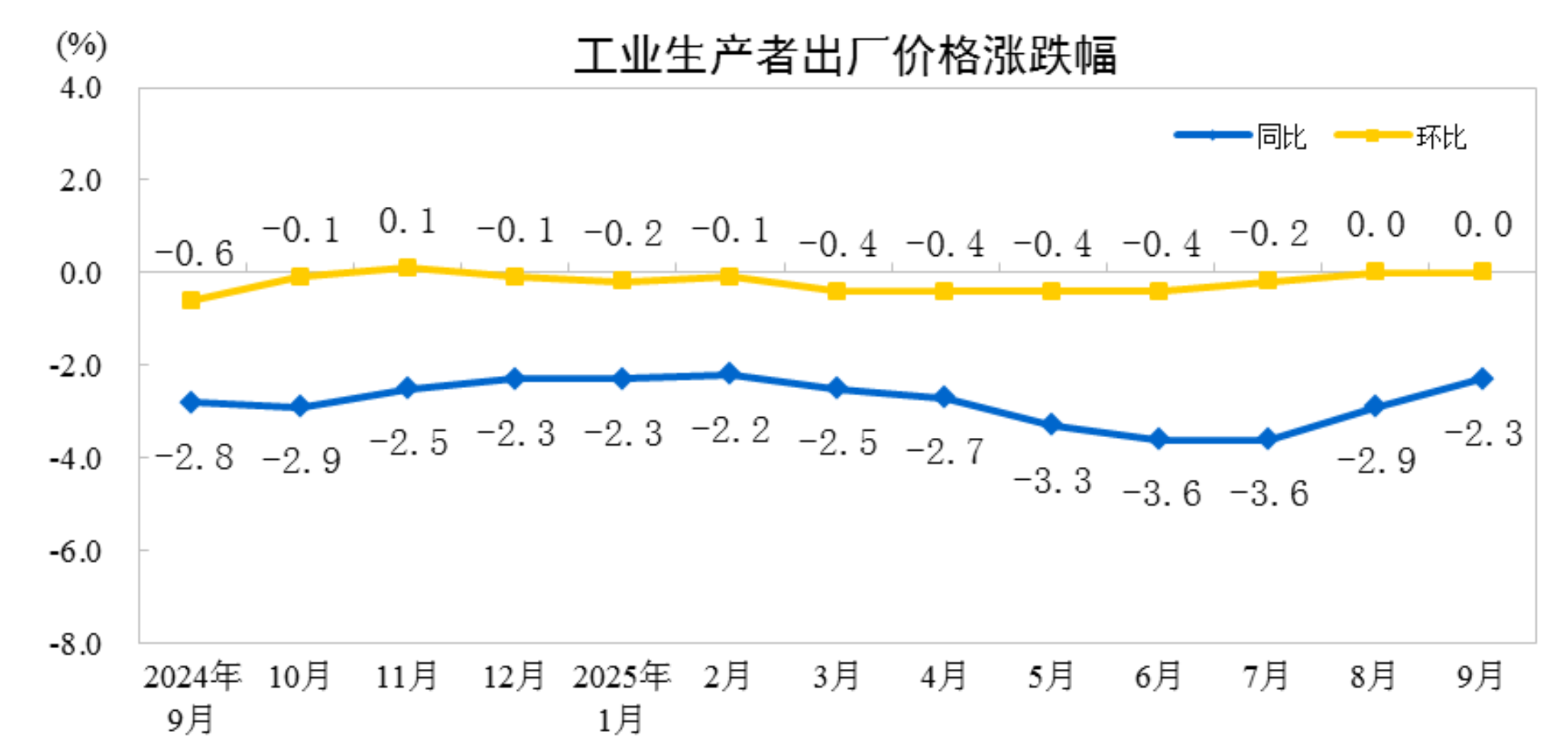
2025年9月份PPI同比降幅继续收窄
Guo Jia Tong Ji Ju· 2025-10-15 01:36
Group 1 - In September, the producer price index for industrial producers showed a decline in the prices of production materials by 2.4%, contributing approximately 1.81 percentage points to the overall decrease in producer prices [2] - The prices in the extraction industry fell by 9.0%, while raw materials and processing industries saw declines of 2.9% and 1.7%, respectively [2] - Prices for living materials decreased by 1.7%, impacting the overall producer price index by about 0.45 percentage points, with food prices down by 1.7% and durable consumer goods down by 3.9% [2] Group 2 - Year-on-year changes in the producer price index indicated a 0.0% change in the overall producer price index, with a 2.3% decline compared to the previous year [10] - The producer price index for production materials showed a 3.3% year-on-year decrease, with specific declines in extraction (9.9%), raw materials (3.6%), and processing (2.6%) [10] - Living materials experienced a year-on-year decline of 1.5%, with food prices down by 1.6% and durable consumer goods down by 3.3% [10] Group 3 - In terms of month-on-month changes, the producer price index for industrial producers remained stable, with extraction prices increasing by 1.2% and processing prices decreasing by 0.1% [7] - Living materials saw a slight decrease of 0.2%, with food prices down by 0.1% and durable consumer goods down by 0.4% [7] - The purchase price index for industrial producers showed a 0.1% increase month-on-month, with notable increases in non-ferrous metal materials and electrical wire prices by 1.2% [8]
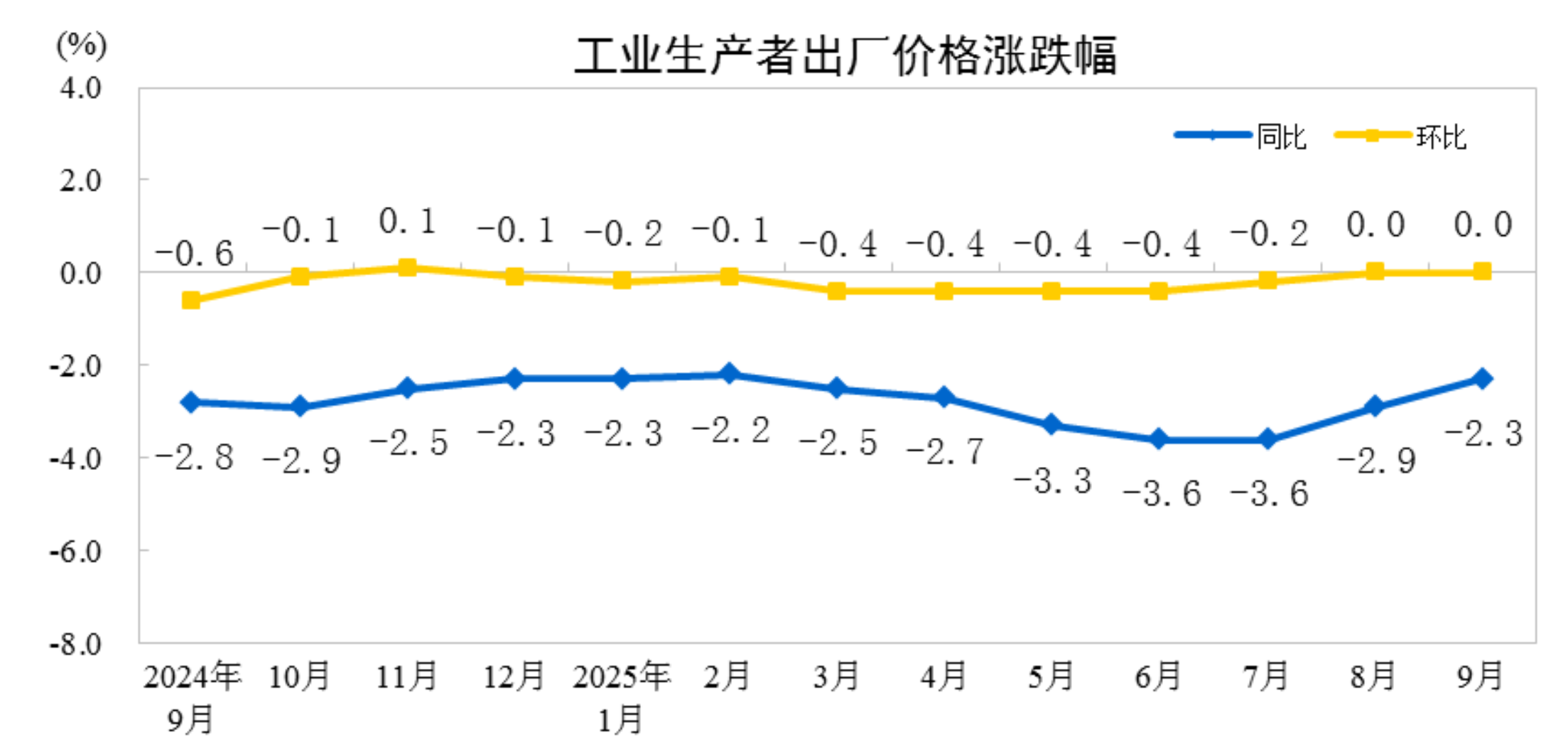
2025年9月份工业生产者出厂价格同比降幅继续收窄
Guo Jia Tong Ji Ju· 2025-10-15 01:31
Group 1: Year-on-Year Changes in Industrial Producer Prices - In September, the producer prices for industrial producers saw a decline of 2.3% year-on-year, with production materials prices decreasing by 2.4%, contributing approximately 1.81 percentage points to the overall decline [8][11] - The mining industry experienced a significant price drop of 9.0%, while raw materials and processing industries saw decreases of 2.9% and 1.7%, respectively [8][10] - Consumer goods prices also fell by 1.7%, with food prices down by 1.7% and durable goods prices decreasing by 3.9% [8][10] Group 2: Month-on-Month Changes in Industrial Producer Prices - In September, the producer prices for industrial producers remained flat month-on-month, with production materials prices unchanged [7][10] - The mining industry prices increased by 1.2%, while processing industry prices saw a slight decline of 0.1% [7][10] - Consumer goods prices decreased by 0.2%, with durable goods prices down by 0.4% [7][10] Group 3: Industrial Producer Purchase Prices - The purchase prices for industrial producers decreased by 3.1% year-on-year, with fuel and power prices dropping by 8.1% [10][12] - Notably, prices for non-ferrous metals and wires increased by 6.6% year-on-year [10][12] - Month-on-month, purchase prices increased by 0.1%, driven by a 1.2% rise in non-ferrous metals and wires [10][12] Group 4: Key Industry Price Changes - The coal mining and washing industry saw a year-on-year price drop of 16.8%, while the oil and gas extraction industry experienced an 8.6% decline [10][12] - The non-ferrous metal mining industry reported a year-on-year price increase of 13.9% [10][12] - The food manufacturing industry experienced a slight decline of 1.3% year-on-year [10][12]
国家统计局:8月份工业生产者出厂价格同比降幅收窄
Zhong Guo Jing Ji Wang· 2025-09-10 06:34
Core Insights - In August 2025, the national industrial producer price index (PPI) decreased by 2.9% year-on-year, with the decline narrowing by 0.7 percentage points compared to the previous month, and month-on-month prices remained stable after a 0.2% decline [1] Group 1: Year-on-Year Changes in Industrial Producer Prices - In August, the prices of production materials fell by 3.2%, contributing approximately 2.40 percentage points to the overall decline in the PPI. The mining industry saw a significant price drop of 11.5%, while raw materials and processing industries experienced declines of 4.1% and 2.2%, respectively [2] - Prices of living materials decreased by 1.7%, impacting the overall PPI by about 0.45 percentage points. Food prices fell by 1.7%, while clothing prices remained stable, and general daily goods prices increased by 0.4%. Durable consumer goods prices dropped by 3.7% [2] - In terms of purchase prices, fuel and power prices decreased by 9.7%, chemical raw materials by 6.2%, and both black metal materials and agricultural products by 5.6%. Prices for construction materials and non-metallic products fell by 4.7%, while textile raw materials decreased by 2.0%. Conversely, prices for non-ferrous metal materials and wires increased by 4.7% [2] Group 2: Month-on-Month Changes in Industrial Producer Prices - In August, production material prices increased by 0.1%, contributing approximately 0.08 percentage points to the overall PPI increase. The mining industry saw a 1.3% rise, while raw materials increased by 0.2%, and processing prices remained unchanged [3] - Living material prices decreased by 0.1%, impacting the overall PPI by about 0.03 percentage points. Food prices rose by 0.1%, clothing prices were stable, while general daily goods and durable consumer goods prices fell by 0.2% and 0.3%, respectively [3] - For purchase prices, construction materials and non-metallic products decreased by 1.4%, while chemical raw materials and agricultural products fell by 0.4%. Fuel and power prices increased by 0.7%, and black metal materials rose by 0.6%. Prices for non-ferrous metal materials, wires, and textile raw materials all saw a slight increase of 0.1% [3]
7月辽宁工业生产者出厂价格同比下降5.8%
Xin Hua Cai Jing· 2025-08-12 06:28
Core Insights - In July 2025, the Producer Price Index (PPI) in Liaoning decreased by 5.8% year-on-year, with the decline widening by 0.2 percentage points compared to the previous month [1] - The Industrial Producer Price Index (IPI) also saw a year-on-year decrease of 6.8%, with a slight month-on-month decline of 0.2%, which is a narrowing of the previous month's decline by 0.7 percentage points [1] Price Trends - The prices of production materials decreased by 5.0% year-on-year in July, with the mining industry down by 10.7%, raw materials down by 5.8%, and processing industry down by 3.7% [1] - Consumer goods prices fell by 9.5% year-on-year, with durable goods down by 15.1%, food down by 5.5%, general daily necessities down by 2.2%, while clothing saw a slight increase of 0.1% [1] Raw Material Price Movements - In July, the prices of nine major raw materials showed a mixed trend with two categories increasing and seven decreasing [1] - Textile raw materials increased by 1.7%, and non-ferrous metals and wire materials increased by 1.4% [1] - Conversely, building materials and non-metallic materials decreased by 0.9%, wood and pulp decreased by 1.0%, other industrial raw materials and semi-finished products decreased by 1.1%, chemical raw materials decreased by 7.9%, black metal materials decreased by 8.7%, agricultural and sideline products decreased by 9.9%, and fuel and power decreased by 12.8% [1]
【数据发布】2025年7月份工业生产者出厂价格 环比降幅收窄
中汽协会数据· 2025-08-12 05:53
Core Viewpoint - In July 2025, the national industrial producer price index showed a month-on-month decline in both the producer's ex-factory prices and the purchasing prices, indicating a continued downward trend in industrial prices [1][3]. Group 1: Year-on-Year Changes in Industrial Producer Prices - In July, the ex-factory prices of industrial producers decreased by 3.6% year-on-year, while the purchasing prices fell by 4.5% [1][3]. - The average decline from January to July for ex-factory prices was 2.9%, and for purchasing prices, it was 3.2% [1][3]. - The prices of production materials dropped by 4.3%, significantly impacting the overall ex-factory price level [3][7]. Group 2: Month-on-Month Changes in Industrial Producer Prices - In July, the ex-factory prices of industrial producers decreased by 0.2% month-on-month, with production materials contributing to a decline of approximately 0.17 percentage points [6][7]. - The purchasing prices of industrial producers fell by 0.3% month-on-month, with notable declines in fuel and power prices by 0.6% and black metal materials by 0.7% [6][7]. Group 3: Breakdown of Price Changes by Category - In the ex-factory price category, the mining industry saw a significant decline of 14.0% year-on-year, while the processing industry experienced a decrease of 3.1% [3][7]. - For purchasing prices, fuel and power prices decreased by 10.8%, and black metal materials dropped by 8.0% [5][7]. - The prices of durable consumer goods fell by 3.5%, while general daily goods saw a slight increase of 0.6% [3][7].
双重驱动下企业碳管理提速 标准、数据瓶颈问题待解
Jin Rong Shi Bao· 2025-08-11 01:00
Core Viewpoint - Companies are facing dual changes in policy and market environments regarding carbon emission management, leading to increased attention from industry experts on the challenges and standards in carbon management [1] Group 1: Policy and Market Influence - The intensity of policy constraints directly affects the progress of corporate carbon management, with raw material industries like metallurgy and petrochemicals being core to national carbon market management [2] - The "1+N" dual carbon policy framework has established specific carbon peak plans for major industrial sectors, emphasizing monitoring, reporting, and verification (MRV) requirements [2] - Market factors, such as external pressures from green trade barriers, are driving companies, especially in the new energy sector, to enhance their carbon management capabilities [3] Group 2: Challenges in Carbon Management - Companies face fragmented systems and increasing compliance burdens due to varying carbon accounting standards across different regions and industries, complicating unified management [5][6] - The lack of economic and suitable carbon management solutions, along with high costs of third-party verification, poses significant challenges for companies [8] - Small and medium-sized enterprises (SMEs) struggle with carbon management due to limited resources, necessitating specialized tools and shared platforms to enhance their capabilities [9] Group 3: Recommendations for Improvement - Experts suggest establishing unified national carbon management regulations and detailed implementation guidelines for specific industries to address existing challenges [7] - There is a need for improved data management and professional governance systems to ensure accurate carbon footprint tracking and effective management [8] - A shared database for carbon emissions tailored to different industries and products could help SMEs reduce management costs and improve their carbon management practices [9]
双重驱动下企业碳管理提速
Jin Rong Shi Bao· 2025-08-11 01:00
Core Viewpoint - Companies are facing dual changes in policy and market environments regarding carbon emission management, leading to significant differences in carbon management practices across industries and scales [1][2]. Group 1: Policy and Market Influences - The intensity of policy constraints directly affects the progress of corporate carbon management, with raw material industries like metallurgy, non-ferrous metals, building materials, and petrochemicals being core to national carbon market management [2][3]. - The "1+N" dual carbon policy framework has established specific carbon peak plans for major industrial sectors, emphasizing monitoring, reporting, and verification (MRV) requirements [2]. - Market factors, such as external pressures from green trade barriers like the EU carbon tariff and ESG evaluations, are driving companies, especially in the new energy equipment manufacturing sector, to enhance their carbon management capabilities [3][4]. Group 2: Challenges in Carbon Management - Companies face multiple challenges in carbon emission management, including fragmented systems and increasing compliance burdens due to differing standards across regions and industries [5][6]. - The lack of unified carbon management standards and the need for multiple certifications for export-oriented companies complicate compliance and increase management costs [6][7]. - Data management issues, such as incomplete data collection and low willingness of suppliers to share data, hinder accurate carbon footprint tracking and identification of reduction potential [8][9]. Group 3: Support and Solutions for Companies - There is a need for a unified national carbon management regulation and detailed implementation guidelines at the industry level to address the challenges faced by companies [7]. - Specialized support systems and training programs are essential for effective carbon management, particularly for small and medium-sized enterprises (SMEs) that struggle with resource limitations [8][9]. - Establishing shared platforms and simplified processes for SMEs can enhance their carbon management capabilities and encourage proactive emission reduction efforts [9].
2025年7月份工业生产者出厂价格环比降幅收窄
Yang Shi Wang· 2025-08-09 02:11
Core Insights - In July 2025, the national industrial producer price index (PPI) decreased by 0.2% month-on-month, while the industrial producer purchase price index (PPPI) fell by 0.3%, with the decline narrowing by 0.2 and 0.4 percentage points compared to the previous month respectively [1] - Year-on-year, the PPI dropped by 3.6%, and the PPPI decreased by 4.5% [1] - For the average from January to July, the PPI declined by 2.9% compared to the same period last year, and the PPPI fell by 3.2% [1] Price Changes in July - In July, the prices of production materials decreased by 4.3%, contributing approximately 3.20 percentage points to the overall decline in the PPI [3] - The mining industry saw a price drop of 14.0%, while raw materials and processing industries experienced declines of 5.4% and 3.1% respectively [3] - Prices of living materials decreased by 1.6%, impacting the overall PPI by about 0.42 percentage points, with food prices down by 1.8% and durable goods prices down by 3.5% [3] Month-on-Month Price Changes - In July, the production materials prices decreased by 0.2%, affecting the overall PPI by approximately 0.17 percentage points [8] - The mining industry prices fell by 0.2%, raw materials prices decreased by 0.1%, and processing industry prices dropped by 0.3% [8] - Living materials prices also decreased by 0.2%, with food prices remaining stable and durable goods prices declining by 0.6% [8] Purchase Price Changes - In the PPPI, fuel and power prices decreased by 10.8%, black metal materials by 8.0%, and chemical raw materials by 6.5% [7] - Agricultural products prices fell by 4.6%, while construction materials and non-metallic materials prices decreased by 3.8% [7] - However, prices for non-ferrous metal materials and wires increased by 2.8% [7]
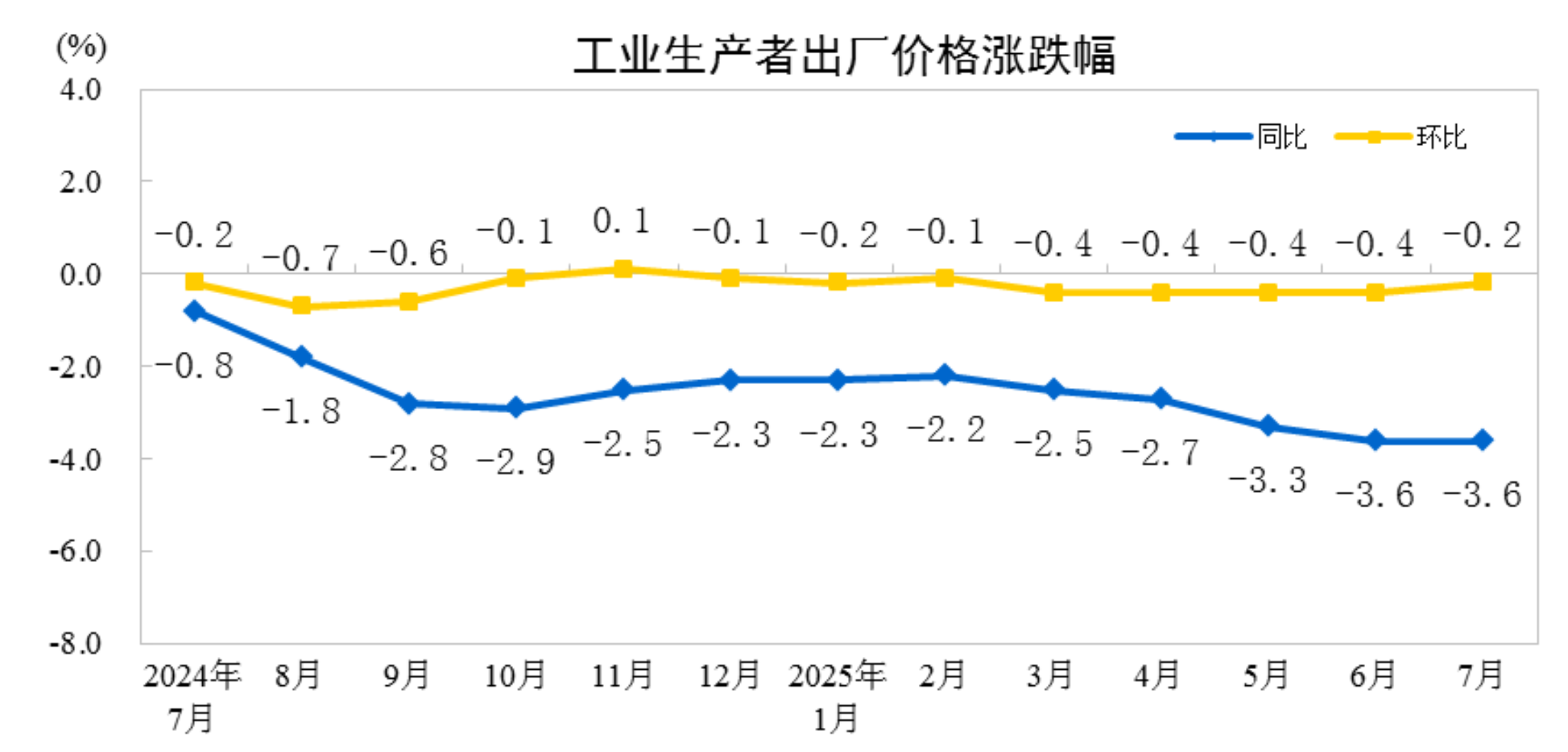
2025年7月份PPI同比下降3.6%
Guo Jia Tong Ji Ju· 2025-08-09 02:01
Group 1: Year-on-Year Changes in Industrial Producer Prices - In July, the prices of production materials decreased by 4.3%, contributing approximately 3.20 percentage points to the overall decline in industrial producer prices [2] - The mining industry saw a significant price drop of 14.0%, while raw materials and processing industries experienced declines of 5.4% and 3.1%, respectively [2] - Consumer goods prices fell by 1.6%, with food prices down by 1.8% and durable goods prices down by 3.5% [2] Group 2: Month-on-Month Changes in Industrial Producer Prices - In July, the month-on-month prices of production materials decreased by 0.2%, impacting the overall industrial producer price level by approximately 0.17 percentage points [7] - The mining industry prices decreased by 0.2%, while raw materials and processing industries saw declines of 0.1% and 0.3%, respectively [7] - Consumer goods prices also fell by 0.2%, with food prices remaining stable and durable goods prices decreasing by 0.6% [7] Group 3: Industrial Producer Purchase Prices - The purchase prices for fuel and power decreased by 10.8%, while black metal materials and chemical raw materials saw declines of 8.0% and 6.5%, respectively [6] - Prices for agricultural products decreased by 4.6%, and construction materials and non-metallic materials fell by 3.8% [6] - Prices for non-ferrous metal materials and wires increased by 2.8% [6] Group 4: Key Industry Price Changes - The coal mining and washing industry experienced a price drop of 23.0%, while the oil and natural gas extraction industry saw a decrease of 12.6% [10] - The black metal mining industry prices fell by 9.1%, whereas the non-ferrous metal mining industry prices increased by 11.1% [10] - The food manufacturing industry prices decreased by 1.1%, while the beverage and refined tea manufacturing industry prices remained stable [10]