
工业生产者出厂价格指数

Search documents
1月份广东居民消费价格指数环比由降转平
Zhong Guo Xin Wen Wang· 2026-02-12 05:53
Core Viewpoint - In January, the Consumer Price Index (CPI) in Guangdong transitioned from a decline to stability, while the Producer Price Index (PPI) remained unchanged compared to the previous month [1] Group 1: Consumer Price Index (CPI) - In January, Guangdong's CPI remained flat after a 0.1% decrease in the previous month [1] - Food prices decreased by 0.8%, with the decline narrowing by 0.2 percentage points compared to the previous month [1] - The supply of winter vegetables was sufficient due to favorable weather, leading to an 8.0% decrease in fresh vegetable prices [1] - Non-food prices increased by 0.2%, driven by higher demand for services such as housekeeping and hairdressing due to the New Year and upcoming Spring Festival [1] - Year-on-year, the CPI in January showed a decrease of 0.7% due to the timing of the Spring Festival [1] Group 2: Producer Price Index (PPI) - The PPI in Guangdong remained unchanged both month-on-month and year-on-year, influenced by factors such as tight supply and increased demand in the market, rising prices of certain international commodities, and fluctuations in international crude oil prices [1] - Cement inventory levels were low due to staggered production, and demand for cement increased as downstream markets prepared for the Spring Festival, resulting in a 1.5% increase in prices for non-metallic mineral products [1]
2026年1月份工业生产者出厂价格同比下降1.4%
Guo Jia Tong Ji Ju· 2026-02-11 01:43
Group 1 - In January, the producer price index (PPI) for industrial producers showed a decline in the prices of production materials by 1.3%, contributing approximately 1.06 percentage points to the overall decrease in the PPI [2][10] - The prices in the extraction industry fell by 8.1%, while raw material prices decreased by 2.0%, and processing industry prices dropped by 0.4% [2][10] - Prices for living materials decreased by 1.7%, impacting the overall PPI by about 0.38 percentage points, with food prices down by 1.9% and clothing prices down by 0.7% [2][10] Group 2 - In terms of year-on-year changes, the PPI for industrial producers decreased by 1.4%, with production materials down by 1.3% [10] - The extraction industry saw a significant year-on-year price drop of 8.1%, while raw materials and processing industries experienced declines of 2.0% and 0.4%, respectively [10] - Living materials prices also fell by 1.7%, with food and clothing prices contributing to this decline [10] Group 3 - In January, the PPI for industrial producers increased by 0.4% month-on-month, with production materials rising by 0.5%, contributing approximately 0.37 percentage points to the overall increase [7][10] - The extraction industry prices decreased by 1.7%, while raw materials and processing industries saw increases of 0.7% and 0.5%, respectively [7][10] - Living materials prices rose slightly by 0.1%, with food prices down by 0.1% and clothing prices down by 0.3% [7][10] Group 4 - The purchasing prices for industrial producers showed a month-on-month increase of 0.5%, with notable increases in the prices of non-ferrous metals and wires by 4.5% [8][10] - Fuel and power prices decreased by 0.7%, while building materials and non-metallic prices fell by 0.6% [8][10] - Year-on-year, the purchasing prices for industrial producers decreased by 1.4%, with fuel and power prices down by 7.1% [10]

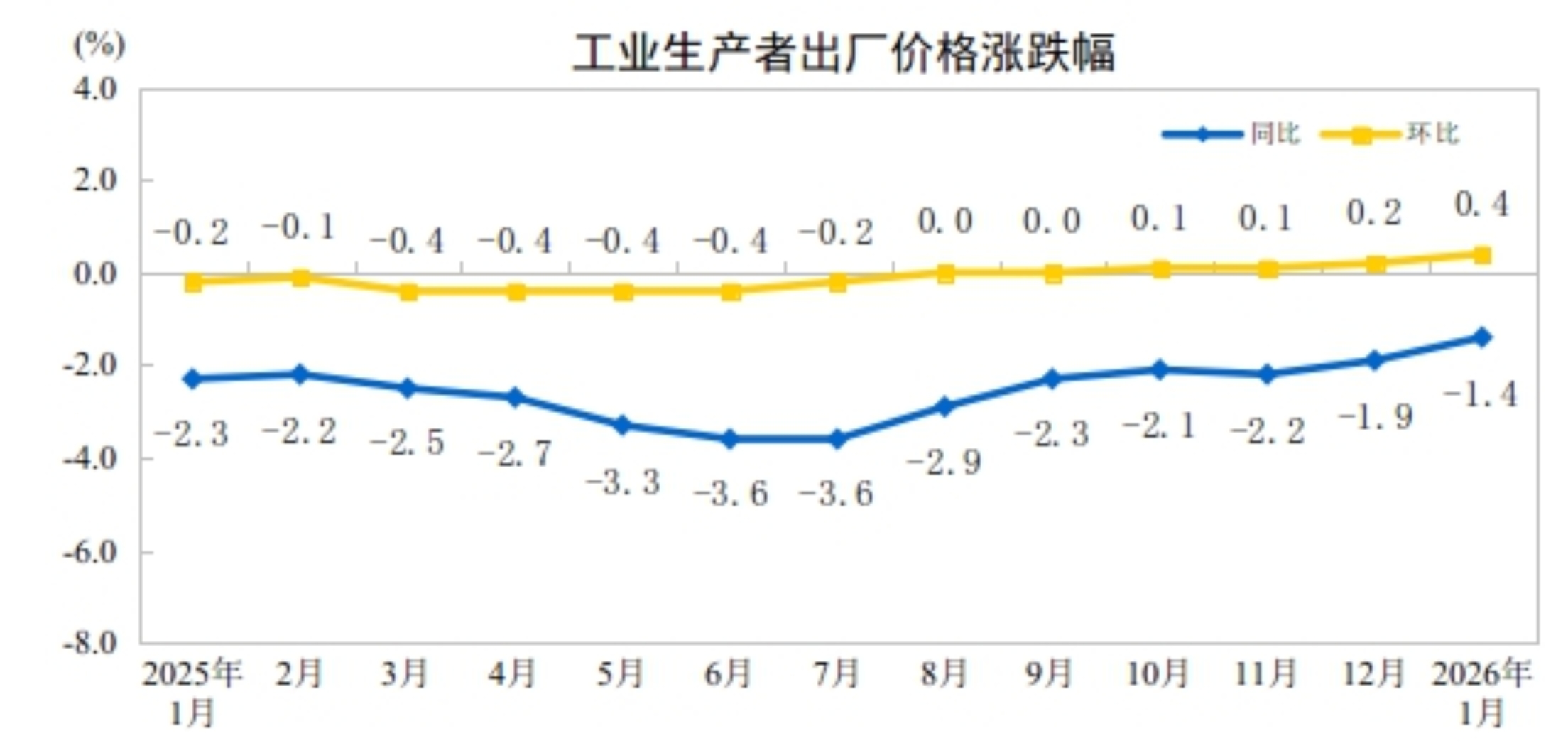
2026年1月工业生产者出厂价格同比降幅收窄 环比涨幅扩大
Guo Jia Tong Ji Ju· 2026-02-11 01:39
Core Viewpoint - In January 2026, the Producer Price Index (PPI) for industrial producers in China showed a year-on-year decline of 1.4%, with a month-on-month increase of 0.4%, indicating a narrowing decline compared to the previous month [1][9]. Group 1: Year-on-Year Changes - The PPI for industrial producers decreased by 1.4% year-on-year, with the decline narrowing by 0.5 percentage points from the previous month [1][9]. - The prices of production materials fell by 1.3%, contributing approximately 1.06 percentage points to the overall decline in the PPI [3]. - The mining industry experienced a significant price drop of 8.1%, while raw material prices decreased by 2.0% and processing industry prices fell by 0.4% [3][9]. Group 2: Month-on-Month Changes - The PPI for industrial producers increased by 0.4% month-on-month, with production materials prices rising by 0.5%, contributing approximately 0.37 percentage points to the overall increase [1][8]. - The mining industry prices decreased by 1.7% month-on-month, while raw materials prices increased by 0.7% and processing industry prices rose by 0.5% [8][9]. - The prices of life materials saw a slight increase of 0.1%, with food prices decreasing by 0.1% and durable consumer goods prices increasing by 0.3% [8][9]. Group 3: Specific Price Changes - In the category of industrial producers' purchase prices, fuel and power prices fell by 7.1%, while chemical raw materials prices decreased by 5.8% [7][10]. - Prices for non-ferrous metal materials and wires increased by 16.1%, indicating a significant rise in this category [7][10]. - The prices of agricultural and sideline products rose by 0.7%, while building materials and non-metallic materials prices decreased by 0.6% [8][10].
2026年1月份工业生产者出厂价格同比降幅收窄 环比涨幅扩大
Guo Jia Tong Ji Ju· 2026-02-11 01:30
Group 1 - In January 2026, the national industrial producer price index (PPI) for factory prices decreased by 1.4% year-on-year, with the decline narrowing by 0.5 percentage points compared to the previous month; month-on-month, it increased by 0.4%, with the increase expanding by 0.2 percentage points from the previous month [1][10] - The prices of production materials decreased by 1.3% year-on-year, contributing approximately 1.06 percentage points to the overall decline in factory prices; the mining industry saw a price drop of 8.1%, raw materials prices fell by 2.0%, and processing industry prices decreased by 0.4% [4][9] - The prices of living materials decreased by 1.7% year-on-year, impacting the overall factory price level by about 0.38 percentage points; food prices fell by 1.9%, clothing prices decreased by 0.7%, and prices for general daily necessities and durable consumer goods both dropped by 1.8% [4][9] Group 2 - In January, the industrial producer purchase price index (PPPI) showed a year-on-year decrease of 1.4%, with a month-on-month increase of 0.5%; fuel and power prices fell by 7.1%, while prices for non-ferrous metals and wires increased by 16.1% [7][11] - The prices of production materials increased by 0.5% month-on-month, contributing approximately 0.37 percentage points to the overall increase in factory prices; mining prices decreased by 1.7%, while raw materials prices rose by 0.7% and processing prices increased by 0.5% [8][9] - The prices of living materials increased by 0.1% month-on-month, with food prices decreasing by 0.1% and clothing prices dropping by 0.3%, while durable consumer goods prices rose by 0.3% [8][9]
2025年12月份广东PPI环比继续上涨
Xin Lang Cai Jing· 2026-01-10 08:10
Group 1 - The Consumer Price Index (CPI) in Guangdong remained stable year-on-year in December 2025, with a 0.4% increase compared to the same month last year [1] - Food prices in Guangdong showed a shift from a 0.3% increase to stability, with fresh vegetables and seawater fish prices rising, while pork, other livestock products, eggs, and milk powder prices decreased [1] - The Industrial Producer Price Index (PPI) in Guangdong increased by 0.1% month-on-month in December, influenced by supply-demand adjustments and fluctuations in international raw material prices [1] Group 2 - Year-on-year, the PPI in Guangdong decreased by 1.5% in December, with the decline in production materials at 2.1% and living materials at 0.4%, both showing a narrowing of the decline compared to the previous month [2] - In the PPI survey of 38 major industries, 10 industries saw price increases, while 26 experienced declines, maintaining an industry increase rate of 26.3% compared to the previous month [2]
气象局启动重大气象灾害四级应急响应 11月份CPI同比上涨0.7%
Xin Lang Cai Jing· 2025-12-12 00:36
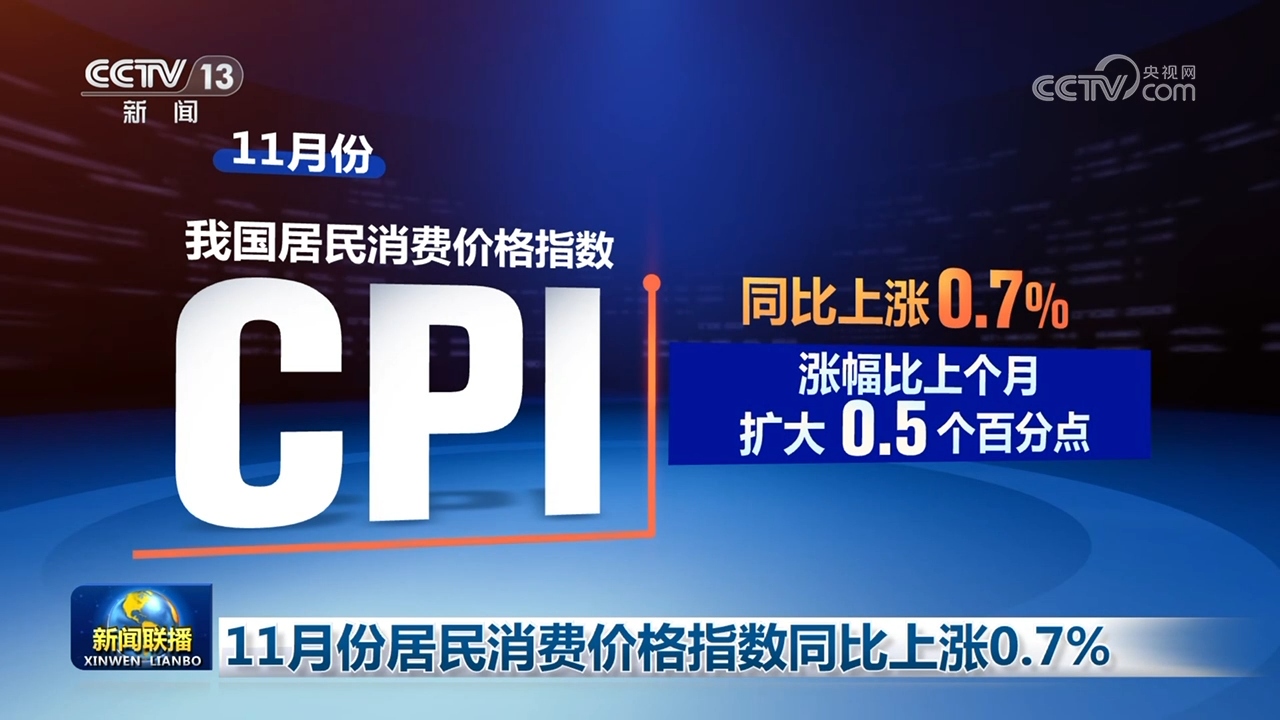
Group 1 - The Central Meteorological Administration has initiated a Level 4 emergency response due to significant meteorological disasters including cold waves, strong winds, and snowstorms affecting large areas of China from December 10 to 13 [1] - The average or minimum daily temperatures are expected to drop by 6-10°C across most regions, with some areas experiencing drops of 10-12°C and localized drops reaching 14-16°C [1] - Heavy snowfall and blizzards are anticipated in parts of Xinjiang, Northwest China, North China, and Northeast China [1] Group 2 - In November, the Consumer Price Index (CPI) rose by 0.7% year-on-year, with food prices being a significant contributor, particularly fresh vegetable prices which increased by 14.5% after a previous decline [1] - The Industrial Producer Price Index (PPI) saw a slight increase of 0.1% month-on-month but a year-on-year decrease of 2.2% [1] Group 3 - The Ministry of Natural Resources and the National Forestry and Grassland Administration have issued a notice to protect the rights of geological workers conducting fieldwork, emphasizing that no individual or organization should obstruct their operations [2] - The notice highlights the importance of respecting local customs and minimizing the impact on local communities during geological surveys [2] Group 4 - The Ministry of Finance issued 7 billion RMB in government bonds in Hong Kong, with a subscription rate of 5.22 times, indicating strong investor interest [4] - The bonds include 2-year, 3-year, and 5-year maturities with interest rates of 1.43%, 1.45%, and 1.65% respectively [4] Group 5 - The State Administration for Market Regulation has established 88 key laboratories and 42 innovation centers across 29 provinces, focusing on various safety and quality standards [4][5] - These centers aim to enhance market regulation capabilities and support national strategic initiatives [5] Group 6 - The Ministry of Education has released standards for the certification of excellent engineering education, aiming to shift focus from a "paper-only" approach to practical engineering projects as criteria for graduation [6] - The standards encourage collaboration between universities and enterprises to ensure graduates meet industry requirements [6] Group 7 - The All-China Federation of Trade Unions has launched a winter action plan to address wage arrears, focusing on protecting the rights of migrant workers and preventing wage disputes [6] - The plan includes mechanisms for monitoring and addressing wage-related issues effectively [6] Group 8 - The Taiwan Affairs Office has commented on Taiwan's economic claims, stating that Taiwan's GDP is expected to be lower than that of many provinces in mainland China this year, highlighting the strong economic performance of the mainland [7] - The mainland's GDP exceeded 101.5 trillion RMB in the first three quarters, growing by 5.2% year-on-year, which is significantly higher than Taiwan's economic growth [7]

11月份居民消费价格指数同比上涨0.7%
Yang Shi Wang· 2025-12-10 12:12
Group 1 - The Consumer Price Index (CPI) in China increased by 0.7% year-on-year in November, with the growth rate expanding by 0.5 percentage points compared to the previous month [1] - The core CPI, excluding food and energy, rose by 1.2% year-on-year, maintaining a growth rate above 1% for three consecutive months [1] Group 2 - The Producer Price Index (PPI) for industrial producers increased by 0.1% month-on-month in November, marking the second consecutive month of growth [3] - The price declines in coal mining and washing, photovoltaic equipment and components manufacturing, and lithium-ion battery manufacturing have been narrowing for several months due to the effects of comprehensive rectification of "involution" competition [5]
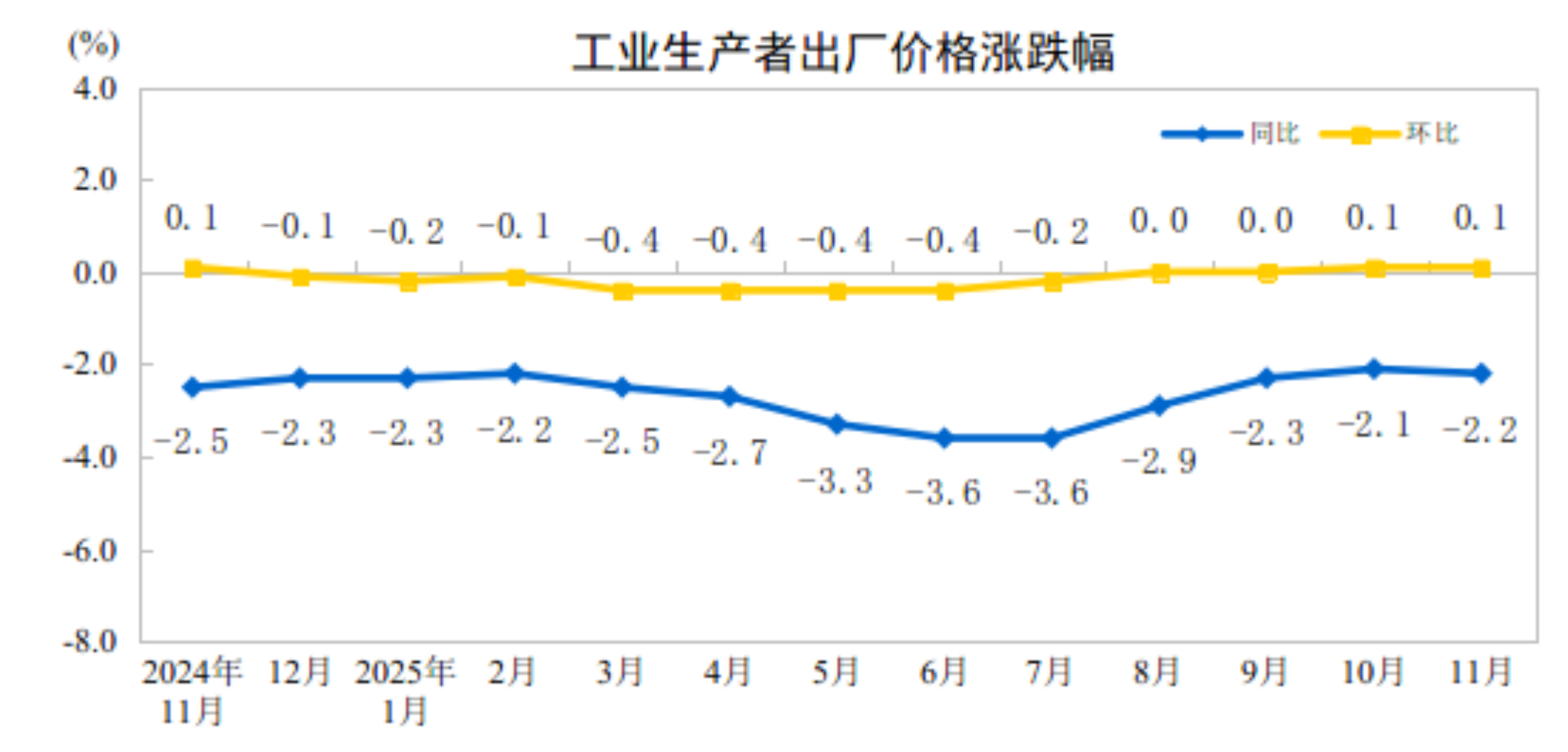
国家统计局:2025年11月电力、热力生产和供应业出厂价格同比下降2.0%
Guo Jia Tong Ji Ju· 2025-12-10 01:44
Core Insights - In November 2025, the Producer Price Index (PPI) for industrial producers decreased by 2.2% year-on-year, while the purchasing price index fell by 2.5% year-on-year [1][4] - Month-on-month, both the PPI and purchasing price index increased by 0.1%, consistent with the previous month [1] Industrial Producer Price Year-on-Year Changes - In November, the prices of production materials dropped by 2.4%, contributing approximately 1.79 percentage points to the overall decline in the PPI [4] - The mining industry saw a price decrease of 6.1%, while raw materials and processing industries experienced declines of 2.9% and 1.9%, respectively [4] - Prices for living materials decreased by 1.5%, with food prices down by 1.5% and clothing prices down by 0.3% [4] Industrial Producer Price Month-on-Month Changes - In November, production material prices rose by 0.1%, contributing about 0.08 percentage points to the overall increase in the PPI [9] - The mining industry prices increased by 1.7%, while raw materials prices fell by 0.2% [9] - Living material prices remained stable, with food prices down by 0.1% and clothing prices up by 0.1% [9] Purchasing Price Index Changes - The purchasing price index for industrial producers saw a month-on-month increase of 0.1% and a year-on-year decrease of 2.5% [10] - Fuel and power prices dropped by 6.9%, while prices for non-metallic building materials fell by 5.8% [8] - Prices for non-ferrous metals and wires increased by 8.1% [8] Summary of Key Price Changes - The overall PPI decreased by 2.7% from January to November, with production materials down by 3.1% [10] - The mining sector experienced a significant year-on-year decline of 9.3% in prices [10] - The food manufacturing industry saw a year-on-year price drop of 1.2% [11]
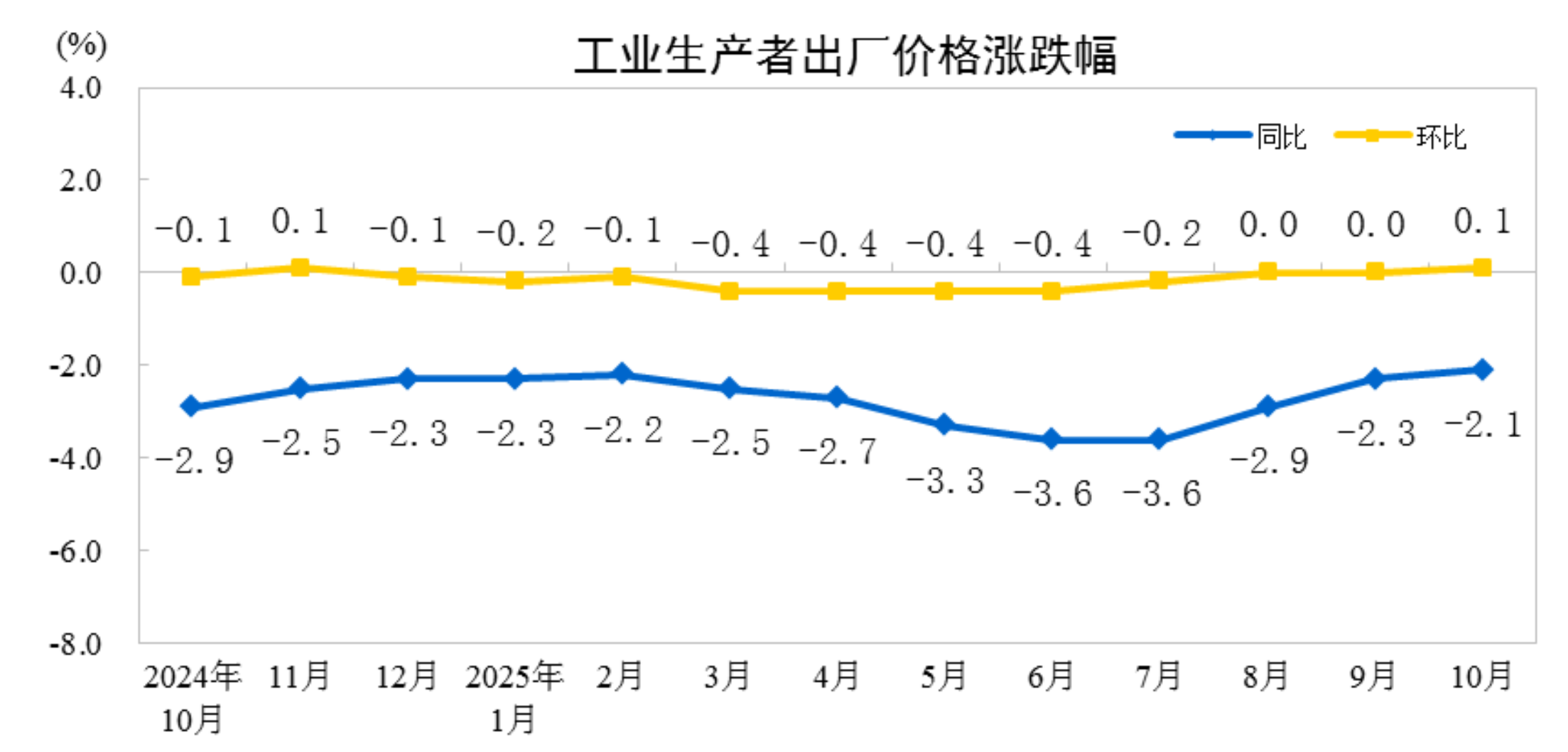
2025年10月份工业生产者出厂价格同比降幅继续收窄 环比由平转涨
Guo Jia Tong Ji Ju· 2025-11-09 01:30
Core Insights - In October 2025, the national industrial producer's ex-factory prices decreased by 2.1% year-on-year, with a narrowing decline of 0.2 percentage points compared to the previous month, while month-on-month, it shifted from flat to an increase of 0.1% [1] - The average industrial producer's ex-factory prices from January to October fell by 2.7% compared to the same period last year [1] Group 1: Year-on-Year Changes - In October, the prices of production materials decreased by 2.4%, contributing approximately 1.77 percentage points to the overall decline in ex-factory prices. The mining industry saw a price drop of 7.8%, raw materials decreased by 2.5%, and processing industry prices fell by 1.9% [4] - Consumer goods prices decreased by 1.4%, impacting the overall ex-factory price level by about 0.36 percentage points. Food prices fell by 1.6%, while clothing prices decreased by 0.3% [4] Group 2: Month-on-Month Changes - In October, the ex-factory prices of production materials increased by 0.1%, contributing approximately 0.08 percentage points to the overall increase in ex-factory prices. The mining industry prices rose by 1.0%, while raw materials remained flat, and processing industry prices increased by 0.1% [8] - Consumer goods prices remained flat, with food and clothing prices both decreasing by 0.1%, while general consumer goods prices increased by 0.7% [8] Group 3: Industrial Purchase Prices - The industrial producer's purchase prices saw a year-on-year decline of 2.7%, with a month-on-month increase of 0.1%. The prices of fuel and power decreased by 7.4%, agricultural and sideline products fell by 5.2%, and chemical raw materials dropped by 5.0% [9][12] - Notably, prices for non-ferrous metals and wires increased by 7.5% [7]
四川9月CPI同比下降0.9% 猪肉价格继续下跌
Sou Hu Cai Jing· 2025-10-20 00:54
Group 1: Consumer Price Index (CPI) Insights - In September, the Consumer Price Index (CPI) in Sichuan decreased by 0.9% year-on-year, maintaining the same decline as the previous month, while the month-on-month change stabilized after a decline [1] - The core CPI, excluding food and energy prices, increased by 0.6% year-on-year, reaching the highest point since February of this year [1] - Seasonal factors led to significant month-on-month price increases for fresh vegetables (7.4%), fresh fruits (1.2%), and eggs (3.5%) [1] Group 2: Pork and Livestock Industry - Pork prices continued to decline, with a month-on-month decrease of 0.3% and a year-on-year drop of 20.6% [1] - The president of the Sichuan Livestock Association's Pig Industry Committee indicated that despite signals to reduce overproduction since July, the industry will remain in a "bottoming phase" due to a 10-month transmission cycle for capacity reduction and the absence of peak seasonal consumption [1] Group 3: Service Prices and Tourism - In September, tourism-related service prices reached a low point after the summer and before the National Day holiday, with significant month-on-month decreases in airfares (15.8%), hotel accommodations (5.5%), and travel agency fees (9.1%) [1] Group 4: Industrial Producer Price Index (PPI) Insights - In September, the Industrial Producer Price Index (PPI) showed a notable narrowing of the year-on-year decline to 2.0%, which is a reduction of 1.1 percentage points from the previous month, while month-on-month it increased by 0.4% [2] - The automotive manufacturing sector experienced a month-on-month price increase of 0.4% but a year-on-year decrease of 3.6% [2] - The "anti-involution" policy has led to visible results in capacity management, with some industries like steel and photovoltaics experiencing a narrowing of year-on-year price declines [2]