页岩气

Search documents
多个重大工程把“规划图”变成“实景图” 硬核实力支撑经济发展底气
Yang Shi Wang· 2025-05-14 07:53
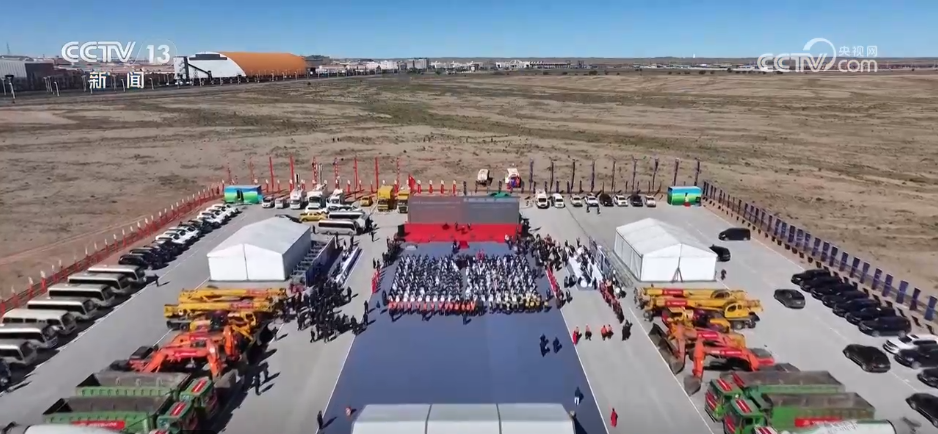
Group 1 - The "Hualong One" nuclear reactor at Fuqing Nuclear Power Unit 5 has safely operated for 1000 days, demonstrating the safety and advancement of China's third-generation nuclear technology [1] - The reactor has generated a total of 37 billion kilowatt-hours of electricity since its operation began on August 18, 2022, contributing to global clean energy development [1] - The "Hualong One" reactor can produce 10 billion kilowatt-hours annually, equivalent to reducing carbon dioxide emissions by approximately 8.16 million tons each year [1] Group 2 - The Daitengxia project has achieved a cumulative electricity generation of over 20 billion kilowatt-hours [2] Group 3 - The construction of the second cross-border railway between China and Mongolia has officially commenced, connecting Ganchi Maodu in China to Gashu Suhait in Mongolia [3] - The railway will span 9.91 kilometers, with a 6.08-kilometer bridge section crossing the border, and is expected to be completed by 2027 [5] Group 4 - The Qilian Jiutian Mountain Tunnel of the Xikang High-speed Railway has successfully passed through, marking the completion of all 20 tunnels along the line [6] - The new railway line will reduce travel time from Xi'an to Ankang from approximately 3 hours to under 1 hour, enhancing transportation services in the region [7] Group 5 - A shale gas exploration well in the Sichuan Basin has set a new record with a vertical depth exceeding 5300 meters, indicating significant advancements in shale gas exploration capabilities [8][9]

我国前脚停止购买美国天然气,万万没想到,赖清德亮出大手笔
Sou Hu Cai Jing· 2025-05-05 19:51
Group 1 - Taiwan plans to increase procurement from the U.S., including natural gas and oil, to address trade deficits, which is a key focus in upcoming tariff negotiations [1] - The push for energy independence and resilience in Taiwan is expected to lead to significant construction of natural gas receiving stations, potentially increasing carbon emissions [1] - The impact of the ongoing U.S.-China trade war is severe on Taiwan's traditional industries, with an estimated 100,000 workers affected [1] Group 2 - Past actions, such as selling TSMC and purchasing U.S. weapons and LNG, have not improved Taiwan's negotiating position with the U.S., indicating a miscalculation by Taiwan's leadership [2] - Since February, China has halted imports of U.S. LNG, with significant drops in volumes imported, reflecting the broader impact of tariffs on energy trade [2] - The U.S. energy sector, particularly shale gas, is facing challenges due to the loss of the Chinese market, with profit margins for Texas shale oil companies plummeting [5] Group 3 - China's response to the trade war has shifted to a more proactive stance, targeting service trade sectors for retaliation, indicating a strategic adjustment in its approach [7] - The diversification of China's energy imports, including a significant increase from Canada, highlights the changing dynamics in global energy supply chains [5]