
Semiconductors(半导体)

Search documents
Texas Instruments (TXN) 2025 Conference Transcript
2025-09-04 13:12
Texas Instruments (TXN) 2025 Conference Summary Company Overview - **Company**: Texas Instruments (TXN) - **Date**: September 04, 2025 - **Context**: Conference call discussing the company's performance and outlook in the semiconductor industry Key Points Industry Recovery - **Recovery Status**: The semiconductor industry is experiencing a broad-based recovery, with four out of five end markets showing improvement, except for automotive, which is recovering at a slower pace [3][4] - **Investment Strategy**: Texas Instruments is focusing on manufacturing and technology investments, with ongoing expansions in U.S.-based factories [4][5] Financial Performance - **Earnings Growth**: Texas Instruments is projected to achieve approximately 80% to 90% earnings growth from current estimates, down from 100% two quarters ago due to improved performance [1] - **Inventory Management**: The company maintains a unique inventory strategy, with over 90% of wafer fabs being internal, allowing for better control and reduced reliance on distributors [16][17] Market Dynamics - **End Market Performance**: Industrial applications are showing strong growth, while automotive remains sluggish. The industrial sector has seen double-digit growth across various sectors [56][61] - **Geographic Performance**: China accounts for about 20% of Texas Instruments' business, with strong performance noted in the region [64][65] Manufacturing and Capacity - **Internal Manufacturing**: The shift towards more internal manufacturing is seen as advantageous, allowing for better control over supply chains and cost efficiencies [24][25] - **CapEx Plans**: The company plans to maintain a capital expenditure (CapEx) range of $2 billion to $5 billion for the next year, depending on revenue expectations [49][52] Pricing Strategy - **Price Adjustments**: Texas Instruments regularly adjusts prices based on market conditions, with a long-term expectation of low single-digit price declines [39][40] Future Outlook - **Long-term Growth**: The company is well-positioned to capitalize on long-term growth trends in industrial, automotive, and data center markets, with a focus on expanding manufacturing capacity in the U.S. [32][33] - **M&A Considerations**: Texas Instruments continues to evaluate potential mergers and acquisitions, particularly in the analog space, but does not have immediate plans for significant acquisitions [78][79] Risks and Challenges - **Automotive Market**: The automotive sector's slower recovery poses a risk, as it was the last to begin inventory corrections and has not shown the same growth as other sectors [56][58] - **Market Sentiment**: There is a noted shift in market sentiment from earlier in the year, with some pull-ins affecting order trends [42][43] Conclusion - Texas Instruments is navigating a complex recovery landscape in the semiconductor industry, with strong performance in most sectors, strategic investments in manufacturing, and a focus on maintaining competitive pricing and inventory management. The company remains optimistic about long-term growth opportunities while being cautious about the automotive market's recovery trajectory.

英伟达电话会:“将Blackwell带到中国市场”的机会真实存在,今年毛利率仍有望达70%中段水平
美股IPO· 2025-08-28 04:59
Core Insights - The global AI capital expenditure is expected to reach $3-4 trillion by 2030, driven by significant growth in AI infrastructure investments [5][12][45] - NVIDIA's sovereign AI revenue is projected to reach $20 billion this year, more than doubling from the previous year, with substantial opportunities in the Chinese market [9][19] - The new Blackwell architecture is setting a new standard for AI inference performance, with a 10x return on investment per token and a 50x improvement in efficiency compared to previous architectures [7][17] Group 1 - NVIDIA's Q2 revenue showed double-digit growth, with Blackwell chip revenue increasing by 17% quarter-over-quarter, indicating strong demand [3][12] - The data center revenue continues to lag, partly due to a decrease in H20 chip sales, with no sales to China in the quarter [3][15] - The company expects significant growth opportunities in the coming years, particularly in AI infrastructure [3][12][66] Group 2 - The Chinese market presents a $50 billion opportunity this year, with an expected annual growth rate of 50% [4][48] - NVIDIA is in discussions with the U.S. government regarding the importance of meeting the Chinese market's needs and aims to sell Blackwell architecture GPUs there [4][48] Group 3 - The anticipated $3-4 trillion in AI capital expenditure is considered reasonable, given the rapid expansion of AI infrastructure projects globally [5][12] - Major cloud service providers have doubled their capital expenditures to $600 billion over two years, indicating a robust market for AI infrastructure [5][12][43] Group 4 - Factors driving continued investment growth include the need for increased training and inference computing, the global development of sovereign AI, and the adoption of enterprise AI [6][16] - Blackwell's NVLink and CUDA architecture redefine inference economics, enabling unprecedented scalability and monetization of computing resources [7][17] Group 5 - The gross margin is expected to reach the mid-70% range by year-end, reflecting strong profitability potential [8][28] - The company is accelerating investments to capitalize on future growth opportunities, with a focus on enhancing product performance and customer profitability [8][39] Group 6 - The company anticipates total revenue of $54 billion for Q3, excluding any assumptions for H20 shipments to China [27][66] - The expected GAAP and non-GAAP gross margins for Q3 are projected to be 73.3% and 73.5%, respectively [27][28]



The Best Growth Stock ETF to Invest $100 in Right Now
The Motley Fool· 2025-08-17 13:45
Core Insights - The Vanguard Growth ETF has significantly outperformed the S&P 500 over various multi-year periods, making it an attractive option for investors seeking growth stocks [1][10] - The ETF focuses on large-cap companies with above-average growth potential, tracking the CRSP U.S. Large Cap Growth Index [5][6] Investment Strategy - Investors are encouraged to consider the Vanguard Growth ETF as a way to gain exposure to high-growth companies, including the "Magnificent Seven" stocks: Apple, Amazon, Alphabet, Meta Platforms, Microsoft, Nvidia, and Tesla [1][2][6] - The ETF allows for investment with a minimum of $100, making it accessible for a wide range of investors [4] ETF Composition - As of June 30, the Vanguard Growth ETF held 165 stocks, with 60% of its assets in the technology sector and 19% in consumer discretionary [6] - The top 10 holdings account for approximately 59% of the ETF's total assets, with Microsoft (11.76%), Nvidia (11.63%), and Apple (9.71%) being the largest [6][7] Performance Metrics - Over the past 3 years, the Vanguard Growth ETF returned 21.22%, compared to 16.30% for the Vanguard S&P 500 ETF [10] - The ETF has shown consistent outperformance over 5, 10, and 15-year periods as well, although it is noted that growth stocks can experience significant downturns during market declines [10]





This Red-Hot Vanguard ETF Just Hit an All-Time High. Here's Why It's Still Worth Buying in August.
The Motley Fool· 2025-08-16 11:20
Core Viewpoint - The Vanguard Dividend Appreciation ETF is a well-balanced investment option that combines growth, income, and value stocks, making it appealing for investors seeking diversified exposure [2][10]. Investment Strategy - The ETF targets companies that are not only capable of paying dividends but also have a track record of growing their earnings, which supports future dividend increases [4][11]. - Unlike typical dividend-focused funds, the Vanguard Dividend Appreciation ETF includes tech giants like Broadcom, Apple, and Microsoft, which have low yields but strong growth potential [6][7]. Holdings Overview - The top holdings in the ETF include Broadcom (6.1% of the fund, 0.7% yield), Microsoft (5.2%, 0.6%), JPMorgan Chase (4.1%, 1.8%), and Apple (3.4%, 0.4%), among others [5]. - Eight of the ten largest holdings have yields under 1%, yet they represent industry leaders across various sectors, including technology, financials, and healthcare [5][8]. Valuation Comparison - The Vanguard Dividend Appreciation ETF has a price-to-earnings (P/E) ratio of 25.7 and a yield of 1.7%, which is more attractive compared to the Vanguard S&P 500 ETF's P/E of 27.8 and yield of 1.2% [9]. - The ETF's larger holdings consist of blue-chip stocks with higher yields and reasonable valuations, contributing to its overall attractive valuation [9]. Long-term Appeal - The ETF's focus on dividend quality over quantity is particularly appealing to long-term investors who prefer not to invest in lower-quality companies for higher yields [11]. - The fund is positioned as a balanced option for investors looking to gain exposure to both megacap growth stocks and blue-chip dividend-paying value stocks, potentially making it a better choice than the Vanguard S&P 500 ETF [12][13].

AI Development Is Accelerating: 1 Vanguard ETF to Buy Right Now
The Motley Fool· 2025-08-14 09:00
Group 1 - The Vanguard Information Technology ETF (VGT) captures major themes in AI development, focusing on companies supplying chips, cloud platforms, and enterprise software [1][2] - The ETF has become a strong proxy for AI build-out despite not being designed as an AI fund at launch in 2004 [3] - Major holdings include Nvidia (16.7%), Microsoft (14.9%), and Apple (13%), reflecting their dominance in the AI market [4] Group 2 - The ETF includes 319 stocks providing AI exposure, with companies like Palantir Technologies, Cisco Systems, and IBM contributing to its diversified portfolio [7] - The fund has delivered 19.7% annual total returns over the past 15 years, significantly outperforming the S&P 500 [8] - Analysts predict substantial AI infrastructure spending, with estimates of $300 billion from major tech companies by 2025, benefiting the ETF's holdings [10] Group 3 - The ETF has some limitations, excluding Amazon and Alphabet, which play significant roles in AI, and is heavily weighted towards Apple, Microsoft, and Nvidia [11] - Historical performance shows the fund experienced significant drawdowns, over 50% in 2008 and 30% in 2022, but long-term compounding has offset these downturns [12] - The ETF is positioned to adapt to future AI breakthroughs, owning companies with the necessary capital and market dominance [13][14]
刚刚!陈立武拒绝辞职!
国芯网· 2025-08-08 14:36
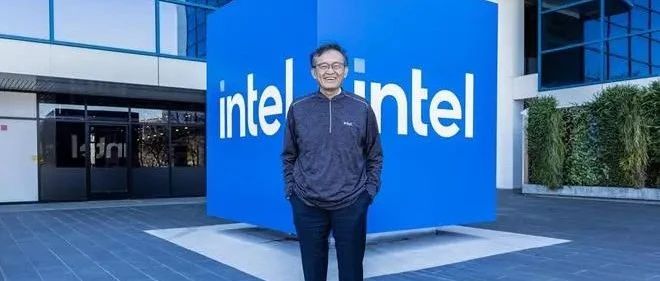
Core Viewpoint - The article emphasizes Intel's commitment to the United States' national and economic security, highlighting the importance of the company's role in the semiconductor industry and its ongoing communication with the government to address concerns raised by recent events [3][4][5]. Group 1: Company Leadership and Commitment - Intel's CEO, Chen Liwu, expresses his deep appreciation for the United States, where he has lived for over 40 years, and emphasizes the honor of leading Intel during this critical time [3][4]. - The CEO acknowledges the importance of Intel's success for the U.S. technology and manufacturing sectors, as well as for national security and economic strength [4]. - The company is making progress in its transformation and innovation efforts, with strong support from the board of directors [4]. Group 2: Future Outlook and Technological Advancements - Intel plans to adopt advanced semiconductor manufacturing technologies later this year, marking a significant milestone in its operations [4]. - The CEO expresses optimism about the future, stating that the company's mission is clear and opportunities are limitless [4].

ST(STM) - 2025 Q2 - Earnings Call Transcript
2025-07-24 08:32
Financial Data and Key Metrics Changes - The company reported revenues of $2.77 billion, which was $56 million above the midpoint of the business outlook range, with automotive revenues slightly below expectations but offset by higher revenues in personal electronics and industrial [6][5] - Gross margin was 33.5%, in line with the midpoint of the business outlook range, but decreased by 660 basis points year over year due to unfavorable product mix and lower manufacturing efficiency [18][20] - Net income for Q2 was a loss of $97 million compared to a profit of $353 million in the same quarter last year, with diluted earnings per share at negative $0.11 compared to positive $0.38 [20][21] Business Line Data and Key Metrics Changes - Automotive revenues grew approximately 14% sequentially, driven by Asia Pacific excluding China and the Americas, but overall automotive revenues declined by about 24% year over year [16][17] - Industrial revenues exceeded expectations with strong sequential growth and year-over-year improvement, confirming that Q1 was the bottom [10][11] - Personal electronics and communication equipment revenues were above expectations, driven by increased content in personal electronics and the expanding low earth orbiting satellite market [13][14] Market Data and Key Metrics Changes - Year-over-year sales to OEMs decreased by 15.3%, while distribution sales also saw a decline [17] - The automotive market is projected to grow, with a total of 90 million vehicles expected, of which 30 million are battery electric and hybrid electric vehicles [42][54] - The company noted that inventory levels in distribution are returning to normal, with improvements seen in Asia Pacific and China [11][115] Company Strategy and Development Direction - The company is focused on car electrification and digitalization, with significant wins in silicon carbide and automotive microcontrollers [8][9] - The strategy includes reshaping the manufacturing footprint and resizing the global cost base, with expected annual cost savings in the high triple million dollar range by the end of 2027 [25][26] - The company aims to maintain its net CapEx plan between $2 billion and $2.3 billion for 2025 to support manufacturing reshaping [25] Management's Comments on Operating Environment and Future Outlook - Management acknowledged uncertainty in the automotive market due to trade and tariff situations but expects sequential growth in Q3 compared to Q2 [7][25] - The company anticipates Q3 revenues to be around $3.17 billion, representing a 14.6% sequential increase but a 2.5% year-over-year decrease [23][25] - Management expressed confidence in the strength of the product portfolio and customer base, despite specific customer dynamics affecting automotive revenues [43][54] Other Important Information - The company received recognition for sustainability, ranking 25th in the Time World's Most Sustainable Companies list and achieving an A-list rating for climate change tracking [14][15] - The company maintained a solid financial position with a net financial position of $2.67 billion as of June 28, 2025 [22] Q&A Session Summary Question: Can you clarify the impact of the manufacturing reshaping program on Q3 gross margin guidance? - Management indicated that the gross margin for Q3 is negatively impacted by approximately 140 basis points due to currency effects and nonrecurring costs related to the manufacturing reshaping program [30][31] Question: Have there been any changes in customer order patterns due to geopolitical uncertainties? - Management noted that all verticals are expected to grow sequentially in Q3, except for automotive due to specific customer dynamics, but overall customer demand remains positive [40][41] Question: What is the outlook for Q4 revenues and potential impacts from new U.S. rules on EVs? - Management expects Q4 revenues to grow sequentially and potentially year-over-year, with no significant impact from new U.S. rules on EVs anticipated at this time [62][65] Question: Can you provide insights on the pricing environment for general-purpose microcontrollers? - Management confirmed that pricing for general-purpose microcontrollers remains stable, with low single-digit pricing observed [104] Question: What is the current status of inventory levels in the distribution channel? - Management reported that inventory levels in distribution have improved, with excess inventory declining by about one month on average [114][115]

This Spectacular Vanguard ETF Is on Course to Crush the S&P 500 Yet Again in 2025
The Motley Fool· 2025-07-23 09:28
Core Insights - The information technology sector is the largest in the S&P 500, with a weighting of 33.9%, driven by major companies like Nvidia, Microsoft, and Apple, which collectively have a market capitalization of $11 trillion [1] - The Vanguard Information Technology ETF (VGT) has consistently outperformed the S&P 500 since its inception in 2004, with a compound annual return of 13.7% compared to the S&P 500's 10.1% [3][13] Sector Overview - The Vanguard ETF invests across the entire information technology sector, holding 319 stocks from 12 subsegments, with semiconductors being the largest segment at 30.4% [5][6] - The top 10 holdings in the Vanguard ETF represent 58.8% of its portfolio value, all of which are involved in the AI sector [7][8] Key Companies - Nvidia, Microsoft, and Apple are the top three holdings in the Vanguard ETF, with weightings of 16.74%, 14.89%, and 13.03% respectively [8] - Microsoft is a leader in AI software with its Copilot virtual assistant, while Palantir Technologies is recognized for its AI platforms that help businesses and governments [9][10] Performance Metrics - As of July 18, the Vanguard ETF had a year-to-date gain of 10.3%, outperforming the S&P 500's gain of 7.3% [14] - The ETF's ultra-low expense ratio of 0.09% makes it significantly cheaper to own compared to the industry average of 0.93% [12] Investment Strategy - An investment split between the S&P 500 and the Vanguard ETF since 2004 would have resulted in a significantly higher return, highlighting the potential benefits of including the ETF in a diversified portfolio [16]

TI(TXN) - 2025 Q2 - Earnings Call Transcript
2025-07-22 21:32
Financial Data and Key Metrics Changes - Revenue for the second quarter was $4.4 billion, representing a 9% sequential increase and a 16% year-over-year increase [5] - Gross profit was $2.6 billion, or 58% of revenue, with a sequential gross profit margin increase of 110 basis points [10] - Operating profit was $1.6 billion, or 35% of revenue, up 25% from the previous year [10] - Net income was $1.3 billion, or $1.41 per share, which included a $0.02 benefit not in the original guidance [10] - Cash flow from operations was $1.9 billion for the quarter and $6.4 billion on a trailing twelve-month basis [11] - Free cash flow on a trailing twelve-month basis was $1.8 billion [12] Business Line Data and Key Metrics Changes - Analog revenue grew 18% year-over-year, while Embedded Processing grew 10% [5] - The Other segment grew 14% from the year-ago quarter [5] - The industrial market increased upper teens year-over-year and mid-teens sequentially [8] - The automotive market increased mid-single digits year-over-year but decreased low-single digits sequentially [8] - Personal electronics grew around 25% year-over-year and upper single digits sequentially [8] - Enterprise systems grew about 40% year-over-year and about 10% sequentially [8] - Communications equipment grew more than 50% year-over-year and was up about 10% sequentially [8] Market Data and Key Metrics Changes - Customer inventories remain at low levels, indicating a cyclical recovery [6][7] - The industrial market showed broad recovery across all sectors, while automotive recovery has been shallow [20][32] - China saw a 19% sequential increase and a 32% year-over-year increase in revenue, with industrial leading the growth [51] Company Strategy and Development Direction - The company is focused on maintaining flexibility to navigate geopolitical and tariff-related challenges [6][22] - Continued investment in competitive advantages such as manufacturing and technology is emphasized [14] - The company aims to deliver long-term free cash flow per share growth through disciplined capital allocation [14] Management's Comments on Operating Environment and Future Outlook - Management noted that tariffs and geopolitics are reshaping global supply chains, and they are prepared for future changes [6][22] - The cyclical recovery is ongoing, with four out of five markets showing recovery, but automotive is lagging [20][106] - Management expressed caution regarding the automotive market, which has not yet fully recovered [20][82] Other Important Information - Capital expenditures for the year are expected to be around $5 billion, with depreciation estimates for 2025 between $1.8 billion and $2 billion [41][42] - The company returned $6.7 billion to shareholders over the past twelve months through dividends and stock repurchases [12] Q&A Session Summary Question: Change in tone regarding cyclical recovery - Management acknowledged a cautious tone due to ongoing tariff and geopolitical uncertainties, but noted that industrial markets are recovering [18][22] Question: Gross margins guidance - Management indicated that gross margins are expected to be flat despite higher depreciation, with other income and expense impacting the outlook [24] Question: Improvement in turns business - Management confirmed that the turns business grew sequentially in Q2, with low customer inventories supporting this trend [30] Question: Impact of tariffs on industrial segment - Management stated that the industrial segment showed broad recovery, despite concerns about tariffs affecting trade [32] Question: CapEx and depreciation framework - Management reiterated that CapEx plans remain consistent, with no changes expected for 2025 and 2026 [41][42] Question: End market performance and potential softening - Management noted that industrial markets ran hotter than expected in Q2, while automotive has not shown significant recovery yet [70][82] Question: Future exposure to AI markets - Management highlighted strong growth in the data center segment, with opportunities in application-specific markets expected to grow in the future [111]
TI(TXN) - 2025 Q2 - Earnings Call Transcript
2025-07-22 21:30
Financial Data and Key Metrics Changes - Revenue for Q2 2025 was $4.4 billion, representing a 9% sequential increase and a 16% year-over-year increase [4] - Gross profit was $2.6 billion, or 58% of revenue, with a sequential gross profit margin increase of 110 basis points [9] - Operating profit was $1.6 billion, or 35% of revenue, up 25% from the previous year [9] - Net income was $1.3 billion, or $1.41 per share, including a $0.02 benefit not in original guidance [10] - Cash flow from operations was $1.9 billion for the quarter, with a trailing twelve-month cash flow of $6.4 billion [10] - Free cash flow for the trailing twelve months was $1.8 billion [11] Business Line Data and Key Metrics Changes - Analog revenue grew 18% year-over-year, while Embedded Processing revenue grew 10% [4] - The Other segment grew 14% year-over-year [4] - Industrial market revenue increased upper teens year-over-year and mid-teens sequentially [7] - Automotive market revenue increased mid-single digits year-over-year but decreased low-single digits sequentially [7] - Personal electronics grew around 25% year-over-year and upper single digits sequentially [7] - Enterprise systems grew about 40% year-over-year and about 10% sequentially [7] - Communications equipment grew more than 50% year-over-year and was up about 10% sequentially [7] Market Data and Key Metrics Changes - The industrial market showed recovery across all sectors, while the automotive market's recovery was shallow [5][7] - Personal electronics and enterprise systems demonstrated strong growth, indicating robust demand in those segments [7] - China saw a significant increase in industrial revenue, up about 19% sequentially and 32% year-over-year, while automotive remained consistent with overall results [49] Company Strategy and Development Direction - The company is focused on maintaining flexibility to navigate geopolitical disruptions and supply chain challenges [5][21] - Continued investment in competitive advantages such as manufacturing and technology, broad product portfolio, and diverse positions is emphasized [14] - The company aims to deliver long-term free cash flow per share growth through disciplined capital allocation [14] Management's Comments on Operating Environment and Future Outlook - Management noted that the semiconductor cycle is continuing, with customer inventories remaining low [5] - The company is prepared for a range of scenarios as it transitions into 2025 and beyond, emphasizing the importance of flexibility [13] - Management expressed cautious optimism regarding the cyclical recovery, with four out of five markets showing positive trends [103] Other Important Information - Capital expenditures for the quarter were $1.3 billion, with a total of $4.9 billion over the last twelve months [11] - The company returned $6.7 billion to shareholders in the past twelve months through dividends and stock repurchases [12] - Total debt outstanding is $14.15 billion, with a weighted average coupon of 4% [12] Q&A Session Summary Question: Change in tone regarding cyclical recovery - Management acknowledged the cyclical recovery but noted the impact of tariffs and geopolitical factors, leading to a more cautious outlook for Q3 [16][21] Question: Gross margin guidance for next quarter - Management indicated that gross margins are expected to be flat despite higher depreciation and other expenses impacting the outlook [22][23] Question: Growth in turns business - Management confirmed that the turns business saw sequential growth in Q2, with low customer inventories contributing to this trend [28] Question: Impact of tariffs on automotive market - Management stated that the automotive market has not yet recovered, with customers being cautious due to tariffs and geopolitical uncertainties [19][78] Question: CapEx and depreciation framework - Management reiterated that CapEx for 2025 is expected to be $5 billion, with depreciation estimates remaining consistent [40][41] Question: Exposure to AI markets - Management highlighted strong growth in the data center segment, with opportunities in AI expected to increase in the future [106]