
氢能

Search documents
重庆:成渝氢走廊的建设实施,将形成可复制推广的氢能产业示范模式
Zheng Quan Shi Bao Wang· 2025-12-16 05:24
Core Viewpoint - The "Chongqing Hydrogen Station Industry Development Plan (2025-2035)" has been issued, focusing on the establishment of a hydrogen supply network along the Chengyu corridor to enhance the application of hydrogen fuel cell vehicles and promote regional development [1] Group 1: Infrastructure Development - The Chengyu hydrogen corridor will utilize the Chengdu-Chongqing, Chengdu-Rong, and Chengyu-Suizhou highways as main transportation routes [1] - Key logistics hubs include the Chongqing Liangjiang New Area Automotive Industry Park, Guoyuan Port National Logistics Hub, Chengdu International Aviation Hub, and the Western China Modern Logistics Port, with an annual freight volume exceeding 220 million tons and a logistics vehicle ownership exceeding 50,000 [1] - Hydrogen infrastructure will be strategically developed along the Chengyu trunk line, particularly in Dazhu District, Tongliang District, Tongnan District, and Rongchang District [1] Group 2: Industry Expansion - The plan aims to enhance the scale of hydrogen fuel cell vehicle applications along intercity trunk lines and gradually expand applications to surrounding areas [1] - The establishment of a complete hydrogen energy industry chain is intended to drive collaborative development in urban clusters such as southern Sichuan and western Chongqing [1] - The implementation of the Chengyu hydrogen corridor will create a replicable and promotable hydrogen industry demonstration model, providing significant support for the construction of the Yangtze River Economic Belt hydrogen corridor [1]
Utility Global、京瓷国际推进清洁氢能技术商业化
Zhong Guo Hua Gong Bao· 2025-12-16 03:23
中化新网讯 12月11日,美国休斯顿Utility Global公司正式官宣与日本京都京瓷国际达成战略协作,两大 企业将聚焦清洁氢能技术商业化突破,携手扩大Utility Global专利电化学电池产能,加速其H2Gen制氢 系统的市场化进程。 据悉,Utility Global的H2Gen专利技术无需依赖外部电力,仅通过捕获现有工业废气中的电化学能即可 分解水制备清洁氢能。根据合作框架,Utility Global独创的陶瓷——金属电化学电池技术,将与京瓷的 先进材料研发实力、全球制造网络深度融合。双方明确三大核心合作方向:共建高产能生产线、联合攻 关先进材料工程与自动化技术、协同开展产品质量及耐久性验证。 双方在产能布局上已敲定清晰路线,先期以京瓷美国北卡罗来纳州亨德森维尔精细陶瓷基地为依托,打 造专属制造中心,2026年实现初始产能投产;后续将随工业级项目需求扩容,逐步铺展全球制造网络。 ...
韩国Lupro加码布局绿氢绿氨项目
Zhong Guo Hua Gong Bao· 2025-12-16 03:23
中化新网讯 12月10日,韩国Lupro公司发布声明称,正加速扩大其在泰国与阿联酋的绿氢及绿氨产能布 局。该公司明确表示,此举旨在构建覆盖绿氢与绿氨"生产、储存、运输、加注"全环节的一体化价值 链。 Lupro披露,公司已与泰国能源企业Ma集团正式签署合作协议,敲定在泰国境内利用可再生氢能生产 1000万吨绿氨的重大项目。根据合作规划,双方将合资在泰国北柳府投建一座占地面积达540万平方米 的可再生能源综合工厂。项目将充分依托泰国得天独厚的资源与区位优势:一方面借力当地丰富的水资 源及充足的太阳能、风能发电潜力,保障绿能生产的原料与能源供给;另一方面依托泰国作为全球海运 物流枢纽的战略地位,大幅提升产品运输效率。 产品流通方面,协议明确了分级输出方案。Lupro将把泰国工厂生产的部分绿氨通过韩国全罗北道新万 金港运回国内,定向用于混燃发电、氢燃料电池电站及工业制造等领域;剩余产能则将借助Ma集团的渠 道优势,远销至东南亚及欧洲市场。 ...
三菱重工完成氨裂解制氢中试
Zhong Guo Hua Gong Bao· 2025-12-16 03:16
Core Insights - Mitsubishi Heavy Industries has achieved a significant breakthrough in ammonia cracking hydrogen production technology, successfully producing hydrogen with 99% purity using steam as a heating source [1] Group 1: Technological Advancements - The new steam heating system demonstrates two core advantages over traditional combustion-based hydrogen production: a significant reduction in reaction temperature and a substantial decrease in operational costs [1] - The absence of a combustion furnace allows for notable miniaturization potential of the equipment, facilitating flexible deployment closer to application scenarios [1] Group 2: Strategic Initiatives - Mitsubishi Heavy Industries has identified the construction of a hydrogen supply chain based on ammonia as a strategic priority, planning to advance the development of medium-sized distributed ammonia cracking systems [1] - The technology has been selected for Japan's New Energy and Industrial Technology Development Organization's project focused on competitive hydrogen supply chain construction, with collaboration from partners such as Japan Catalytic and Hokkaido Electric Power to accelerate technology implementation [1]
中科轩达:固态储氢材料年产能3000吨,锚定电氢耦合场景应用 | 势银调研
势银能链· 2025-12-16 03:10
Core Viewpoint - The article discusses the advancements and strategic positioning of Baotou Zhongke Xuanda New Energy Technology Co., Ltd. in the solid-state hydrogen storage materials sector, highlighting its technological innovations, production capacity, and market expansion efforts in both domestic and international markets [3][5][15]. Technological Development - Zhongke Xuanda was established in 2017, focusing on the research and industrialization of rare earth magnesium-nickel battery materials and solid-state hydrogen alloy materials, aiming to commercialize hydrogen energy technologies that were previously only in the research phase in China [7]. - The company successfully built a pilot production line with a capacity of 200-300 tons, overcoming challenges in material formulation, process design, and production equipment over nearly two years [7]. - The firm has optimized existing hydrogen storage materials to enhance performance in terms of cycle life, kinetics/thermodynamics, and reaction temperature, indirectly achieving cost reduction and efficiency improvement [7]. Production Capacity - 2024 is identified as a pivotal year for Zhongke Xuanda's production capacity, with the completion of a major solid-state hydrogen production base in Anqing, achieving an annual capacity of 3,000 tons [8]. - The company operates a dual-base strategy with the Baotou base focusing on rare earth magnesium-nickel battery materials and the Anqing base specializing in solid-state hydrogen materials, covering various product categories to meet diverse market needs [8][11]. Market Application - Zhongke Xuanda's hydrogen storage materials are designed for specific applications, ensuring a precise match between material types and usage scenarios, including emergency power supply systems and high-performance charging stations [12]. - The company has established multiple practical cases, including collaborations with leading forklift manufacturers and projects for emergency power supply in high-altitude areas [12]. Market Expansion - The company is actively expanding its international presence, having established partnerships with clients in the USA, France, Germany, and Bulgaria, focusing on high-value solid-state hydrogen materials for export [15]. - Zhongke Xuanda's future development strategy includes continuous product iteration, targeting solid-state hydrogen applications in large-scale renewable energy storage, and developing customized solutions for industry challenges [15].

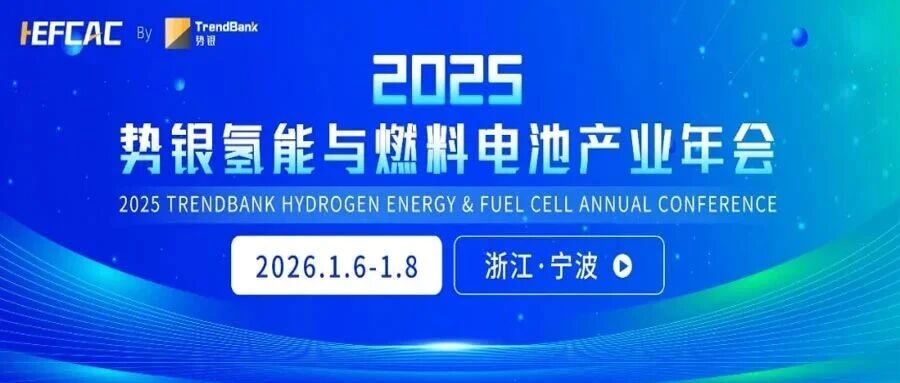
保时来新材料总冠名 | 2025势银氢燃年会(1月6-8日,宁波)
势银能链· 2025-12-16 03:10
Core Viewpoint - The article discusses the upcoming 2025 Trend Bank Hydrogen Energy and Fuel Cell Industry Annual Conference, highlighting its focus on key industry topics and the participation of leading companies in the hydrogen sector [2][6]. Group 1: Conference Details - The conference is scheduled for January 6-8, 2026, at the Ningbo Nanyuan Wanghai Hotel, aiming to gather over 500 participants [6]. - The event will feature various specialized sessions and the "Trend Bank Future Award" ceremony, providing opportunities for networking and knowledge sharing [2][6]. - Ticket prices start at RMB 2500, with early bird discounts available for registrations before December 10 [7]. Group 2: Company Highlight - Baoshilai New Materials Technology (Suzhou) Co., Ltd. is the main sponsor of the conference and will deliver a keynote speech [4]. - The company is recognized as a leading supplier of green hydrogen electrode products in China, with eight advanced production lines capable of meeting a demand of 3GW/year for electrolyzer electrodes [4][5]. - Baoshilai has developed several series of electrodes, including BSL-1.0 and BSL-5.0, which address industry challenges such as catalyst coating detachment and load fluctuation [5].
国金证券:氢能非电降碳关键载体,蓄势已成、拐点将至
Di Yi Cai Jing· 2025-12-16 00:18
Group 1 - The report from Guojin Securities indicates that the resonance of hydrogen energy policies domestically and internationally opens up demand, making producers of green methanol who can ensure sales channels competitive [1] - The hydrogen production equipment industry has undergone significant clearing, and the optimization of the competitive landscape will bring more concentrated opportunities, with a focus on equipment companies that already have project experience [1] - The fuel cell vehicle sector is on the brink of an explosion, driven by the decrease in fuel cell system costs and the exemption of highway tolls for hydrogen vehicles, with the competitive landscape narrowing and leading fuel cell companies now listed [1] Group 2 - Solid oxide fuel cells are highlighted, particularly Bloom Energy and its core supply chain, as well as domestic and overseas system providers [1]

氢能产业化提速 A股公司抢抓先机
Zheng Quan Ri Bao· 2025-12-15 15:48
Group 1 - Hydrogen energy is a key component of the future national energy system, with China's green hydrogen production capacity exceeding 220,000 tons annually, accounting for over 50% of global production [2][3] - The number of hydrogen refueling stations in China has surpassed 540, representing 40% of the global total [2] - National policies are forming a comprehensive support system for the hydrogen energy industry, with local governments also implementing supportive measures [2][3] Group 2 - The National Energy Administration has announced the first batch of hydrogen energy pilot projects, including 9 regional and 41 project trials, focusing on various aspects of hydrogen production and development [3] - Significant technological breakthroughs in the hydrogen energy sector are being reported, particularly in water electrolysis and hydrogen storage, which are crucial for large-scale development [3][4] - The International Energy Agency predicts that China's hydrogen demand will reach between 100 million to 130 million tons by 2050 [5] Group 3 - Companies in the hydrogen energy industry are actively investing in projects and collaborations, with a focus on commercial applications in short-distance travel and integrated hydrogen production projects [6] - Shenzhen Energy Group is set to launch a 250,000 kW photovoltaic hydrogen production project by July 2024, with additional projects under construction [6] - Companies are advised to focus on core areas such as green hydrogen production and storage, while also enhancing collaboration across the industry and internationally to leverage policy benefits [6]
东方电气石化氢能(自贡)有限公司成立
Zheng Quan Ri Bao Wang· 2025-12-15 13:47
Group 1 - The establishment of Dongfang Electric Petrochemical Hydrogen Energy (Zigong) Co., Ltd. has been announced, with a registered capital of 87.8 million yuan [1] - The company's business scope includes gas operation, food sales, solar power technology services, new energy technology research and development, and the sale of hydrogen refueling and storage facilities [1] - The shareholders of the company include Dongfang Electric Group Dongfang Boiler Co., Ltd., Sinopec Sales Co., Ltd., and Zigong Anhydrous Port Investment Development Co., Ltd. [1]
中国旭阳集团旗下旭阳氢能连续三年通过国家清洁氢认证 氢气产销量再创新高
Zhi Tong Cai Jing· 2025-12-15 09:26
Core Viewpoint - Xuyang Group has achieved significant milestones in its hydrogen energy business, establishing itself as a leading player in the hydrogen market, particularly in the Beijing-Tianjin-Hebei region, with record-breaking production and sales figures [1][2]. Group 1: Hydrogen Production and Sales - Xuyang Group's hydrogen production and sales have surpassed 90,000 standard cubic meters per day for several consecutive days, and in November 2025, the monthly hydrogen production and sales reached 2.85 million standard cubic meters, setting a new historical record [1]. - The company has a hydrogen resource capacity of 5.3 billion cubic meters per year and has established four high-purity hydrogen production bases, with a total production capacity of 34 tons per day [4]. Group 2: Certification and Standards - Xuyang Hydrogen has been certified as a high-purity hydrogen supplier for three consecutive years by the National Hydrogen Energy and Fuel Cell Vehicle Demonstration Evaluation Platform, with a carbon emission of only 0.49 kg CO2e/kg H, which is 90% lower than the national clean hydrogen certification standard [2][3]. - The certification also aligns with the EU's Carbon Border Adjustment Mechanism (CBAM), indicating that Xuyang's hydrogen products meet the highest global standards for carbon emissions [2]. Group 3: Technological Advancements - The company has implemented innovative production processes and a comprehensive carbon management system, achieving a hydrogen purity of 99.999% and establishing an industry-leading low-carbon hydrogen production and transportation model [3]. - Xuyang has participated in drafting national hydrogen energy standards and has developed key technologies such as the Zhengzhong hydrogen conversion catalyst [3]. Group 4: Environmental Impact and Applications - Xuyang's clean hydrogen products help clients reduce overall hydrogen costs and achieve carbon reduction goals, contributing to an annual reduction of 58,000 tons of carbon dioxide emissions [4]. - The company has established a hydrogen energy logistics fleet with a transportation capacity of 5.5 tons per day and has opened five hydrogen energy heavy truck transportation routes [4]. Group 5: Future Development Plans - Xuyang Group aims to leverage its hydrogen energy supply chain advantages to build a diversified hydrogen energy ecosystem, focusing on increasing high-purity hydrogen production capacity and expanding its network layout [5]. - The company is also developing the first integrated demonstration project for liquid hydrogen in China, which will enhance hydrogen supply capabilities and expand applications in various fields, including aerospace and heavy-duty vehicles [6]. Group 6: Strategic Vision - Xuyang Group is committed to creating a unique business model and competitive advantage in the hydrogen energy sector, contributing to the global green energy revolution through continuous innovation and development [7].