
绿氢

Search documents
氢能周度观察(16):资源禀赋+政策协同+全链落地,川渝氢能潜力突出-20260401
Changjiang Securities· 2026-04-01 01:17
Investment Rating - The report indicates a positive investment outlook for the hydrogen energy sector, particularly in the Sichuan and Chongqing regions, which are expected to become key national hydrogen application pilot city clusters due to their resource endowment, policy synergy, and comprehensive chain implementation [4][10]. Core Insights - In March 2026, the Ministry of Industry and Information Technology, the Ministry of Finance, and the National Development and Reform Commission jointly announced the launch of a new round of national hydrogen energy pilot projects, with Sichuan and Chongqing positioned as potential leaders in this initiative [4][10]. - The Sichuan and Chongqing regions have a rich hydrogen resource base, including green, blue, and gray hydrogen supply systems, supported by significant hydropower and natural gas reserves [10]. - The policy framework in these regions emphasizes a collaborative approach, integrating provincial and municipal efforts to promote the hydrogen industry across the entire value chain [10]. - The infrastructure for hydrogen energy is being rapidly developed, with a network of hydrogen corridors and a growing number of hydrogen refueling stations planned to support the increasing adoption of fuel cell vehicles [10]. - The report highlights significant growth in fuel cell vehicle registrations in Sichuan and Chongqing, with projections indicating a cumulative insurance of 1,204 and 449 vehicles respectively from 2021 to 2025, reflecting a strong upward trend in adoption [10]. Summary by Sections Policy Initiatives - The report outlines various policy measures aimed at promoting hydrogen energy, including the establishment of a hydrogen energy industry development plan in Sichuan, which targets the deployment of 6,000 fuel cell vehicles and the construction of 60 hydrogen refueling stations by 2025 [11]. - In Chongqing, policies are in place to support the development of a comprehensive hydrogen refueling network, with plans to build 72 refueling stations by 2035, enhancing the region's hydrogen supply capacity [11]. Resource Endowment - Sichuan boasts over 100 million kilowatts of hydropower capacity, the highest in the country, and has significant potential for wind and solar energy, which can be harnessed for low-cost hydrogen production [10]. - The industrial by-product hydrogen production in Sichuan and Chongqing exceeds 20,000 and 13,000 tons annually, providing a low-cost hydrogen source for initial industry development [10]. Infrastructure Development - The report details the establishment of a hydrogen energy backbone network through various corridors and routes, enhancing transportation and distribution capabilities [10]. - As of September 2025, a total of 34 hydrogen refueling stations are expected to be operational in the Sichuan and Chongqing regions, with further expansions planned [10]. Industry Chain Completeness - The report notes the presence of leading enterprises in the hydrogen energy sector within Sichuan and Chongqing, covering key areas such as hydrogen production, storage, transportation, and fuel cell technology [10]. - Significant advancements in critical materials for hydrogen energy applications have been achieved, with ongoing efforts to accelerate industrialization [10].
内蒙古能源局党组书记、局长曹思阳: 结合开展光伏治沙工程 谋划实施一批区内自用新能源项目
Zhong Guo Dian Li Bao· 2026-03-31 03:12
Core Viewpoint - The 20th Central Committee's Fourth Plenary Session emphasizes the construction of a new energy system and the development of an energy powerhouse, with specific targets set for 2030 and 2035, guiding the energy sector's development for the "14th Five-Year Plan" and beyond [1] Group 1: Energy Security and Development - Inner Mongolia has made significant progress in high-quality energy development since the "14th Five-Year Plan," focusing on traditional energy transformation and green energy development, ensuring energy supply tasks are met with over 12 billion tons of coal production [2] - The region's electricity generation capacity has doubled, with power delivery increasing by 72% compared to the end of the "13th Five-Year Plan," maintaining a leading position in national energy security [2] Group 2: New Energy Development - New energy capacity has reached 170 million kilowatts, achieving a 2.4 times increase in installed capacity and a 2.1 times increase in power generation compared to the end of the "13th Five-Year Plan," with over 70% of new electricity consumption coming from new energy sources [3] - The region has established 230 intelligent coal mines, accounting for 80% of coal mines in operation, with a production capacity of 1.14 billion tons, leading the nation [3] Group 3: Energy Reform and Cooperation - The approval process for new energy and grid projects has been streamlined, reducing processing time from six months to approximately three months, facilitating market entry for new energy [4] - Cooperation with central enterprises has expanded, with agreements totaling over 1.1 trillion yuan, and energy collaboration with Mongolia has strengthened, including the establishment of nine power transmission channels [4] Group 4: Future Energy Strategy - The "15th Five-Year Plan" aims to enhance traditional energy supply capabilities and promote the development of modern energy economies, transitioning Inner Mongolia from an energy region to an energy powerhouse [5][6] - The focus will be on improving the efficiency of new energy development, expanding renewable energy applications, and enhancing the construction of a new power system [6][7] - The region plans to develop green hydrogen and establish a comprehensive hydrogen transport network, positioning itself as a leader in the green hydrogen industry [7]
媒体报道丨首次写入政府工作报告 中国绿色燃料出海 产业示范项目加速推进
国家能源局· 2026-03-31 01:59
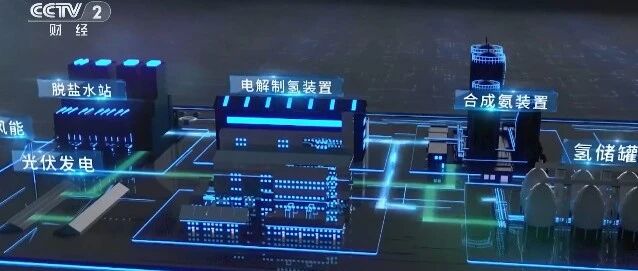
Core Viewpoint - The article emphasizes the importance of developing green fuels, such as green hydrogen, green methanol, green ammonia, and sustainable aviation fuel, as a new growth point for China's economy during the 14th Five-Year Plan period, especially in the current geopolitical context [5][15]. Group 1: Green Fuel Development - Green fuels have been included in the government work report for the first time this year, highlighting their significance in promoting green transformation and utilizing surplus wind and solar resources [5]. - The first domestic shipment of green hydrogen-synthesized ammonia has successfully been sent to South Korea, produced from the Chifeng green hydrogen ammonia project, which is expected to expand production to 1.5 million tons by 2028 [8]. - The Daan project by State Power Investment Corporation has a stable operation capacity of 32,000 tons of green hydrogen and 180,000 tons of green ammonia annually, with costs less affected by raw material prices compared to gray ammonia [12]. Group 2: Market Potential and Investment Opportunities - The China Electricity Council predicts that by 2030, the value of China's green fuel industry could exceed 1 trillion yuan, with green hydrogen demand expected to reach between 2.4 million tons and 4.3 million tons annually [15][22]. - The first green methanol dual-fuel power roll-on/roll-off ship has successfully completed its first green methanol refueling operation, with about 500 tons of green methanol injected, reducing greenhouse gas emissions by approximately 85% compared to traditional fuels [18]. - By 2025, the number of commercialized green methanol projects in China is expected to reach 7, with a total capacity of 506,000 tons per year, and over 47,500 tons of green methanol expected to be exported [20]. Group 3: Equipment Manufacturing and Global Competitiveness - The domestic green fuel industry is driving the development of related equipment manufacturing, with a significant increase in overseas orders for hydrogen production equipment [25][26]. - A large hydrogen equipment manufacturer in Hefei has reported a backlog of orders until the end of the year, indicating a substantial growth in demand [28]. - The price of methanol has increased by 72% since the beginning of the year, showcasing the growing importance and value of green fuels, with domestic hydrogen equipment manufacturers poised to seize market opportunities [32].

未知机构:1本次试点政策关于交通领域的补贴不及预期但是在化工领域的支持力度是超预期的-20260330
未知机构· 2026-03-30 01:40
Summary of Key Points from the Conference Call Industry Overview - The conference call discusses the hydrogen industry, specifically focusing on the developments in green hydrogen technology and its applications in various sectors. Core Insights and Arguments - The pilot policy regarding subsidies in the transportation sector was below expectations, while the support in the chemical sector exceeded expectations [1] - The market structure is expected to maintain a dominance of alkaline electrolyzers, with PEM electrolyzers as a secondary option, and AEM technology gradually being introduced [2] - The industry anticipates that large-scale application of green hydrogen will occur by 2028, when policy directions will be clearer, early projects will have completed validation, and the costs of key components will further decrease [3] Additional Important Content - The emphasis on the chemical sector's unexpected support indicates potential investment opportunities in that area, while the transportation sector may face challenges due to lower-than-expected subsidies [1] - The gradual introduction of AEM technology suggests a shift in market dynamics that could impact future investments and technological advancements [2] - The timeline for large-scale application by 2028 highlights the importance of monitoring policy changes and technological developments in the coming years [3]
电力设备行业跟踪周报:油价高企新能源受益,锂电需求和盈利有望超预期
Soochow Securities· 2026-03-30 00:24
Investment Rating - The report maintains an "Overweight" rating for the power equipment industry, indicating a positive outlook for investment opportunities [1]. Core Insights - High oil prices are benefiting the renewable energy sector, with expectations for increased demand and profitability in lithium batteries [1]. - The report highlights significant growth in energy storage and electric vehicle markets, driven by government policies and technological advancements [4][5]. Industry Trends - The energy storage sector is experiencing robust growth, with countries like Croatia and Spain investing heavily in solar and storage projects. The report anticipates a global energy storage installation growth of over 60% in 2026, with a compound annual growth rate of 30-50% from 2027 to 2029 [4][5]. - In the electric vehicle market, there was a notable decline in retail sales in early March, but expectations for recovery are set for April, with a projected annual growth of around 3% [4][5]. - The report also notes a significant increase in lithium prices, with battery-grade lithium carbonate reaching 158,000 CNY/ton, reflecting a 4.8% increase [4]. Company Performance - Notable company performances include: - Ningde Times: 2025 revenue of 804 billion CNY, a 4% year-on-year increase, with a net profit of 32.6 billion CNY, down 19% [4]. - BYD: 2025 revenue of 804 billion CNY, with a net profit of 32.6 billion CNY, reflecting a 19% decrease [4]. - Other companies like Ganfeng Lithium and CATL are also highlighted for their strong market positions and growth potential [4][5]. Investment Strategy - The report suggests a focus on companies leading in energy storage and lithium battery production, such as Ningde Times, Ganfeng Lithium, and others, due to their strong growth prospects and market leadership [4][5]. - It emphasizes the importance of technological advancements and government policies in driving the growth of the renewable energy sector, particularly in energy storage and electric vehicles [4][5].





振兴东北老工业基地,绿氢+绿色燃料是否靠谱?
势银能链· 2026-03-27 03:39
Core Viewpoint - The article emphasizes the importance of "green hydrogen + green fuel" as a sustainable development path for revitalizing Northeast China's old industrial base, highlighting collaborative efforts among the three provinces of Heilongjiang, Jilin, and Liaoning to leverage their respective resources and strengths in this transition [2][10]. Group 1: Policy and Strategic Initiatives - Jilin Province is focusing on the development of a comprehensive "green hydrogen" industry chain, aiming to establish itself as the largest "green liquid fuel supply base" in China, with plans to produce 100,000 tons of green hydrogen and 300,000 tons of green liquid fuel annually [2][3]. - Heilongjiang's "14th Five-Year Plan" outlines the development of the biomass fuel industry, targeting the production of green hydrogen, green ammonia, and green methanol, with an expected revenue of 30 billion yuan from related industries [3][4]. Group 2: Resource and Technical Challenges - The article identifies two main challenges in the sustainable development of the "green hydrogen + green fuel" model: the limited availability of biomass resources and the potential for supply shortages as production scales up [3][4]. - The reliance on biomass alone is insufficient for long-term sustainability, necessitating the integration of electric fuel production to enhance resource efficiency and reduce carbon emissions [4][5]. Group 3: Collaborative Development and Projects - The article highlights the collaborative efforts among the three provinces, showcasing various projects that integrate biomass and electric fuel production, such as the Tianying wind-solar-hydrogen ammonia project, which exemplifies the synergy between renewable energy and biomass resources [6][7]. - Jilin's notable projects include the world's largest green ammonia project, which produces 32,000 tons of green hydrogen and 180,000 tons of green ammonia annually, and has received international certification for its products [8][9]. Group 4: Future Outlook and Economic Impact - The article concludes that the "green hydrogen + green fuel" strategy is not only feasible but also essential for the economic revitalization of Northeast China, providing a robust framework for sustainable growth and new economic opportunities [10]. - The integration of electric fuel production with existing biomass resources is expected to create a billion-level green hydrogen and ammonia industry cluster, enhancing the region's economic landscape [6][9].

宁德时代3月26日全情报分析报告:「宁德时代投资莒纳科技布局零碳」对股市有积极影响
36氪· 2026-03-26 13:46
Core Viewpoint - Ningde Times is expanding its business into the green hydrogen sector by investing in Junna Technology, a leading company in the electrolytic water hydrogen production field, marking a significant step towards its zero-carbon solutions strategy [8]. Market Performance - On March 26, Ningde Times' stock price increased by 1.18%, closing at 402.50, with a trading volume of 267,600 shares [5][6]. - The stock has shown a 3-day increase of 0.13% and a 5-day increase of 0.50%, with a total market capitalization of 1,836.96 billion [7]. Investment Impact - The investment in Junna Technology is expected to enhance Ningde Times' market competitiveness and diversify its operations in the renewable energy sector, positively influencing its stock price [13]. - As a leader in the electrolytic water hydrogen production field, Junna Technology's technology leadership will help Ningde Times maintain its competitive edge and drive innovation [14]. - The investment aligns with global carbon neutrality goals, potentially attracting policy support and subsidies, further benefiting the company's stock price [15]. Public Sentiment Analysis - As of March 26, the event related to the investment generated a total of 83 online public sentiment messages, with 69.9% being positive and no negative messages reported [9]. - The primary channel for this information dissemination was WeChat, accounting for 13.25% of the total messages [11]. Industry Outlook - The investment in Junna Technology positions Ningde Times to capitalize on the growing green hydrogen market, which is seen as a critical component of zero-carbon solutions, allowing the company to seize industry growth opportunities [15]. - The lithium battery industry is expected to see a 30% increase in global demand by 2026, with significant growth in the energy storage market, benefiting Ningde Times directly [23].
制氢篇-绿氢降本路径与技术格局
2026-03-26 13:20
Hydrogen Industry Research Summary Industry Overview - Hydrogen energy is positioned as a core non-electric renewable energy source, complementing lithium batteries with high energy density and long endurance advantages [1][2] - China accounts for 30% of global hydrogen demand, with over 80% being gray hydrogen and only 1% being green hydrogen, indicating significant replacement potential [1] Key Insights and Arguments - The core of reducing green hydrogen costs lies in electricity consumption, with mid-term costs expected to align with industrial by-product hydrogen and long-term costs potentially matching coal-based hydrogen [1][6] - Alkaline electrolysis (ALK) is currently the mainstream technology, while Proton Exchange Membrane (PEM) technology has broad future replacement potential due to its adaptability to wind and solar fluctuations and high current density [1][4] - Carbon Capture, Utilization, and Storage (CCUS) technology increases the cost of coal-based hydrogen by approximately 12 CNY/kg, significantly hindering the large-scale commercialization of blue hydrogen [1][7] - The core barriers for PEM electrolysis include the cost of precious metal catalysts and the need for breakthroughs in domestic proton exchange membrane production [1][13] Market Dynamics - The market landscape is still evolving, with major players like Longi Green Energy and Sungrow Power competing alongside heavy equipment manufacturers like Huadian Heavy Industry [1][14] - Hydrogen is primarily used as an industrial raw material in China, with limited energy application penetration. Future applications are expected to expand into transportation, electricity, and construction sectors [3][4] Cost Structure and Reduction Pathways - The main components of green hydrogen costs are electricity consumption, with pathways for cost reduction including technological improvements in equipment, increasing the proportion of green electricity supply, and lowering upstream wind and solar costs [5][6] - Mid-term projections suggest that alkaline electrolysis costs could approach those of industrial by-product hydrogen, while long-term projections aim for parity with coal-based hydrogen [6] Transitioning Existing Capacity - The low-carbon transition of existing fossil fuel hydrogen production capacity relies on the integration of CCUS technology, which, despite its potential to significantly reduce carbon emissions, currently faces high costs that limit its large-scale application [7] Industrial By-product Hydrogen Sources - Industrial by-product hydrogen primarily comes from five sources: light hydrocarbon utilization, coke industry, chlor-alkali industry, ammonia synthesis, and methanol synthesis [8][9] - The light hydrocarbon utilization sector is in a growth phase, while the coke and chlor-alkali industries are mature, with declining production capacities [8][9] Purification Technologies - The most widely used purification method for fossil fuel and industrial by-product hydrogen is pressure swing adsorption, while cryogenic separation and membrane separation are less commonly applied due to the current market's limited demand for ultra-pure hydrogen [10] Electrolysis Technology Routes - Electrolysis water hydrogen production includes four main technology routes: alkaline electrolysis, PEM, solid oxide electrolysis, and anion exchange membrane electrolysis, each with distinct characteristics and development stages [10][12] - While alkaline electrolysis is the most mature, PEM and solid oxide electrolysis show higher potential for efficiency improvements and cost reductions [12] Market Participation and Competition - The domestic electrolysis market is characterized by significant uncertainty, with various types of companies participating, including listed renewable energy firms and heavy equipment manufacturers [14]
氢能-从氢到-X-绿氢氨醇的远大前程
2026-03-26 13:20
Summary of Hydrogen Energy Industry Conference Call Industry Overview - The hydrogen energy industry, particularly green hydrogen, is positioned as a key player in the "14th Five-Year Plan" with clear policy support from the Ministry of Industry and Information Technology and other departments [2][4] - The strategic importance of green hydrogen is increasing due to rising traditional energy prices from geopolitical conflicts and the approaching 2030 carbon peak target [2] Key Points and Arguments Green Hydrogen Cost Challenges - The cost reduction of green hydrogen faces a "trilemma" of low electricity costs, low initial investment, and long operational duration being difficult to achieve simultaneously [1][3] - Current theoretical costs for green ammonia are estimated to be 700-1,600 RMB per ton higher than gray ammonia, necessitating subsidies and carbon tax mechanisms to bridge the price gap [1][7] Production and Demand Dynamics - Green methanol's demand is primarily driven by the shipping industry, influenced by new EU emission regulations, making it a preferred decarbonization solution due to its maturity and low conversion costs [1][13] - Green aviation fuel is seen as the only mainstream path for aviation decarbonization, with short-term production relying on fatty acid synthesis and long-term potential in green hydrogen + CO2 synthesis [1][14] Technological Developments - Alkaline electrolyzers dominate due to cost advantages, but the combination of alkaline and PEM electrolyzers is gaining traction for large projects due to better adaptability to power fluctuations [1][5] - Three operational models for green hydrogen projects are identified: full grid balancing, grid-friendly with storage, and pure off-grid, each with distinct cost and investment implications [6][4] Market and Regulatory Challenges - Green methanol production faces stringent EU standards requiring sustainable carbon sources, complicating the reuse of existing coal-based production capacities [12][9] - The transition from gray to green ammonia is hindered by high costs and the need for policy support to cover the price differential [8][13] Investment Focus - Investment should focus on two main areas: electrolyzer manufacturers with high load adjustment capabilities (e.g., Sungrow Power) and project operators with resource coordination abilities (e.g., Jidian Co., China Tianying) [1][17] - The green hydrogen chemical industry is expected to see significant growth, but challenges in energy and material supply must be addressed for successful project implementation [15][16] Conclusion - The green hydrogen industry is poised for growth, driven by technological advancements and regulatory support, but faces significant challenges in cost and market acceptance that require strategic investment and policy backing to overcome [17]
新天绿色能源(00956) - 海外监管公告-2025年年度报告摘要、年度报告及审计报告
2026-03-25 12:19
承董事會命 新天綠色能源股份有限公司 譚建鑫 (於中華人民共和國註冊成立的股份有限公司) (股份代號:00956) 海外監管公告 本公告乃由新天綠色能源股份有限公司(「本公司」)根據《香港聯合交易所有限公司證券上市規則》第 13.10B條作出。 茲載列本公司於上海證券交易所網站刊發之《新天綠色能源股份有限公司2025年年度報告摘要》《新 天綠色能源股份有限公司2025年年度報告》及《新天綠色能源股份有限公司2025年度已審財務報 表》,僅供參閱。 執行董事及總裁 香港交易及結算所有限公司及香港聯合交易所有限公司對本公告的內容概不負責,對其準確性或完 整性亦不發表任何聲明,並明確表示,概不對因本公告全部或任何部分內容而產生或因倚賴該等內 容而引致的任何損失承擔任何責任。 公司代码:600956 公司简称:新天绿能 新天绿色能源股份有限公司 2025 年年度报告摘要 新天绿色能源股份有限公司2025 年年度报告摘要 第一节 重要提示 1、 本年度报告摘要来自年度报告全文,为全面了解本公司的经营成果、财务状况及未来发展规 中國河北省石家莊市,2026年3月25日 於本公告日期,本公司非執行董事為曹欣博士、李連平博士 ...