
绿氨

Search documents
媒体报道丨首次写入政府工作报告 中国绿色燃料出海 产业示范项目加速推进
国家能源局· 2026-03-31 01:59
Core Viewpoint - The article emphasizes the importance of developing green fuels, such as green hydrogen, green methanol, green ammonia, and sustainable aviation fuel, as a new growth point for China's economy during the 14th Five-Year Plan period, especially in the current geopolitical context [5][15]. Group 1: Green Fuel Development - Green fuels have been included in the government work report for the first time this year, highlighting their significance in promoting green transformation and utilizing surplus wind and solar resources [5]. - The first domestic shipment of green hydrogen-synthesized ammonia has successfully been sent to South Korea, produced from the Chifeng green hydrogen ammonia project, which is expected to expand production to 1.5 million tons by 2028 [8]. - The Daan project by State Power Investment Corporation has a stable operation capacity of 32,000 tons of green hydrogen and 180,000 tons of green ammonia annually, with costs less affected by raw material prices compared to gray ammonia [12]. Group 2: Market Potential and Investment Opportunities - The China Electricity Council predicts that by 2030, the value of China's green fuel industry could exceed 1 trillion yuan, with green hydrogen demand expected to reach between 2.4 million tons and 4.3 million tons annually [15][22]. - The first green methanol dual-fuel power roll-on/roll-off ship has successfully completed its first green methanol refueling operation, with about 500 tons of green methanol injected, reducing greenhouse gas emissions by approximately 85% compared to traditional fuels [18]. - By 2025, the number of commercialized green methanol projects in China is expected to reach 7, with a total capacity of 506,000 tons per year, and over 47,500 tons of green methanol expected to be exported [20]. Group 3: Equipment Manufacturing and Global Competitiveness - The domestic green fuel industry is driving the development of related equipment manufacturing, with a significant increase in overseas orders for hydrogen production equipment [25][26]. - A large hydrogen equipment manufacturer in Hefei has reported a backlog of orders until the end of the year, indicating a substantial growth in demand [28]. - The price of methanol has increased by 72% since the beginning of the year, showcasing the growing importance and value of green fuels, with domestic hydrogen equipment manufacturers poised to seize market opportunities [32].

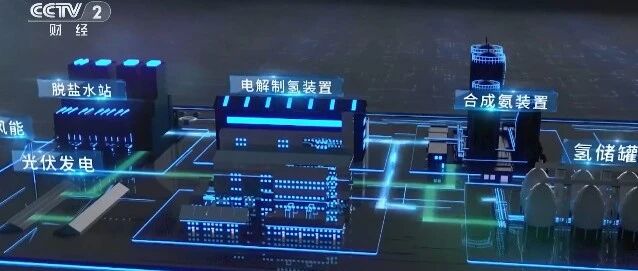
媒体报道︱新型能源体系建设提速
国家能源局· 2026-03-30 08:31
Core Viewpoint - The article emphasizes the importance of energy security and the transition to a new energy system in China, driven by recent geopolitical tensions and domestic policy initiatives aimed at achieving carbon neutrality and sustainable energy development [2][4]. Group 1: Energy Security and Transition - The Chinese government has outlined plans to strengthen energy security and transition towards renewable energy sources, as highlighted in the recent government work report [2]. - The "14th Five-Year Plan" explicitly includes the goal of building an energy powerhouse, which will guide energy development over the next five years [4]. - The construction of a new energy system is deemed essential, with significant achievements in renewable energy over the past decade, including a shift where non-fossil energy consumption has surpassed that of oil [4][6]. Group 2: Renewable Energy Development - By 2025, the power generation structure is expected to see a significant increase in renewable energy sources, with wind and solar power installations projected to rise dramatically by 2060 [6]. - Wind power capacity is expected to grow from 520 million kilowatts in 2024 to between 3.22 billion and 3.34 billion kilowatts by 2060, while solar power capacity is projected to increase from 890 million kilowatts to between 5.5 billion and 6.5 billion kilowatts [6]. - By 2060, renewable energy is anticipated to account for over 90% of total power generation, with wind and solar contributing approximately 77% of the total generation [6]. Group 3: Electrification and Energy Efficiency - The electrification rate in China is projected to reach around 35% by 2030, significantly above the OECD average, with electricity expected to account for over 50% of terminal energy consumption by 2050 [8]. - The government aims to ensure that new electricity demand is primarily met by renewable energy sources by the end of the "14th Five-Year Plan" [8]. - The article highlights the need for technological innovation and improved systems to enhance the proportion of renewable energy in total electricity consumption [9]. Group 4: Hydrogen Energy Potential - Hydrogen energy is identified as a crucial component for achieving carbon neutrality, with policies shifting towards a more integrated approach involving industry funds and green finance [11]. - The development of green ammonia and green methanol is projected to significantly reduce reliance on oil and natural gas imports, with green ammonia potentially decreasing oil import dependence by 1.77% and natural gas by 62.67% [12]. - The article suggests that hydrogen and hydrogen-based fuels can play a vital role in decarbonizing various sectors, including industry and transportation, thereby contributing to a cleaner energy landscape [13].

中东冲突进入第2个月对于电新煤炭板块意味着什么
2026-03-30 05:15
Summary of Conference Call Records Industry Overview - The records discuss the impact of the ongoing Middle East conflict on the energy sector, particularly focusing on the coal, lithium battery, and renewable energy industries [1][2][3]. Key Points and Arguments Energy Supply Disruption - The closure of the Strait of Hormuz has led to a supply disruption of approximately 15 million barrels per day of crude oil and 5 million barrels per day of refined oil, significantly exceeding previous oil crises [2][3]. - The conflict is expected to cause energy shortages to become more apparent starting April 2026, with Asian countries facing greater impacts than Europe [2][3]. Electric Vehicle and Battery Demand - High oil prices are accelerating the electrification of transportation, with an estimated additional demand of 180 GWh for power batteries over the next three years [1][3]. - The domestic market for lithium batteries is expected to see a significant increase in demand, with projections indicating a year-on-year growth of over 50% for commercial vehicle electrification [4][5]. Lithium Battery Supply Chain Dynamics - The lithium battery sector is experiencing a period of heightened demand and price increases, with major battery manufacturers planning production increases of 15%-30% in Q2 2026 [4][5]. - Specific materials within the lithium battery supply chain, such as lithium iron phosphate and copper foil, are expected to see price increases due to supply constraints and rising production costs [5][6]. Coal Market Dynamics - The global coal supply-demand balance is improving, with significant increases in production from China, Indonesia, and India, totaling approximately 550 million tons [8][9]. - However, structural price increases are anticipated, particularly for Australian coal, due to high demand from Japan and South Korea, which rely on high-quality coal [9][10]. Renewable Energy Transition - The energy crisis is expected to accelerate the transition to renewable energy, particularly in electric vehicle and energy storage sectors, moving from emergency demand to sustainable growth [4][5]. - The cost of green hydrogen and ammonia is projected to become competitive with traditional fuels when oil prices exceed $108 per barrel [18][19]. Investment Recommendations - The investment outlook for the renewable energy sector is positive, with a focus on materials and battery segments. Companies involved in lithium iron phosphate and hexafluorophosphate lithium are recommended due to their potential for profit growth [6][11]. - In the coal sector, Yancoal Australia is highlighted as a key investment opportunity, with significant profit elasticity linked to coal price increases [11][12]. Geopolitical Impacts on Energy Policy - The ongoing geopolitical tensions are prompting countries to reconsider their energy policies, with Taiwan planning to restart nuclear power plants by 2027-2029 [15][17]. - The conflict is also expected to drive demand for nuclear power and uranium, as countries seek to diversify their energy sources [16][17]. Challenges in Renewable Energy Sectors - The hydrogen sector has faced recent stock price adjustments due to negative interpretations of government subsidy policies, despite the long-term potential for green hydrogen to become economically viable [20][21]. Additional Important Insights - The records indicate that the current energy crisis is reshaping global energy policies and accelerating the adoption of renewable energy technologies, with significant implications for investment strategies across various sectors [1][2][3][4][5][6][8][9][10][11][12][15][16][17][18][19][20][21].



电力设备行业跟踪周报:油价高企新能源受益,锂电需求和盈利有望超预期
Soochow Securities· 2026-03-30 00:24
Investment Rating - The report maintains an "Overweight" rating for the power equipment industry, indicating a positive outlook for investment opportunities [1]. Core Insights - High oil prices are benefiting the renewable energy sector, with expectations for increased demand and profitability in lithium batteries [1]. - The report highlights significant growth in energy storage and electric vehicle markets, driven by government policies and technological advancements [4][5]. Industry Trends - The energy storage sector is experiencing robust growth, with countries like Croatia and Spain investing heavily in solar and storage projects. The report anticipates a global energy storage installation growth of over 60% in 2026, with a compound annual growth rate of 30-50% from 2027 to 2029 [4][5]. - In the electric vehicle market, there was a notable decline in retail sales in early March, but expectations for recovery are set for April, with a projected annual growth of around 3% [4][5]. - The report also notes a significant increase in lithium prices, with battery-grade lithium carbonate reaching 158,000 CNY/ton, reflecting a 4.8% increase [4]. Company Performance - Notable company performances include: - Ningde Times: 2025 revenue of 804 billion CNY, a 4% year-on-year increase, with a net profit of 32.6 billion CNY, down 19% [4]. - BYD: 2025 revenue of 804 billion CNY, with a net profit of 32.6 billion CNY, reflecting a 19% decrease [4]. - Other companies like Ganfeng Lithium and CATL are also highlighted for their strong market positions and growth potential [4][5]. Investment Strategy - The report suggests a focus on companies leading in energy storage and lithium battery production, such as Ningde Times, Ganfeng Lithium, and others, due to their strong growth prospects and market leadership [4][5]. - It emphasizes the importance of technological advancements and government policies in driving the growth of the renewable energy sector, particularly in energy storage and electric vehicles [4][5].




能源自主不再只是“叙事”,储能锂电高景气明确,风电肩负重任
SINOLINK SECURITIES· 2026-03-29 09:04
Investment Rating - The report maintains a positive investment outlook on the wind power, energy storage, lithium battery, and photovoltaic sectors, highlighting their potential for long-term growth due to increasing global demand and supportive government policies [2][6][12]. Core Insights - The report emphasizes that the current historical low costs of wind and solar storage will accelerate global energy independence, particularly in response to geopolitical tensions, leading to increased government incentives and orders for related technologies [2][6]. - Major European countries are implementing specific policies to enhance energy independence, focusing on wind power, energy storage, and electric transportation [6][7]. - The report identifies key investment opportunities in wind power, energy storage, lithium batteries, and photovoltaic products, suggesting a new long-cycle demand growth for Chinese manufacturers in these sectors [2][6][12]. Summary by Relevant Sections Wind Power - Goldwind Technology reported strong annual results for 2025, with revenue of 73 billion yuan, a year-on-year increase of 28.8%, and a net profit of 2.77 billion yuan, up 49.1% [8][9]. - The report continues to recommend Goldwind and other companies in the wind power sector, despite short-term challenges related to international expansion [10][12]. Energy Storage and Lithium Batteries - The lithium battery supply chain is experiencing price increases driven by strong demand for lithium carbonate and lithium iron phosphate [3][13]. - The report highlights the high demand for energy storage solutions and the acceleration of electric transportation, indicating a robust market outlook for lithium battery materials [2][3][12]. Photovoltaics - The upcoming SpaceX IPO and related projects are expected to boost demand for photovoltaic products, particularly in the space and commercial aerospace sectors [15][16]. - The report notes that high silver prices are benefiting certain photovoltaic technologies, with expectations for increased market share and profitability for BC+ silver-free products [17][18]. Hydrogen and Fuel Cells - The hydrogen sector is poised for growth as local policies are expected to support the industry, with green methanol becoming economically viable due to rising oil prices [18][19]. - The report mentions significant contracts in the green ammonia sector, indicating a shift towards renewable energy sources for fertilizer production [19][20]. Electric Grid - The electric equipment export value increased by 35% year-on-year in January-February, indicating strong demand for power infrastructure upgrades globally [22][24]. - Companies like State Grid and others are expected to benefit from ongoing projects in high-voltage transmission and automation, with significant contract wins reported [23][24][26].

振兴东北老工业基地,绿氢+绿色燃料是否靠谱?
势银能链· 2026-03-27 03:39
Core Viewpoint - The article emphasizes the importance of "green hydrogen + green fuel" as a sustainable development path for revitalizing Northeast China's old industrial base, highlighting collaborative efforts among the three provinces of Heilongjiang, Jilin, and Liaoning to leverage their respective resources and strengths in this transition [2][10]. Group 1: Policy and Strategic Initiatives - Jilin Province is focusing on the development of a comprehensive "green hydrogen" industry chain, aiming to establish itself as the largest "green liquid fuel supply base" in China, with plans to produce 100,000 tons of green hydrogen and 300,000 tons of green liquid fuel annually [2][3]. - Heilongjiang's "14th Five-Year Plan" outlines the development of the biomass fuel industry, targeting the production of green hydrogen, green ammonia, and green methanol, with an expected revenue of 30 billion yuan from related industries [3][4]. Group 2: Resource and Technical Challenges - The article identifies two main challenges in the sustainable development of the "green hydrogen + green fuel" model: the limited availability of biomass resources and the potential for supply shortages as production scales up [3][4]. - The reliance on biomass alone is insufficient for long-term sustainability, necessitating the integration of electric fuel production to enhance resource efficiency and reduce carbon emissions [4][5]. Group 3: Collaborative Development and Projects - The article highlights the collaborative efforts among the three provinces, showcasing various projects that integrate biomass and electric fuel production, such as the Tianying wind-solar-hydrogen ammonia project, which exemplifies the synergy between renewable energy and biomass resources [6][7]. - Jilin's notable projects include the world's largest green ammonia project, which produces 32,000 tons of green hydrogen and 180,000 tons of green ammonia annually, and has received international certification for its products [8][9]. Group 4: Future Outlook and Economic Impact - The article concludes that the "green hydrogen + green fuel" strategy is not only feasible but also essential for the economic revitalization of Northeast China, providing a robust framework for sustainable growth and new economic opportunities [10]. - The integration of electric fuel production with existing biomass resources is expected to create a billion-level green hydrogen and ammonia industry cluster, enhancing the region's economic landscape [6][9].

中国化学-中国能建
2026-03-26 13:20
Summary of Conference Call Records Company and Industry Overview - **Companies Involved**: China Chemical (中国化学) and China Energy Construction (中国能建) - **Industry Focus**: Chemical engineering, coal chemical industry, hydrogen energy, and green energy sectors Key Points and Arguments China Chemical (中国化学) 1. **Revenue Growth and Profitability**: By 2025, China Chemical's overseas revenue is expected to reach 29%, significantly contributing to the company's profit doubling target during the 14th Five-Year Plan period [1][2] 2. **Domestic Orders**: The company has secured over 70 billion yuan in domestic coal chemical orders, exceeding previous expectations of 50 billion yuan, with a market share of 80%-90% [1][2] 3. **Order Growth**: In Q1 2026, new orders are projected to increase by 20%, with anticipated profit growth outpacing revenue growth [1][3] 4. **Cash Flow Concerns**: Despite stable performance in 2025, operating cash flow faced pressure, decreasing by 80% year-on-year to approximately 1.4 billion yuan [3] 5. **Dividend Policy**: The company maintained a 20% dividend payout ratio in 2025, expected to continue in the future [3] 6. **Industrial Projects**: The chemical industrial projects remain in a loss state, but rising prices of products like adiponitrile may improve the situation [5] 7. **Investment Logic**: The core investment logic focuses on coal chemical projects, particularly in Xinjiang, supported by a significant investment framework from the central government [5] China Energy Construction (中国能建) 1. **Hydrogen Energy Projects**: The company has a competitive edge in hydrogen energy, with a low electricity cost of less than 0.2 yuan per kWh for its green ammonia project [1][6][7] 2. **Project Scale**: The company has 2 million tons of hydrogen projects in hand, with a potential market value increase of 90 billion yuan, targeting a total market value of 190 billion yuan [1][8] 3. **Green Energy Capacity**: China Energy Construction has 20 GW of operational green energy capacity and 80 GW in hand, leveraging its experience in energy planning for synergistic growth [1][8] 4. **Market Position**: The company has established itself as a leader in the hydrogen and green fuel sectors, with significant project advancements and cost advantages [6][7] 5. **Valuation Assessment**: The company's market value is estimated at 1 trillion yuan for its main business, with an additional 90 billion yuan from hydrogen energy, totaling a target market value of 190 billion yuan [8] General Insights 1. **Strategic Alignment**: Both companies align closely with national strategies and industry trends, particularly in hydrogen energy and coal chemical sectors, which are prioritized by the government [9] 2. **Investment Considerations**: Investors should recognize the unique role of these state-owned enterprises in supporting national strategies and the potential for significant performance improvements as strategic projects materialize [9] Additional Important Points - The companies are positioned to benefit from favorable government policies and market conditions, which may enhance their investment attractiveness in the long term [9]


氢能-从氢到-X-绿氢氨醇的远大前程
2026-03-26 13:20
Summary of Hydrogen Energy Industry Conference Call Industry Overview - The hydrogen energy industry, particularly green hydrogen, is positioned as a key player in the "14th Five-Year Plan" with clear policy support from the Ministry of Industry and Information Technology and other departments [2][4] - The strategic importance of green hydrogen is increasing due to rising traditional energy prices from geopolitical conflicts and the approaching 2030 carbon peak target [2] Key Points and Arguments Green Hydrogen Cost Challenges - The cost reduction of green hydrogen faces a "trilemma" of low electricity costs, low initial investment, and long operational duration being difficult to achieve simultaneously [1][3] - Current theoretical costs for green ammonia are estimated to be 700-1,600 RMB per ton higher than gray ammonia, necessitating subsidies and carbon tax mechanisms to bridge the price gap [1][7] Production and Demand Dynamics - Green methanol's demand is primarily driven by the shipping industry, influenced by new EU emission regulations, making it a preferred decarbonization solution due to its maturity and low conversion costs [1][13] - Green aviation fuel is seen as the only mainstream path for aviation decarbonization, with short-term production relying on fatty acid synthesis and long-term potential in green hydrogen + CO2 synthesis [1][14] Technological Developments - Alkaline electrolyzers dominate due to cost advantages, but the combination of alkaline and PEM electrolyzers is gaining traction for large projects due to better adaptability to power fluctuations [1][5] - Three operational models for green hydrogen projects are identified: full grid balancing, grid-friendly with storage, and pure off-grid, each with distinct cost and investment implications [6][4] Market and Regulatory Challenges - Green methanol production faces stringent EU standards requiring sustainable carbon sources, complicating the reuse of existing coal-based production capacities [12][9] - The transition from gray to green ammonia is hindered by high costs and the need for policy support to cover the price differential [8][13] Investment Focus - Investment should focus on two main areas: electrolyzer manufacturers with high load adjustment capabilities (e.g., Sungrow Power) and project operators with resource coordination abilities (e.g., Jidian Co., China Tianying) [1][17] - The green hydrogen chemical industry is expected to see significant growth, but challenges in energy and material supply must be addressed for successful project implementation [15][16] Conclusion - The green hydrogen industry is poised for growth, driven by technological advancements and regulatory support, but faces significant challenges in cost and market acceptance that require strategic investment and policy backing to overcome [17]
顺周期-冰火转换-时刻-策略对话建筑建材
2026-03-19 02:39
Summary of Conference Call Records Industry Overview - The conference call focuses on the construction and building materials industry in China, particularly highlighting the developments in coal chemical projects and the transition of state-owned enterprises towards hydrogen energy operations. Key Points Coal Chemical Industry - China Chemical's coal chemical orders are expected to accelerate, reaching approximately 100 billion yuan by 2026, which will account for over 20% of total orders, significantly higher than the 10-20 billion yuan level in 2023 [1][2] - The coal chemical project reserves in Xinjiang exceed 500 billion yuan, with China Chemical holding an 80% market share, ensuring profitability above the industry average [1][2] - In 2025, China Chemical's new coal chemical contracts are projected to be around 70 billion yuan, showing a notable increase from approximately 50 billion yuan in the previous three quarters [2] Transition of State-Owned Enterprises - China Energy Construction is transitioning from traditional engineering construction to becoming a hydrogen energy operator, with an initial phase of an 800,000-ton green ammonia project already in production, expected to contribute profits by 2026 [1][4] - The valuation of major state-owned construction enterprises is currently low, with price-to-earnings ratios around 6-7 times, indicating potential for valuation recovery [1][4] Market Expectations and Policy Impacts - The 2026 special bond quota is expected to increase, and significant engineering projects are set to commence, although post-holiday resumption of work shows only a 1-2% increase in demand [1][4] - The construction materials industry is closely monitoring the 2027 carbon tax guidelines and supply-side production restriction policies, with the central government's push for consolidation among state-owned enterprises being a key observation point [1][5] Future Directions in the Building Materials Sector - The building materials sector is expected to see improvements in demand, although current new construction data shows only slight growth [5] - The combination of "dual carbon" policies and measures to reduce competition in the industry will be critical in shaping the market landscape [5] - The potential for consolidation among state-owned enterprises could break the current market expectations, providing opportunities for investors seeking undervalued assets [5] Additional Insights - The transition of China Energy Construction to hydrogen energy operations is seen as a significant shift that could lead to a revaluation of the company, similar to past trends observed in other state-owned enterprises [4] - The execution progress of coal chemical projects is reportedly on track, suggesting stable performance for companies involved in these projects in the first quarter of 2026 [2][4]
专家解读-如何看待新一轮氢能政策与氢能产业前景
2026-03-19 02:39
Summary of Hydrogen Energy Industry Conference Call Industry Overview - The hydrogen energy transportation sector is at a critical juncture, with the price of 49-ton heavy trucks reduced to approximately 700,000 to 800,000 yuan, halving from initial prices. The supply chain has largely achieved domestic production [1] - Hydrogen production costs have significantly improved, with hydrogen prices in eastern regions falling below 20 yuan/kg, making total cost of ownership (TCO) for fuel cell heavy trucks competitive with lithium battery trucks. By-product hydrogen supply can be controlled under 30 yuan/kg [1][3] - New subsidy policies, while slightly lower than market expectations, provide around 300,000 yuan in subsidies, sufficient to cover the price difference for mainstream 200kW models, facilitating the industry's transition to commercialization [1][3] Key Insights and Arguments - The commercialization of green methanol is accelerating, driven by shipping emission reduction premiums. If production costs drop to 3,000 yuan/ton, combined with subsidies and carbon taxes, it will be highly competitive in the domestic methanol market [1] - The electrolyzer market is poised for scaling, with an expected annual production of 2 million tons of green hydrogen generating a market for equipment worth approximately 40 billion yuan annually. The alkaline route will dominate in the short term, while the PEM route could become more flexible if costs drop significantly [1] - Industry inflection points include the price of 49-ton heavy trucks falling below 600,000 yuan and hydrogen prices below 20 yuan/kg, which would shift hydrogen transportation from policy-driven to market-driven explosive growth [1] Challenges and Market Dynamics - Despite positive prospects, challenges remain, particularly for established companies burdened by historical issues, while new entrants can more easily compete with lithium battery vehicles [4][5] - The hydrogen cost has seen significant reductions over the past few years, with prices previously reaching 50-60 yuan/kg now dropping to around 10 yuan/kg for by-product hydrogen, thanks to supply chain maturity and innovative business models [5][6] - The synergy between hydrogen's various downstream applications (like ammonia and methanol) and vehicle hydrogen is crucial, as vehicle hydrogen can absorb large quantities of hydrogen production, stabilizing the market [6] Policy Impact and Future Outlook - The recent hydrogen pilot policy's evaluation varies based on the observer's perspective, with some seeing it as exceeding expectations while others view it as falling short of optimistic forecasts [2] - The policy's impact on the industry will depend on the current development stage, with significant progress made in both vehicle and hydrogen supply sectors [2][3] - The commercial viability of green methanol and ammonia is contingent on achieving cost parity with traditional methods, with specific targets set for production costs to enable market competitiveness [9] Key Indicators to Monitor - Future industry dynamics will hinge on monitoring cost trends, particularly the prices of heavy trucks and hydrogen supply agreements, as these will signal the commercialization progress of hydrogen fuel cell vehicles [9][14] - The industry is expected to transition from a negative to a positive feedback loop, where increased vehicle usage drives down hydrogen costs, which in turn promotes further vehicle adoption [13][14] Conclusion - The hydrogen energy sector is on the brink of significant transformation, with policy support playing a crucial role in facilitating this transition. The next 6 to 12 months will be critical for observing changes in the vehicle and green methanol markets [14]