
医院

Search documents
首批定点医药机构人员医保支付资格管理典型案例公布
Xin Hua She· 2025-09-16 07:55
新华财经北京9月16日电(记者彭韵佳)国家医保局日前公布了第一批定点医药机构相关人员违法违规 的典型案例,涉及伪造病历、虚构医药服务、重复收费等违法违规行为。 这是医保支付资格管理制度落实以来,首次对外公开的典型案例。 2025年1月1日起,医保支付资格管理制度正式实施,即在对违法违规的定点医药机构进行行政处罚、协 议处理之后,依法依规精准认定相关人员的责任,对责任人实行"驾照式记分",通过监管延伸到人,维 护好医保基金安全。 以内蒙古自治区赤峰市巴林左旗济仁中医医院欺诈骗保为例,该院2023年1月至2025年3月违法违规使用 医保基金204万元,其中有的医务人员批量伪造图像相同、报告雷同、病历一样的医学文书;有的医务 人员一边在本院虚假"挂床"住院,一边从事诊疗活动。 目前,当地医保部门依据相关法律法规和医保服务协议,已追回骗取的医保基金,并处违约金,解除该 机构医保定点服务协议。依据相关实施细则,对该院耿某敏、杜某鑫、李某阳、张某艳、王某忠、特某 根等6名医务人员各记12分,终止医保支付资格3年,对李某梅、刘某茹等2名医务人员分别记10分,暂 停医保支付资格4个月。 该负责人说,下一步,国家医保局将持续收 ...
美年健康涨2.12%,成交额3.17亿元,主力资金净流入1434.59万元
Xin Lang Cai Jing· 2025-09-16 06:29
Core Viewpoint - Meinian Health has shown a mixed performance in stock price and financial metrics, with a notable increase in stock price year-to-date but a decline in revenue and net profit for the first half of 2025 [1][2]. Group 1: Stock Performance - On September 16, Meinian Health's stock rose by 2.12%, reaching 5.30 CNY per share, with a trading volume of 317 million CNY and a turnover rate of 1.57%, resulting in a total market capitalization of 20.746 billion CNY [1]. - Year-to-date, Meinian Health's stock price has increased by 15.80%, with a slight rise of 0.76% over the last five trading days, a decline of 5.69% over the last 20 days, and an increase of 6.28% over the last 60 days [1]. - The company has appeared on the "Dragon and Tiger List" twice this year, with the most recent instance on February 19, where it recorded a net buy of -155 million CNY [1]. Group 2: Financial Performance - For the first half of 2025, Meinian Health reported a revenue of 4.109 billion CNY, reflecting a year-on-year decrease of 2.28%, and a net profit attributable to shareholders of -221 million CNY, down 2.59% year-on-year [2]. - Cumulative cash dividends since the company's A-share listing amount to 634 million CNY, with 127 million CNY distributed over the past three years [3]. Group 3: Shareholder Information - As of June 30, 2025, the number of shareholders for Meinian Health was 172,400, a decrease of 8.95% from the previous period, while the average circulating shares per person increased by 9.87% to 22,471 shares [2]. - The top ten circulating shareholders include Huabao Zhongzheng Medical ETF, which holds 104 million shares, an increase of 1.9034 million shares from the previous period, and the newly entered shareholder,招商优势企业混合A, holding 60 million shares [3].

美年健康跌2.09%,成交额2.54亿元,主力资金净流出3226.20万元
Xin Lang Cai Jing· 2025-09-15 05:45
Core Viewpoint - Meinian Health's stock price has shown volatility, with a year-to-date increase of 12.52% but a recent decline in the last five and twenty trading days [1][2]. Financial Performance - For the first half of 2025, Meinian Health reported a revenue of 4.109 billion yuan, a year-on-year decrease of 2.28%, and a net profit attributable to shareholders of -221 million yuan, a decrease of 2.59% [2]. - The company has cumulatively distributed 634 million yuan in dividends since its A-share listing, with 127 million yuan distributed in the last three years [3]. Stock Market Activity - As of September 15, Meinian Health's stock was trading at 5.15 yuan per share, with a market capitalization of 20.158 billion yuan [1]. - The stock experienced a net outflow of 32.262 million yuan from main funds, with significant selling pressure observed [1]. Shareholder Structure - As of June 30, 2025, the number of shareholders decreased to 172,400, while the average circulating shares per person increased by 9.87% to 22,471 shares [2][3]. - Notable changes in institutional holdings include an increase in shares held by Huabao Zhongzheng Medical ETF and the entry of招商优势企业混合A as a new top ten shareholder [3].
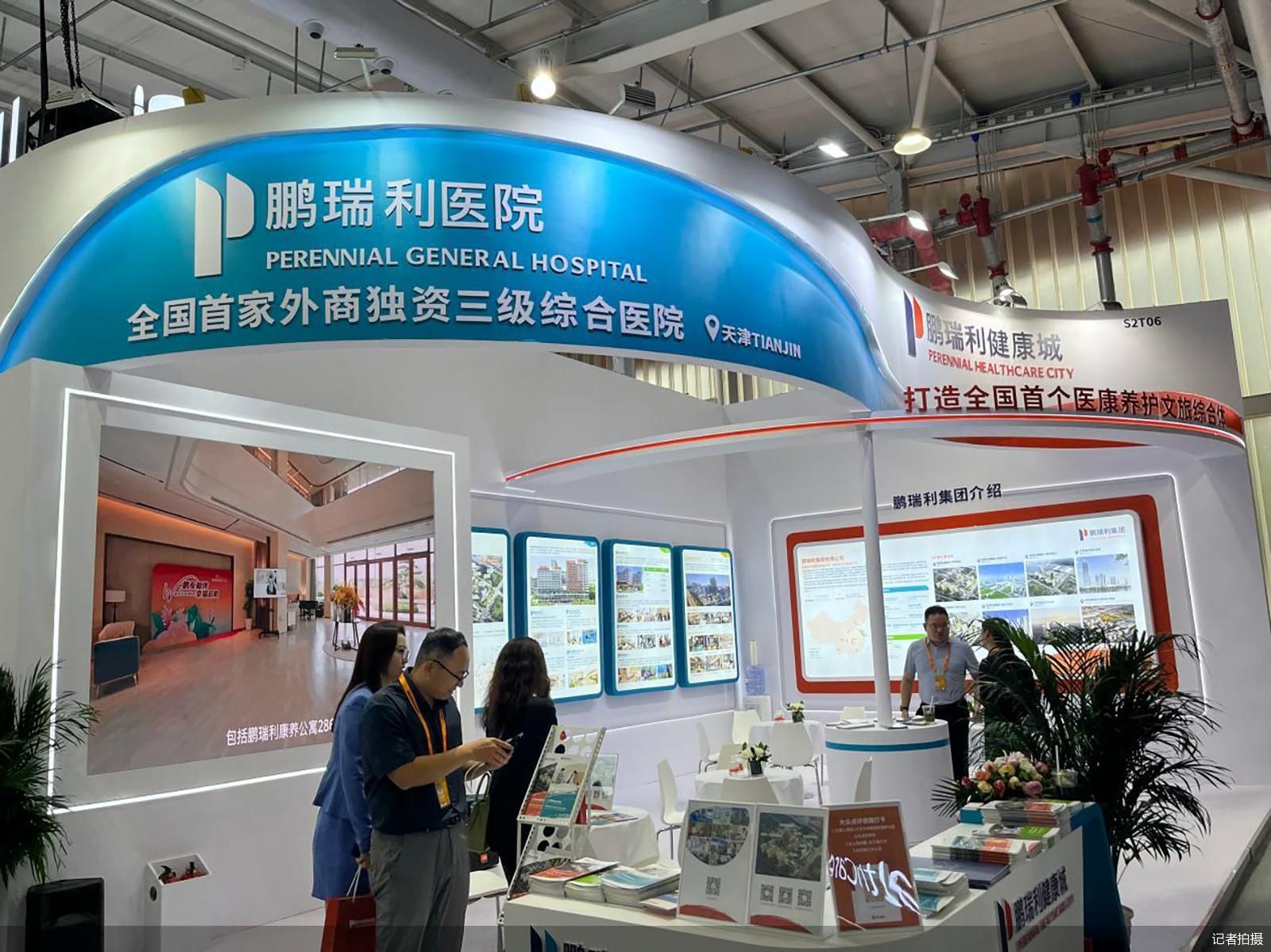
2025服贸会|对话首家外商独资三级综合医院天津鹏瑞利医院院长刘丹:打造“医康养护文旅”生态,让国际医疗跨越边界
Bei Jing Shang Bao· 2025-09-13 11:35
Core Insights - Tianjin Pengruili Hospital is recognized as the "first wholly foreign-owned tertiary general hospital in China," showcasing an innovative development model that integrates "medical, rehabilitation, nursing, cultural tourism" and international medical services [1][3] Group 1: Hospital Overview - The hospital has opened various departments including internal medicine, surgery, dermatology, oncology, orthopedics, and more, providing customized medical services [3] - Tianjin Pengruili Hospital is part of the larger Pengruili International Health City, which includes rehabilitation hospitals, brain hospitals, wellness communities, and hotel clusters, creating a comprehensive health service system [3] Group 2: International Collaboration - The hospital has served over 15 countries' foreign nationals and aims to deepen cooperation with top international medical institutions to enhance its international medical service capabilities [4][5] - Partnerships with organizations like Singapore Health Group have been established for physician training, international consultations, and the introduction of advanced medical technologies [5] Group 3: Customized Services - The hospital focuses on "layered medical needs," providing services that public hospitals may not cover, particularly for specialized patients [6] - Unique advantages in drug supply allow the hospital to procure imported and original drugs not available in public hospitals, enhancing service appeal [6] Group 4: Future Development - The hospital aims to attract foreign patients to Tianjin for medical services, thereby boosting related consumption and developing a "medical tourism industry" [7]

更微创、彻底,烟台毓璜顶医院实现神经内镜颅底手术领域新突破
Qi Lu Wan Bao Wang· 2025-09-12 11:39
齐鲁晚报.齐鲁壹点孙淑玉通讯员李成修李凌峰 编者按: 好医生千千万,怎样才能找到最对的那个?就医路上不仅要找对门,更要寻对人。烟台毓璜顶医院作为 山东省区域医疗中心,优秀的医护人员层出不穷,他们既能协同作战又各有所长。齐鲁晚报.齐鲁壹点 推出"毓医关键字"栏目,以关键词锁定专家擅长的领域,做您最贴心的"医路助手"。 寻医关键词:神经内镜颅底手术、颅咽管瘤、垂体瘤 无需开颅、无体表创口,仅通过人体自然腔道即可精准切除颅底肿瘤。近日,烟台毓璜顶医院神经外科 团队在神经内镜颅底手术领域取得重大技术突破,成功为两位罹患极高难度颅底肿瘤的患者实施了神经 内镜经鼻蝶微创手术。这标志着烟台毓璜顶医院神经外科神经内镜技术已达到国内先进水平,为胶东地 区及周边颅底肿瘤患者带来了"微创治疗、快速康复"的新希望。 不惧啃"硬骨头",为颅咽管瘤患者寻生机 颅底肿瘤因位置深、毗邻脑干、颅神经、大血管等重要结构,一直是神经外科手术的"硬骨头"。传统开 颅手术不仅创伤大、出血多,还可能对脑组织造成牵拉损伤,术后患者更是面临恢复慢、并发症多等一 系列问题。神经内镜在颅底手术领域的突破,为这一群体寻到了生机。 垂体瘤是人体最常见的神经内分泌肿 ...

强强联合共谱新篇,烟台毓璜顶医院与北海医院普外科专科联盟成立
Qi Lu Wan Bao Wang· 2025-09-12 11:38
齐鲁晚报.齐鲁壹点孙淑玉通讯员张妍 近日,烟台毓璜顶医院与烟台市北海医院普外科专科联盟签约暨揭牌仪式在北海医院隆重举行。这一合作标志着两家医院在普外专科领域 的深度协作正式启动,将为龙口市居民带来更加优质、便捷的医疗服务。 近日,揭牌仪式在北海医院多功能厅举行。北海医院院长王树宪致辞,他在讲话中表示,与毓璜顶医院建立专科联盟是北海医院发展历程 中的重要里程碑,将有效提升医院普外科的诊疗水平和服务能力,为患者提供更加专业的医疗服务。 毓璜顶医院普通外科主任吕忠船在随后的讲话中强调,此次合作是贯彻国家医改精神、推动优质医疗资源下沉的具体实践。毓璜顶医院将 充分发挥专业优势,通过技术帮扶、人才培养、资源共享等方式,全面提升北海医院普外科的专科建设水平,让群众在家门口就能享受到 三甲医院的优质医疗服务。 在与会人员的共同见证下,吕忠船与王树宪签署了合作协议书。随后,两家医院负责人共同为"烟台毓璜顶医院普外科专科联盟成员单 位"揭牌。 仪式结束后,毓璜顶医院专家团队到北海医院普外科病房进行参观指导,双方就具体病例诊疗、技术创新等方面进行了深入交流与探讨。 此次专科联盟的建立,搭建了两家医院之间学术交流、技术合作的桥梁, ...

爱尔眼科跌2.06%,成交额7.39亿元,主力资金净流出1.40亿元
Xin Lang Cai Jing· 2025-09-12 04:25
Core Viewpoint - Aier Eye Hospital experienced a decline in stock price and significant net outflow of funds, indicating potential investor concerns about the company's performance and market position [1][2]. Financial Performance - For the first half of 2025, Aier Eye Hospital reported revenue of 11.507 billion yuan, a year-on-year increase of 9.12%, and a net profit attributable to shareholders of 2.051 billion yuan, showing a slight growth of 0.05% [2]. - The company has distributed a total of 7.12 billion yuan in dividends since its A-share listing, with 3.6 billion yuan distributed over the past three years [2]. Stock Market Activity - As of September 12, Aier Eye Hospital's stock price was 12.85 yuan per share, with a market capitalization of 119.831 billion yuan [1]. - The stock has seen a year-to-date decline of 1.84%, with a slight decrease of 0.54% over the past five trading days and a 1.53% decline over the past 20 days, although it has increased by 8.35% over the past 60 days [1]. Shareholder Structure - As of June 30, 2025, the number of shareholders decreased to 343,900, while the average number of circulating shares per person increased to 23,064 [2]. - Major shareholders include Hong Kong Central Clearing Limited, holding 193 million shares, and various ETFs, with some experiencing changes in their holdings [2]. Business Overview - Aier Eye Hospital, established on January 24, 2003, and listed on October 30, 2009, provides a range of ophthalmic medical services, with its main revenue sources being refractive projects (40.13%), vision care services (23.64%), and cataract projects (15.48%) [1]. - The company operates within the pharmaceutical and biological industry, specifically in the medical services sector, and is involved in various concept sectors including smart healthcare and private hospitals [1].

“医院过剩”大潮来临,大批医院将转型
3 6 Ke· 2025-09-12 00:06
Core Insights - The number of hospital beds in China has significantly increased from 6.182 million at the end of 2013 to 10.174 million by 2023, marking a 64% growth over ten years [1] - There is a mismatch in the distribution and structure of hospital beds, leading to an oversupply in some areas while others face shortages [1][2] - The Chinese government is encouraging the transformation of secondary and lower-level medical institutions into rehabilitation and nursing hospitals to address the surplus of hospital beds [3][4] Group 1: Hospital Bed Surplus - The rapid increase in hospital beds has led to a situation where many hospitals, especially in rural areas, have a significant number of vacant beds [1] - The National Health Commission has issued guidelines to support the transformation of certain hospitals to better align with community health needs [3][4] - The trend of hospital closures and bankruptcies is rising, with 1,158 bankruptcy-related cases involving hospitals reported in 2024 [5][6] Group 2: Financial Pressures on Hospitals - Hospitals are facing high operational costs, particularly secondary hospitals that require expensive equipment and qualified personnel [11] - The profitability of hospitals has declined due to reforms that have eliminated traditional revenue sources such as drug markups and government funding [13][14] - The average loss for non-public medical institutions reached 553 million per institution in 2021, indicating widespread financial distress [11] Group 3: Demographic and Technological Changes - A declining birth rate and an aging population are altering the demand for hospital services, leading to closures of maternity wards in several hospitals [16][17] - Advances in medical technology are reducing the average length of hospital stays, further contributing to the surplus of hospital beds [18][19] Group 4: Future Directions - The government is promoting the concept of "medical-nursing integration" to adapt to the aging population and improve healthcare services [21][22] - The transition to medical-nursing integration is expected to lead to a significant number of hospitals shifting their focus to elder care and rehabilitation services [22][24] - The oversupply of hospital beds is viewed as a necessary phase for industry upgrade, where inefficient hospitals will be eliminated, allowing for better resource allocation [24]
Universal Health Services (NYSE:UHS) 2025 Conference Transcript
2025-09-10 14:07
Summary of Universal Health Services Conference Call Company Overview - **Company**: Universal Health Services (NYSE: UHS) - **Industry**: Healthcare, specifically acute care hospitals and behavioral health facilities Key Points and Arguments Policy Impact on Revenue - The company is focused on the impact of Medicaid disenrollment and work requirements, which could affect revenue, particularly in the acute care segment where Medicaid constitutes about 15% of revenue [6][7][9] - The CFO noted that the potential impact of Medicaid disenrollment is speculative, with estimates of affected individuals ranging from 7 to 13 million, but these individuals are not expected to significantly utilize hospital services [7][8] - The company is legally and morally obligated to treat uninsured patients, which contributes to higher uncompensated care in acute care compared to behavioral health [9] Financial Projections and Cuts - The anticipated reduction in supplemental payments is estimated to be between $360 million to $400 million by 2032, with cuts beginning in 2028 [12][14] - The CFO indicated that the cuts are expected to be meaningful, especially for rural and smaller hospitals, and that there may be opportunities for Congress to modify these cuts in the future [14][15] - The company is preparing for these cuts by exploring shifting revenue sources and cost-cutting initiatives, although it is too early to determine if these will fully offset the projected losses [16][17] Volume and Growth Expectations - The company expects mid-single-digit revenue growth (5%-7%) in the acute care segment, with a 3% adjusted admission growth rate being sustainable [34][35] - Behavioral health volumes have been slower than anticipated, with a revised expectation of exiting the year closer to the original target of 2.5%-3% growth [35][36] - Labor scarcity remains a challenge, with ongoing efforts to improve staffing and retention rates, particularly in behavioral health settings [36][40] Outpatient Care Expansion - The company plans to open 10 to 15 new freestanding outpatient facilities annually, focusing on intensive outpatient care [46][47] - The primary challenge in expanding outpatient services is not capital expenditure but rather finding qualified therapists to staff these facilities [47][48] - Established referral sources and relationships with payers are seen as advantages in expanding outpatient services [48] State Budget Pressures - The company is engaged in discussions with state governments regarding budget pressures and potential relief for hospitals affected by Medicaid cuts [20][22] - States are currently taking a wait-and-see approach regarding the implementation of new policies and their impact on hospital funding [23] Specific Programs and Initiatives - The approval of the Directed Payment Programs (DPP) in Washington, DC, is expected to provide a benefit of approximately $85 million, effective October 2024 [24][26] - Proposition 35 in California, which aims to provide funding for behavioral hospitals, is still in discussions with no definitive developments expected in the near term [31] Additional Important Insights - The company is focusing on improving retention rates for staff, particularly nurses, by enhancing orientation and mentorship programs [42][44] - There is a recognition that turnover rates are high but have improved since the pandemic, with efforts now directed towards retaining staff beyond their first year [40][42] This summary encapsulates the key discussions and insights from the Universal Health Services conference call, highlighting the company's strategic focus on policy impacts, financial projections, volume growth, and expansion into outpatient care.

国际医学:西安国际医学中心医院整体医疗业务保持了稳定的发展态势
Zheng Quan Ri Bao Wang· 2025-09-10 13:45
Core Viewpoint - The company reports stable development in its overall medical business, with a steady increase in bed utilization and a commitment to enhancing service quality and capacity based on patient demand [1] Company Summary - International Medical (000516) has indicated that its Xi'an International Medical Center Hospital is experiencing stable growth in its medical operations [1] - The company plans to continuously improve the service quality and capacity of its existing medical institutions in response to patient needs [1] - Xi'an Shengxin Medical Management Co., Ltd., a subsidiary of International Medical, operates independently and the parent company bears profits and losses according to its investment ratio [1]
