
信用评级

Search documents
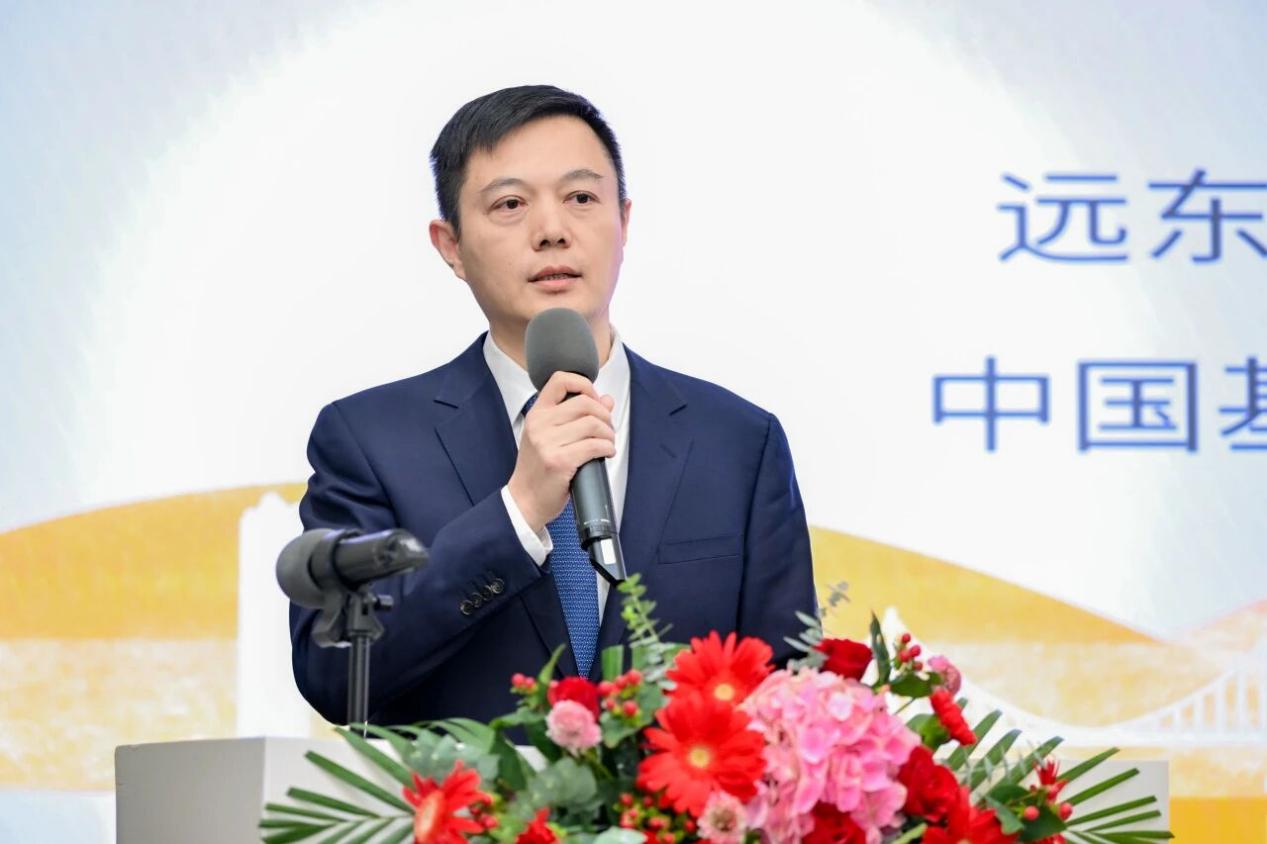
远东资信潘成龙:打造琴澳信用互认示范田 共建金融合作新格局
Zheng Quan Ri Bao Wang· 2025-11-28 05:02
Core Viewpoint - The "Qin-Ao Bond Market Innovation Development Forum" held in Hengqin aims to explore innovative paths for bond instruments and promote the ecological prosperity of the Qin-Ao bond market through collaboration among nearly 200 representatives from policy-making departments, financial infrastructure, and top investment institutions [1]. Group 1: Financial Cooperation and Credit System - The collaboration between Hong Kong, Macau, and mainland China's bond markets has achieved significant results due to the deepening financial cooperation and improved market connectivity [3]. - Credit is emphasized as the foundation of financial development, with cross-border credit cooperation being essential for the efficient and safe allocation of high-end resources such as capital, technology, and talent [3]. - The "Opinions on Improving the Social Credit System" issued in March outlines the direction for cross-border credit services, including mutual recognition of credit evaluation and reports [3]. Group 2: Opportunities for Development - Two key opportunities for development were highlighted: the implementation of the "Overall Plan for the Construction of the Hengqin Deep Cooperation Zone," which supports the development of modern financial industries and the establishment of a financial service platform for China and Portuguese-speaking countries [4]. - The "14th Five-Year Plan" encourages the development of direct financing through equity and debt, promoting the internationalization of the Renminbi and enhancing the openness of capital projects, providing significant policy opportunities for cross-border financial and credit cooperation in the Qin-Ao Economic Zone [4]. Group 3: Innovation and Collaboration - The need for innovation in credit rating methodologies is stressed, shifting from traditional asset-heavy assessments to focusing on growth potential, development resilience, and cross-border capabilities [5]. - A new cross-border rating methodology that aligns with international standards while reflecting the characteristics of the Qin-Ao region is necessary, particularly in areas like green bonds and technology innovation [5]. - Collaboration among credit service institutions is essential for maintaining independence, objectivity, and credibility, while regulatory bodies and financial infrastructures should work together to establish a framework for cross-border credit cooperation [6]. Group 4: Commitment to Future Development - The company expresses its willingness to contribute its experience in green finance and technology innovation bonds to the development of standards and practices for credit mutual recognition in the Qin-Ao region [6]. - The establishment of a cross-border credit mutual recognition system is viewed as a foundational step in building a bridge for finance, capital, and credit in the Qin-Ao Cooperation Zone, requiring vision, courage, and patience [6].

债券市场“科技板”促进信用评级行业高质量发展的路径研究
Xin Lang Cai Jing· 2025-11-26 23:35
Core Viewpoint - The launch of the "Technology Board" in the bond market enhances the financing channels for small and medium-sized technology enterprises, optimizes the investment environment, and provides opportunities for the credit rating industry to innovate and upgrade its rating methods [1][2]. Group 1: Development of the Bond Market - The "Technology Board" aims to support the financing of small and medium-sized technology enterprises and enhance the bond market's service capabilities for the real economy [3][4]. - Since the announcement of the "Technology Board," the number of issued technology innovation bonds has reached 1,006, with a total issuance scale of 11,945 billion yuan, involving 342 technology enterprises [3]. Group 2: Opportunities for the Credit Rating Industry - The establishment of the "Technology Board" presents significant opportunities for the credit rating industry to expand its business and innovate its rating methods [6][7]. - The credit rating industry is encouraged to develop new rating methodologies that consider the unique characteristics of technology enterprises, such as their reliance on intellectual property and innovation potential [7][11]. Group 3: Enhancing Rating Distinction - The announcement requires rating agencies to design a forward-looking and distinctive rating symbol system for technology bonds, which will improve the differentiation of credit ratings [8][9]. - The introduction of a suffix "sti" to traditional rating symbols will highlight the uniqueness of technology bonds and enhance the clarity of credit ratings [9][14]. Group 4: Risk Management and Information Security - The credit rating agencies are advised to strengthen data security management to protect sensitive information related to technology enterprises during the rating process [15].
从订单降速到清欠发力,“一揽子”化债第二阶段建筑企业信用风险怎么看?
Lian He Zi Xin· 2025-11-24 14:52
Report Industry Investment Rating - There is no information provided regarding the report industry investment rating. Core Viewpoints of the Report - Since the first stage of the current round of debt resolution, the orders and revenues of sample construction enterprises related to local government projects have decreased, and the collection and turnover efficiency have deteriorated. Especially, local construction state - owned enterprises with a high proportion of local government projects face relatively large short - term solvency pressure. - In the second stage of the current round of debt resolution, under the background of optimizing the central - local debt structure and establishing a long - term mechanism for preventing and resolving local government debt risks, it is expected that the overall demand structure of the construction industry will continue to adjust, and the credit levels of construction enterprises will diverge more significantly. [2] Summary According to Relevant Catalogs "One - Package" Debt Resolution Policy Review - Since 2014, China has promoted multiple rounds of local government debt resolution. The first round from 2014 - 2018 mainly included incorporating existing debts into budget management and "explicitizing" them through the issuance of replacement bonds, with a total issuance of about 12.2 trillion yuan of local government replacement bonds. The second round from 2019 - 2020 focused on the debts of counties and districts with weak fiscal strength, using replacement bonds to resolve the implicit debts of pilot counties, issuing 157.9 billion yuan of local government replacement bonds. The third round from 2020 - July 2023 used special refinancing bonds to replace local implicit debts, and some regions carried out pilot projects to eliminate implicit debts, with a cumulative issuance of 612.8 billion yuan of special refinancing bonds for implicit debt replacement and over 500 billion yuan issued in Beijing, Shanghai, and Guangdong for implicit debt elimination. - The current round of debt resolution started in July 2023. The central government put forward a "one - package debt resolution plan" with the core idea of "preserving the stock and controlling the increment". A series of policies such as "Document 35", "Document 47", "Document 14", "Document 134", and "Document 150" were successively introduced, covering aspects such as defining support policies, tightening bond - issuing policies for urban investment enterprises, controlling government investment projects, and guiding the orderly exit of financing platforms. - In 2024 - 2025, policies such as increasing the local government debt limit to replace existing implicit debts, emphasizing compliance in debt resolution, and clarifying the specific path for urban investment entities in key areas to exit the government financing platform were introduced. The policy framework involves four key dimensions: differential control of new financing, restriction of project investment scope and scale of urban investment platforms, specification of bond - issuing approval processes, and standardization of the mechanism for lifting financing restrictions after the exit of urban investment entities from the government financing platform. The debt resolution policy has shifted from emergency response to systematic governance. [4][5][8] Impact Path of the Current Round of Debt Resolution on Construction Enterprises Demand Side - Construction enterprises are highly dependent on local governments on the demand side. Local government - related projects, including infrastructure projects, urban renewal projects, and public service projects under the PPP model, have long accounted for a major share of construction enterprises' contract amounts. As of the end of June 2025, among 74 sample bond - issuing construction enterprises, 26 had an average proportion of local government - related projects in new contracts over the past three years of more than 70%, and from 2022 - 2024, the proportion of new local government - related contracts in the total new contracts of sample enterprises was between 36% - 43%. - The current round of debt resolution has led to a significant decline in construction demand in areas related to local government investment. It has imposed dual constraints of hierarchical control and policy regulation on local government investment, and squeezed the traditional infrastructure funding sources of local governments. In high - risk debt areas, new government investment projects are restricted, the approval cycle of some projects is extended, and some projects are suspended or postponed. For PPP projects, relevant policies have restricted project promotion. In addition, the decline in land transfer income, the adjustment of the use structure of special bonds, and the restart of land reserve special bonds have all affected traditional infrastructure funding. [12][13] Cash Flow Side - Construction enterprises are highly dependent on local governments on the cash flow side. Their accounts receivable are highly concentrated in the government and urban investment platforms, and they often need to advance a large amount of funds for government - related projects. The PPP projects carried out with local governments over the past decade have also occupied a significant amount of funds, and the repayment progress of PPP project financing is related to the government's payment rhythm. - The current round of debt resolution has led to a decline in the payment ability of local governments and the liquidity pressure of urban investment platforms, which has directly affected the collection of construction enterprises' project funds. The settlement and collection cycles of local government - related projects have been extended, and the proportion of progress payment has decreased significantly. In 2024, the issuance scale of urban investment bonds decreased by 17.02% year - on - year to 4.914114 trillion yuan, and the net financing turned from a net inflow of 1.144279 trillion yuan in 2023 to a net repayment of 333.294 billion yuan. In the first half of 2025, the net financing of urban investment bonds was - 178.050 billion yuan, with the net repayment scale expanding significantly year - on - year and narrowing slightly quarter - on - quarter. [16][17] Performance of the Construction Industry in the First Stage of the Current Round of Debt Resolution Newly Signed Contracts - In 2023, the newly signed contract amounts of sample enterprises in key provinces and cities related to local government projects decreased significantly due to debt resolution policies. In 2024, the overall newly signed contracts of sample enterprises related to local government projects decreased significantly, with central enterprises experiencing the largest decline and local state - owned enterprises the smallest decline. However, due to business composition, the year - on - year decline in the total newly signed contract amounts of sample central enterprises was lower than that of local state - owned enterprises. From 2023 - 2024, the year - on - year growth rates of the total newly signed contract amounts of sample enterprises related to local government projects were 2.74% and - 9.58% respectively, significantly lower than the year - on - year growth rates of the total newly signed contract amounts of sample enterprises (8.14% and - 1.07% respectively). [19][20] Revenue - In 2024, the revenues of sample construction state - owned central and local enterprises with a relatively high proportion of local government projects decreased significantly. For sample construction central enterprises from 2023 - 2024, the higher the proportion of local government projects, the lower the year - on - year growth rate of construction revenue, and the revenue growth rate decreased significantly in 2024 compared with the previous year. For sample construction local state - owned enterprises, the median year - on - year growth rates of revenues of sample enterprises with a proportion of local government projects over 70% ranked the highest and lowest in 2023 and 2024 respectively. Sample enterprises with a proportion of local government projects between 30% - 50% were mainly engaged in housing construction and infrastructure, and their construction revenues in 2024 decreased by more than 10% due to the decline in local government demand and real estate demand. [21][22] Accounts Receivable Turnover and Aging - Since 2022, the turnover speed of accounts receivable of sample construction enterprises has slowed down overall, and the turnover efficiency of local state - owned enterprises decreased significantly in 2024 due to debt resolution. From 2022 - 2024, the turnover efficiency of each group of sample enterprises showed a continuous decline, and the turnover rate of central enterprises was generally better than that of local state - owned enterprises. For sample construction central enterprises, the group with a proportion of local government projects in the range of 30 - 50% had the best performance in turnover efficiency indicators. For sample construction local state - owned enterprises, the turnover rate of the two groups with a proportion of local government projects over 50% decreased significantly, and the turnover rates of the two groups with a proportion of local government projects over 70% and less than 30% were weak in 2024, mainly affected by local debt resolution, the contraction of housing construction demand, and the lag in revenue and collection. - The proportion of accounts receivable within one year of sample central enterprises generally showed an upward trend, while that of sample local state - owned enterprises decreased overall, and the high - proportion group of local government projects decreased significantly in 2024. [23][24] Cash Flow - The sample enterprises as a whole maintained a net cash inflow from operating activities, but the coverage ratio of sales cash collection to current liabilities continued to weaken. Local state - owned enterprises with a high proportion of local government projects faced relatively large short - term solvency pressure. From 2022 - 2024, the operating cash inflow of the group of sample local state - owned enterprises with a proportion of local government projects greater than 70% continued to decline, but except for a few samples, the operating cash flow as a whole remained in a net inflow state. The coverage ratio of sales cash collection to current liabilities of sample construction enterprises continued to weaken, especially for local state - owned enterprises with a high proportion of local government projects, indicating a weakening of their collection situation as a whole. [27][28] Impact Assessment of the Policies in the Second Stage of the Current Round of Debt Resolution on the Construction Industry - The "6 - trillion - yuan" plan is expected to alleviate the squeezing of infrastructure investment funds by debt resolution. However, the decline in government fund revenues and the progress of the issuance and implementation of new special bonds have affected the growth rate of local infrastructure investment. The implementation of subsequent policies is expected to accelerate. The "6 + 4+ 2 - trillion - yuan" debt resolution plan approved in November 2024 is estimated to reduce the total implicit debt of local governments to be digested from 14.3 trillion yuan at the end of 2023 to 2.3 trillion yuan, saving about 600 billion yuan in interest expenses over five years. Although the total amount of newly issued local government special bonds in 2025 increased, the issuance progress of special bonds other than those related to debt resolution was relatively slow, and the decline in land transfer income also affected local infrastructure investment. The cumulative year - on - year growth rate of narrow - sense infrastructure investment in the first three quarters of 2025 slowed down to 1.10%, lower than 4.10% in the same period of 2024. - Under the background of optimizing the central - local debt structure and establishing a long - term mechanism for preventing and resolving local government debt risks, the central government has increased leverage, and the demand structure of the construction industry has continued to adjust. Although local government investment has been affected by debt resolution, the central government has emphasized the use of a more proactive fiscal policy. The issuance of treasury bonds and ultra - long - term special treasury bonds will support large - scale standardized projects, especially "two major" projects (major strategic implementation and key - area security capacity building). It is expected that future infrastructure investment will be more targeted at areas in line with "high - quality development" and "high social benefits", such as "two major" and new infrastructure fields. - As of the end of June 2025, the effect of the arrears - clearing action on alleviating the cash flow of bond - issuing construction enterprises was not significant. It is expected that the arrears - clearing action will accelerate in 2026, which will be beneficial to improving the cash return of the construction industry. A series of policies on arrears - clearing have been introduced, and the scope of key arrears - clearing entities has been defined. The total amount of arrears of four types of units involved in financial arrears - clearing is about 1.8 trillion yuan. Although the cash flow performance of sample construction enterprises has improved to some extent in the first half of 2025, the overall effect of arrears - clearing on cash flow is not significant. In the long run, the accounts receivable of construction state - owned central and local enterprises are expected to be recovered, and their financial statements are expected to improve. [30][34][37] Outlook on the Credit Change Trend of Construction Enterprises under the Background of Debt Resolution - The credit levels of construction enterprises will face differentiation under the background of debt resolution, and enterprises with policy resources, technological barriers, diversified and international layouts, and financial robustness are expected to dominate the market. - Enterprises with complete qualifications and diversified construction capabilities are expected to survive the cycle and develop in the long term. They can reduce risks in a single market and better cope with policy regulation and market uncertainties, and are expected to find new growth points in the field of new - quality productivity. - Enterprises with stable operation and finance are more likely to survive in the downward period of the industry. The traditional high - leverage and large - scale advance payment operation model in the industry is facing challenges, and enterprises with financial stability, sufficient capital reserves, or stable financing channels can better cope with risks and seize market opportunities. - The competition pattern will further differentiate, and regional risk differences will continue. Leading construction central enterprises are expected to maintain their competitive advantages, and state - owned construction enterprises in regions with strong financial resources or with strong competitiveness in niche markets will have better development prospects. Construction central enterprises have advantages in project acquisition, financing costs, and channels, and are expected to participate in major projects in countries and regions along the "Belt and Road". Local state - owned enterprises mainly engaged in housing construction and traditional infrastructure in regions with weak economic strength and high debt pressure will face business contraction pressure, while those in economically active and financially strong regions and enterprises with advantages in new fields will have good development opportunities. [41][42]
【环球财经】穆迪上调意大利主权信用评级至Baa2
Xin Hua Cai Jing· 2025-11-23 01:01
Core Viewpoint - Moody's has upgraded Italy's sovereign credit rating to Baa2 and changed the outlook to "stable," reflecting the country's political stability and effective economic policies [1][1][1] Group 1: Rating Upgrade - Moody's had maintained Italy's credit rating at Baa3 since October 2018 until this recent upgrade [1] - The upgrade indicates a robust and sustained performance in Italy's political stability and economic policy [1][1] Group 2: Economic and Fiscal Reforms - The upgrade is attributed to the effectiveness of economic and fiscal reforms, particularly under the "National Recovery and Resilience Plan" (PNRR) [1] - Italy is making good progress in achieving milestones and targets set by the PNRR, ranking among the top EU countries in terms of payment requests and disbursement amounts [1][1] Group 3: Government Response - Italy's Minister of Economy and Finance, Giancarlo Giorgetti, expressed satisfaction with Moody's decision, viewing it as a sign of confidence in the government's efforts and Italy's economic recovery [1]

地方政府与城投企业债务风险研究报告:浙江省篇
Lian He Zi Xin· 2025-11-19 11:06
1. Report Industry Investment Rating No relevant information provided. 2. Core Views of the Report - Zhejiang Province has prominent regional advantages, a well - developed economy and finance, and a relatively low government debt burden. It is accelerating industrial transformation and upgrading and has received strong policy support [3][5]. - Although the general public budget revenues of all prefecture - level cities in Zhejiang Province have increased, the government - funded budget revenues have declined due to the real estate industry. The government debt scale of each city has increased, with Hangzhou having a relatively light debt burden [3]. - Zhejiang has a large number of urban investment enterprises with outstanding bonds and a large bond outstanding scale, mainly concentrated in the cities around the Hangzhou Bay Greater Area. Affected by the debt - resolution policy, the issuance scale of urban investment bonds in Zhejiang declined in 2024, and the financing was in a net outflow state. Since 2025, the issuance term has been further extended, and the financing has turned into a net inflow [3]. - The total debt of urban investment enterprises in Zhejiang has continued to grow, with the debt structure mainly relying on bank financing. In 2026, the maturity scale of urban investment bonds in Taizhou is relatively concentrated. In 2024, Huzhou and Shaoxing had relatively high regional debt pressures [4]. 3. Summary by Relevant Catalogs 3.1 Zhejiang Province's Economic and Fiscal Strength 3.1.1 Regional Characteristics and Economic Development in Zhejiang Province - Zhejiang has prominent regional advantages, with well - developed transportation infrastructure, a significant port economy, a continuous net inflow of permanent residents, and a high urbanization rate. In 2024, its GDP ranked fourth in the country, and its per - capita GDP ranked fifth. In the first half of 2025, its GDP continued to grow at a rate higher than the national average [5][7][8]. - The industrial structure is dominated by the secondary and tertiary industries, with the proportion of the tertiary industry continuously increasing. The province has a solid industrial foundation, a well - developed private economy, and is steadily developing new productive forces. It is accelerating the construction of the "415X" advanced manufacturing cluster and focusing on cultivating future industries [9][11][14]. - A series of policies have provided strong support for Zhejiang's economic development. The province has completed the "14th Five - Year Plan" with high quality. By the end of 2025, its economic aggregate is expected to reach about 9.5 trillion yuan, and the per - capita GDP is expected to exceed 20,000 US dollars [16][18]. 3.1.2 Fiscal Strength and Debt Situation in Zhejiang Province - Zhejiang has strong fiscal strength. In 2024, its general public budget revenue ranked third in the country, with high revenue quality and fiscal self - sufficiency rate. Although the government - funded revenue continued to decline, it still contributed significantly to the local comprehensive financial resources. In the first half of 2025, the general public budget revenue changed little year - on - year, but the revenue quality declined [20]. - The provincial government's debt burden is relatively low in the country. In recent years, the local government debt scale has been increasing, with the debt balance ranking fourth in the country at the end of 2024. The local government debt ratio and debt - to - GDP ratio have been rising [21]. - Zhejiang has continued to receive debt - resolution policy support. In 2024 and from January to September 2025, it issued special refinancing bonds of 10.9 billion yuan and 8.14 billion yuan respectively. In 2025, it applied for a new government debt quota of 378.8 billion yuan [23]. 3.2 Economic and Fiscal Strength of Prefecture - Level Cities in Zhejiang Province 3.2.1 Economic Strength and Industrial Situation of Prefecture - Level Cities in Zhejiang Province - Most prefecture - level cities in Zhejiang have a per - capita GDP higher than the national average, but the economic development elements are unevenly distributed, and the GDP gap between cities is large. The economic vitality increases from the southwest to the northeast. The pillar industries of cities around the Hangzhou Bay Greater Area are manufacturing, with many national industrial parks and listed companies [25]. - The cities around the Hangzhou Bay Greater Area and in the southeast mainly have manufacturing as their pillar industries, while those in the southwest mainly rely on the tertiary industry. Each city has its own dominant and emerging industries [27][29]. - In 2024, the GDP of Hangzhou and Ningbo exceeded 2 trillion yuan and 1.8 trillion yuan respectively, accounting for more than 44% of Zhejiang's GDP. Except for Hangzhou, the GDP growth rates of other cities were higher than the national average. The per - capita GDP of cities around the Hangzhou Bay Greater Area was significantly higher than that of other regions [32][33]. 3.2.2 Fiscal Strength and Debt Situation of Prefecture - Level Cities in Zhejiang Province - The general public budget revenues of all prefecture - level cities in Zhejiang have increased, but the scale gap is significant. Hangzhou and Ningbo lead by a large margin. Affected by the real estate industry, the government - funded budget revenues of all cities have declined. Cities with low fiscal self - sufficiency rates rely more on superior subsidies [34]. - The fiscal self - sufficiency rates of prefecture - level cities are highly polarized. In 2024, Hangzhou had a fiscal self - sufficiency rate close to 100%, while Quzhou and Lishui had rates of only 32% and 30% respectively [36]. - The government debt scale of each prefecture - level city has increased, with Hangzhou having a relatively light debt burden. Except for Hangzhou, the local government debt ratios of other cities exceeded 100% in 2024. Zhejiang is continuing to prevent and resolve local debt risks [38][41][43]. 3.3 Debt - Repayment Ability of Urban Investment Enterprises in Zhejiang Province 3.3.1 Overview of Urban Investment Enterprises in Zhejiang Province - As of the end of September 2025, there were 479 urban investment enterprises with outstanding bonds in Zhejiang, an increase of 22 compared to the end of October 2024. The administrative levels of these enterprises are mainly concentrated at the district - county level, and most are located in cities around the Hangzhou Bay Greater Area. The main credit ratings are AA and AA+ [44]. 3.3.2 Issuance and Outstanding Situation of Urban Investment Bonds in Zhejiang Province - Affected by the debt - resolution policy, the issuance scale of urban investment bonds in Zhejiang declined in 2024, but the outstanding scale remained large, mainly concentrated in cities around the Hangzhou Bay Greater Area. The financing of urban investment bonds showed a net outflow. Since 2025, the issuance term has been further extended, and the financing has turned into a net inflow [48]. - In 2024, the number and scale of urban investment bond issuances in Zhejiang decreased by 16.13% and 19.78% respectively compared to the previous year. From January to September 2025, the number and scale of issuances decreased by 11.04% and 17.65% respectively compared to the same period in the previous year [49]. - In 2024, the issuance term of urban investment bonds in Zhejiang shifted to long - term. From January to September 2025, the proportion of 5 - year bonds increased by 5.2 percentage points compared to the whole year of 2024 [50]. - In 2024, the net financing of urban investment bonds in Zhejiang turned negative, with a net outflow of about 2 billion yuan. From January to September 2025, it turned into a net inflow of 1.4051 billion yuan [52]. - As of the end of September 2025, the outstanding scale of urban investment bonds in Zhejiang was 200.61 billion yuan, with Hangzhou having the largest balance [55]. 3.3.3 Analysis of the Debt - Repayment Ability of Urban Investment Enterprises in Zhejiang Province - The total debt of urban investment enterprises in Zhejiang has continued to grow, with the debt structure mainly relying on bank loans. In 2026, the maturity scale of urban investment bonds in Taizhou is relatively concentrated. At the end of 2024, the coverage of short - term debt by cash - like assets decreased. Since 2024, the cash flow from financing activities has remained in a net inflow state, indicating strong financing ability [57]. - As of the end of 2024, the total debt of urban investment enterprises in Zhejiang reached 8.25 trillion yuan, a year - on - year increase of 11.9%. As of the end of June 2025, it increased by 6.6% compared to the end of 2024 [58]. - As of the end of 2024, bank financing accounted for 62.9% of the total debt of urban investment enterprises in Zhejiang, with the proportion continuously increasing. The proportion of bond financing in Shaoxing, Huzhou, and Zhoushan exceeded 30%, and the proportion of other financing in Jinhua and Zhoushan exceeded 15% [58]. - As of the end of September 2025, the scale of urban investment bonds due in 2026 and 2027 was about 700 billion yuan and 450 billion yuan respectively, accounting for about 36% and 23% of the total. The proportion of bonds due in Taizhou in 2026 was 46.7%, relatively concentrated [61]. - As of the end of June 2025, the total debt capitalization ratio of urban investment enterprises in each prefecture - level city increased, all exceeding 50%, with those in Shaoxing, Jinhua, and Taizhou exceeding 60% [61]. - At the end of 2024, the coverage of short - term debt by cash - like assets of urban investment enterprises in Zhejiang decreased compared to the end of 2023. As of the end of June 2025, the cash - to - short - term debt ratio of each city increased compared to the end of the previous year, but except for Ningbo and Wenzhou, it was still lower than that at the end of 2023 [63]. - In 2024, the cash flow from financing activities of urban investment enterprises in Zhejiang remained in a net inflow state, but the net inflow scale decreased year - on - year. In the first half of 2025, it still maintained a net inflow state, and the net inflow of Shaoxing, Quzhou, and Zhoushan exceeded the whole - year level of 2024 [63][64]. 3.3.4 Support and Guarantee Ability of Fiscal Revenues of Prefecture - Level Cities in Zhejiang for the Debt of Bond - Issuing Urban Investment Enterprises - Among the prefecture - level cities in Zhejiang, the scale of "local government debt + total debt of bond - issuing urban investment enterprises" in Hangzhou is the largest, followed by Ningbo, Shaoxing, Huzhou, and Jiaxing. The ratio of "local government debt + total debt of bond - issuing urban investment enterprises" to comprehensive financial resources in most cities exceeds 400%, with Shaoxing and Huzhou approaching 1000%, indicating relatively high regional debt pressures [65].
美联储坐不住了!中国手握3万亿外储,却为何发行40亿美债?
Sou Hu Cai Jing· 2025-11-19 02:15
全球金融圈都被中国一个操作惊到了,明明自己账上躺着3万亿美元的外汇储备,根本花不完,却面向全球投资者发行了40亿的美元债。 不缺美元借美元,中国到底打的什么算盘? 就在11月份,中国在香港成功发行了40亿美元的主权债券,3年期和5年期各20亿美元。 按理来说,发债券就等于找市场借现金,发美元债就代表手里没美元了,需要借美元来救急。 可中国呢? 压根就不缺美元,9月份的顺差还有500多亿美元,外汇储备更是高达3万亿美元,全球独一份。 那中国为什么还要借美元呢? 这背后的真实目的,是改写全球金融规则,直指美元霸权的要害,中国发行的不是美债,而是美债的掘墓人,特朗普跟美联储恐怕都要坐不住了。 为什么这么说呢?三大原因。 第一点,这是对中国主权信用认可度的最好测试。 过去几十年里,世界各国的主权信用,牢牢地攥在3家评级机构的手里,分别是美国的穆迪、标准普尔,和欧美合资的惠誉。 美元霸权收割全球,这3家机构都出了不少力,每当华尔街要收割一个国家的优质资产时,这3家机构就会一起发力,大幅调降目标国家的主权信用评级,市 场投资者一看,马上就会引起恐慌,纷纷抛售这个国家的外汇、债券和股票。 面对投资者的挤兑,本来没问题的国家 ...
尼泊尔连续两年获“BB-”主权信用评级
Zhong Guo Xin Wen Wang· 2025-11-19 00:56
Core Viewpoint - Nepal has maintained its sovereign credit rating at "BB-" for the second consecutive year, with a stable outlook, despite facing multiple challenges such as social and political turmoil, natural disasters, and global economic slowdown [1] Economic Indicators - The rating reflects Nepal's relatively low government and external debt levels, along with sufficient external liquidity and a robust medium-term growth outlook supported by the hydropower industry [1] Political Landscape - Political uncertainty remains a concern that could affect future ratings, despite the temporary government restoring domestic order and announcing elections for March 5, 2026 [1] Future Developments - Nepal will initiate its own sovereign credit rating process starting in 2024 [1]
2025年三季度城投债市场分析与展望:以化债促发展,城投债融资边际改善
Lian He Zi Xin· 2025-11-18 14:19
1. Report's Industry Investment Rating No relevant content provided. 2. Core Viewpoints of the Report - The "package debt resolution plan" advanced its efforts, with two "500 billion" injections in succession, highlighting the policy approach of balancing debt resolution and development. The intensified proactive fiscal policy is expected to ease the liquidity pressure on local governments and urban investment enterprises [4][5]. - In Q3 2025, the issuance scale of urban investment bonds increased both year - on - year and quarter - on - quarter, and the net repayment scale narrowed significantly. The financing situation of key provinces improved marginally, and provincial and park - level urban investment entities turned into net inflows [4][8][9]. - In Q4, the maturity and repayment scale of urban investment bonds will decline, but considering the large total debt of urban investment enterprises, the interest payment pressure remains severe, and the repayment pressure on urban investment bonds in Q4 will not decrease. Attention should be paid to the liquidity pressure in regions with high concentrated repayment pressure and district - county - level urban investment enterprises [4][33]. - The powerful incremental debt resolution plan has achieved phased results, significantly reducing costs and accelerating the transformation of urban investment enterprises. Urban investment enterprises have entered a critical transition period from "debt resolution" to "transformation and quality improvement" [4][37]. 3. Summary by Relevant Catalogs Policy Environment - The "package debt resolution plan" advanced its efforts, with two "500 billion" injections, highlighting the policy approach of balancing debt resolution and development. The proactive fiscal policy was intensified, and the liquidity pressure on local governments and urban investment enterprises is expected to ease. The Ministry of Finance increased support for implicit debt resolution by using the debt resolution quota in advance. As of the end of October 2025, the special refinancing bonds for replacing implicit debt had a cumulative issuance of 1.993 trillion yuan, with a issuance progress of 99.67%. The issuance of special new special bonds accelerated significantly since May, with a cumulative issuance of 738.1 billion yuan in Q3, and the total issuance exceeded 1.2 trillion yuan by the end of September, exceeding the annual issuance target of 800 billion yuan [5]. - A new policy - based financial instrument of 500 billion yuan was established, which was fully used to supplement the capital of major projects. As of the end of October, all the funds had been invested, supporting more than 2,300 projects with a total investment of about 7 trillion yuan, mainly in digital economy, artificial intelligence, and other fields. It can relieve the project capital bottleneck caused by tight local finances and help some urban investment companies relieve capital pressure and expand financing channels [6]. - The central government allocated 500 billion yuan from the local government debt balance limit to local governments, an increase of 100 billion yuan compared with the previous year, and the scope was expanded. In addition to supplementing local government comprehensive financial resources and supporting debt resolution, it was also used for project construction in eligible economic provinces to support effective investment [7]. Review of the Urban Investment Bond Market Issuance Overview - In Q3, the issuance scale of urban investment bonds increased both year - on - year and quarter - on - quarter, and the net repayment scale narrowed significantly. The issuance of private placement bonds and ABS increased significantly, while the issuance of ultra - short - term financing bills and medium - term notes decreased significantly. The net repayment scale of inter - bank and exchange - traded products decreased significantly year - on - year. The issuance scale of urban investment bonds in Q3 was 1.26 trillion yuan, a year - on - year increase of 0.42% and a quarter - on - quarter increase of 17.38%, with a net repayment of 2.6007 billion yuan. The issuance scale of urban investment bonds of entities that declared themselves as market - oriented business entities accounted for 33.99%, and they achieved a net financing of 3.444 billion yuan. The early repayment scale of urban investment bonds in Q3 was about 453.6 billion yuan, with year - on - year and quarter - on - quarter increases of 3.65% and 4.10% respectively [8][9]. - In terms of issuance varieties, the issuance scale of exchange - traded products increased both year - on - year and quarter - on - quarter, mainly private placement bonds, with significant increases in private placement bonds and ABS. The issuance scale of inter - bank products decreased year - on - year, with significant declines in ultra - short - term financing bills and general medium - term notes of over 10%. The net repayment scale of the inter - bank and exchange markets decreased significantly year - on - year, with a decline of over 80% [11]. - Regionally, the issuance scale of non - key provinces increased both year - on - year and quarter - on - quarter, with a quarter - on - quarter increase of about 16%. The issuance scale of key provinces decreased year - on - year but increased significantly quarter - on - quarter, with a quarter - on - quarter increase of about 26%. The net repayment scale of both key and non - key provinces narrowed significantly. In non - key provinces, Zhejiang, Shanghai, and Guangdong had large net inflows, while Jiangsu had the largest net repayment scale of 45.09 billion yuan. In key provinces, except for Tianjin, Liaoning, Qinghai, and Inner Mongolia, other provinces had net repayments, and Chongqing had the largest net repayment scale of 9.293 billion yuan [13][15]. - In terms of credit ratings, the issuance of urban investment bonds was still dominated by AA + and AAA - rated entities, with high - level entities accounting for over 77%. The AAA - rated entities maintained a net inflow, and provincial and park - level entities turned into net inflows, while the net repayment scale of municipal and district - county - level entities narrowed [17][19]. - The issuance scale of ultra - long - term urban investment bonds further increased and was concentrated in high - quality entities in more economically developed regions. In key provinces, the issuance term structure of Guizhou and Yunnan improved. The issuance term of urban investment bonds was still mainly medium - and long - term, with bonds over 3 years accounting for over 55%. The issuance of ultra - long - term (10 years and above) urban investment bonds was 128 issues with a scale of 84.028 billion yuan, increasing both year - on - year and quarter - on - quarter. Non - key provinces were the main issuers of ultra - long - term urban investment bonds, with the issuers mainly in Shandong, Jiangsu, Zhejiang, and other economically developed provinces [20]. - In Q3, the issuance interest rate and spread of urban investment bonds fluctuated upward, but the spread center decreased quarter - on - quarter. The issuance spreads of some key provinces decreased significantly, but the spreads of Guizhou, Yunnan, and Guangxi remained high. Among non - key provinces, the spreads of Shandong, Xinjiang, and Henan were higher than the national average, and the credit differentiation intensified [23]. New Issuance Situation - In Q3, driven by the policy of balancing debt resolution and development, the number of issues and scale of newly issued bonds of urban investment entities increased both year - on - year and quarter - on - quarter. The newly issued entities showed the characteristic of "concentration on high - quality entities", mainly high - level entities in regions with strong economic and fiscal strength and industrial advantages such as Guangdong, Shanghai, and Zhejiang. The newly issued bonds were mainly invested in rural revitalization, green industries, and other fields. A total of 68 urban investment entities newly issued bonds, with 89 issues and a scale of 53.591 billion yuan [28][29]. Outlook - In Q4, the maturity and repayment scale of urban investment bonds will decline, but considering the large total debt of urban investment enterprises, the interest payment pressure remains severe, and the repayment pressure on urban investment bonds in Q4 will not decrease. Attention should be paid to the liquidity pressure in regions with high concentrated repayment pressure and district - county - level urban investment enterprises. The scale of outstanding urban investment bonds at the end of Q3 was about 13.36 trillion yuan. Assuming that all callable bonds are exercised, the maturity scale of urban investment bonds in Q4 2025 is 1.2 trillion yuan, a decrease of about 15% compared with Q4 2024 [33][35]. - The powerful incremental debt resolution plan has achieved phased results, significantly reducing costs and accelerating the transformation of urban investment enterprises. Urban investment enterprises have entered a critical transition period from "debt resolution" to "transformation and quality improvement". After the replacement of implicit debt with local government debt, the average interest cost of debt decreased by over 2.5 percentage points, saving over 450 billion yuan in interest payments. As of the end of June 2025, over 60% of financing platforms had exited. In the future, urban investment enterprises will be classified and disposed of in an orderly manner, and some financing platforms may be forced to accelerate their market - oriented transformation. Urban investment enterprises should explore substantial transformation paths based on their own conditions and regional resource endowments [37][38].
东方金诚及子公司东方金诚信用荣膺20
Xin Lang Cai Jing· 2025-11-14 07:36
Core Viewpoint - The 10th Real Estate Securitization Cooperation Development Conference highlighted the achievements of Dongfang Jincheng, which was awarded "Best Rating Agency of the Year" for its contributions to the real estate securitization market [1] Group 1: Company Achievements - Dongfang Jincheng was recognized for its outstanding performance in innovative projects within the real estate securitization sector [1] - The company has demonstrated strong rating expertise across both traditional and emerging asset types, including REITs [1] Group 2: Market Trends - The Chinese real estate securitization market is entering a new phase of innovation and expansion, driven by the expansion of public REITs trials and ongoing green finance policies [1] - There is an increasing demand for professional rating services as the market evolves, particularly in the areas of green finance and cross-border securitization products [1] Group 3: Future Outlook - Dongfang Jincheng plans to deepen its research in real estate securitization, green finance, and supply chain finance, aiming to optimize rating methodologies and models [1] - The company is committed to providing more accurate and efficient credit rating services to support national dual carbon strategy goals [1]

【延安】一企业获评AAA主体信用等级
Shan Xi Ri Bao· 2025-11-12 00:25
Core Viewpoint - The strategic cooperation signing between Yan'an Municipal Government and Dagong Global Credit Rating Co., Ltd. marks a significant milestone for Yan'an Capital, which has been rated AAA, the highest credit rating for a municipal state-owned enterprise in Yan'an [1] Group 1: Credit Rating and Its Implications - Yan'an Capital has been awarded an AAA credit rating, indicating strong debt repayment capability and low default risk, reflecting market recognition of its development prospects and overall strength [1] - The AAA rating is a critical measure of a company's comprehensive strength and competitiveness, positioning Yan'an Capital favorably in the market [1] Group 2: Strategic Reforms and Objectives - Yan'an is actively promoting the reform of its municipal state-owned enterprises by restructuring and integrating 17 municipal group companies into 13 clearly defined state-owned enterprises [1] - The aim of these reforms is to address industrial transformation challenges, establish a modern corporate governance system, and enhance the market competitiveness and overall strength of Yan'an's state-owned enterprises [1]