
经济多元化

Search documents
摩洛哥重获标准普尔“投资级”评级
Shang Wu Bu Wang Zhan· 2026-02-28 03:32
Core Viewpoint - Morocco has regained the "investment grade" rating from Standard & Poor's, with its sovereign credit rating upgraded to "BBB," reflecting a significant enhancement in its credibility in the international debt market [1]. Group 1: Rating Upgrade - The upgrade is attributed to Morocco's ongoing structural, socio-economic, and fiscal reforms [1]. - Morocco's economic diversification and strengthened fiscal revenue base have improved its macroeconomic resilience, with a projected real GDP growth rate of 4.5% by 2025 [1]. Group 2: Impact on Financing Environment - The restoration of the investment-grade rating is expected to positively influence the corporate financing environment [1]. - Attijariwafa Bank's rating was upgraded in October 2025, and the credit rating of the Moroccan phosphate group (OCP) aligns with the sovereign rating, facilitating better financing conditions for enterprises [1]. Group 3: International Financing Advantages - Morocco successfully issued €2 billion in bonds at a historical low coupon rate of 4.3%, demonstrating a financing cost advantage compared to the average financing cost of 7.7% for African sovereign bonds in the dollar market [1]. - By reducing reliance on dollar financing, Morocco effectively mitigates exchange rate volatility risks [1]. Group 4: Future Financing Potential - Adjustments in multilateral financial institutions' loan rules could release an additional $90 billion to $120 billion in financing capacity for Africa, providing crucial funding support for Morocco's large infrastructure projects, including high-speed rail, ports, and renewable energy [2]. - The restoration of the investment-grade rating not only recognizes the Moroccan government's reform achievements but also enhances its attractiveness and financing capabilities in global capital markets [2].
非洲采矿业推动就业增长
Shang Wu Bu Wang Zhan· 2026-02-25 13:28
Core Insights - The demand for critical minerals globally is rising, leading to increased investments in mining, processing, and the entire industry chain in Africa, solidifying the mining sector's role as an employment engine with a positive outlook for development [1] Group 1: Industry Overview - Africa holds approximately $29.5 trillion in mineral wealth, accounting for 20% of global reserves, with $8.6 trillion yet to be developed [1] - The mining industry is a crucial source of income for Africa and a key pathway for job creation and economic diversification [1] - Future focus will shift from reliance on raw material exports to local processing of downstream industries such as aluminum and battery materials, transforming resource advantages into sustainable industrial employment [1] Group 2: Current Developments - Several African countries are advancing new mining projects: Namibia plans to resume uranium production and expand into rare earths and lithium; South Africa aims to invest $125.2 billion over five years to enhance the critical mineral value chain; Zambia's mining sector is projected to provide 73,000 jobs by 2025, with copper mine expansions attracting further investment and employment [1] - The U.S. has signed a mineral cooperation agreement with the Democratic Republic of the Congo, which has $24 trillion in mineral reserves, of which only 10% has been developed, indicating significant employment growth potential [1] Group 3: Challenges and Opportunities - Geopolitical competition for critical minerals like cobalt and lithium in Africa is intensifying, while insufficient financing channels continue to hinder the expansion of the mining sector, particularly affecting local companies and small operators [1] - There is a growing need for enhanced collaboration between Africa and global financial institutions to address these challenges [1]
阿联酋总统会见巴林王储
Shang Wu Bu Wang Zhan· 2026-02-23 15:30
Core Viewpoint - The meeting between the President of the UAE and the Crown Prince of Bahrain emphasizes the commitment to deepen bilateral cooperation, promote economic diversification, and enhance regional stability, reflecting the long-standing friendship and close collaboration between the two nations [1] Group 1 - The leaders discussed enhancing bilateral cooperation [1] - Economic diversification was a key topic of discussion [1] - The meeting reaffirmed the mutual desire to strengthen strategic partnerships [1]
Tycoons 将于2026年4月12日在迪拜首次亮相,汇聚全球顶尖投资领袖
Sou Hu Cai Jing· 2026-02-19 05:14
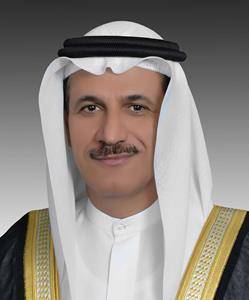
Core Insights - The Tycoons initiative, launched by AIM Global Foundation, will debut on April 12, 2026, in Dubai, aiming to create a high-level strategic intelligence exchange platform for around 500 invited local and international decision-makers [3][7] - The theme "Tycoons 2.0: New Rules of Power, Legacy, and Influence" reflects a new generation of investment platforms that emphasize not only capital allocation but also foresight, governance, and global impact [3][4] Investment Focus Areas - Tycoons will focus on three interconnected investment areas: trade and investment, family wealth and capital, and the future economy, which collectively define the economic landscape of the 21st century [4] - The initiative aims to facilitate strategic insights into actionable partnerships through carefully curated closed-door discussions and networking opportunities [4] UAE's Strategic Position - The launch of Tycoons coincides with a critical period for the UAE as it solidifies its status as a global hub for investment and innovation, with foreign direct investment inflows reaching historical highs [4][5] - UAE's Minister of Foreign Trade emphasized the country's role as a global investment catalyst and its commitment to fostering international cooperation through high-level platforms [5] Event Significance - The inaugural Tycoons event is seen as a milestone that reflects growing global confidence in Dubai as a premier destination for investment and economic decision-making [6] - The event aims to establish a framework for strategic partnerships and promote practical outcomes, leveraging AIM's broader investment and cooperation ecosystem [6][7]

曾助力沙特债务热潮的银行家,将牵头推动外商直接投资
Xin Lang Cai Jing· 2026-02-16 14:36
Core Viewpoint - Saudi Arabia aims to attract foreign direct investment (FDI) to reach $100 billion annually by 2030, tripling its current scale, with Fahd Al-Saeef appointed as the new Minister of Investment to lead this initiative [1][6]. Group 1: Appointment and Background - Fahd Al-Saeef, a seasoned banker, has been selected to help Saudi Arabia attract capital, succeeding Khalid Al-Falih as Minister of Investment [1][10]. - Al-Saeef has extensive experience in finance, spanning commercial, political, and sovereign wealth sectors, making him a suitable candidate for the role [2][10]. - He played a key role in Saudi Arabia's debt issuance strategy, helping the country become one of the most active sovereign bond issuers in emerging markets [2][10]. Group 2: Investment Strategy and Goals - Al-Saeef is tasked with implementing Saudi Arabia's vision to achieve over $100 billion in annual FDI by 2030, which is approximately three times the expected amount for 2024 [6][13]. - The Public Investment Fund (PIF), which Al-Saeef oversees, is expected to announce a five-year plan prioritizing domestic investments and directing funds towards national champions like AI company Humain [3][11]. - The focus will be on signing projects that generate tangible returns for Saudi Arabia rather than merely promoting policies [6][13]. Group 3: Economic Diversification and Key Sectors - Foreign direct investment is becoming a crucial component of Saudi Arabia's economic diversification plan, with officials emphasizing reduced government intervention to empower the private sector [7][14]. - Al-Saeef has identified six key investment areas, including tourism, advanced manufacturing, and logistics, positioning Saudi Arabia as a global and friendly investment destination [8][14]. - The ambitious Neom project, despite facing challenges, remains a focal point, with plans for significant events like the 2030 World Expo and 2034 World Cup being prioritized [8][14].
非洲金属热潮遇现实冲击
Shang Wu Bu Wang Zhan· 2026-02-06 16:18
Core Insights - The global metal market downturn poses significant challenges for African mining economies, revealing the vulnerabilities of commodity-dependent economic structures [1] - Recent price surges in gold, silver, and copper have been followed by a sharp market correction, impacting currencies, stock markets, and investor confidence in Southern Africa [1][2] - Countries like South Africa and Zambia, heavily reliant on metal exports, are particularly sensitive to global demand fluctuations and investor sentiment [1] Group 1: Market Impact - The Johannesburg Stock Exchange (JSE) experienced a maximum single-day drop of 6%, indicating heightened market volatility and investor caution [1] - Zambia's currency, the kwacha, has weakened significantly, with copper accounting for over 70% of its export revenue, making the economy vulnerable to minor fluctuations in global copper prices [1] Group 2: Economic Diversification - Economists suggest that the recent market turmoil should accelerate the diversification of economies, emphasizing the importance of manufacturing, agricultural processing, digital services, and regional trade over single commodity exports [2] - Southern African nations have committed to investing mining revenues into infrastructure, skills training, and sovereign wealth funds to build more resilient economic systems [2]
利比亚经济监测,2025年秋季:为公共财政管理的问责制和透明度铺平道路(英)
Shi Jie Yin Hang· 2026-01-26 08:25
Investment Rating - The report indicates a positive outlook for Libya's economy, with a projected GDP growth of 13.3% in 2025, primarily driven by the oil sector's recovery and expansion [21]. Core Insights - Libya's economy is showing signs of recovery in 2025, with oil production averaging 1.3 million barrels per day, a 17% increase year-on-year, following a crisis in the Central Bank of Libya (CBL) in 2024 that had severely impacted economic growth [20][34]. - The fiscal situation is improving, with a projected fiscal surplus of 3.8% of GDP in 2025, driven by increased oil production and revenue despite a decline in oil prices [21][22]. - The report highlights ongoing challenges, including political fragmentation and a lack of a unified national budget, which complicates macroeconomic management and economic stability [27][29]. Summary by Sections Recent Economic Developments - The report notes a strong recovery in Libya's GDP in the first half of 2025, primarily due to the oil sector's resurgence, with non-oil GDP also showing robust growth supported by private and public consumption [20][21]. - The fiscal surplus for the GNU expanded to 3.6% of GDP in the first nine months of 2025, compared to 0.7% in the same period of 2024, despite rising public expenditures [22][44]. Political and Institutional Developments - The political landscape remains divided between the GNU and the GNS, hindering efforts to unify fiscal policies and implement a coherent national budget [26][27]. - The report emphasizes the need for political consensus and institutional cooperation to improve public financial management and transparency [23][29]. Public Financial Management - The report discusses the challenges in Libya's public financial management system, including institutional fragmentation and reliance on oil revenues, which complicate budget execution and reporting [23][24]. - It identifies successful reform strategies from other countries that could be adopted in Libya, such as improving cash management and revising budget classifications [23]. External Sector Performance - Libya's trade surplus has contracted by 16% year-on-year, primarily due to a decrease in oil export revenues and a 9% increase in imports driven by government spending on development and reconstruction projects [64][74]. - The report highlights the importance of accurate trade data for effective economic policy-making and the need for improvements in trade reporting and customs systems [77][79].
驻港公司和初创企业数目再创新高 团结香港基金:建议港府引进国际加速器 在新田打造加速器集群
Zhi Tong Cai Jing· 2026-01-26 08:18
Group 1 - The number of companies with parent companies based in mainland China and overseas in Hong Kong increased to 11,070, while the number of startups reached a record high of 5,221, reflecting growth despite geopolitical and global economic changes [1][2] - The Deputy Research Director of the Unity Hong Kong Foundation expressed optimism about the attractiveness of Hong Kong's business environment, emphasizing the need for the government to actively attract international accelerators and create accelerator clusters in areas like San Tin [1] - It is crucial to convert the increase in companies into tangible contributions to local GDP and employment, with a focus on strategic industries such as biotechnology, life sciences, and advanced manufacturing, rather than an over-reliance on light asset models like financial services [1] Group 2 - The number of startups in Hong Kong increased by 39% compared to 2021, showcasing a thriving entrepreneurial ecosystem [2] - The current startup ecosystem faces challenges, particularly with public-led incubation being hindered by bureaucratic processes, necessitating a shift towards private-led initiatives to attract more market capital and networks [2] - The introduction of international accelerators is seen as a breakthrough for the startup ecosystem, transitioning from a government-led to a market-led model, with suggestions for initial rent-free periods for new accelerators to enhance ecosystem vitality [2]
圣城地产“解禁” 沙特房产股开启狂飙模式
Xin Lang Cai Jing· 2026-01-25 14:08
Core Viewpoint - The implementation of new regulations in Saudi Arabia allowing foreigners to own a broader range of local real estate assets has led to a significant increase in the stock prices of Saudi real estate developers, marking the largest rise in four months [1] Group 1: Market Reaction - The Saudi stock exchange's real estate management and development index surged by 4.5%, with all 17 constituent stocks showing gains [1] - Mecca Construction Development Company led the gains with an approximate increase of 10%, followed closely by Dar Al Arkan Real Estate [1] Group 2: Regulatory Changes - The new regulations indicate that Saudi Arabia is moving towards allowing foreign ownership of residential, commercial, agricultural, and industrial properties, including land [1] - This initiative is part of Saudi Arabia's efforts to diversify its economy and reduce dependence on oil, following the comprehensive revision of property ownership laws approved in July of the previous year [1]
中非经货共同体呼吁提升成员国经济治理能力
Jing Ji Guan Cha Wang· 2026-01-23 05:21
Core Viewpoint - The leaders of the Central African Economic and Monetary Community (CEMAC) called for measures to enhance economic governance among member states during a special summit in Brazzaville, Congo, amid declining budget revenues, increasing public deficits, and rising external debt repayment pressures [1] Group 1: Economic Governance - CEMAC Chairman Baltasar Ngonga Edho emphasized the need for member states to improve governance capabilities in response to economic challenges [1] - The summit highlighted the necessity for adjustments in macroeconomic policies within CEMAC to address the current economic situation [1] Group 2: Structural Reforms - CEMAC's rotating president, President Sassou of Congo, urged member states to accelerate the diversification of their economies and implement structural reforms in governance, fiscal regulations, business environment, and regional integration [1] - The call for reforms aims to strengthen the overall economic framework and resilience of member countries [1] Group 3: CEMAC Overview - CEMAC was established in 1999 and includes member countries such as Cameroon, Central African Republic, Chad, Equatorial Guinea, Gabon, and Congo (Brazzaville) [1] - The common currency used within the community is the Central African CFA franc [1]