纳米材料

Search documents
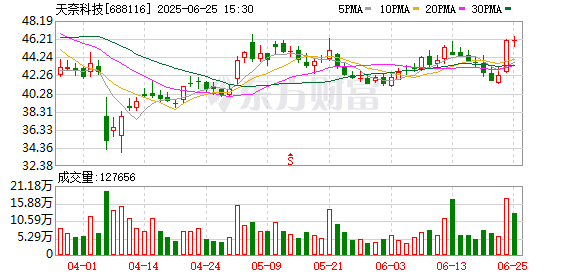
天奈科技商标纠纷迎反转 “Cnano”被国家知识产权局裁定无效
Zheng Quan Shi Bao Wang· 2025-06-25 12:51
Core Viewpoint - TianNai Technology (688116) faces a significant setback as the National Intellectual Property Administration declared its "Cnano and logo" trademark invalid, reversing a previous court ruling in its favor [2][9]. Group 1: Trademark Dispute - The trademark dispute between TianNai Technology and Shandong Dazhan Nano Materials Co., Ltd. has been ongoing for several years, with a previous court ruling in 2023 favoring TianNai Technology [2][6]. - The National Intellectual Property Administration's recent ruling has prompted TianNai Technology to prepare for an appeal to the Beijing Intellectual Property Court [4][5]. - TianNai Technology claims that the trademark "Cnano" has established a strong association with its brand and has significant recognition in the industry [7][8]. Group 2: Market Position and Product Offerings - TianNai Technology specializes in the research, production, and application of carbon nanotubes and graphene, with products including carbon nanotube powder and conductive pastes [3]. - According to GGII statistics, TianNai Technology holds the leading market share in carbon nanotube conductive pastes, with shares of 40.3%, 46.7%, and 53.2% from 2022 to 2024, respectively [3]. Group 3: Company Strategy and Impact - The company has established a comprehensive intellectual property defense system and has registered alternative trademarks to mitigate potential impacts from the current dispute [5]. - TianNai Technology asserts that the trademark dispute will not significantly affect its core competitiveness or operational capabilities, regardless of the court's final decision [5].


天奈科技: 江苏天奈科技股份有限公司可转换公司债券受托管理事务报告(2024年度)
Zheng Quan Zhi Xing· 2025-06-24 17:48
Group 1: Overview of Convertible Bonds - Jiangsu Cnano Technology Co., Ltd. issued convertible bonds totaling RMB 830 million, approved by the China Securities Regulatory Commission [1][2][3] - The bonds have a maturity of six years, with an annual interest rate of 0.30% for the first year, 0.50% for the second year, and 1.00% for the third year [2][16] - The initial conversion price is set at RMB 153.67 per share, subject to adjustments based on specific corporate actions [3][4] Group 2: Financial Performance - The company's net profit for 2024 is reported at RMB 250.20 million, a decrease of 15.80% compared to the previous year [11] - Total revenue for 2024 is RMB 1.45 billion, showing an increase from RMB 1.40 billion in 2023 but a decline from RMB 1.84 billion in 2022 [11][12] - As of December 31, 2024, total assets amount to RMB 5.14 billion, with net assets of RMB 2.96 billion [13] Group 3: Use of Proceeds from Bonds - The company has utilized RMB 308.95 million from the convertible bond proceeds, with RMB 50.30 million used in the current year [14][15] - The remaining balance of the bond proceeds as of December 31, 2024, is RMB 554.28 million, including interest income [14][15] - The company has established a dedicated account for managing the proceeds, adhering to regulatory requirements [14] Group 4: Debt Servicing Capability - The company has maintained a normal debt repayment willingness, with no delays in interest payments reported [17] - Key financial ratios indicate a debt-to-asset ratio of 42.33% and a current ratio of 2.61 as of December 31, 2024, reflecting a stable financial position [18] - The company has not implemented any credit enhancement measures for the bonds [18] Group 5: Credit Rating - The company's credit rating has been consistently rated at AA- with a stable outlook by Zhongjian Pengyuan Credit Rating Co., Ltd. [18]
兰石中科前往金川集团开展专题调研交流
Jing Ji Wang· 2025-06-19 07:15
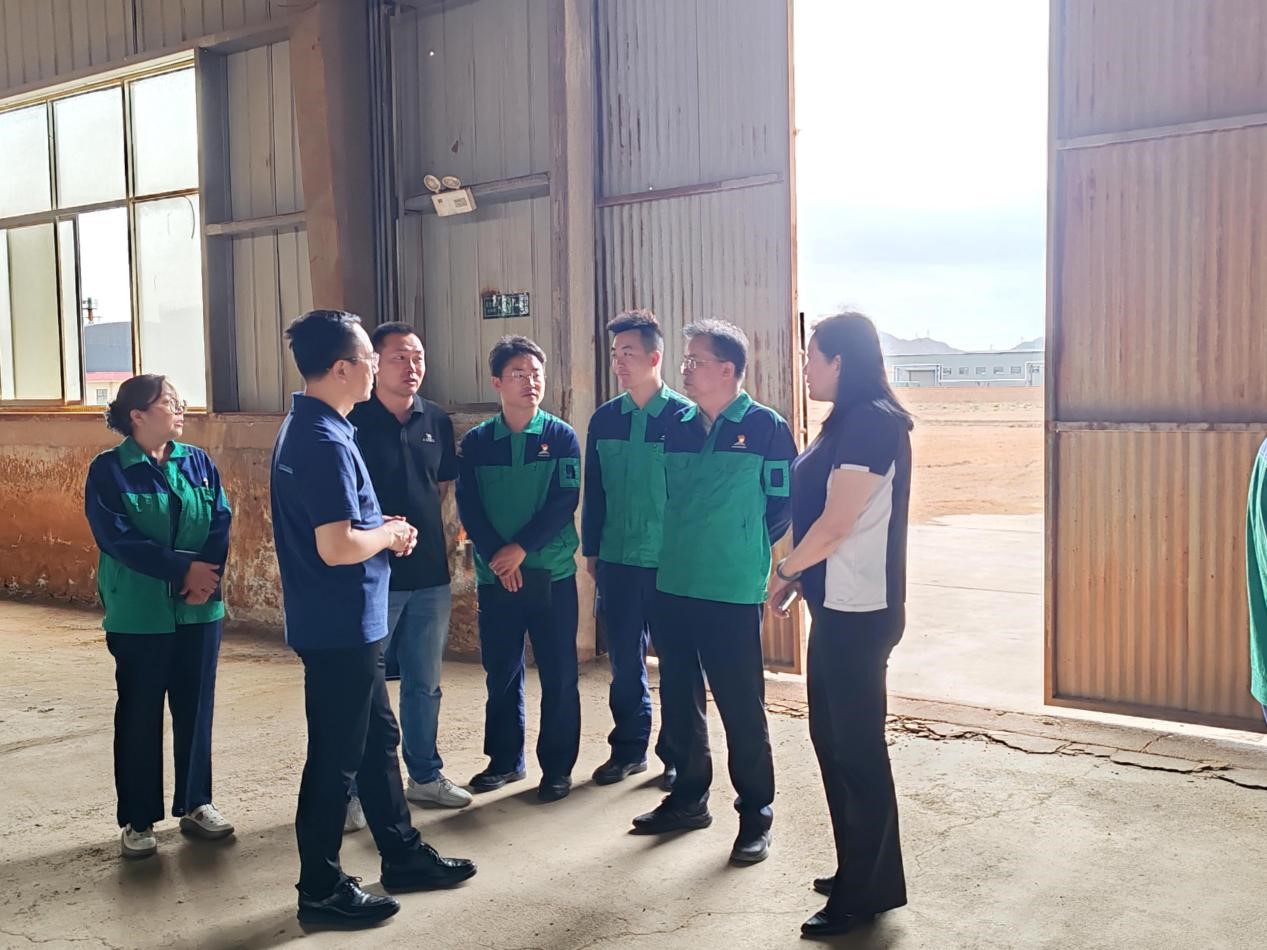
Core Viewpoint - The collaboration between Lanshi Zhongke and Jinchuan Group focuses on the development of a nano rare earth catalyst project, which aligns with national strategic goals in new materials and energy sectors [1][3][5] Group 1: Project Development - Lanshi Zhongke's executives conducted a detailed investigation into the nano rare earth catalyst project at Jinchuan Group, discussing construction plans, site selection, and cooperation models [1] - Jinchuan Group possesses various technologies in powder material preparation, which align well with Lanshi Zhongke's core patent technology advantages [3] - The collaboration aims to establish multiple pilot platforms for nano materials, providing innovative solutions for Jinchuan Group's strategic development [3] Group 2: Strategic Importance - Nano rare earth materials are identified as a key development direction by the state, indicating a promising future for the project [3] - The project is expected to contribute to cost reduction, efficiency improvement, and enhanced risk resilience for Jinchuan Group [3] - Both companies are encouraged to integrate resources and expedite the development of a feasible plan to ensure the project's rapid implementation [3] Group 3: Future Collaboration - Lanshi Zhongke expressed gratitude for Jinchuan Group's long-term support and emphasized the importance of strengthening collaboration in project management, market expansion, and technology research [5] - The successful implementation of the nano rare earth catalyst project is seen as a foundation for the future industrialization of nano new materials [5]
济源:科技创新助力打造产业新城
Sou Hu Cai Jing· 2025-06-09 03:20
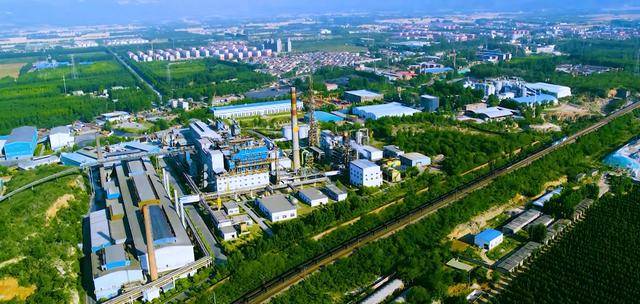
Group 1 - Two companies from Jiyuan entered the top 500 Chinese enterprises, four entered the top 500 manufacturing enterprises, and three entered the top 500 private enterprises, with six companies exceeding 10 billion in revenue [1] - The comprehensive technology innovation level index of the demonstration zone ranks fifth in the province, with R&D expenditure increasing by 63.4% year-on-year, accounting for 3.44% of GDP, ranking second in the province [1][3] - Jiyuan is transforming from a traditional industrial city to a modern industrial city, leveraging technological innovation to reshape its industrial structure [1][3] Group 2 - Jiyuan's industrial base is strong, with major industrial enterprises playing a crucial role in technological innovation, leading to significant economic growth [3] - The city has implemented the "332" industry cluster cultivation project, focusing on three advantageous industry clusters: non-ferrous metals, steel deep processing, and modern chemical industries, while also developing emerging industries [3][5] - Jiyuan has become the largest green lead-zinc smelting base and silver production base in the country, with industrial enterprises' revenue exceeding 220 billion [3][5] Group 3 - Jiyuan Steel Group has successfully transformed from construction steel to industrial steel, entering the first tier of special steel enterprises in China [5] - The demonstration zone has a high coverage rate of R&D activities among industrial enterprises and has seen a doubling of high-tech enterprises and technology-based SMEs over the past three years [6] - New research institutions and partnerships have been established to enhance innovation in materials and waste resource utilization [6] Group 4 - The circular economy in Jiyuan is thriving, with significant recycling and utilization of industrial waste, contributing to a total output value of over 746 billion in the circular economy sector [8] - The city is focusing on developing new industries while upgrading traditional industries, particularly in the nanomaterials sector, which has been recognized as a strategic emerging industry cluster [10] - Jiyuan is fostering a resilient ecosystem for small and medium enterprises, with numerous specialized and innovative companies emerging [10][11] Group 5 - The city emphasizes innovation as a key driver for high-quality economic development, aiming to build a modern industrial system [13] - Jiyuan is positioned to become a modern city with robust industrial capabilities and sustainable growth, integrating traditional industrial strengths with innovative dynamics [13]
如何打通从实验室到生产线的“最后一公里” 科技成果转化试出来
He Nan Ri Bao· 2025-06-08 23:37
Core Viewpoint - The establishment of pilot test bases in Henan Province plays a crucial role in transforming scientific and technological achievements into industrial applications, effectively bridging the gap between laboratory innovations and market-ready products [1][4][10]. Summary by Sections Pilot Test Bases Overview - Since 2021, Henan has established 61 provincial pilot test bases covering 28 key industrial chains, conducting 7,220 pilot projects and achieving 2,099 successful transformations, generating service revenue of 3.351 billion yuan [1]. - The pilot test bases serve as essential connectors between the innovation chain and the industrial chain, facilitating technology maturation, product testing, and process validation [4][10]. Intelligent Manufacturing - The Henan Intelligent Manufacturing System Pilot Test Base, developed by Guojihulian, provides a digital twin platform for enterprises to validate their smart manufacturing systems, enhancing the success rate of software development [2]. - This base has rapidly developed, gathering 101 service providers across over 10 industries and creating 125 solutions to support the digital transformation of manufacturing in the province [2]. Successful Case Studies - The low-carbon energy technology pilot test base has contributed to products supporting manned lunar missions, while the intelligent agricultural machinery base is responsible for 17 national-level major research projects in 2024 [4]. - The unmanned aerial vehicle pilot test base is working on a single-person electric vertical takeoff and landing aircraft project, aiming to advance technology in low-altitude short-distance flight [4]. Operational Models - Three operational models have emerged in Henan's pilot test bases: 1. University-led "full-chain incubation" model, exemplified by the nanomaterials pilot test base, which has achieved a 66 billion yuan annual output value [5]. 2. Enterprise-led "industrial ecosystem co-construction" model, where leading companies provide pilot testing services to upstream and downstream enterprises [6]. 3. Government-led "park-based aggregation" model, which attracts enterprises and research institutions to collaborate within industrial parks [6]. Future Development - The future vision for Henan's pilot test bases includes a shift towards high-end, intelligent, and green services, integrating into the national market and establishing cross-regional resource-sharing mechanisms [9][11]. - The bases are expected to evolve from merely facilitating technology transfer to becoming integral parts of the regional innovation ecosystem, enhancing the overall competitiveness of the industry [12].
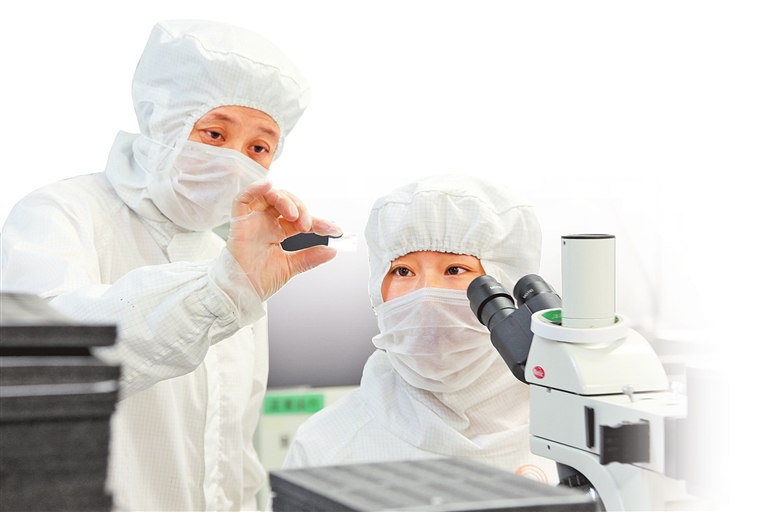
Cell:突破人类视觉极限,我国学者开发红外隐形眼镜,闭眼也能“看见”红外世界
生物世界· 2025-05-22 23:46
Core Viewpoint - The article discusses the development of wearable near-infrared (NIR) upconversion contact lenses (UCL) that enable humans to perceive NIR images, expanding the visual spectrum beyond the visible light range [3][9]. Group 1: Research Development - A research team from multiple institutions developed UCL that possess suitable optical properties, hydrophilicity, flexibility, and biocompatibility, allowing for the perception of NIR spatial and temporal color images [3][5]. - The UCL achieved a high doping ratio (7-9%) of upconversion nanoparticles (UCNP) while maintaining over 90% transparency in the visible light spectrum, significantly outperforming previously reported materials [5][6]. Group 2: Functional Capabilities - Mice wearing UCL were able to perceive NIR light and distinguish different temporal frequencies and orientations of NIR information [6]. - Human volunteers wearing UCL could see a range of NIR light intensities and accurately identify time-encoded information [6][9]. Group 3: Technological Innovations - The research team developed a wearable eyeglass system integrated with UCL to enhance spatial resolution, allowing volunteers to recognize complex NIR patterns with clarity similar to visible light vision [6][9]. - The use of trichromatic UCNP in the UCL enables the conversion of three different NIR wavelengths into red, green, and blue visible light, facilitating the perception of multi-spectral NIR colors [7][9]. Group 4: Future Applications - This technology has potential applications in medical fields, information processing, and visual assistance technologies, and may offer new solutions for treating visual disorders such as color blindness [9][12]. - The research emphasizes the need for further optimization, including improving upconversion efficiency and achieving directional emission of light from the lenses [12].

2025-2031全球与中国磁性氧化铁纳米粒子市场发展状况及项目可行性研究报告
Sou Hu Cai Jing· 2025-05-19 08:46
2025-2031全球与中国磁性氧化铁纳米粒子市场发展状况及项目可行性研究报告 【全新修订】:2025年5月 【出版机构】:中智信投研究网 1.2.2 磁铁矿纳米颗粒 1.2.3 磁赤铁矿纳米颗粒 1.3 从不同应用,磁性氧化铁纳米粒子主要包括如下几个方面 1.3.1 全球不同应用磁性氧化铁纳米粒子销售额增长趋势2020 VS 2024 VS 2031 1.3.2 医疗 1.3.3 工业 1.3.4 环境 1.3.5 其他 1.4 磁性氧化铁纳米粒子行业背景、发展历史、现状及趋势 1.4.1 磁性氧化铁纳米粒子行业目前现状分析 1.4.2 磁性氧化铁纳米粒子发展趋势 2 全球磁性氧化铁纳米粒子总体规模分析 【内容部分有删减·详细可参中智信投研究网出版完整信息!】 【免费售后 服务一年,具体内容及订购流程欢迎咨询客服人员 】 报告目录 1 磁性氧化铁纳米粒子市场概述 1.1 产品定义及统计范围 1.2 按照不同产品类型,磁性氧化铁纳米粒子主要可以分为如下几个类别 1.2.1 全球不同产品类型磁性氧化铁纳米粒子销售额增长趋势2020 VS 2024 VS 2031 2.1 全球磁性氧化铁纳米粒子供需现状及预测(2 ...

天奈科技: 江苏天奈科技股份有限公司向特定对象发行A股股票上市公告书
Zheng Quan Zhi Xing· 2025-05-15 11:25
Core Points - Jiangsu Cnano Technology Co., Ltd. is issuing A-shares to specific investors, with a total fundraising target of up to RMB 800 million [4][11][12] - The shares will be listed on the Shanghai Stock Exchange's Sci-Tech Innovation Board after a six-month lock-up period [3][12] - The company specializes in the research, production, and sales of nano-level carbon materials, primarily carbon nanotubes, which are used in lithium batteries and new energy vehicles [3][4] Group 1: Issuance Details - The issuance will consist of no more than 23,717,758 shares, representing up to 30% of the company's total share capital before the issuance [9][10] - The issuance price is set at RMB 36.91 per share, which is not less than 80% of the average trading price over the 20 trading days prior to the pricing date [10][11] - The total amount raised from the issuance is RMB 799,999,963.22, with net proceeds after expenses amounting to RMB 787,116,308.19 [11][13] Group 2: Lock-up and Compliance - Shares acquired by investors will be subject to a six-month lock-up period post-issuance, during which they cannot be transferred [11][12] - The issuance process has been verified by the underwriters and legal counsel to ensure compliance with relevant regulations [5][11] Group 3: Investor Participation - A total of 37 investors submitted valid subscription documents, with 21 investors ultimately receiving allocations [6][9] - The investor pool includes various institutional investors, such as private equity funds and asset management companies [6][14][15]
天奈科技: 天奈科技2024年年度股东大会会议资料
Zheng Quan Zhi Xing· 2025-05-15 11:14
Core Viewpoint - Jiangsu Tiannai Technology Co., Ltd. is preparing for its 2024 Annual General Meeting, focusing on maintaining shareholder rights and ensuring orderly proceedings [1][2][3]. Meeting Procedures - The meeting will require attendees to verify their identity and sign in 45-15 minutes before the start [1][2]. - The meeting will follow a predetermined agenda for discussing and voting on proposals [2][3]. - Shareholders have the right to speak, inquire, and vote during the meeting, with specific rules governing the conduct of discussions [2][3][4]. Financial Performance - In 2024, the company achieved a revenue of 1,448.16 million yuan, a year-on-year increase of 3.13%, while the net profit attributable to shareholders was 250.20 million yuan, a decrease of 15.80% [7][20]. - The company maintained a market share of 53.2% in China's carbon nanotube conductive paste market, leading the industry [7][20]. Governance and Management - The company has strengthened its internal control systems and optimized various business processes to ensure compliance and operational efficiency [8][9]. - The board of directors has actively communicated with major shareholders to gather feedback on operational and strategic matters [9][10]. Future Plans - The company aims to enhance its research and development efforts, focusing on expanding the application of carbon nanotubes in various fields, including lithium batteries and conductive plastics [15][16]. - Plans for 2025 include maintaining steady business growth and significant breakthroughs in new product lines [22].
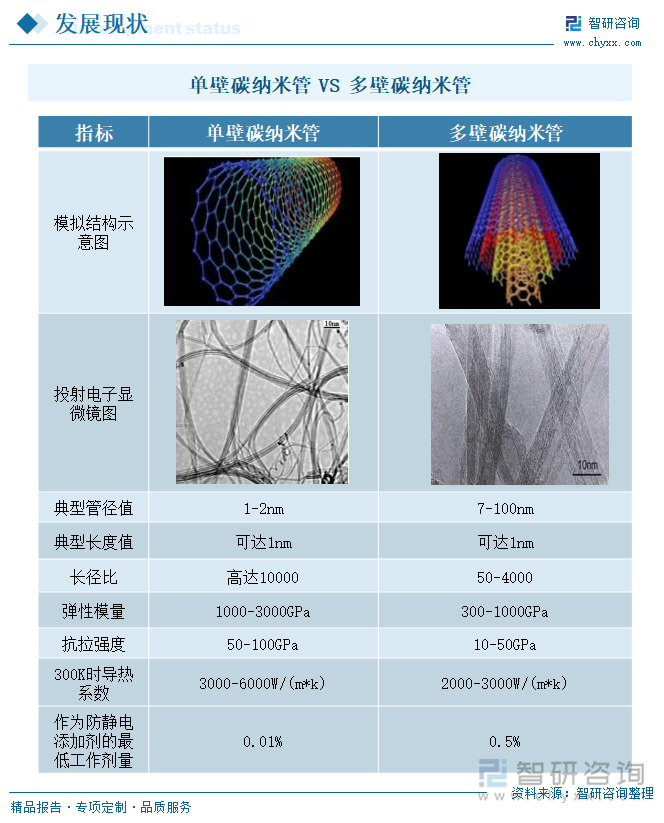
趋势研判!2025年中国单壁碳纳米管行业市场规模、业布局、产业链及未来趋势分析:越来越多企业布局单壁碳纳米管,规模不断壮大[图]
Chan Ye Xin Xi Wang· 2025-05-12 01:23
Core Viewpoint - Single-walled carbon nanotubes (SWCNTs) are experiencing a significant growth phase due to their superior properties compared to multi-walled carbon nanotubes (MWCNTs), particularly in applications such as lithium batteries and solid-state batteries, with the global market for SWCNT slurry expected to reach approximately 1.6 billion yuan in 2024 and 17.8 billion yuan by 2030 [1][13]. Group 1: Overview of Single-Walled Carbon Nanotubes - Carbon nanotubes are tubular nanostructures made of graphite crystals, categorized into single-walled and multi-walled types, with distinct physical properties due to structural differences [2][4]. - SWCNTs have a higher specific surface area, finer diameter, longer length, and better graphitization, leading to superior performance, including conductivity that exceeds MWCNTs by over ten times [4][5]. Group 2: Market Status of Single-Walled Carbon Nanotubes - The production methods for SWCNTs include arc discharge, laser ablation, and chemical vapor deposition (CVD), with CVD being the most common due to its cost-effectiveness and scalability [7][8]. - The SWCNT market is expected to grow significantly, driven by the increasing demand for conductive agents in lithium batteries, with a projected total shipment of conductive agents in China reaching 52,000 tons in 2024, a 13% year-on-year increase [17]. Group 3: Industry Chain of Single-Walled Carbon Nanotubes - The industry chain includes upstream equipment and raw material suppliers, with key materials affecting production costs and quality, and downstream applications primarily in lithium batteries and composite materials [15]. Group 4: Corporate Landscape of Single-Walled Carbon Nanotubes - Major players in the SWCNT market include OCSiAl, Tianai Technology, and Dao's Technology, with OCSiAl being the largest global supplier, while Tianai Technology is noted for its early industrialization efforts in China [22][24]. Group 5: Development Trends of Single-Walled Carbon Nanotubes - The SWCNT industry is expected to see continuous optimization of production processes, expansion of market size driven by the growth of the electric vehicle market, and high industry concentration due to significant technological barriers [25].