
网络安全

Search documents
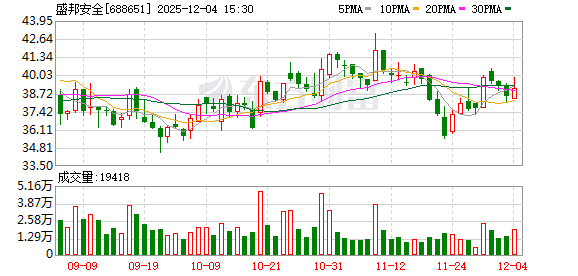
盛邦安全:近期推出200G高速链路加密网关产品
Mei Ri Jing Ji Xin Wen· 2025-12-04 08:13
Core Insights - The company, Shengbang Security (688651.SH), has announced its "integrated air-space-ground" security strategy, establishing partnerships with key enterprises across the industry chain, including satellite manufacturing, communication operations, and terminal applications [2] Strategic Developments - The company has made strategic investments in satellite manufacturing unicorn, Weina Starry Sky, and satellite communication equipment provider, Xingzhan Measurement and Control, to deepen cooperation in satellite internet security, low-altitude economy scenarios, and emergency rescue [2] - These collaborations lay a solid foundation for future participation in satellite constellation construction and the expansion of satellite application scenarios [2] Future Focus - The company will continue to focus on core aspects of satellite internet and deepen investment cooperation within the industry chain, exploring new directions such as 6G and cloud computing [2] - Recent years have seen increased R&D investment aimed at consolidating technological barriers and broadening the product matrix to meet the demands of integrated air-space-ground development [2] R&D Priorities - R&D efforts are concentrated in three core areas: 1. Deepening the core technology system, focusing on the iteration of advantageous technologies such as vulnerability and weakness detection, and application security defense [2] 2. Layout in emerging sectors, with R&D resources prioritized for satellite internet security, including the recent launch of a 200G high-speed link encryption gateway product [2] 3. Enhancing the integration of AI and cybersecurity in research and development [2]


奇安信科技集团股份有限公司关于2025年第一期和2025年第二期科技创新债券获准注册的公告
Shang Hai Zheng Quan Bao· 2025-12-03 19:03
登录新浪财经APP 搜索【信披】查看更多考评等级 证券代码:688561 证券简称:奇安信 公告编号:2025-050 奇安信科技集团股份有限公司关于2025年第一期和2025年第二期 科技创新债券获准注册的公告 本公司董事会及全体董事保证本公告内容不存在任何虚假记载、误导性陈述或者重大遗漏,并对其内容 的真实性、准确性和完整性依法承担法律责任。 奇安信科技集团股份有限公司(以下简称"公司")于2025年9月12日和2025年9月29日分别召开第三届董 事会第四次会议和2025年第二次临时股东大会,审议通过了《关于拟申请注册发行银行间债券市场非金 融企业债务融资工具的议案》,同意公司向中国银行间市场交易商协会(以下简称"交易商协会")申请 注册发行总额不超过人民币20亿元的科技创新债券。其中,中期票据不超过人民币10亿元,超短期融资 券不超过人民币10亿元。具体内容详见公司分别于2025年9月13日和2025年9月30日在上海证券交易所网 站(www.sse.com.cn)上披露的《奇安信关于拟申请注册发行银行间债券市场非金融企业债务融资工具 的公告》(公告编号:2025-040)和《奇安信2025年第二次临 ...

AI出现多个“S型曲线”机遇 基金经理看好两大方向
Zheng Quan Shi Bao· 2025-12-03 17:51
Core Viewpoint - The current AI market has been experiencing a phase of adjustment, leading to discussions about the existence of a bubble, but institutions believe the AI industry has solid fundamentals and vast potential, with the "bubble theory" being more about short-term market sentiment rather than a denial of industry trends [1] Group 1: Market Analysis - The valuation of leading companies in core AI sectors is considered reasonable despite being high, as the long-term industry trends and market potential support these valuations [1] - The current AI market is viewed as more rational compared to the internet bubble period, with primary market funds focusing on quality leading companies and the valuations of the "seven sisters" in the US stock market being significantly lower than the internet bubble levels [1] Group 2: Investment Opportunities - The AI industry chain is extending from foundational computing power to higher levels, with major chip manufacturers collaborating with AI companies, enhancing industry prosperity and increasing the demand for computing infrastructure [2] - The fund manager has adjusted holdings in response to market changes, increasing allocations in semiconductor, cloud computing, and cybersecurity sectors, with the "seven sisters" in the US stock market making up 28.28% of the portfolio by the end of Q3 [2] Group 3: Future Outlook - The focus will be on two main areas: the expanding demand for inference capabilities and the increasing importance of data generation [3] - The demand for computing power is expected to continue growing, particularly in the inference stage, while mid-tier semiconductor companies may gain market share due to reduced demand for high-performance GPUs in the pre-training phase [3] - Chinese companies are showing competitiveness in the application and reinforcement learning data generation sectors, leveraging their data accumulation and business scenarios to optimize internal efficiencies and potentially create new business models [3]
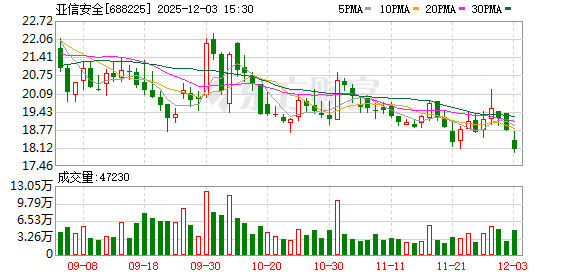
亚信安全:截至2025年三季度末普通股股东总数为9271户
Zheng Quan Ri Bao· 2025-12-03 13:39
Group 1 - The core point of the article is that Asion Security reported a total of 9,271 common stock shareholders as of the end of the third quarter of 2025 [2]

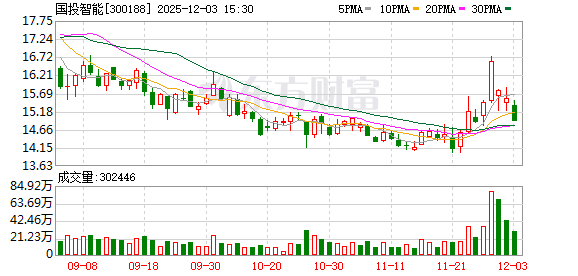
国投智能:公司依托自研的“天擎”公共安全大模型及电子数据取证产品,聚焦涉网犯罪预警等核心场景
Mei Ri Jing Ji Xin Wen· 2025-12-03 13:00
Core Viewpoint - The company, Guotou Intelligent (300188.SZ), has successfully implemented its self-developed "Tianqing" public safety model and electronic data forensics products in various public safety and network governance scenarios across the country, focusing on online crime warning and data traceability [2]. Company Summary - Guotou Intelligent has developed a public safety model named "Tianqing" which is utilized for online crime prevention and data forensics [2]. - The company's products have been applied in multiple regions nationwide, indicating a broad adoption in the public safety and network governance sectors [2].

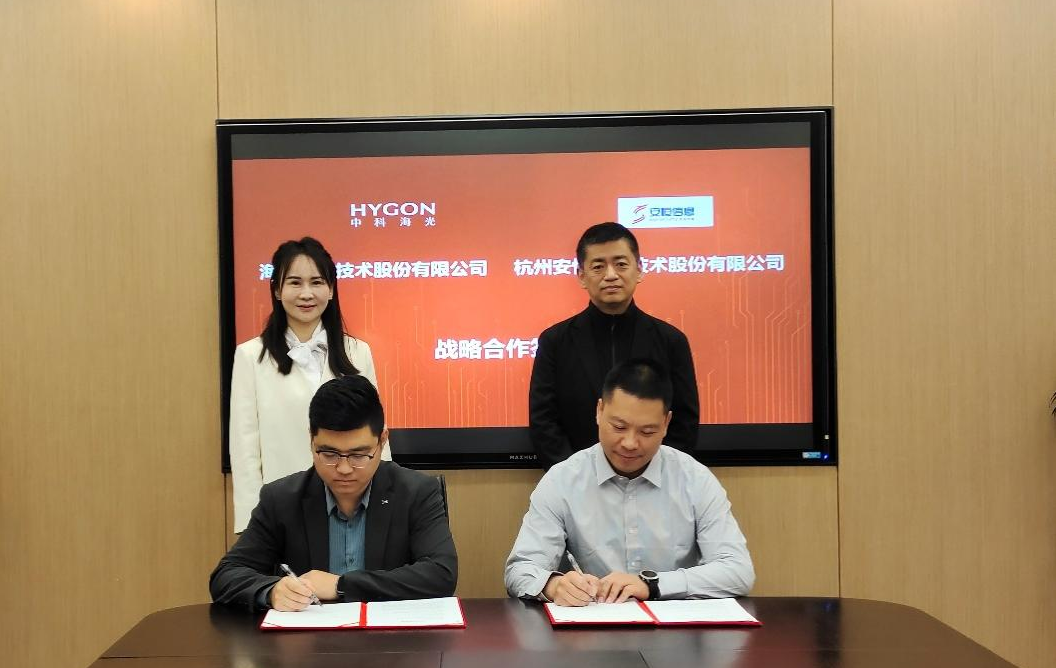
安恒信息与海光信息签署算力安全战略合作
Ju Chao Zi Xun· 2025-12-03 10:12
根据合作安排,双方将依托国产算力平台,围绕人工智能安全、重点行业场景创新、数据要素开发与流通等领域开展产品适配与联合研发,共同打造 覆盖基础设施、安全产品与行业应用的一体化解决方案。同时,双方还计划在安全能力输出、服务体系建设等方面探索协同模式。 在人才与生态层面,安恒信息与海光信息将通过联合实验室、联合培训等方式,推进安全人才培养和技术经验沉淀,并向上下游合作伙伴开放算力与 安全技术能力,推动形成更为完善的国产算力与安全产业生态。 从应用前景看,双方的合作有望在政务云、金融信创、能源安全生产、工业互联网等场景中落地,为用户提供更安全、高效、智能的数字基础设施, 提升关键行业在自主可控算力和安全防护方面的整体能力。随着项目推进,相关成果也将逐步通过产品化和解决方案形式推向市场。 (校对/秋贤) (文/罗叶馨梅)12月3日,安恒信息(688023.SH)发布消息称,公司与海光信息技术股份有限公司(以下简称"海光信息")正式签署战略合作协议, 确立在技术创新、生态构建和资源共享等多领域长期稳定的合作关系。双方将立足"芯片+应用""算力+安全"的双轮驱动模式,建立长期协同机制。 安恒信息是国内网络安全和数据安全领域 ...


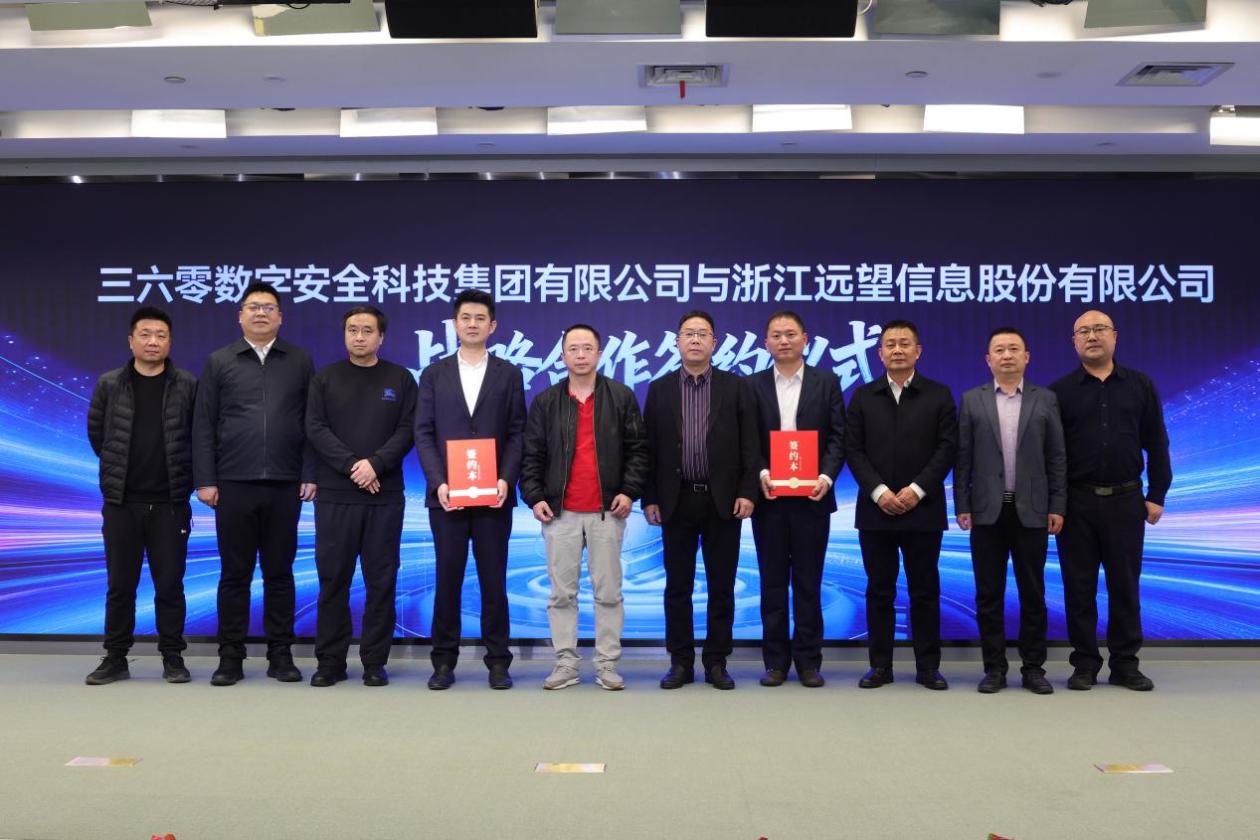
开放AI Agent核心技术,360与远望信息深化安全生态协同
Huan Qiu Wang· 2025-12-03 09:44
Core Insights - 360 Digital Security Group and Yuanwang Information signed a strategic cooperation agreement focusing on key livelihood and government sectors, aiming to create a "technology + scenario + service" collaborative ecosystem to enhance digital economic development in multiple provinces and cities [1][3] Group 1: Strategic Collaboration - The partnership will leverage technology synergy, deep scenario cultivation, and AI empowerment to provide robust security solutions for digital economy growth [1][4] - 360 Digital Security Group has a strong foundation in digital security and AI, having pioneered a free antivirus model and addressed international cybersecurity challenges [3][4] Group 2: Operational Synergies - Previous collaborations in regions like Chongqing and Sichuan have established trust and successfully tackled industry pain points related to heterogeneous terminal protection and high-frequency business security [3] - Yuanwang Information will utilize its advantages in channel networks and enterprise customer resources to enhance 360's technological capabilities in security and AI [4] Group 3: Future Directions - The strategic agreement marks an upgrade to "comprehensive ecological co-creation," integrating 360's AI agents and security intelligence with Yuanwang's localized service networks and industry experience [4] - The goal is to develop replicable and scalable benchmark solutions that meet industry needs, ensuring comprehensive and robust security for the sustainable development of the regional digital economy [4]

破发股亚信安全5股东拟减持 2022上市即巅峰募12.2亿
Zhong Guo Jing Ji Wang· 2025-12-03 08:34
Core Viewpoint - The shareholders of AsiaInfo Security (688225.SH) have announced a plan to reduce their holdings, with a total of up to 7,000,000 shares, representing 1.75% of the company's total share capital [1][2]. Group 1: Shareholder Holdings - Nanjing Anrong holds 10,809,779 shares, accounting for 2.70% of the total share capital [1] - Nanjing Anchun holds 5,223,120 shares, accounting for 1.31% of the total share capital [1] - Tianjin Yixin holds 2,228,920 shares, accounting for 0.56% of the total share capital [1] - Nanjing Xinzhi holds 761,207 shares, accounting for 0.19% of the total share capital [1] - Nanjing Jianxin holds 146,683 shares, accounting for 0.0367% of the total share capital [1] - The total shares held by these shareholders amount to 19,169,709 shares, representing 4.7967% of the total share capital [1] Group 2: Reduction Plan - The shareholders plan to reduce their holdings through centralized bidding and block trading, with a maximum of 4,000,100 shares (1.00%) through centralized bidding and 2,999,900 shares (0.75%) through block trading [2] - The reduction period is set to begin 15 trading days after the announcement and will last for three months [2] - Company directors and executives plan to indirectly reduce their holdings by up to 4,500,000 shares, representing 1.1250% of the total share capital [2] Group 3: Company Background - AsiaInfo Security was listed on the Shanghai Stock Exchange's Sci-Tech Innovation Board on February 9, 2022, with an initial public offering of 40.01 million shares at a price of 30.51 yuan per share [3] - The stock reached a peak price of 41.55 yuan on its listing day but is currently in a state of decline [4] - The total funds raised from the IPO amounted to 1.221 billion yuan, with a net amount of 1.123 billion yuan, which is 85.0591 million yuan less than originally planned [4]
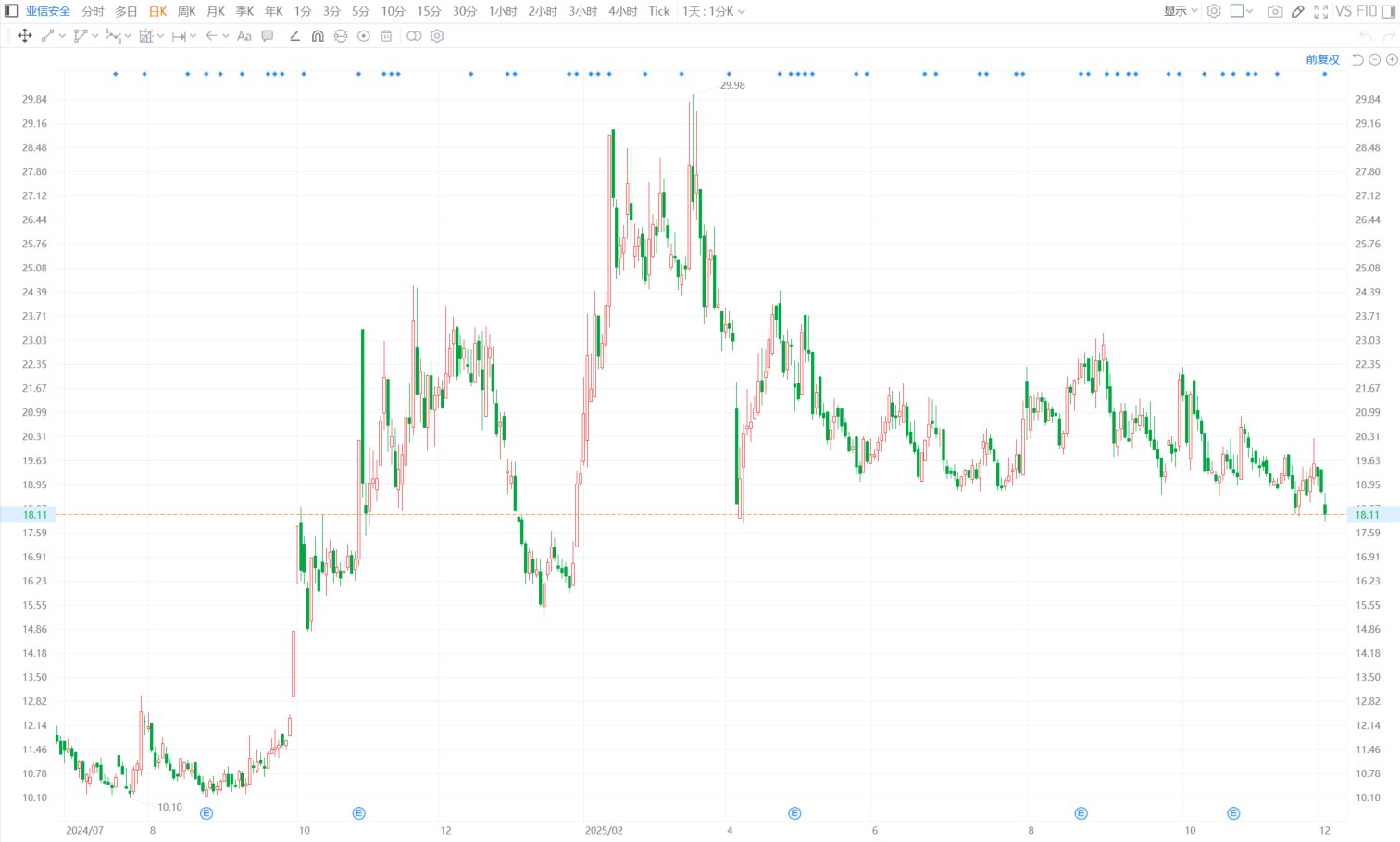
A股异动丨亚信安全跌逾4% 股价创近8个月新低
Ge Long Hui A P P· 2025-12-03 06:55
Group 1 - The core point of the article is that AsiaInfo Security (688225.SH) experienced a decline of 4.32% in its stock price, reaching a new low of 17.93 yuan since April 10, marking an 8-month low [1] - AsiaInfo Security announced that several entities, including Nanjing Anrong, Nanjing Anchun, Tianjin Yixin, Nanjing Xinzhi, and Nanjing Jianxin, plan to reduce their holdings by a total of up to 7,000,000 shares, which represents no more than 1.75% of the company's total share capital [1] - The reduction period for the shareholding is set to begin 15 trading days after the announcement and will last for three months [1]
Okta上调2026财年业绩指引 网络安全工具需求上升
Xin Lang Cai Jing· 2025-12-03 06:02
格隆汇12月3日|网络安全公司Okta公布2026财年第三季度业绩,营收为7.42亿美元,同比增长12%, 超过市场预期的7.3亿美元;调整后每股收益为82美分,亦超过预期的76美分。该公司预计第四季度营 收将介于7.48亿至7.5亿美元之间,高于市场预期的7.379亿美元,得益于网络安全工具需求上升。展望 全年,公司上调业绩指引,预计营收将介于29.06亿至29.08亿美元之间,此前预期为28.8亿至28.9亿美 元;预计调整后每股收益预期将介于3.43至3.44美元之间,此前预期为3.33至3.38美元。 来源:格隆汇APP ...
