
Autos

Search documents
Will Cost Cuts and Backlog Fuel Earnings Growth for Dana?
ZACKS· 2026-03-24 13:31
Core Insights - Dana Incorporated (DAN) is leveraging a growing backlog and cost transformation to enhance profitability in a challenging auto market [1] Backlog and Revenue Visibility - Dana has established a $750 million new-business backlog, which provides visibility into near-term revenue despite weak industry demand [2] - Approximately $200 million of this backlog is anticipated to convert into revenue in 2026, serving as a buffer against lower volumes [3] - The company is adopting a selective approach to electric-vehicle bidding, focusing on higher-return internal combustion and hybrid programs [3] Cost Transformation and Margin Expansion - Dana achieved approximately $248 million in cost savings in 2025 through efficiencies in material, engineering, and manufacturing [4] - The company aims for a cost-savings run rate of about $325 million entering 2026, including $40 million from stranded-cost elimination post-Off-Highway divestiture [5] 2026 Profitability Outlook - Dana expects adjusted EBITDA for 2026 to be between $750 million and $850 million, a significant increase from $610 million in 2025 [6] - The projected adjusted EBITDA margin is around 10.6%, indicating a margin expansion of about 250 basis points year-over-year [7] Commercial Vehicle Segment Performance - The Commercial Vehicle segment is expected to see margin improvements, with flat industry volumes anticipated in 2026 [8] - A low-cost manufacturing facility in Mexico and ongoing operational efficiencies are key drivers for profitability gains [9] Investor Insights - Dana's 2026 outlook assumes flat sales, with backlog conversion and tariff and currency benefits offsetting softer volumes [12] - The Zacks Consensus Estimate indicates a year-over-year EPS increase of 1,358% for 2026 and 25% for 2027 [13]


Should You Buy Rivian Stock Right Now?
Yahoo Finance· 2026-03-24 13:25
Group 1 - Rivian is set to begin deliveries of its R2 SUV, which is expected to be a significant milestone for the company's growth trajectory [1][4] - The R2 SUV will have a starting price of $45,000, making it accessible to nearly 70% of prospective car buyers in the U.S. who prefer to stay below the $50,000 threshold [4] - Following the R2 launch, Rivian plans to introduce two additional models, the R3 and R3X, both priced under $50,000, which could potentially scale sales similar to Tesla's Model 3 and Model Y [5] Group 2 - Rivian shares currently trade at 3.2 times sales, significantly lower than most AI stocks, indicating a potential undervaluation of the company's AI exposure [6] - The company held its first "AI Day" in December, outlining a three-pronged strategy to enhance its AI capabilities over the coming years [6]


Zoox to widen US robotaxi footprint with San Francisco, Vegas expansion
Reuters· 2026-03-24 13:02
Core Insights - Zoox, Amazon's self-driving unit, is expanding its robotaxi service in San Francisco and Las Vegas, and will begin testing in Austin and Miami, marking a significant push into the U.S. autonomous ride-hailing market [1][3] Expansion Plans - The company aims to grow its presence in San Francisco by focusing on high-demand neighborhoods such as the Marina, Chinatown, and the Embarcadero, while also expanding in Las Vegas to cover more hotels and entertainment destinations along the Strip [3] - Zoox will start operating its purpose-built robotaxis on public roads in Austin and Miami, initially offering rides to employees, their families, and friends before gradually opening to the public later this year [3] Performance Metrics - Zoox has logged nearly 2 million autonomous miles and has carried over 350,000 riders, while introducing new features to reduce wait times and enhance the ride experience in a competitive sector [4]


Amazon's Zoox to debut robotaxis in Austin, Miami later this year as it awaits paid ride approval
CNBC· 2026-03-24 13:00
Core Insights - Amazon's Zoox is set to launch its robotaxi service in Austin and Miami later this year, initially for Zoox employees and their families before opening to the public through a waitlist program [1] Group 1: Service Launch and Expansion - Zoox will deploy its unique robotaxis, which lack traditional controls, for testing in designated areas of Austin and Miami [1] - The company has gradually opened its robotaxi service to the public, having provided 350,000 rides and with 500,000 individuals on the waitlist for the Explorer program [2] - Zoox is expanding its service areas in San Francisco and Las Vegas, adding coverage in neighborhoods such as Marina, North Beach, Chinatown, and Pacific Heights [3][4] Group 2: Competitive Landscape - Zoox is competing with Alphabet's Waymo, which currently leads the U.S. robotaxi market by offering 400,000 paid rides weekly across six metro areas and operating commercially in ten cities [3]

The One EV Breakthrough That Makes Waiting Obsolete - and Turns Minutes Into Money
Accessnewswire· 2026-03-24 12:45
Core Viewpoint - Elektros Inc. has submitted a licensing proposal to Waymo LLC for its patented multi-plug EV charging system, which aims to significantly reduce electric vehicle charging times from approximately one hour to just 5 to 7 minutes, potentially transforming the EV industry [2][3]. Group 1: Licensing Proposal - The proposal offers Waymo the opportunity to license Elektros' patented multi-plug EV charging system under a one-year agreement from May 1, 2026, to May 1, 2027 [2]. - The proposed licensing structure allows Waymo access to the technology for an initial term with the possibility for renewal, subject to mutual agreement [4]. Group 2: Technological Innovation - Elektros' multi-plug charging system addresses a critical challenge in electric vehicle adoption: charging speed, which can improve efficiency across consumer vehicles, commercial fleets, and autonomous mobility platforms [3]. - The technology is positioned as a transformative advancement for the EV industry, potentially turning charging downtime into a catalyst for growth [5]. Group 3: Strategic Partnership - Waymo was selected as a proposed licensee due to its leadership in autonomous driving and its ability to deploy advanced technologies in real-world environments [3]. - The CEO of Elektros emphasized that the technology represents a critical missing piece in the EV infrastructure landscape, highlighting the innovation and opportunity presented by the proposal [4].

Li Auto Surges 4% on a $1 Billion Buyback: Is LI or NIO the Better Chinese EV Bet?
247Wallst· 2026-03-24 12:38
Core Viewpoint - Li Auto announced a $1 billion share repurchase program, which has led to a 4% increase in its stock price, despite a 31.2% year-over-year decline in Q4 deliveries to 109,194 units. The company holds $8.11 billion in cash and anticipates the launch of the new L9 model in Q2 2026 as a key growth driver [1][5][9]. Summary by Sections Li Auto's Performance - Li Auto's Q4 deliveries fell 31.2% year-over-year to 109,194 units, and guidance for Q1 2026 indicates a further decline of 16% to 21% in revenue [1][8]. - The company has a strong cash position of $8.11 billion, allowing it to support stock buybacks without jeopardizing operations [7][14]. - The upcoming launch of the Li L9 in Q2 2026 is expected to be a significant growth catalyst, featuring upgrades in powertrain, autonomous driving, and chassis technology [9][15]. Nio's Performance - Nio reported Q4 deliveries of 124,807 units, a 71.7% increase year-over-year, and achieved its first GAAP quarterly profit [2][10]. - Vehicle margins improved to 18.1%, up from 13.1% year-over-year, indicating better pricing and cost control [12]. - Nio reduced R&D spending by 44.3% and SG&A by 27.5%, contributing to a more sustainable profitability structure [13]. Comparative Analysis - Li Auto is viewed as a more capital-secure option, while Nio is seen as a riskier high-growth play due to its momentum from a multi-brand strategy and recent profitability milestone [3][17]. - Nio's financial position is weaker, with only $1.61 billion in cash against $15.97 billion in liabilities, raising concerns about its sustainability [14]. - Analyst consensus suggests a target price of around $22 for Li Auto, contingent on the success of the L9 launch, while Nio's stock has increased by approximately 29% over the past year [16][17].



XIAOMI(01810) - 2025 Q4 - Earnings Call Transcript
2026-03-24 12:32
Financial Data and Key Metrics Changes - In 2025, the total group revenue reached RMB 457.3 billion, marking a 25% year-on-year increase and surpassing the RMB 400 billion mark for the first time [5][16] - Adjusted net profit for 2025 was RMB 39.2 billion, up 44% year-on-year, achieving a record high [5][23] - Overall gross profit margin improved to 22.3%, up 1.3% year-on-year, also a historical high [16] Business Segment Data and Key Metrics Changes - Revenue from the smartphones and IoT segment was RMB 351.2 billion, up 5.4% year-on-year, with a gross profit margin of 21.7% [17] - Smartphone revenue was RMB 186.4 billion, accounting for 40.8% of total revenue, with global shipments reaching 165 million units [17][18] - IoT revenue surpassed RMB 120 billion for the first time, reaching RMB 123.2 billion, reflecting an 18.3% year-on-year growth [7][19] - The smart EV and AI innovation business segment achieved annual revenue of RMB 106.1 billion, up over 200% year-on-year, and recorded an operating profit of RMB 0.9 billion for the first time [21][23] Market Data and Key Metrics Changes - In 2025, Xiaomi maintained a global smartphone market share of 13.3%, ranking in the top three for 22 consecutive quarters [5][18] - In Mainland China, Xiaomi's smartphone sales ranking rose to second, with premium models accounting for 27.1% of total smartphone sales, up 3.8 percentage points year-on-year [6][17] - The company achieved significant growth in overseas markets, particularly in Latin America and Southeast Asia, where shipment rankings improved to second [5] Company Strategy and Development Direction - Xiaomi plans to focus on breakthroughs in hardcore technology, particularly in AI and embodied intelligence, with R&D investment exceeding RMB 33 billion in 2025 and projected to exceed RMB 40 billion in 2026 [9][21] - The company aims to enhance its premium product offerings and expand its presence in mature international markets [6][7] - Xiaomi is committed to integrating AI into its ecosystem, with plans to invest RMB 60 billion in AI over the next three years [12][21] Management's Comments on Operating Environment and Future Outlook - Management acknowledged challenges in the second half of 2025 but expressed confidence in achieving growth targets for 2026 [16][52] - The company is aware of rising memory prices impacting the smartphone segment but aims to manage costs while protecting consumer pricing [27][59] - Management emphasized the importance of maintaining market position and competitive advantages through strong supplier relationships and inventory management [33][60] Other Important Information - Xiaomi's share repurchase program totaled approximately HKD 6.3 billion in 2025, reflecting confidence in the company's long-term future [24] - The company achieved a management level B score in the CDP Climate Change and Water Security Survey, and a score of 81 in EcoVadis Gold Medal for ESG efforts [25] Q&A Session Summary Question: Concerns about rising memory prices and smartphone pricing strategy - Management acknowledged the impact of rising memory prices and indicated that while they aim to protect consumers, price hikes may be necessary if pressures continue [27][32][59] Question: Sales data for new generation vehicles - Management clarified that locked orders for new vehicles are primarily from new buyers, indicating strong demand and a positive outlook for future sales [34][36] Question: AI capabilities and commercialization - Management stated that while AI models are progressing, commercialization is still in early stages, with ongoing improvements expected [40][64] Question: Impact of Middle Eastern situation on business - Management noted that the Middle Eastern market contributes only a small percentage to overall revenue, and the situation remains controllable [55] Question: Future investment in chips and IoT pricing strategy - Management confirmed continued investment in chip development as a strategic capability, while also indicating that pricing strategies for IoT products will align with those for smartphones [69][70]

XIAOMI(01810) - 2025 Q4 - Earnings Call Transcript
2026-03-24 12:32
Financial Data and Key Metrics Changes - In 2025, total group revenue reached CNY 457.3 billion, a 25% year-on-year increase, marking the first time surpassing the CNY 400 billion mark [4][15] - Adjusted net profit reached CNY 39.2 billion, up 44% year-on-year, also a record high [4][21] - Overall gross profit margin was 22.3%, up 1.3% year-on-year, achieving a historical high [15] - Revenue from smartphones and IoT segment was CNY 351.2 billion, up 5.4% year-on-year, with a gross profit margin of 21.7%, up 0.5% year-on-year [16] Business Line Data and Key Metrics Changes - Smartphone revenue was CNY 186.4 billion, accounting for 40.8% of total revenue, with global shipments reaching 165 million units [16][17] - IoT revenue surpassed CNY 123.2 billion, an 18.3% year-on-year growth, with a gross profit margin of 23.1%, up 2.8% year-on-year [6][18] - The EV and AI innovation business segment reached CNY 106.1 billion in revenue, up over 200% year-on-year, with a gross profit margin of 24.3% [20] Market Data and Key Metrics Changes - In 2025, Xiaomi maintained a global smartphone market share of 13.3%, ranking in the top three for 22 consecutive quarters [4][17] - In Mainland China, Xiaomi's smartphone sales ranking rose to second, with premium models accounting for 27.1% of total smartphone sales, up 3.8 percentage points [5][16] - The company achieved record shipments in wearables and TWS earphones, ranking first and second globally, respectively [6][18] Company Strategy and Development Direction - Xiaomi aims to solidify its high-end market position and expand its premium strategy in international markets, including launching a light phone priced at EUR 1,999 [5][6] - The company plans to invest over CNY 40 billion in R&D for 2026, focusing on AI and embodied intelligence [9][12] - Xiaomi's strategy includes deep integration of AI across its product ecosystem, with significant investments in AI capabilities and robotics [10][12] Management's Comments on Operating Environment and Future Outlook - Management acknowledged challenges in the second half of 2025 but expressed confidence in achieving growth targets for 2026 [15][50] - The company is prepared for potential impacts from rising memory prices and is focused on maintaining competitive pricing strategies [27][57] - Management emphasized the importance of premiumization in IoT and automotive segments, with expectations for continued growth despite economic pressures [45][50] Other Important Information - Xiaomi's cumulative R&D expenditure over the past five years reached CNY 105.5 billion, with plans to exceed CNY 200 billion over the next five years [21][22] - The company actively repurchased shares, demonstrating confidence in its long-term future, with share repurchases totaling approximately HKD 6.3 billion in 2025 [22][23] - Xiaomi received a management level B score in the CDP Climate Change and Water Security Survey, reflecting its commitment to sustainable development [23] Q&A Session Summary Question: Concerns about rising memory prices and their impact on smartphones - Management acknowledged the pressure from rising memory prices and indicated that while they aim to protect consumers from price hikes, adjustments may be necessary in the future [27][30][32] Question: Sales data for new generation vehicles - Management clarified that locked orders for new vehicles are a more reliable indicator of sales, with significant initial demand observed [34][35] Question: AI capabilities and commercialization - Management stated that while AI models are showing promise, commercialization is still in early stages, with ongoing improvements expected [39][63] Question: Impact of Middle Eastern situation on overseas business - Management indicated that the Middle Eastern market contributes only a small portion to overall revenue, and the situation remains controllable [53][56] Question: Pricing strategy for smartphones and vehicles - Management emphasized the importance of maintaining market position while balancing pricing strategies across different product categories [57][58]
This Could Cut Tesla's Stock Price By 70%
247Wallst· 2026-03-24 12:30
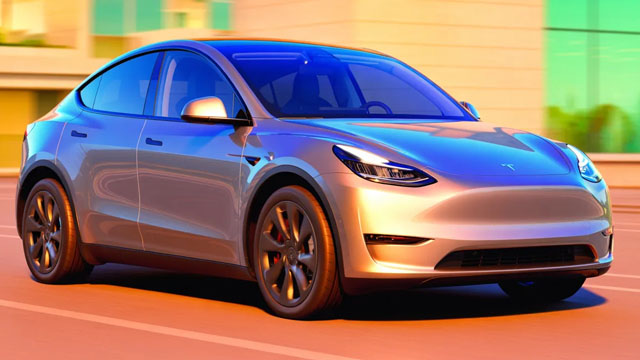
Core Viewpoint - Tesla's stock price could potentially decrease by 70% if the market begins to view it primarily as a car company rather than a technology innovator [1][6]. Group 1: Sales Performance - Tesla's sales in Europe have shown a recovery, with a 29% increase in February, reaching 13,740 units, although it still trails behind BYD, which saw a 185% increase to 15,438 units [2]. - The company continues to face challenges in China, the largest EV market, where competition is fierce and sales are declining [3]. Group 2: Market Capitalization - Tesla's current market capitalization stands at $1.43 trillion, significantly higher than BYD's $144 billion and Toyota's $274 billion, indicating a potential risk if the market reassesses Tesla's value based on car sales alone [6]. - If Tesla's value becomes more dependent on car sales due to failures in its new initiatives, it could lead to a substantial decline in its market cap [5]. Group 3: Competition and Challenges - Tesla's Robotaxi has faced safety concerns due to accidents, and it competes with companies like Waymo and WeRide in the self-driving vehicle space [4]. - The expiration of the $7,500 tax credit for EV purchases in the US has negatively impacted the entire EV industry, including Tesla [3]. Group 4: Investor Sentiment - Investors have been patient with Tesla's ambitious projects, but if key initiatives fail, it could undermine confidence in the company's future prospects [8].
This Could Cut Tesla’s Stock Price By 70%
Yahoo Finance· 2026-03-24 12:30
Core Viewpoint - Tesla's market cap may face significant challenges if it is primarily viewed as a car company, especially given its current valuation compared to competitors like BYD and Toyota [6]. Group 1: Sales Performance - Tesla's sales in the EU increased by 29% in February, reaching 13,740 units, although it still lagged behind BYD, which saw a 185% increase to 15,438 units [2]. - The company continues to struggle in China, the largest EV market, facing intense competition from numerous brands [3]. Group 2: Market Dynamics - The expiration of the $7,500 tax credit for EV purchases in the US has negatively impacted the entire EV industry, including Tesla [3]. - Competitors such as Ford and GM have retreated from the EV market, which may provide Tesla with some relief in market share [3]. Group 3: Safety and Competition - Tesla's Robotaxi has been involved in multiple accidents, raising concerns about vehicle safety [4]. - Competing self-driving technologies from companies like Google's Waymo and WeRide in China pose additional challenges to Tesla's market position [4]. Group 4: Market Capitalization - Tesla's current market cap stands at $1.43 trillion, significantly higher than BYD's $144 billion and Toyota's $274 billion, indicating a potential market cap decline if Tesla is viewed mainly as a car manufacturer [6]. - Over the past five years, Tesla's stock has increased by 84%, which is only slightly better than the S&P 500's 66% increase, suggesting limited growth potential [7].