Telecommunications

Search documents
6 Ultra-High-Yield Dividend Stocks for Safe Income in 2026 and Beyond
The Motley Fool· 2025-12-20 10:15
Core Insights - The article highlights six stocks that offer high-yielding dividends expected to grow in the coming years, amidst a low dividend yield environment in the S&P 500 at around 1.1% [1] Group 1: Clearway Energy - Clearway Energy is a major clean power producer with a diverse portfolio of renewable energy and natural gas assets, providing a 5.5% dividend yield supported by long-term fixed-rate power purchase agreements [3][4] - The company plans to distribute approximately 70% of its stable cash flow as dividends, aiming for a free cash flow growth of 5% to 8% annually, which will support future dividend increases [4] Group 2: Enterprise Products Partners - Enterprise Products Partners owns a diversified portfolio of energy midstream assets, generating stable cash flow with a current distribution yield of 6.8%, comfortably covered by 1.5 times [6][7] - The company has a strong balance sheet and has increased its distribution for 27 consecutive years, with significant capital project completions planned for the second half of the year and further expansions in 2026 [7] Group 3: Healthpeak Properties - Healthpeak Properties is a REIT focused on healthcare-related properties, offering a 7.3% monthly dividend supported by stable cash flow [8][9] - The REIT has a conservative payout ratio and is looking to generate $1 billion from potential sales to reinvest in outpatient medical development and lab properties, which should enhance future dividend growth [9] Group 4: Realty Income - Realty Income is another REIT with a diversified commercial real estate portfolio, currently yielding 5.6% and backed by stable cash flow [11][12] - The company has a strong balance sheet and plans to invest $6 billion this year, which will help in increasing its dividend, having done so 133 times since its public listing in 1994 [12] Group 5: Main Street Capital - Main Street Capital is a business development company providing capital to smaller private firms, currently offering a 5.1% monthly dividend, with a goal to steadily increase this rate [13][14] - The company has raised its monthly dividend by 4% over the past year and has a total yield of 7.6% when including supplemental quarterly dividends [14] Group 6: Verizon - Verizon generates stable cash flow from its mobile and broadband services, currently yielding 6.8% and has raised its dividend for 19 consecutive years [16][17] - The company is in the process of acquiring Frontier Communications for $20 billion, which is expected to enhance its fiber network and customer service offerings, potentially increasing profit margins [17] Conclusion - These six companies are positioned to provide stable cash flow and high-yielding dividends, making them attractive options for investors seeking income in 2026 and beyond [18]








Network API Market to Surpass USD 27.01 Billion by 2033, Driven by 5G Expansion and Demand for Real-Time Connectivity | Report by SNS Insider
Globenewswire· 2025-12-20 08:00
Core Insights - The Network API Market is projected to grow from USD 2.15 billion in 2025 to USD 27.01 billion by 2033, with a CAGR of 37.32% from 2026 to 2033 [1][2] Market Drivers - The demand for seamless integration, real-time data exchange, and enhanced connectivity across cloud services, corporate applications, and IoT ecosystems is driving the growth of the Network API market [2] - The adoption of digital transformation projects, 5G networks, and AI-based services is increasing the need for reliable, scalable, and secure APIs [2] Regional Insights - North America holds a dominant share of 42.00% in the Network API Market in 2025, attributed to advanced digital infrastructure and strong enterprise integration of API-driven solutions [10] - The Asia Pacific region is expected to experience the fastest growth with a CAGR of approximately 40.25% from 2026 to 2033, driven by rapid digital transformation and increasing smartphone penetration [10] Market Segmentation By Type - Communication & Messaging APIs lead with a 29.4% market share, essential for real-time interactions and enterprise messaging workflows [5] - Device & IoT Connectivity APIs are the fastest-growing segment, with a CAGR of 28.6%, driven by the rapid expansion of IoT across various industries [5] By Network Type - 3G/4G/LTE Networks account for 41.7% of the market share, serving as the foundation for API-driven telecom services [6] - 5G Networks are the fastest-growing segment, with a CAGR of 30.3%, due to their ultra-low latency and high bandwidth capabilities [6] By Application - IT & Telecom sectors lead with a 33.8% share, relying heavily on APIs for network optimization and operational automation [8] - BFSI is the fastest-growing segment, with a CAGR of 27.4%, driven by the demand for secure financial APIs [8] By End-User - Enterprises hold a 36.2% share, integrating APIs to streamline workflows and enhance connectivity [9] - Developers represent the fastest-growing segment, with a CAGR of 26.1%, due to the increasing availability of open APIs [9] Recent Developments - In 2024, Ericsson launched its Network API Platform, providing enterprises and developers access to real-time 5G network capabilities [14] - In 2025, Nokia introduced Network as Code (NaC), a cloud-native platform offering self-service access to 5G and fixed network APIs [14] Key Players - Major companies in the Network API market include Ericsson, Nokia, Cisco, Microsoft, AT&T, and others [13]



Africa's Startups, Fintech: The Race to Connect Millions | Bloomberg Next Africa
Bloomberg Television· 2025-12-20 06:00
On this edition of Next Africa, the continent's booming tech ecosystem, with the rise of several unicorns in recent years, the startup community is finding its feet. Fintech leads the charge with two IPOs on the continent for the first time in more than five years, signaling growing confidence in the scalability of African tech. We speak with AI powered firm Optasia on its expansion push and with unicorn Flutterwave on how it's positioning for growth.Plus, bridging the digital divide, from the startup helpi ...

卖光英伟达、抵押Arm加杠杆!软银“孤注一掷”OpenAI,力争年底前资金到位
Hua Er Jie Jian Wen· 2025-12-20 03:55
Core Insights - SoftBank Group and its founder Masayoshi Son are aggressively raising funds to fulfill a massive investment commitment to OpenAI, totaling $22.5 billion, with a deadline set for the end of this year [1][5] - The urgency of this funding push highlights SoftBank's ambitions in the AI sector and reflects the significant capital pressures faced by top global dealmakers in the trillion-dollar AI infrastructure race [1][2] Fundraising Strategies - SoftBank is employing multiple strategies to secure the necessary funds, including liquidating assets, utilizing its balance sheet, and leveraging debt instruments [2] - Key asset disposals include the complete sale of its $5.8 billion stake in Nvidia and a $4.8 billion reduction in its holdings of T-Mobile US [1][2] Focus on OpenAI - Investment managers at SoftBank's Vision Fund have been instructed to shift their focus entirely to the OpenAI deal, indicating the strategic importance of this investment [3] - SoftBank plans to take its payment application PayPay public, with an anticipated IPO in the first quarter of next year, potentially raising over $20 billion [3] Leveraging Arm Holdings - A significant source of funding for SoftBank comes from margin loans secured against its holdings in Arm Holdings, with the loan capacity recently expanded by $6.5 billion, bringing the total available financing to $11.5 billion [4] - The tripling of Arm's stock price since its IPO provides SoftBank with substantial additional collateral without needing to sell this core asset [4] OpenAI's Valuation Surge - The urgency to complete the funding is driven by OpenAI's soaring valuation, which has reportedly increased to nearly $900 billion since SoftBank's initial investment agreement in April, which was based on a $300 billion valuation [5] - This new funding is critical for OpenAI as it faces rising costs associated with training and operating AI models, with CEO Sam Altman stating a goal of investing $1.4 trillion to build 30GW of computing capacity [6]



How China became a global superpower—and what comes next #shorts #china #economy #markets
Bloomberg Television· 2025-12-19 21:09
How much success has China already had in reshaping the the international community. >> I would say much less than we might anticipate. It doesn't seem as though much of the rest of the world is interested in trading the current international system for a Chinaled international system.That being said, if you're looking for Chinese technological influence or economic influence globally, certainly the Belton Road and the digital Silk Road have been transformative. look at Huawei which has you know 70% of the ...

孟晚舟退出,余承东上位:华为权力大地震
Xin Lang Cai Jing· 2025-12-19 16:15
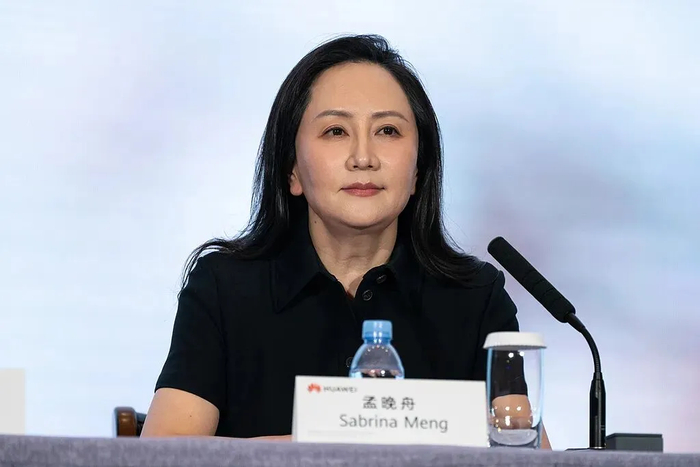
Core Viewpoint - Huawei has undergone a significant leadership change, with Yu Chengdong replacing Guo Ping as the new chairman of Huawei Terminal Co., marking a consolidation of power within the company [1][2][7]. Group 1: Leadership Changes - Meng Wanzhou's exit from the terminal company board is not merely a routine operation but signifies a strategic shift towards a more collective leadership model, emphasizing the principle of letting professionals handle their respective areas [2][4]. - Meng Wanzhou's new role focuses on global strategic planning and risk management, moving away from direct operational responsibilities in terminal business [4][6]. - Yu Chengdong's accumulation of roles as chairman of the terminal BG, chairman of the terminal company, and head of the product investment review committee is unprecedented in Huawei's history, indicating a heightened focus on terminal business [7][9]. Group 2: Strategic Implications - The restructuring reflects Huawei's strategic transformation in its terminal business, transitioning from survival post-U.S. sanctions to a phase of recovery and strategic counterattack [12]. - Huawei's terminal market share reached 27.81% in China, surpassing Apple, and the Harmony ecosystem has over 1 billion devices, showcasing the company's successful navigation through challenges [14][15]. - Yu Chengdong aims for the Harmony ecosystem to capture one-third of the market and plans to launch at least 11 new car models by 2026, indicating a shift from survival to leadership in the market [15]. Group 3: Organizational Dynamics - The power concentration under Yu Chengdong is seen as a response to the fast-paced tech competition, allowing for quicker decision-making and resource allocation [10][11]. - The dual roles of Meng Wanzhou and Yu Chengdong create a complementary relationship, balancing strategic foresight with operational efficiency, which is a sign of Huawei's mature organizational capability [16]. - Huawei's organizational changes are aimed at fostering innovation and establishing a technological ecosystem, positioning the company as a leader in AI and smart automotive sectors [16].
TeleAI Unveils Breakthrough Metric to Quantify AI “Talent” in Large Language Models
Globenewswire· 2025-12-19 13:00
Core Insights - The Institute of Artificial Intelligence of China Telecom (TeleAI) has introduced a new metric called Information Capacity, which redefines the evaluation of large language models (LLMs) beyond traditional size-based comparisons [1][4] - Information Capacity measures the ratio of model intelligence to inference complexity, indicating the knowledge density of a model [3][4] - This metric allows for fair efficiency comparisons across different model series and accurate performance predictions within a model series [3][5] Group 1 - Information Capacity reflects a model's efficiency in compressing and processing knowledge relative to its computational cost, analogous to a sponge's water absorption efficiency [3][4] - The research team, guided by Professor Xuelong Li, quantitatively measures an LLM's efficiency based on compression performance, revealing intelligence density per unit of computational cost [4][5] - The metric facilitates optimal allocation of computing and communication resources under the AI Flow framework, addressing the increasing computational demands of large models [4][6] Group 2 - The introduction of Information Capacity provides a quantitative benchmark for greener development of large models and supports dynamic routing of models for efficient task handling [6] - The AI Flow framework is expected to replace the mainstream cloud-centric computing paradigm with its Device-Edge-Cloud hierarchical network [6] - All relevant code and data from this research have been open-sourced on GitHub and Hugging Face, promoting community collaboration in standardizing large model efficiency evaluation [7]

This Is the 2nd Priciest Stock Market in 155 Years, Which Makes This High-Yield ETF a Genius Buy for 2026
The Motley Fool· 2025-12-19 08:21
Core Viewpoint - The Schwab U.S. Dividend Equity ETF is highlighted as a strong investment option for income- and value-seeking investors, especially in a potentially volatile stock market environment in 2026 [12][19]. Market Overview - The stock market has shown significant gains year-to-date, with the Dow Jones Industrial Average, S&P 500, and Nasdaq Composite increasing by 13%, 14%, and 18% respectively as of December 17 [1]. - The current stock market is considered the second priciest in history, with concerns about sustainability as it approaches 2026 [2]. Valuation Metrics - The S&P 500's Shiller P/E Ratio, a key valuation metric, is currently at 39.59, which is 129% above its 155-year average of 17.32 [8]. - Historically, when the Shiller P/E has exceeded 30, it has been followed by significant declines in major indices [9][10]. ETF Performance and Strategy - The Schwab U.S. Dividend Equity ETF aims to mirror the total returns of the Dow Jones U.S. Dividend 100 Index and includes 103 established companies [14]. - The ETF offers a yield of approximately 3.8%, significantly higher than the S&P 500's yield of 1.12% [17]. - The average trailing 12-month P/E ratio for the companies in the Schwab U.S. Dividend Equity ETF is 17.18, compared to the S&P 500's 25.63 [18]. Investment Characteristics - The ETF is characterized by low management fees, with a net expense ratio of 0.06%, making it cost-effective for investors [17]. - The focus on high-quality dividend stocks has historically provided better returns and lower volatility compared to non-dividend payers [13].


中移“创马”人工智能专题高校赛总决赛收官
Sou Hu Cai Jing· 2025-12-19 08:19
Group 1 - The China Mobile Maker Marathon AI-themed competition and the 2025 University Student Science and Technology Innovation Finals successfully concluded in Guangzhou, showcasing ten outstanding teams from universities [1] - Since its inception in 2016, the Maker Marathon has collected over 36,000 innovative projects and solutions, attracting more than 100,000 innovative talents, establishing itself as a significant technology innovation event [1] - The competition focused on the integration of AI technology with university students, encouraging them to solve real-world problems through coding, marking an extension of the "Maker" brand into the AI sector [1] Group 2 - Local government support, particularly from the Tianhe District in Guangzhou, has provided a solid foundation for the event's implementation and results transformation, contributing to a favorable development environment for technological innovation [3] - China Mobile Internet Company opened its core technological capabilities to participating teams, allowing students to utilize enterprise-level resources for practical development, facilitating the transition from theory to application [3] - The competition featured five specific AI-themed tracks, aligning closely with industry development directions, and included a pre-competition training camp for teams to enhance their practical skills [3] Group 3 - The finals gathered a panel of authoritative guests, including academicians and technical leaders from companies like China Mobile, Huawei, Alibaba, and ByteDance, providing strong professional support for the event [4] - Participating teams showcased their innovative ideas and technical implementation capabilities through project demonstrations and results presentations, while experts conducted in-depth inquiries based on technical feasibility, industry adaptability, and commercial value potential [4]


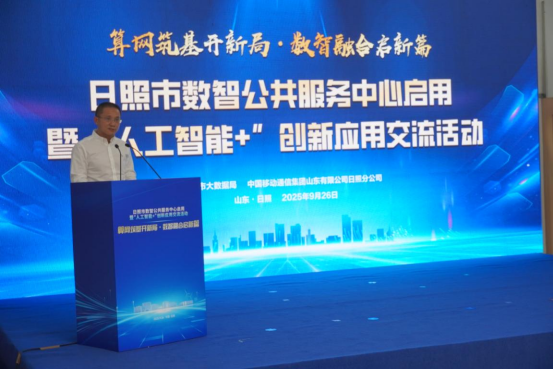
日照移动100+AI场景落地,让数智服务触手可及
Qi Lu Wan Bao· 2025-12-19 05:31
Core Viewpoint - The "Artificial Intelligence +" initiative is a key strategy in the 14th Five-Year Plan, with the Rizhao municipal government actively promoting this action to foster emerging industries such as new information technology, renewable energy, and low-altitude economy, creating a favorable environment for enterprise development [1] Group 1: Infrastructure Development - The company is advancing the upgrade of computing power networks as a foundation for the "Artificial Intelligence +" initiative, focusing on the construction of new infrastructure [2] - The Rizhao City Intelligent Computing Center project, with a total investment of 50 million yuan (approximately 7.1 million USD), aims to achieve a computing power scale of 20 PFlops and is expected to be operational by the fourth quarter [2] - The company has established a "four-computing integration" network that can dispatch one-sixth of the national computing resources, integrating local idle power resources with national advantages [2] Group 2: Core Competency Development - The company aims to strengthen its core capabilities in "Artificial Intelligence +" by investing 2 billion yuan (approximately 285 million USD) to establish the Jiutian Artificial Intelligence Technology Company and co-building the Qilu Innovation Institute with the Shandong provincial government [4] - The company has invested in over 500 leading enterprises, establishing a robust "AI + ecosystem" [4] - The Jiutian model system has been recognized as one of the top ten national treasures among state-owned enterprises, serving over 40 industry sectors [4] Group 3: Application Innovation - The company is focusing on AI empowerment across five major areas: industry, services, agriculture, livelihood, and governance, supporting over 100 related projects in the city [5][6] - In the "Artificial Intelligence + Governance" scenario, the company has established a digital government working group and is promoting AI applications in governance, with 83 government model applications launched in Qingdao [8] - The company has developed an AI model for steel equipment maintenance that improved inspection efficiency by 57% and has been recognized in the provincial AI model application list [9] Group 4: Industry Brain Development - The company has launched the Tea Industry Brain, recognized as a model by the provincial government, and is involved in the development of multiple industry brains, enhancing decision-making capabilities for industrial transformation [10] - The company is the first in the province to participate in the construction of five industry brains, integrating big data and industry models [10] Group 5: Low-altitude Economy - The company is collaborating with local entities to establish a low-altitude flight service center, achieving smart management of low-altitude airspace and deploying 20 automated airports [11] - The platform has conducted over 6,500 flights, providing aerial services for various enforcement agencies [11] - The company has developed a traffic management platform that can accurately identify traffic violations and analyze road hazards, offering a comprehensive solution for smart traffic management [11]