梧桐大数据平台

Search documents
试点密集落地 央国企数据要素价值化破题
Zheng Quan Shi Bao· 2025-12-25 18:45
Core Viewpoint - The State-owned Assets Supervision and Administration Commission (SASAC) is leading initiatives to develop a trusted data space system within state-owned enterprises (SOEs), aiming to enhance the value realization of data elements through pilot projects and policy support [1][6]. Group 1: Policy and Initiatives - The SASAC has issued a notice to initiate pilot projects for the construction of trusted data spaces, with 14 SOEs taking the lead [1]. - The issuance of the "Opinions on Promoting the Development and Utilization of Enterprise Data Resources" in December 2024 provides a regulatory framework for the open circulation of data [2]. - Multiple departments are spearheading various pilot projects related to data asset management and the innovative development of trusted data spaces, with SOEs playing a significant role [2]. Group 2: Data Resource Management - As of now, SOEs have formed four industry data industry communities, with significant progress in data asset management [3]. - The State-owned Assets Supervision and Administration Commission is promoting the construction of high-quality data sets across ten sectors, with the first batch of 30 exemplary construction results already published [5]. - Many SOEs have established large-scale data infrastructures, such as the National Pipeline Network Group's data platform, which aggregates over 10 billion core data entries [5]. Group 3: Challenges and Recommendations - Experts highlight ongoing challenges in realizing the value of data elements, including issues related to compliance, costs, and benefits [8]. - The lack of active market pricing and the high initial investment required for data transactions are significant barriers for enterprises [8]. - Recommendations include the need for clearer operational guidelines on data rights confirmation and the establishment of unified standards for data valuation and circulation [9].
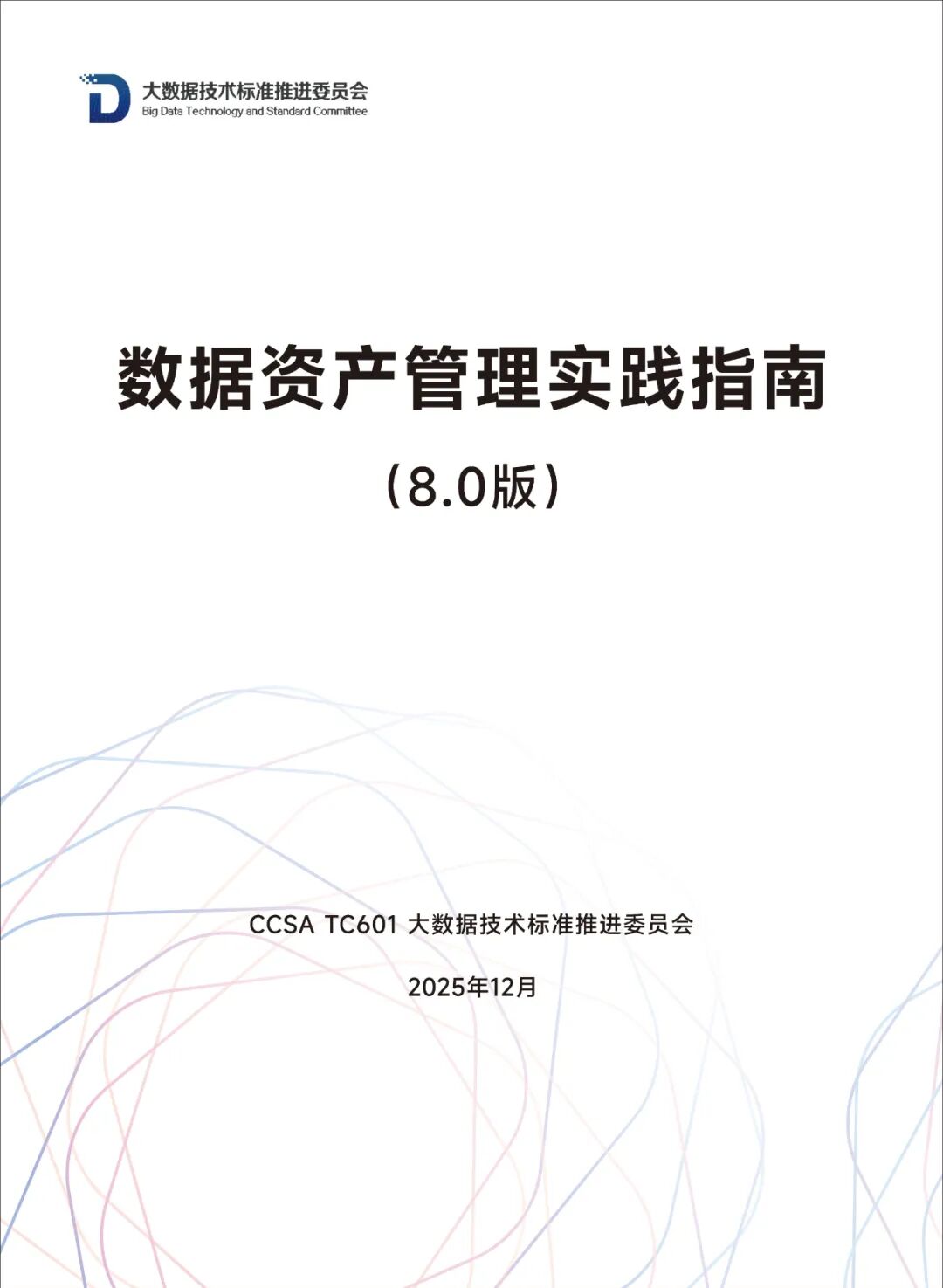
数据如何从“成本”变“资产”,再到“资本”?这份官方权威指南(8.0版)讲透了
3 6 Ke· 2025-12-22 08:17
Core Insights - The article emphasizes the importance of data asset management as a strategic necessity for companies to leverage data as a core asset for growth and innovation in the evolving digital economy [1][18]. Group 1: Data Value Transformation - The 8.0 version of the guide outlines a three-stage transformation of data value: resourceization, assetization, and capitalization, providing a clear path for companies to follow [2][28]. - Resourceization focuses on ensuring data quality, security, and availability, which are prerequisites for value release [2][28]. - Assetization aims to make data's value visible and measurable through activities like registration, valuation, and internal/external circulation [2][28]. - Capitalization allows data to be treated as a stable asset, enabling innovative financing methods such as pledging for loans and securitization [2][28]. Group 2: Practical Implementation Paths - The guide identifies four core paths for companies to realize data value: digitalization of industries, digital management, digital productization, and ecosystem collaboration [4][5]. - It provides tailored strategies for different types of companies, including value operation-focused firms, transaction innovation-driven companies, compliance-driven enterprises, and foundational management-focused organizations [5][6][7]. Group 3: Future Trends - The report anticipates five key trends in data asset management: integration of AI in data management, real-time decision-making through digital twins, establishment of precise value measurement frameworks, expansion of knowledge management, and active participation in data market ecosystems [9][10][11][12][13]. Group 4: Target Audience - The guide is designed for various stakeholders, including CEOs and CDOs for strategic direction, data department heads for optimizing management systems, business managers for understanding data's role in innovation, and finance/legal personnel for compliance challenges [14][15][16][17].

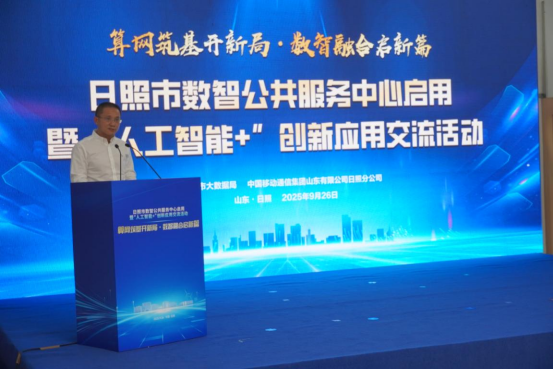
日照移动100+AI场景落地,让数智服务触手可及
Qi Lu Wan Bao· 2025-12-19 05:31
Core Viewpoint - The "Artificial Intelligence +" initiative is a key strategy in the 14th Five-Year Plan, with the Rizhao municipal government actively promoting this action to foster emerging industries such as new information technology, renewable energy, and low-altitude economy, creating a favorable environment for enterprise development [1] Group 1: Infrastructure Development - The company is advancing the upgrade of computing power networks as a foundation for the "Artificial Intelligence +" initiative, focusing on the construction of new infrastructure [2] - The Rizhao City Intelligent Computing Center project, with a total investment of 50 million yuan (approximately 7.1 million USD), aims to achieve a computing power scale of 20 PFlops and is expected to be operational by the fourth quarter [2] - The company has established a "four-computing integration" network that can dispatch one-sixth of the national computing resources, integrating local idle power resources with national advantages [2] Group 2: Core Competency Development - The company aims to strengthen its core capabilities in "Artificial Intelligence +" by investing 2 billion yuan (approximately 285 million USD) to establish the Jiutian Artificial Intelligence Technology Company and co-building the Qilu Innovation Institute with the Shandong provincial government [4] - The company has invested in over 500 leading enterprises, establishing a robust "AI + ecosystem" [4] - The Jiutian model system has been recognized as one of the top ten national treasures among state-owned enterprises, serving over 40 industry sectors [4] Group 3: Application Innovation - The company is focusing on AI empowerment across five major areas: industry, services, agriculture, livelihood, and governance, supporting over 100 related projects in the city [5][6] - In the "Artificial Intelligence + Governance" scenario, the company has established a digital government working group and is promoting AI applications in governance, with 83 government model applications launched in Qingdao [8] - The company has developed an AI model for steel equipment maintenance that improved inspection efficiency by 57% and has been recognized in the provincial AI model application list [9] Group 4: Industry Brain Development - The company has launched the Tea Industry Brain, recognized as a model by the provincial government, and is involved in the development of multiple industry brains, enhancing decision-making capabilities for industrial transformation [10] - The company is the first in the province to participate in the construction of five industry brains, integrating big data and industry models [10] Group 5: Low-altitude Economy - The company is collaborating with local entities to establish a low-altitude flight service center, achieving smart management of low-altitude airspace and deploying 20 automated airports [11] - The platform has conducted over 6,500 flights, providing aerial services for various enforcement agencies [11] - The company has developed a traffic management platform that can accurately identify traffic violations and analyze road hazards, offering a comprehensive solution for smart traffic management [11]

国家队开挖数据金矿
经济观察报· 2025-12-07 04:31
Core Viewpoint - The new round of state-owned enterprise reform is enhanced by the integration of data as a key resource, aiming to break down industry barriers through data circulation and drive deep changes in corporate governance and business models [1][3][19]. Group 1: Data Utilization and Collaboration - The National Pipeline Corporation is focusing on utilizing over 10 billion core data points accumulated over five years to enhance operational efficiency and safety [2]. - A pilot program initiated by the National Data Bureau and the State-owned Assets Supervision and Administration Commission aims to explore the transition of data from resources to assets and capital, involving 12 central enterprises [3][5]. - The pilot program emphasizes collaboration between state-owned enterprises and private companies to create a "cooperative ecosystem" for data utilization [3][5]. Group 2: Challenges in Data Ownership and Valuation - The primary challenges in the data element process include difficulties in ownership confirmation, pricing, and circulation, which are critical for the marketization of data [3][11]. - The ambiguity surrounding data ownership complicates its classification as an asset, as seen in the case of pipeline pressure data and user consumption data [10][11]. - The lack of clear ownership leads to difficulties in fair market valuation and internal conflicts regarding data sharing within enterprises [11][12]. Group 3: Technological Solutions and Innovations - Companies are adopting technologies like blockchain and privacy computing to create "trusted data spaces" that allow for secure data circulation without transferring ownership [14]. - The establishment of data-sharing ecosystems, such as China Mobile's "Renew Community," aims to facilitate collaborative development and revenue sharing among partners [14]. - The first successful registration of data assets at the Beijing International Big Data Exchange highlights the potential for data to be recognized as intangible assets, opening avenues for financing [14][15]. Group 4: Emerging Industry Chains and Market Dynamics - The pilot program is expected to stimulate a new industry chain driven by data elements, with increased interest from market players in data asset registration and trading [17]. - Small and medium-sized enterprises are benefiting directly from data-driven credit support initiatives, showcasing the practical impact of data resource development [17]. - The evolving landscape of data utilization is prompting a shift in regulatory focus from traditional asset management to capital and data management [18].

数据资产之战开启 国家队开挖数据金矿了
Jing Ji Guan Cha Wang· 2025-12-06 06:32
Core Insights - The National Petroleum and Natural Gas Pipeline Group (referred to as "National Pipeline") is focusing on utilizing over 10 billion core data points accumulated over five years of operation to enhance efficiency and safety in data usage and potential trading [2][3] - The initiative is part of a broader effort to integrate data resource development within state-owned enterprises, aiming to transform data into a marketable asset and address challenges related to data ownership, pricing, and circulation [3][12] Group 1: Data Utilization and Collaboration - National Pipeline is engaged in discussions to facilitate the use of its extensive data network, which includes production, transportation, and transaction information, to break market barriers and activate the industrial chain [2][3] - The State Data Bureau and the State-owned Assets Supervision and Administration Commission have initiated a pilot program involving 12 central enterprises, including National Pipeline, to explore collaborative data utilization with private enterprises and research institutions [2][4] Group 2: Challenges in Data Ownership and Valuation - A significant challenge identified is the ambiguity surrounding data ownership, which complicates the ability to classify data as an asset, particularly in relation to national energy security and user privacy [10][12] - The lack of clear ownership leads to difficulties in pricing and circulation of data, as companies struggle to establish fair market valuations without defined rights [12][13] Group 3: Technological Innovations and Solutions - Companies are adopting technologies such as blockchain and privacy computing to create "trusted data spaces" that allow for secure data circulation without transferring ownership [15] - The establishment of collaborative platforms, like China Mobile's "Huanxin Community," aims to create a closed-loop ecosystem for data sharing, joint research, and scenario co-creation [6][15] Group 4: Emerging Market Opportunities - The pilot program is expected to stimulate a new industry chain driven by data elements, with increased interest from enterprises in data asset registration and trading processes [17][18] - Small and medium-sized enterprises are benefiting directly from data-driven initiatives, such as credit support facilitated by large energy companies using consumer data [17][18] Group 5: Regulatory and Strategic Implications - The integration of data as a measurable and tradable asset poses new regulatory challenges, necessitating a shift in oversight from traditional asset management to include data capital management [18][20] - The evolving landscape of state-owned enterprise reform is being influenced by the potential of data to penetrate industry barriers and enhance operational efficiency [19][20]

国家数据局部署国企数据效能提升行动 12家央企首批试点牵头
Zhong Guo Jing Ji Wang· 2025-11-26 07:23
Core Insights - The National Bureau of Statistics of China is implementing a data efficiency enhancement initiative for state-owned enterprises, with 12 central enterprises as pilot leaders, aiming to improve data governance and resource utilization by 2027, benefiting over 100,000 SMEs [1][2] Group 1: Data Utilization and Management - State-owned enterprises are identified as key players in the development and utilization of data resources, with a focus on enhancing core competitiveness and promoting collaborative innovation in the industrial chain [1][2] - The initiative includes 10 key tasks centered around innovating data management mechanisms, fostering the data industry, enabling industrial transformation, and optimizing the innovation environment [2] Group 2: Collaboration and Innovation - The initiative encourages collaboration among state-owned enterprises and their partners across various sectors, including energy, transportation, and agriculture, to create a trusted data space and promote data sharing and innovation [2] - The National Oil and Gas Pipeline Group has created a comprehensive data network, aggregating over 10 billion core data entries, significantly improving data quality and operational efficiency in the natural gas supply chain [3] Group 3: Technological Integration - China Southern Power Grid has established a trusted data space that integrates advanced technologies like blockchain and privacy computing, enhancing data flow and collaboration among over 370 ecosystem partners [4] - China Machinery Industry Group has developed an "Agricultural Machinery Cloud" that connects the entire lifecycle of agricultural machinery, processing over 10 billion data entries daily [5] Group 4: Data-Driven Applications - China Mobile has created a big data platform that processes over 2000PB of core data, improving customer service and operational efficiency across various scenarios [6] - The China Automotive Technology and Research Center is focusing on carbon footprint accounting and data interoperability across the automotive supply chain, enhancing international rule recognition [6] Group 5: Future Directions - The initiative emphasizes the importance of enterprises taking the lead in data utilization, fostering multi-party collaboration, and integrating diverse data sources to drive industrial transformation and improve public welfare [6]
中国移动副总经理张冬:创新数据引擎,激活产业动能
Huan Qiu Wang· 2025-08-28 11:45
Core Viewpoint - The event highlighted the rapid integration of artificial intelligence into various sectors, creating new opportunities for the data industry while also addressing existing challenges such as data silos and high governance costs [3][4]. Group 1: Infrastructure Development - China Mobile has established the world's largest network infrastructure with over 2.59 million 5G base stations and has launched the first large-scale commercial 5G-A network, providing gigabit broadband to 500 million households [4]. - The company is investing in computing power infrastructure, achieving a computing scale of 61 EFLOPS and establishing national computing power hub nodes [4]. - The "Wutong Big Data Platform" has been developed to efficiently process massive data, with core data assets exceeding 2000 PB and training data for large models surpassing 10 trillion tokens [4]. Group 2: Data Resource Supply - China Mobile is creating a big data ecosystem platform, offering a "central kitchen" for data processing, compliance, and product development to partner enterprises [5]. - The company is leveraging its technological advantages to assist state-owned enterprises like CNOOC and China Communications Construction in overcoming data utilization challenges [5]. - Collaborative efforts are being made to build data annotation bases in Baoding and Changsha, enhancing the quality of industry data sets [5]. Group 3: Application Expansion - In the public service sector, over 500 application scenarios have been developed, utilizing vast amounts of public data for governance [6]. - The company has implemented a digital rural management platform in Guizhou, covering 17,926 administrative villages and addressing employment challenges [6]. - In emergency management, a real-time disaster response system has been established, providing over 2,100 reports and assisting more than 100 million disaster-affected individuals [6]. Group 4: Collaborative Development - The company emphasizes the need for a collaborative approach to advance the data industry, focusing on enhancing information infrastructure and expanding quality data resource supply [7]. - A "Ten-Hundred-Thousand" partnership plan is proposed to explore data application scenarios and facilitate the flow of data elements [7]. - The goal is to contribute significantly to the construction of a digital China and promote high-quality economic and social development [7].

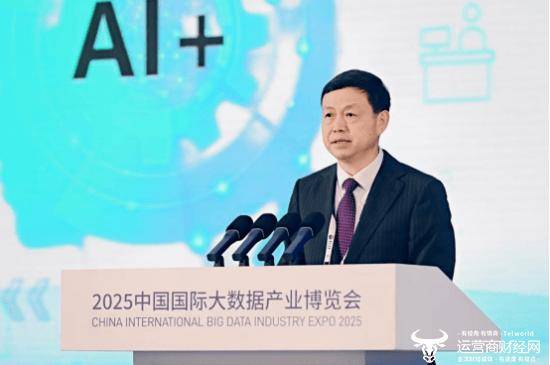
中国移动董事长杨杰:激发数据要素潜能 共谱“AI+”时代华章
Sou Hu Cai Jing· 2025-08-28 09:51
Core Viewpoint - The speech by Yang Jie at the 2025 China International Big Data Industry Expo emphasizes the transformative potential of data in the "AI+" era, highlighting its role in driving innovation, economic growth, and ensuring data security. Group 1: Data's Role in AI Innovation - Data scale and quality are becoming the "power source" for accelerating AI innovation, with new data sources driving AI applications from "usable" to "well-used" [3] - The integration of data serves as a "catalyst" for new economic forms, enabling businesses to optimize services and meet diverse consumer needs, thus unlocking new growth avenues [3] Group 2: Data Security and Governance - Data security and trustworthiness are essential for building a smart society, necessitating a comprehensive data security governance system to balance data development and safety [3] - The company is committed to enhancing data supply, flow, and utilization while ensuring security, thereby maximizing the multiplier effect of data elements [4] Group 3: Company Initiatives and Innovations - The company is developing a high-quality data supply system, with over 2000PB of high-value data and a data analysis capability that processes over 100 billion instances annually [4] - The launch of the first industry data circulation infrastructure, the Data Sharing Network (DSSN), facilitates cross-industry and cross-region data connectivity, supporting over 100 million transactions monthly [4] - The company is enhancing data utilization across various sectors, including tourism and finance, with significant usage metrics, such as serving over 170 financial clients with more than 1.5 billion annual transactions [5] Group 4: Regional Development and Collaboration - Guizhou is positioned as a national innovation zone for digital economy development, with the company actively participating in key infrastructure projects to strengthen the region's digital economy [6] - The company aims to collaborate with various sectors to promote data aggregation, explore new pathways for data assetization, and establish a robust data governance framework [6]
中国移动(00941) - 海外监管公告2025年半年度报告
2025-08-07 10:11
CHINA MOBILE LIMITED 中國移動有限公司 (根據公司條例在香港註冊成立之有限公司) 股份代號:941(港幣櫃台)及 80941(人民幣櫃台) 海外監管公告 2025年半年度報告 本公告乃中國移動有限公司(「本公司」)根 據《香 港 聯 合 交 易 所 有 限 公 司 證 券 上 市 規 則》第13.10B條 而 作 出。 茲提述本公司在上海證券交易所網站刊登的《中 國 移 動 有 限 公 司2025年半年度 報 告》,僅 供 參 考。 香港交易及結算所有限公司及香港聯合交易所有限公司對本公告之內容概不 負 責,對 其 準 確 性 或 完 整 性 亦 不 發 表 任 何 聲 明,並 明 確 表 示 概 不 就 因 本 公 告 全 部或任何部分內容而產生或因倚賴該等內容而引致之任何損失承擔任何責任。 承董事會命 中國移動有限公司 楊 杰 董事長 香 港,2025年8月7日 前瞻性陳述 本 公 告 中 所 包 含 的 前 瞻 性 陳 述 不 構 成 亦 不 應 視 為 本 公 司 作 出 的 承 諾。這 些 前 瞻 性 陳 述 涉 及 已 知 和 未 知 的 風 險、不 確 定 性 以 及 其 他 ...
中移齐鲁创新院:为齐鲁大地智能产业升级提供全栈式“烹制”服务
Qi Lu Wan Bao· 2025-08-06 10:04
Core Viewpoint - The event held by the Shandong Provincial Government focuses on the strength of Shandong's artificial intelligence products and discusses new opportunities for industrial development in the intelligent era [1] Group 1: Role of the Innovation Institute - The China Mobile Qilu Innovation Institute acts as a "central kitchen" in the Shandong AI industry chain, providing comprehensive services for the upgrade of the intelligent industry [6] - The institute has established a "2+2+X" intelligent computing resource network, achieving a computing scale exceeding 1000P and gathering over 2000PB of data through the Wutong big data platform [7] Group 2: Development of Benchmark Applications - The institute collaborates with local leading enterprises to create 26 benchmark cases, including the "Guanhai" marine science intelligent computing platform, demonstrating its capability in promoting original technology breakthroughs and results transformation [8] Group 3: Empowering Various Industries - The "Qilu Zhijun" platform, certified by the China Academy of Information and Communications Technology, supports end-to-end large model solutions and has been implemented in nearly 100 industry applications [9] - The lightweight product "Qilu Smart Cloud Eye," which integrates over 110 AI algorithms and visual models, has served more than 5200 clients across the province [9] Group 4: Achievements and Future Plans - Within a year, the innovation institute has made significant progress, including enhancing domestic chip performance and planning the first provincial-wide data network in the country [10] - The institute aims to continue promoting collaborative innovation and enriching AI products and applications, contributing to the high-quality development of the AI industry in Shandong [10]