电子设计自动化(EDA)

Search documents
华大九天(301269.SZ):上半年净利润306.79万元 同比下降91.90%
Ge Long Hui A P P· 2025-08-15 12:49
Group 1 - The company reported a revenue of 502 million yuan for the first half of 2025, representing a year-on-year growth of 13.01% [1] - The net profit attributable to shareholders of the listed company was 3.0679 million yuan, showing a significant year-on-year decline of 91.90% [1] - The net profit attributable to shareholders after deducting non-recurring gains and losses was -18.621 million yuan [1] - The basic earnings per share were 0.0057 yuan [1]

华大九天:上半年净利润306.79万元 同比下降91.9%
Zheng Quan Shi Bao Wang· 2025-08-15 12:21
Group 1 - The company, BGI Genomics (华大九天), reported a revenue of 502 million yuan for the first half of 2025, representing a year-on-year growth of 13.01% [1] - The net profit attributable to shareholders of the listed company was 3.0679 million yuan, showing a significant decline of 91.9% compared to the previous year [1]
华大九天:2025年第一次临时股东大会决议公告
Zheng Quan Ri Bao· 2025-08-08 16:11
Group 1 - The company Huada Jiutian announced the convening of its first extraordinary general meeting of shareholders in 2025 on August 8, 2025 [2] - The meeting will review and approve the proposal regarding the supplementary election of non-independent directors for the company's second board of directors [2]

国微芯一口气发布五款产品
半导体芯闻· 2025-08-08 10:54
Core Viewpoint - The article emphasizes the importance of domestic EDA tools in overcoming the dual blockade faced by China's semiconductor industry, highlighting the need for innovation and market trust to support the self-sufficiency of the industry [4][45]. Group 1: Company Overview - Shenzhen Guowei Chip Technology Co., Ltd. is a competitive EDA enterprise with leading core technologies, offering products and services including backend EDA tools, manufacturing EDA tools, IP design, DFT design services, and backend design services [2]. Group 2: Product Launch - Guowei Chip has launched five new or upgraded products under the "Xincheng" brand, aimed at enhancing the entire chip design and manufacturing process, addressing critical pain points in the industry [6][12]. - The five products focus on formal verification, physical verification, reliability, and PDK automation development verification, creating a comprehensive toolset that spans from design to manufacturing [12]. Group 3: Technological Advantages - The company leverages four major technological architectures to establish a robust foundation for innovation, forming a complete technology chain from atomic-level data processing (SMDB) to system-level process optimization (DTCO) [9][10]. - The integration of these technologies aims to build a self-controllable underlying architecture for domestic EDA [9]. Group 4: Product Features and Customer Feedback - **EsseCDC**: A tool designed for cross-clock domain issues in integrated circuits, enhancing design stability and functionality [14]. - **EsseLint**: Focuses on early detection of potential errors in code, improving code quality and maintainability [20]. - **EsseMDC**: Integrates a high-performance unified data base (SMDB) and supports various layout checks and optimizations [27]. - **EsseSanity**: Provides rapid analysis and management of verification libraries, improving collaboration efficiency [32]. - **EssePDK**: Aims to automate and validate the PDK development process, enhancing efficiency and quality [37][38]. - Customer testimonials highlight the effectiveness and reliability of these tools in improving design processes and reducing risks [19][26][31][36][44]. Group 5: Industry Collaboration and Future Outlook - The company emphasizes the need for collaboration across the semiconductor industry to build a secure and sustainable ecosystem, stating that breakthroughs in single tools are important but not sufficient [45]. - Guowei Chip aims to continue enhancing its core technology system and assist clients in shortening design cycles, reducing risks, and improving product competitiveness [45][47].

又现重大并购!AI与EDA双向奔赴!
Zheng Quan Shi Bao Wang· 2025-08-05 04:34
Core Insights - The EDA (Electronic Design Automation) industry is experiencing a merger wave driven by artificial intelligence (AI), with companies globally aligning their strategies towards AI integration [1] - The largest merger in EDA history, a $35 billion acquisition of Ansys by Synopsys, has been conditionally approved, significantly expanding Synopsys's market potential [2] - The acquisition is expected to enhance Synopsys's capabilities in simulation, which is increasingly reliant on AI for efficiency and accuracy [2][4] - Other major EDA companies, such as Cadence and Siemens, are also pursuing significant acquisitions to bolster their simulation and design capabilities [3] Industry Trends - The EDA industry is shifting from a focus on design process optimization to a more integrated system technology optimization approach, driven by the need for collaboration across the entire system from chip to packaging [4] - The complexity of intelligent computing and supercomputing chip architectures is leading to earlier verification stages in the chip development process, aiming to reduce risks and improve quality [5] - EDA giants are exploring advanced interconnect technologies and adhering to Moore's Law while also enhancing memory bandwidth and data transfer rates to support AI applications [6] AI Integration - The relationship between AI and EDA is characterized as a "mutual drive," where EDA enhances the capabilities of intelligent computing while AI improves EDA efficiency [7] - Major EDA firms are deploying AI-driven tools and generative AI models to streamline chip design processes and improve simulation capabilities [7][8] - EDA tools are being utilized to address issues in AI models, such as design errors, by providing feedback mechanisms that enhance the overall design process [8] Future Outlook - Predictions for the EDA industry's future include a shift towards full-process intelligence, cross-scale collaboration, and continuous technological innovation [8]


AI驱动EDA行业并购浪潮 双向奔赴提质增效正当时
Zheng Quan Shi Bao· 2025-08-04 18:53
Core Insights - The EDA industry is experiencing a merger wave driven by artificial intelligence, with companies aligning their strategies towards AI integration [1] - The largest merger in EDA history, Synopsys' acquisition of Ansys for $35 billion, is expected to significantly expand market potential and enhance simulation capabilities [2] - EDA companies are increasingly focusing on expanding their capabilities beyond semiconductor design to include automotive and aerospace sectors [3] Group 1: Mergers and Acquisitions - Synopsys' acquisition of Ansys is a landmark deal, with Ansys holding a 42% market share in engineering simulation software, which will potentially increase Synopsys' market size by 1.5 times [2] - Cadence's acquisition of BETA CAE Systems for $1.24 billion and Siemens EDA's acquisition of Altair Engineering for $10.6 billion further illustrate the trend of EDA companies expanding their simulation capabilities [3] Group 2: AI Integration - The integration of AI into EDA processes is enhancing system-level optimization, moving from design process optimization to system technology optimization [4] - AI is being utilized to improve the design verification process, allowing for earlier intervention in chip development to reduce risks and enhance quality [5] - EDA tools are being developed to address the complexities of AI-driven chip designs, with a focus on improving data transmission efficiency and power management [5] Group 3: Industry Trends - The EDA industry is shifting towards a fully intelligent process, where AI covers the entire design, simulation, and verification chain, transforming engineers from operators to decision-makers [9] - There is a growing need for cross-scale collaboration to bridge gaps between system-level design and chip manufacturing [9] - Continuous technological innovation is expected to drive EDA advancements, with new processes, materials, and applications emerging [9]
AI驱动EDA行业并购浪潮双向奔赴提质增效正当时
Zheng Quan Shi Bao· 2025-08-04 18:41
Core Insights - The EDA industry is experiencing a merger wave driven by artificial intelligence (AI), with companies aligning their strategies towards AI integration [1][6] - Synopsys' acquisition of Ansys for $35 billion marks the largest merger in EDA history, expected to enhance market reach and capabilities significantly [1][2] - The trend of expanding EDA capabilities into high-end manufacturing sectors like automotive and aerospace is evident, as companies seek to leverage simulation technologies [2][3] EDA Industry Mergers - Synopsys' acquisition of Ansys is a pivotal move, as Ansys holds a 42% market share in simulation software, potentially increasing Synopsys' market size by 1.5 times [1][2] - Other notable acquisitions include Cadence's $1.24 billion purchase of BETA CAE Systems and Siemens EDA's $10.6 billion acquisition of Altair Engineering, indicating a broader trend of EDA firms expanding into non-semiconductor markets [2][3] AI Integration in EDA - The relationship between AI and EDA is evolving, with a shift from design process optimization to system-level optimization, driven by the complexities of modern chip architecture [3][4] - EDA companies are increasingly utilizing AI to enhance their system capabilities, which is crucial for supporting high-performance computing and AI applications [3][4] Challenges and Opportunities - The design verification process is moving earlier in the chip development cycle to mitigate risks and improve quality, necessitating advanced EDA tools [4][5] - The industry faces challenges such as data accessibility and the need for effective feedback mechanisms from end-users to improve AI model reliability [5][6] Future Trends in EDA - Predictions for the EDA industry include full-process intelligence, cross-scale collaboration, and continuous technological innovation, which will transform the role of engineers from operators to decision-makers [8][9] - The integration of AI in EDA tools is expected to enhance design analysis and performance evaluation, addressing issues like design errors and inefficiencies [7][8]

华大九天:关于部分募投项目结项并注销相关募集资金专户的公告
Zheng Quan Ri Bao Zhi Sheng· 2025-07-30 13:38
(编辑 任世碧) 证券日报网讯 7月30日晚间,华大九天发布公告称,公司首次公开发行股票募集资金投资项目(简 称"募投项目")"数字设计综合及验证EDA工具开发项目"和"面向特定类型芯片设计的EDA工具开发项 目"已达到预定可使用状态,公司决定对上述募投项目进行结项,同时注销"数字设计综合及验证EDA工 具开发项目"和"面向特定类型芯片设计的EDA工具开发项目"的募集资金专项账户。 ...
华大九天:看得更远一点
Tai Mei Ti A P P· 2025-07-23 02:10
Core Viewpoint - The article discusses the evolution and current state of the EDA (Electronic Design Automation) industry in China, highlighting the significant progress made by domestic companies like Huada Jiutian, while also acknowledging the ongoing challenges and competition from international giants [2][5][12]. Group 1: Historical Context and Development - In the 1980s, China's EDA development was hindered by foreign technology restrictions, prompting a national effort to create domestic EDA systems, leading to the launch of the first self-developed EDA system, "Panda System," in 1993 [3][4]. - After the dissolution of the Paris Coordinating Committee in 1994, foreign EDA companies entered the Chinese market, which negatively impacted the growth of domestic EDA products [3][4]. - Huada Jiutian was established in 2009, inheriting the technology of the "Panda System" and focusing on EDA tool development, despite facing significant challenges and financial difficulties in its early years [4][5]. Group 2: Current Market Position - By 2019, the importance of domestic EDA became evident as major international EDA providers ceased collaboration with Huawei, marking the beginning of a golden era for domestic EDA companies [5][6]. - Currently, domestic EDA can meet approximately 70% to 80% of local industry needs, up from 30% to 40% in 2019, with Huada Jiutian capturing about 20% of the domestic market [5][6]. - Huada Jiutian has become the only company in China capable of providing a full range of EDA tools for analog circuit design, achieving global advanced levels in circuit simulation tools [6][7]. Group 3: Competitive Landscape and Challenges - The top three international EDA companies—Synopsys, Cadence, and Siemens EDA—hold over 70% of the domestic market, creating a significant competitive challenge for local firms [8][9]. - The reliance on foreign EDA tools is partly due to their early integration into educational institutions, which has led to a workforce that is accustomed to these tools [8][9]. Group 4: Future Directions and Innovations - The future of EDA is expected to be influenced by AI technology, which can enhance automation, optimize computational efficiency, and provide technical support [11][12]. - Huada Jiutian is actively developing a one-stop automated generation platform for analog circuit design, aiming to improve efficiency and automation in EDA tools [11][12]. - The company is focused on talent development, recognizing the need for skilled professionals who can utilize and develop domestic EDA tools, and has established partnerships with over 400 universities to foster this talent [10][9].
EDA三巨头为何集体押注汽车系统仿真?
3 6 Ke· 2025-07-23 00:57
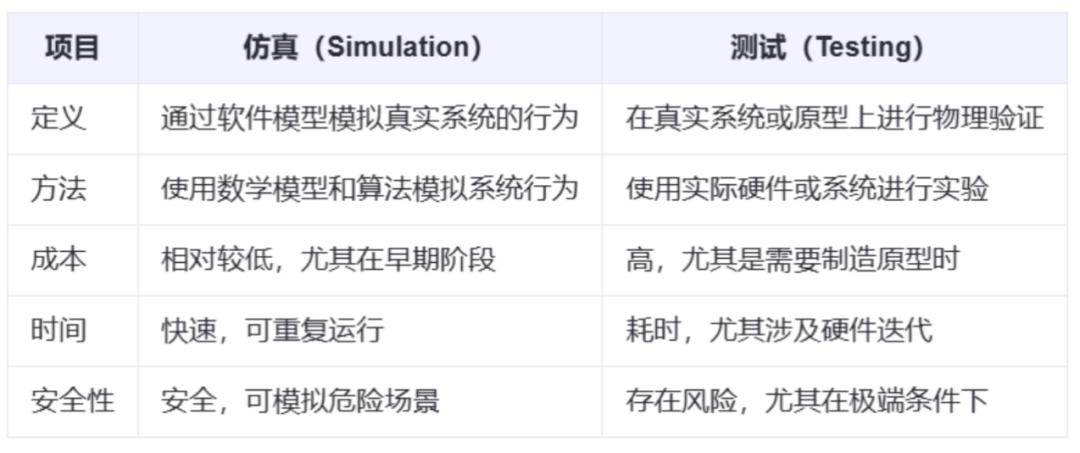
Core Insights - The automotive industry is rapidly transitioning towards electrification, intelligence, and autonomous driving, creating unprecedented opportunities for the Electronic Design Automation (EDA) industry [1] - Major EDA players like Synopsys, Siemens, and Cadence are competing fiercely in the automotive electronics sector through technological innovation and strategic acquisitions [1][25][38] - The complexity and safety requirements of automotive electronic systems necessitate a closer relationship between chip design and system-level development, leading to increased demand for simulation and verification [3][41] Group 1: Mergers and Acquisitions - Synopsys announced the completion of a $35 billion acquisition of Ansys, marking a significant milestone in the EDA industry's shift towards system-level design [8][18] - Siemens completed a $10.6 billion acquisition of Altair Engineering to enhance its system-level software capabilities in the automotive electronics field [25][26] - Cadence acquired BETA CAE Systems for $1.24 billion, expanding its presence in automotive and aerospace simulation [38][39] Group 2: Importance of Simulation - Simulation is increasingly critical in automotive electronics due to the rapid evolution of technologies like autonomous driving and battery management systems [3][6] - Compared to physical testing, simulation is more cost-effective, faster, and safer, allowing for early-stage verification and rapid iteration [4][5][6] - Simulation can cover a broader range of test cases and scenarios, which is essential for complex systems like autonomous vehicles and battery management systems [5][6] Group 3: Market Growth and Trends - The total addressable market (TAM) for Synopsys is expected to grow 1.5 times to approximately $31 billion post-acquisition of Ansys, driven by the increasing demand for electronic and physical integration [20] - The combined market for system-level simulation and EDA revenue is projected to equalize, particularly in aerospace, industrial, automotive, and server markets [24] - The automotive electronics sector is experiencing unprecedented development cycles, necessitating a shift towards system-level simulation and virtual testing [41]