
航天科研

Search documents
【中国新闻网】中国空间站第八批25项约37.25公斤科学实验样品返回地球
Zhong Guo Xin Wen Wang· 2025-05-06 03:10
Core Insights - The eighth batch of space science experiment samples from the Chinese space station successfully returned to Earth on April 30, 2023, weighing approximately 37.25 kilograms [5] - This batch includes 25 experimental projects across fields such as space life sciences, space materials science, and new space technologies [5] - The life science samples consist of 20 types, including bone cells, induced pluripotent stem cells, and early embryos, marking the largest variety of biological samples returned to date [5] Group 1: Life Science Samples - The life science samples were immediately transported to the Chinese Academy of Sciences Space Application Center for status checks and further research [5] - Scientists will conduct morphological detection, cell lineage analysis, structural analysis, and multi-omics analysis on the returned samples [5] Group 2: Material Science Samples - The material science samples, which will return with the Shenzhou 19 spacecraft, include 4 categories and 22 types, such as tungsten-based ultra-high temperature alloys and high-strength steel [6] - Research will focus on the effects of microgravity on material growth, composition segregation, solidification defects, and performance [6][7] Group 3: Future Applications - The research outcomes are expected to support the design of new high-performance alloys and the ground preparation of large-sized high-performance crystals [7] - This will aid in the manufacturing and application of key materials for next-generation aerospace turbine blades, nano-electronic devices, and flexible solar sails for deep space exploration [7]

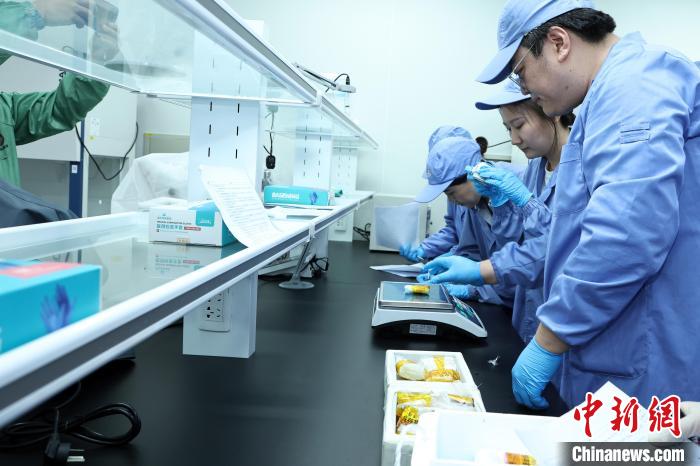
“终于从中国借到了月壤,NASA却…”
Guan Cha Zhe Wang· 2025-05-03 10:46
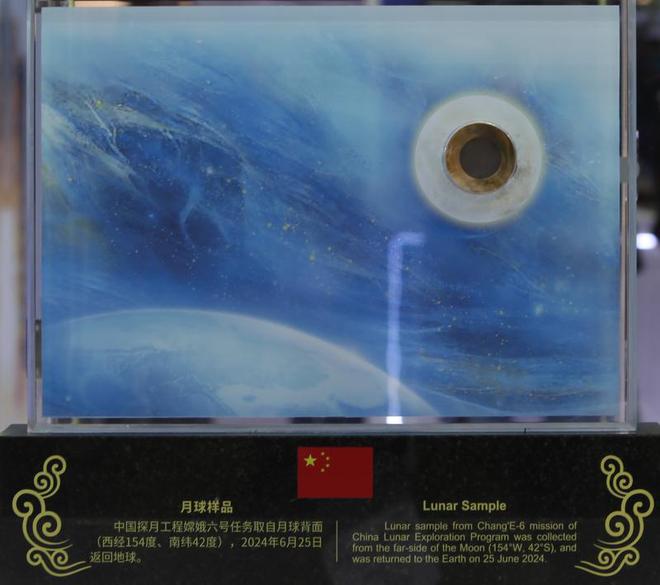
Core Viewpoint - The China National Space Administration (CNSA) has approved international applications for lunar samples from the Chang'e 5 mission, allowing seven institutions from six countries, including two U.S. universities, to borrow these samples. However, U.S. researchers face restrictions due to the "Wolf Amendment," which prohibits NASA funding for projects involving Chinese lunar samples [1][6][7]. Group 1: International Collaboration - The approved institutions include the University of Brown and Stony Brook University, both receiving NASA funding, but they cannot use these funds for research on the Chinese samples due to the "Wolf Amendment" [1][6]. - Timothy Glotch from Stony Brook University expressed gratitude for funding from his institution to collaborate with Chinese scientists, indicating a willingness to analyze the samples despite the restrictions [3][4]. - CNSA Administrator Zhang Zhongde emphasized the importance of sharing lunar research for the benefit of humanity, stating that the Chang'e program is open to international collaboration [6][8]. Group 2: Research Objectives - Glotch aims to compare the properties of lunar soil and rock samples with those from the Apollo program, focusing on thermal properties and magnetic characteristics to understand the geological history of the Moon [4][6]. - The research will involve examining ultra-thin rock slices under high magnification to uncover clues about the origin and composition of the rocks, contributing to a better understanding of lunar geology [4][6]. Group 3: U.S.-China Relations in Space - The "Wolf Amendment" has hindered U.S. scientists' access to Chinese lunar samples and vice versa, with Chinese scientists facing difficulties in obtaining Apollo samples from NASA [4][7]. - There have been ongoing discussions between U.S. and Chinese space officials regarding the sharing of lunar samples, but U.S. institutions still face significant domestic obstacles to receiving the samples [7][8]. - Wu Weiren, a prominent figure in China's lunar exploration program, criticized the U.S. for its isolationist policies and expressed a desire for more open communication and collaboration in space exploration [8].
这些“太空特产”从中国空间站而来 期待科学家破解更多“生命之谜”
Yang Shi Wang· 2025-05-01 10:19
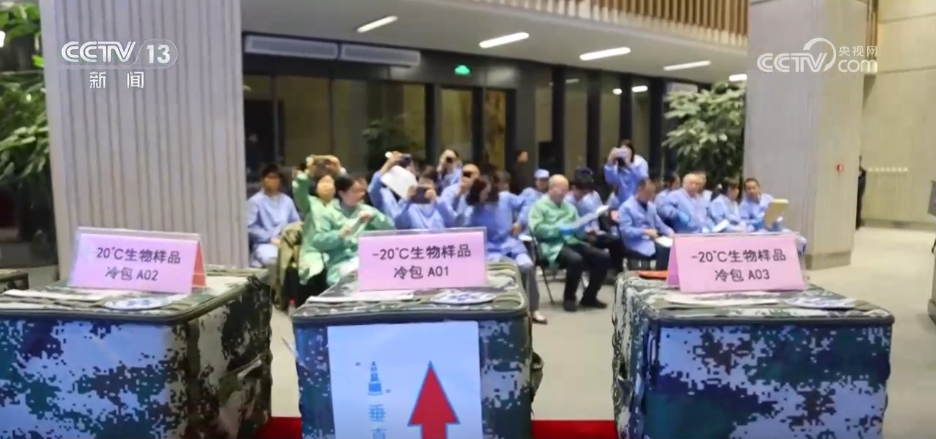
Core Viewpoint - The successful return of the Shenzhou 19 manned spacecraft marks a significant advancement in China's space exploration, with a focus on life sciences and materials science experiments that could provide insights into human health and future space activities [1][4][11]. Group 1: Life Sciences Experiments - The Shenzhou 19 mission returned with 25 experimental projects related to life sciences, materials science, and new technologies, weighing approximately 37.25 kilograms [4]. - The life science samples include various cell types such as bone cells, bronchial epithelial cells, and fruit flies, which are crucial for understanding human health in space [4][9]. - Experiments conducted on fruit flies in microgravity conditions revealed unique behaviors and successful breeding, contributing to research on human survival and reproduction in space environments [4][11]. Group 2: Materials Science Experiments - The mission also returned 22 types of materials science samples, including high-strength steel and lunar soil reinforcement materials, which will be analyzed for their properties and potential applications [6][13]. - Research on these materials aims to support the development of new high-performance alloys and materials for aerospace applications, such as turbine blades and nano-electronic devices [15][18]. - Over 70% of spacecraft failures are linked to environmental factors, making the study of materials' performance in space critical for enhancing their reliability and durability [17].
中国空间站第八批科学实验样品顺利返回
news flash· 2025-05-01 03:41
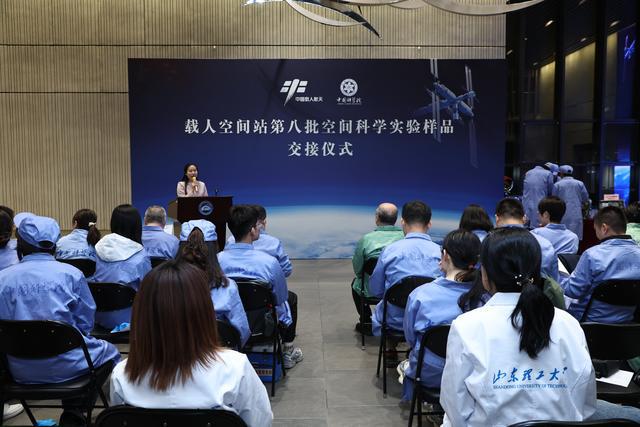
Core Points - The eighth batch of scientific experiment samples from the Chinese space station successfully returned to Earth on April 30 with the Shenzhou 19 manned spacecraft [1] - The returned samples include 25 experimental projects related to space life sciences and space materials sciences, weighing approximately 37.25 kilograms [1] - Life science experiment samples have been delivered to scientists in Beijing, while materials science samples will be transported back to Beijing with the Shenzhou 19 spacecraft [1]
中国空间站第八批25项约37.25公斤科学实验样品返回地球
Huan Qiu Wang Zi Xun· 2025-04-30 18:25
Core Insights - The successful return of the eighth batch of space science experiment samples from the Chinese space station on April 30, 2023, marks a significant achievement in space research, involving 25 experimental projects across various fields including space life sciences, materials science, and new technologies, with a total weight of approximately 37.25 kilograms [1][3] Group 1: Space Life Sciences - The returned life science samples include 20 categories such as bone cells, induced pluripotent stem cells, bronchial epithelial cells, early embryos of humans and animals, protein samples, and fruit flies, representing the largest variety of biological samples and experimental projects to date from the Chinese space station [3][5] - Research will focus on mechanisms of bone loss in microgravity, characteristics of 3D growth of stem cells in space, effects of space radiation on cancer, and the impact of space environments on early embryonic development [5][7] Group 2: Space Materials Science - The materials science samples, which will be transported back to Beijing, consist of 22 types across 4 categories, including tungsten-based ultra-high temperature alloys, high-strength steel, nonlinear optical crystals, indium selenide semiconductor crystals, lunar soil reinforcement materials, and gel composite lubricants [5][7] - The research aims to analyze the effects of microgravity on material growth, segregation, solidification defects, and performance, providing technical support for the design of new high-performance alloys and large-size high-performance crystals [7]
泰媒:泰国科学家踊跃参加中国探月工程
Huan Qiu Wang Zi Xun· 2025-04-27 23:05
Group 1 - Thailand's scientific community is actively participating in China's Chang'e 8 lunar mission, which is scheduled for launch around 2029, marking a significant step in Thailand's space ambitions [1] - The collaboration between Thailand and the China National Space Administration (CNSA) is highlighted by the inclusion of the "China-Thailand Space Weather Global Monitoring Sensor" as a payload for the Chang'e 7 mission, showcasing Thailand's achievements in deep space exploration [1] - This partnership is seen as a reflection of the strengthening ties between Thailand and China, particularly in the fields of science, technology, and innovation, which serve as a bridge connecting the two nations [1] Group 2 - Thailand is preparing to provide an important payload called the "Lunar Neutron Analyzer" for the Chang'e 8 lander, developed by the National Astronomical Research Institute of Thailand and other institutions, aimed at analyzing neutron emissions from the lunar surface [2] - This collaboration represents a significant advancement in understanding lunar resources, which is crucial for future human settlement on the Moon and long-term deep space exploration [2] - The 10th "China Space Day" was celebrated with the theme "The Bright Moon on the Sea, Grasping the Stars in the Nine Heavens," emphasizing the shared achievements in space exploration and China's vision for peaceful space utilization [2]