Fast Food

Search documents
XLY Has A Major Concentration Risk: Two Stocks Own Nearly Half the Portfolio
247Wallst· 2026-02-18 14:35
Core Insights - The Consumer Discretionary SPDR Fund (XLY) has a significant concentration risk, with Amazon and Tesla accounting for over 40% of the portfolio, leading to underperformance compared to the S&P 500 [1] - XLY returned only 3.2% over the past year, while the S&P 500 gained 11.8%, primarily due to Amazon's 13.7% decline [1] - Consumer sentiment has dropped 18.2% to 52.9, indicating pessimism, while retail sales grew 3.3% year-over-year, creating a disconnect in consumer behavior [1] Fund Structure and Performance - XLY holds 51 companies across various sectors, including e-commerce, automotive, home improvement, and dining, but is heavily weighted towards Amazon (20.73%) and Tesla (19.77%) [1] - The fund's top five holdings also include Home Depot, McDonald's, and TJX Companies, but the portfolio remains top-heavy [1] - XLY charges an annual fee of 0.08% and has a modest dividend yield of 0.72%, focusing on capital appreciation rather than income [1] Market Conditions - Consumer discretionary stocks are cyclical, performing well during economic expansions and poorly during downturns [1] - Current economic indicators show a contradictory picture, with low consumer sentiment typically associated with recessions, yet retail sales are increasing [1] - The fund is suited for investors who believe in accelerating consumer spending and can handle the volatility associated with concentrated positions in major companies [1]



Getting the Last Dime Out of Every Mile: A Lesson in Efficiency
Yahoo Finance· 2026-02-17 21:15
Group 1 - The core lesson in business is that efficiency protects profit margins, as demonstrated through a personal anecdote about managing resources effectively [1] - In the trucking industry, survival and growth are heavily reliant on operational efficiency rather than just revenue generation [2][4] - The importance of net profit over gross revenue is emphasized, highlighting that thin margins and fluctuating rates make efficiency crucial for financial health [3] Group 2 - A personal experience illustrates that a lack of financial cushion can lead to business failure, reinforcing the idea that efficiency is a critical factor in the trucking sector [4] - Fuel efficiency is identified as a key driver for financing growth, with disciplined savings from operational efficiency being used to acquire new assets [5] - Incremental gains in fuel efficiency, such as improved routing and reduced idle time, can compound over time, leading to significant financial benefits [6]
X @Forbes
Forbes· 2026-02-17 20:44
Ray Kroc spent his career making the "Golden Arches" recognizable across the country.Now, Seventy years after the first McDonald's was franchised, there are more than 41,000 McDonald's around the world. His contribution to the fast food industry gives him a spot on the #Forbes250 list honoring historic innovators.Get the full list: https://t.co/YMzxi4ftVmPhoto: Bettman Archive via Getty Images ...
Wendy's (NASDAQ:WEN) Faces Challenges Amid Declining Sales and Restaurant Closures
Financial Modeling Prep· 2026-02-16 19:11
Core Viewpoint - Wendy's is facing challenges in the competitive fast-food industry, leading to plans for closing a significant number of U.S. locations due to declining domestic sales [2][5]. Group 1: Company Actions - Wendy's plans to close hundreds of its U.S. restaurants, which represents about 5% to 6% of its total locations in the country [2][5]. - The company is responding to declining domestic sales as highlighted in its fourth-quarter earnings report [2]. Group 2: Stock Performance - Wendy's stock price was trading at $7.48, with a recent price target set at $7 by Morgan Stanley, indicating a potential decrease of about -6.42% [1]. - The stock has shown volatility, with a trading range between $7.08 and $7.93 on a recent trading day [3]. - Over the past year, Wendy's stock has experienced a high of $16.20 and a low of $7.08, reflecting ongoing efforts to navigate sales challenges [3]. Group 3: Market Metrics - Wendy's market capitalization is approximately $1.42 billion, indicating the total market value of its outstanding shares [4]. - The trading volume on the NASDAQ exchange is 19.22 million shares, showing active investor interest [4][5].

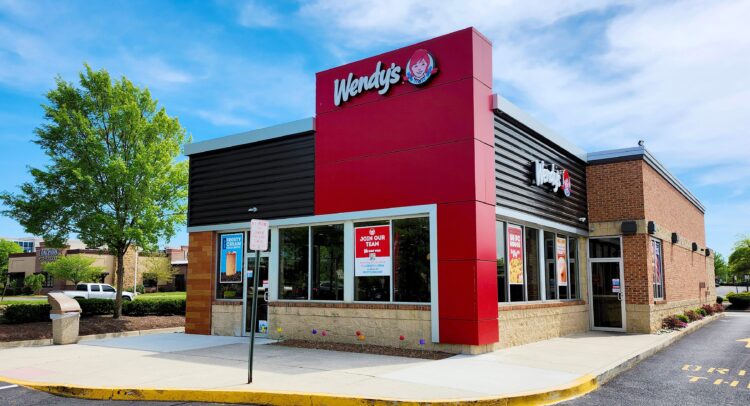
Wendy's making a big change no one is talking about
Yahoo Finance· 2026-02-15 19:51
Core Insights - Wendy's is facing significant challenges in the fast-food burger market, particularly in the U.S., where it holds the number-two position behind McDonald's [1] - The company reported a global system-wide sales decline of 8.3% on a constant currency basis and an 11.3% decline in U.S. same-restaurant sales, attributed to reduced marketing spend and decreased customer traffic [2] - The severe 11.3% decline in same-store sales indicates a substantial loss of customer visits, prompting the need for strategic reassessment of store operations [3] Sales Performance - The decline in U.S. same-restaurant sales was primarily driven by decreased customer traffic, although there was a partial offset from a higher average check [2] - An 11.3% same-store sales decline is considered severe in the fast-food industry, typically indicating more than just routine traffic issues [3] Strategic Responses - Wendy's plans to close 5%-6% of its 5,831 U.S. restaurant locations, equating to approximately 292 to 350 underperforming units, as a response to broader challenges in same-store sales and competitive pressures [4] - The company is also scaling back its breakfast initiative, which was launched during the pandemic but has not met expectations due to changing consumer behaviors [5][6] Breakfast Initiative Challenges - Wendy's breakfast launch coincided with the onset of the Covid pandemic, which limited customer access to dining options and affected the breakfast model reliant on morning traffic [6][7] - The pandemic significantly impacted the fast-food breakfast model, as fewer people were commuting to work and stopping for meals [7]
Wendy's is closing hundreds of U.S. restaurants as domestic sales slide
Fastcompany· 2026-02-15 09:41
Core Insights - Wendy's plans to close hundreds of restaurants, representing 5% to 6% of its total U.S. locations, as part of a strategy to address declining domestic performance [1][1] - The company's fourth-quarter earnings report indicates a 10.1% decline in same-store sales, with U.S. locations experiencing an 11.3% drop compared to a 2% decline in international locations [1][1] - Global systemwide sales reached $3.4 billion, reflecting an 8.3% decrease from the previous quarter [1][1] Store Closures - Wendy's initially announced the closure of several hundred U.S. stores in November 2025, with the aim to shut down approximately 300 to 360 locations this year [1][1] - The closures are part of a "system optimization" strategy to allow franchisees to focus on more profitable locations [1][1] - In the fourth quarter of 2025, 28 restaurants were closed, and the decision to close additional locations was made in collaboration with franchisees [1][1] Financial Performance - Shares of Wendy's Co. increased by about 5% in early trading on February 13, although overall stock prices are nearing lows not seen since 2013 [1][1] - The company operated around 6,000 U.S. stores before the planned closures, indicating a significant reduction in its domestic footprint [1][1] - The process of closing underperforming restaurants is expected to take time, particularly in terms of negotiating with landlords for rental income impacts [1][1]

Wendy’s Shares Rise Despite Weak 2026 Earnings Guidance
Financial Modeling Prep· 2026-02-13 21:36
Core Viewpoint - Wendy's reported fourth-quarter earnings that slightly exceeded analyst expectations, but the 2026 outlook fell short of Wall Street forecasts Financial Performance - Adjusted EPS for the fourth quarter was $0.16, beating the consensus estimate of $0.15 [1] - Revenue reached $543 million, surpassing expectations of $537.55 million [1] - For full-year 2025, adjusted EPS was $0.88, down 12% from $1.00 in 2024 [4] Sales and Growth - Global systemwide sales declined 8.3% to $3.4 billion in the quarter [2] - Same-restaurant sales fell 10.1% globally and 11.3% in the United States [2] - International markets showed strength with systemwide sales increasing 6.2% in the fourth quarter and 8.1% for the full year [3] - Wendy's added 34 net new restaurants in the quarter, totaling 157 net additions for the year, representing 2.2% growth [3] Margin and Cost Factors - U.S. company-operated restaurant margin declined to 12.7% from 16.5% a year earlier due to weaker traffic, commodity cost inflation, and higher labor expenses [3] Future Guidance - For 2026, Wendy's guided to earnings per share of $0.56 to $0.60, significantly below analyst expectations of $0.85 [2] - The company projected flat global systemwide sales growth for the upcoming year [2]
Wendy’s is closing hundreds of U.S. restaurants as domestic sales slide
Fastcompany· 2026-02-13 19:00
Core Insights - Wendy's plans to close hundreds of restaurants, representing 5% to 6% of its total U.S. locations, as part of a strategy to optimize its business following disappointing sales figures [1][1][1] Financial Performance - Total same-store sales for Wendy's fell by 10.1% in the last quarter, with U.S. same-store sales down 11.3%, compared to a 2% decline in international locations [1][1][1] - Global systemwide sales decreased to $3.4 billion, an 8.3% drop from the previous quarter [1][1][1] Store Closures - The company initially announced plans to close several hundred U.S. stores in November 2025, with 28 locations already closed in the fourth quarter of 2025 [1][1][1] - Wendy's expects to close between 300 and 360 locations, based on its U.S. operations of approximately 6,000 restaurants [1][1][1] - The closures are being conducted in collaboration with franchisees, who can identify underperforming locations [1][1][1] Strategic Focus - The interim CEO, Ken Cook, emphasized that the closures are part of a "system optimization" strategy to enhance franchisee profitability and overall brand performance [1][1][1] - The process of closing restaurants involves working with landlords to ensure mutually beneficial outcomes for both franchisees and the company [1][1][1]

Restaurant Brands International Inc. (NYSE:QSR) Maintains "Hold" Rating Amid Price Target Adjustment
Financial Modeling Prep· 2026-02-13 04:09
Core Viewpoint - Restaurant Brands International Inc. (NYSE:QSR) is a significant player in the fast-food industry, owning brands like Burger King, Tim Hortons, and Popeyes, and competes with McDonald's and Yum! Brands [1] Financial Performance - TD Cowen adjusted its price target for QSR from $74 to $72 following the Q4 2025 earnings call, indicating a strategic reassessment of the company's financial outlook [2] - The stock's current price of $66.35 reflects a decrease of approximately 6.15%, with a drop of $4.35 [2][5] Stock Performance - During trading, QSR's stock fluctuated between a low of $65.90 and a high of $69.47, with a yearly high of $73.70 and a low of $58.71 [3] - The company's market capitalization is approximately $21.75 billion, showcasing its substantial market presence [3] Investor Interest - The trading volume for QSR today is 9,099,036 shares, indicating active investor interest following the recent earnings call [4][5]


These Industry Leaders Stand Out After Q4 Earnings: MAR, MCD, TMUS
ZACKS· 2026-02-13 01:41
Core Insights - The earnings season has shifted focus from AI-related tech stocks to traditional industry leaders, which have been rewarded by the market for their favorable Q4 reports, reasonable valuations, and respectable dividends [1] Group 1: McDonald's (MCD) - McDonald's stock reached a 52-week high of $333 after exceeding Q4 expectations, driven by loyalty and digital engagement improvements [2] - Global comparable sales increased by 6% year-over-year in Q4, with U.S. comparable sales rising by 7%, indicating strong demand [3] - Systemwide sales to loyalty members grew by 20% year-over-year, with active users up by 19%, reflecting recurring demand [3] - MCD is close to becoming a Dividend King, having increased its dividend for 49 consecutive years [3] Group 2: T-Mobile US (TMUS) - T-Mobile's shares surged by 9% after surpassing Q4 expectations, with an additional 2% increase the following day [5] - The company reported industry-leading net customer additions of 2.4 million, including 962,000 postpaid phone net adds, marking an industry best [6] - TMUS has a forward P/E valuation of 18X, which is attractive compared to the industry average of 13X [7] Group 3: Marriott International (MAR) - Marriott's stock increased by 7% following mixed Q4 results, which included a slight EPS miss but a revenue beat and strong forward guidance [8] - Worldwide RevPAR increased by 2% in Q4, driven by 6% growth in international markets, with a 2026 RevPAR growth outlook of 1.5%-2.5% [9] - MAR trades at a forward P/E of 30X, slightly above the broader market but near its decade-long median of 24X [10] - The company has raised its dividend by 25.67% over the last five years, maintaining a low payout ratio of 27% [11]