
Funds

Search documents
贵阳贵安长三角基金招商推介会在沪举办
Sou Hu Cai Jing· 2025-10-28 03:57
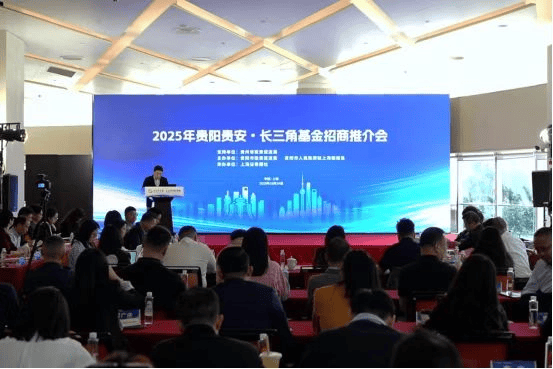
Group 1 - The "Guizhou Gui'an · Yangtze River Delta Fund Promotion Conference" was successfully held in Shanghai, supported by the Guizhou Provincial Investment Promotion Bureau and co-hosted by the Guiyang Investment Promotion Bureau and the Guiyang Municipal Government's Shanghai Liaison Office, attracting over 60 representatives from investment and financing institutions in the Yangtze River Delta region [1][3] - The conference focused on exploring new opportunities for fund cooperation under the theme of "Capital + Science and Technology + Industry," emphasizing the role of financial resources in driving technological innovation and industrial upgrades for high-quality economic development [3] - Guiyang introduced its development advantages, promoting the "1+6+1" key industry development model and seeking deep cooperation with Yangtze River Delta capital in establishing special funds, promoting project implementation, and building exit channels [3] Group 2 - Guiyang Venture Capital Co., Ltd. reported that it has invested in over 130 projects, with 8 companies successfully listed [3] - The Kunpeng Private Equity Fund Management Co., Ltd. highlighted the development fund for the big data science and technology city [3] - Several fund institutions expressed their intention to cooperate during the event, indicating a positive outlook for future collaborations [3]

10/27财经夜宵:得知基金净值排名及选基策略,赶紧告知大家
Sou Hu Cai Jing· 2025-10-27 16:09
Core Insights - The article provides a ranking of open-end funds based on their net asset value growth as of October 27, 2025, highlighting the top and bottom performers in the market [2][4][6]. Fund Performance Summary - The top 10 funds with the highest net value growth include: 1. Qianhai Kaiyuan Hong Kong and Shanghai Enjoy Life Fund (2.7605) 2. GF Emerging Growth Mixed A (1.4923) 3. GF Emerging Growth Mixed C (1.4670) 4. Shanzheng Asset Management Strategy Selected Mixed (1.7731) 5. Yongying Pioneer Semiconductor Smart Selected Mixed A (1.4000) 6. Yongying Pioneer Semiconductor Smart Selected Mixed C (1.3992) 7. Guolian An Technology Power Stock (2.5137) 8. Manulife Renaissance Mixed A (2.5460) 9. Haifutong Technology Innovation Mixed A (1.2377) 10. Manulife Renaissance Mixed C (2.5250) [2][6]. - The bottom 10 funds with the lowest net value growth include: 1. Yongying Consumer Leader Smart Selected Mixed C (0.9478) 2. Yongying Consumer Leader Smart Selected Mixed A (0.9596) 3. Huaxia CSI Animation Game ETF (1.4436) 4. Guotai CSI Animation Game ETF (1.4324) 5. Huatai Baichuan CSI Animation Game ETF (1.4942) 6. Guotai CSI Animation Game ETF Link E (1.5399) 7. Guotai CSI Animation Game ETF Link C (1.5243) 8. Huaxia CSI Animation Game ETF Initiated Link (1.5028) 9. Huaxia CSI Animation Game ETF Initiated Link A (1.5215) 10. Guotai CSI Animation Game ETF Link A (1.5442) [4][6]. Market Analysis - The Shanghai Composite Index opened high and experienced a rebound, with a trading volume of 2.35 trillion, showing a positive market sentiment with 3,361 stocks rising against 1,862 falling [6]. - Leading sectors included communication equipment and components, both showing gains of over 3% [6].

新掌门两个月前上任,东吴基金旗下部分权益基金长期亏损
Shen Zhen Shang Bao· 2025-10-27 06:59
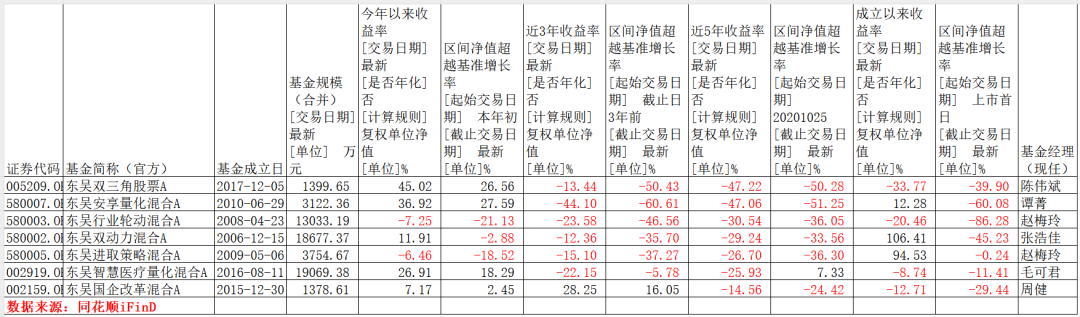
Core Insights - The Shanghai Composite Index is approaching the 4000-point mark after reaching a ten-year high, while several equity funds under Dongwu Fund have reported negative returns over the past five years, with Dongwu Double Triangle Stock A and Dongwu Anxiang Quantitative Mixed A experiencing nearly a 50% decline in net value [1][2] Fund Performance - Dongwu Double Triangle Stock A and Dongwu Anxiang Quantitative Mixed A have recorded five-year returns of -47.22% and -47.06%, respectively, significantly underperforming the benchmark by over 50 percentage points [1] - Dongwu Industry Rotation Mixed A and Dongwu Progress Strategy Mixed A have also shown negative returns across various time frames, with five-year returns of -30.54% and -26.70% [1][3] - Dongwu Double Power Mixed A has consistently underperformed the benchmark, with recent three-year returns being negative and five-year returns close to -30% [1] - Dongwu Wisdom Medical Quantitative Mixed A and Dongwu State-Owned Enterprise Reform Mixed A have also reported negative returns over the past five years [1] Management Changes - Dongwu Fund has appointed a new chairman with a background from the major shareholder, Dongwu Securities, following the resignation of the previous chairman, Ma Zhenya [4] - The new leadership faces challenges in addressing the imbalanced product structure and expanding equity business to enhance competitiveness [4] Company Overview - Dongwu Fund, established in September 2004, has struggled to exceed a management scale of 40 billion yuan, with a current management scale of 37.561 billion yuan, down nearly 6% from the previous year [3] - The company’s stock and mixed fund scales are significantly lower than its bond and money market fund scales, indicating a lack of focus on equity products [3]
清风拂夏,星灯漫照——南方基金2025年三季度投资者教育实践回顾
Sou Hu Cai Jing· 2025-10-27 05:47
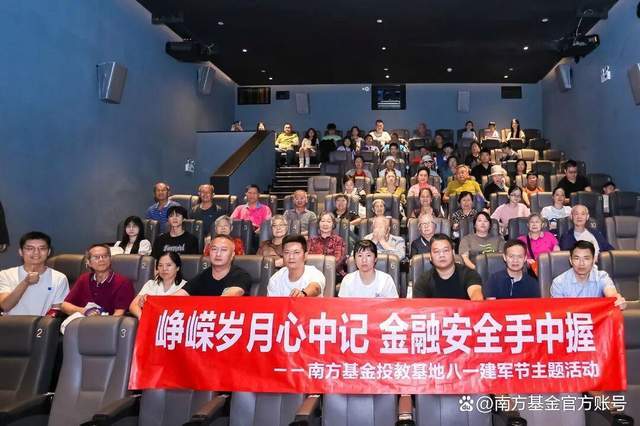
Core Insights - The company is actively responding to regulatory calls by enhancing investor education and building a sustainable investment education ecosystem, focusing on providing diverse services and improving financial literacy among investors [1][21]. Group 1: Investor Education Initiatives - The "8·18 Investor Education Festival" emphasizes rational investment and features both online innovations and offline activities to create a platform for face-to-face communication and engagement [2]. - Activities include a film screening for veterans and party members, aimed at educating them on financial fraud prevention while also promoting red culture [2][5]. - The company launched the "Investment Journey with Responsibility" series to help investors recognize psychological traps and maintain clear judgment in complex markets [7]. Group 2: Community Engagement - During the Financial Education Promotion Week, the company focused on protecting financial rights and addressing community concerns, particularly for vulnerable groups like the elderly and veterans [8]. - Interactive games and immersive experiences were utilized to enhance public financial literacy and risk awareness [9][12]. - The company organized community events that integrated traditional culture with financial education, making the content more relatable and engaging [10]. Group 3: Research and Development - The company conducted targeted surveys to understand investor needs better, shifting from broad coverage to precise service delivery [17]. - Collaborations with various institutions facilitated direct communication between investors and companies, enhancing understanding of corporate value and market dynamics [18]. Group 4: Technological Integration - The introduction of the AI-powered investment education assistant "NanNan FUND" aims to provide real-time support and enhance the interactive experience for investors [21]. - The company is committed to improving investor financial literacy through innovative and engaging content delivery methods [21].
FOF指数化配置渐成趋势 部分产品10只重仓基9只为ETF
Zheng Quan Shi Bao· 2025-10-26 22:34
Core Insights - The trend of index-based allocation in public FOFs (funds of funds) is becoming increasingly evident, with many FOFs heavily investing in ETFs [1][3] - The demand for diversified FOF products and ETF-FOF innovations is rising, reflecting a shift in investment strategies [4][5] - The growing complexity and variety of index funds require enhanced asset allocation capabilities from fund managers [6][7] Group 1: FOF Investment Trends - As of October 25, 2023, many FOFs have a significant portion of their top holdings in ETFs, with some FOFs having up to 9 out of 10 top holdings as ETFs [1][2] - Notable examples include the Jianxin FOF and Wanjiayou FOF, which have multiple ETFs among their top holdings, indicating a strong preference for index funds [2][3] - A report from Huatai Securities predicts that by the end of 2024, 90.73% of public FOFs will have allocated to ETFs [3] Group 2: New Product Innovations - The market is seeing the introduction of new FOF products, such as multi-asset allocation FOFs and ETF-FOFs, to meet investor demand [4][5] - As of October 25, 2023, there are 7 multi-asset allocation FOFs established in 2025, which include provisions for index funds [4] - The ETF-FOF products are designed to allocate over 80% of their non-cash underlying assets to ETFs, reflecting a strategic response to market demand [5] Group 3: Challenges and Requirements - The rise of index-based allocation increases the complexity of asset management, necessitating higher asset allocation skills from fund managers [6][7] - Fund managers are expected to develop capabilities in multi-asset allocation and to identify arbitrage opportunities, which are essential for achieving excess returns [6][7] - Challenges include market volatility affecting asset rotation strategies and potential liquidity issues with certain ETFs, which could lead to homogenization of ETF-FOF products [7]
公募行业展现高质量发展新气象
Zhong Guo Ji Jin Bao· 2025-10-26 12:56
Core Viewpoint - The implementation of the "Action Plan for Promoting High-Quality Development of Public Funds" marks a significant shift in China's public fund industry from a focus on scale to a focus on quality, emphasizing the importance of investment research, investor services, and market ecology [1][2][10]. Transition from Scale to Quality - The core value of the "Action Plan" is to drive a fundamental ecological transformation in the public fund industry, shifting the operational logic from scale-driven to quality-driven [2][3]. - This transformation encourages a positive cycle between scale and performance, where high-performing products attract more funds based on their merits rather than solely on marketing [3][10]. Strengthening Research and Investment Capabilities - Enhancing core investment research capabilities is fundamental to high-quality development, with a shift from individual-driven to system-driven approaches [4][5]. - Fund companies are focusing on building integrated and team-based research systems, leveraging technology to enhance research capabilities [6][9]. Enhancing Investor Experience - The "Action Plan" emphasizes better meeting residents' wealth management needs and enhancing investor satisfaction through fee reductions, product innovation, and investor education [7][8]. - Fee reforms have begun, with management fees across various fund types being reduced, fundamentally changing the competitive landscape towards performance-driven models [7][10]. Product Innovation and Compliance - The public fund industry is actively promoting product innovation, focusing on diverse and refined product offerings that meet investor needs [11][12]. - Compliance and risk management are critical to supporting the industry's transformation, with a focus on optimizing fee structures and enhancing operational efficiency [13][14]. Challenges in the Transition - The transition to a quality-focused model faces internal challenges, including entrenched performance metrics and external pressures from sales channels and investor behavior [15][16]. - The industry is exploring solutions that involve internal governance reforms and external ecological adjustments to align with long-term investment strategies [17][18]. Future Outlook - The next three to five years will see a continued emphasis on high-quality development, with a shift from scale competition to value competition, favoring firms with strong core capabilities [18][19]. - Companies that adapt to industrialization and digitalization trends while providing comprehensive services will likely gain a competitive edge in the evolving market landscape [19].
DTH: Long-Term Inconsistencies But Strong Short-Term Momentum
Seeking Alpha· 2025-10-25 16:59
Core Insights - Dividend strategies are highlighted as solid investment choices for global markets outside the U.S. [1] Group 1: Investment Strategy - The WisdomTree International High Dividend Fund (NYSEARCA: DTH) is specifically mentioned as a focus for analysis [1] Group 2: Analyst Background - The analyst has a Master's in Banking & Finance from Université Paris 1 Panthéon-Sorbonne and a diverse background in corporate finance, M&A, and investment analysis [1] - The analyst specializes in financial modeling, valuation, and qualitative analysis, with experience in private equity, asset management, and real estate [1]

什么样的基金适合当底仓?3900点附近,底仓怎么建?
Sou Hu Cai Jing· 2025-10-24 00:56
Core Viewpoint - The article emphasizes the importance of "bottom warehouse thinking" in a volatile market, suggesting that investors should allocate a portion of their portfolio to stable, long-term "bottom warehouse" funds to manage risks and enhance returns [2][4]. Group 1: Definition and Characteristics of Bottom Warehouse Funds - Bottom warehouse funds are defined as the portion of fund assets that investors hold long-term, serving as the foundation of their investment portfolio, even during significant market downturns [2][5]. - These funds focus on steady appreciation rather than frequent trading, playing a crucial role in risk smoothing and balanced asset allocation [3][5]. - Key characteristics of suitable bottom warehouse funds include balanced investment across various sectors, long-term value potential, and the ability to provide a positive investment experience [5][6][7]. Group 2: Reasons for Allocating to Bottom Warehouse Funds - The article cites Benjamin Graham's perspective that bull markets can lead to significant losses for ordinary investors, highlighting the need for a balanced approach during market fluctuations [4]. - Current market conditions, with the Shanghai Composite Index around 3900 points, indicate increased volatility and a slowdown in capital inflows, making bottom warehouse funds essential for risk management [4][5]. - A well-structured fund portfolio can help investors participate in long-term growth opportunities while mitigating short-term volatility [4]. Group 3: Selection Criteria for Bottom Warehouse Funds - The selection of bottom warehouse funds should be based on the overall asset allocation framework and the investor's risk tolerance and investment goals [8]. - Types of funds that are often considered for bottom warehouse allocation include fixed income funds, broad-based index funds, and dividend strategy funds [9][10][13]. - Broad-based index funds aim to capture market average returns and are recommended for investors seeking stability and alignment with overall market performance [10][12]. Group 4: Specific Fund Types for Bottom Warehouse Allocation - Dividend strategy funds provide a dual benefit of generating income through dividends and capital appreciation, appealing to investors seeking both cash flow and long-term growth [13][14]. - Fixed income funds, while less prominent in a booming equity market, play a vital role in reducing portfolio volatility and providing steady income [15][16]. - The article emphasizes that a balanced portfolio does not require precise market predictions but should focus on dynamic adjustments based on market conditions [16][17].
金鹰基金管理有限公司部分基金新增广发证券股份有限公司为代销机构开通基金转换、基金定投业务及费率优惠的公告
Shang Hai Zheng Quan Bao· 2025-10-23 18:05
Core Points - The company, Jin Ying Fund Management Co., Ltd., has entered into an agency sales agreement with Guangfa Securities Co., Ltd. to sell certain funds starting from October 24, 2025 [1] - The new services will include fund conversion and regular investment plans (fund定投) with fee discounts [1][6] - Investors can perform various transactions such as account opening, subscription, redemption, conversion, and regular investment through Guangfa Securities [1][6] Summary by Sections New Fund Sales - Jin Ying Fund will begin selling certain funds through Guangfa Securities starting October 24, 2025 [1] - Investors will have access to fund conversion and定投 services [1][6] Important Notices - Certain funds, such as Jin Ying Min An and Jin Ying Min Feng, are currently in a closed period and will not allow subscription, redemption, or conversion until further notice [2] - Fund定投 allows investors to set up automatic deductions for fund purchases on specified dates [2][7] - Conversion is not applicable for certain funds, including those with back-end fee structures and FOF products [2][7] Fee Discounts - The minimum discount for subscription,定投, and conversion fees through Guangfa Securities will be no less than 10% [2][8] - Any additional fee discount activities implemented by Guangfa Securities will not be restricted by Jin Ying Fund [2][8] Investor Consultation - Investors can contact Guangfa Securities or Jin Ying Fund for inquiries regarding the new services [3][9]

一财社论:校准公募基金业绩基准,方能告别乱象
Di Yi Cai Jing· 2025-10-23 13:44
Core Viewpoint - The upcoming release of the public fund performance benchmark rules by the China Securities Investment Fund Association aims to rectify the discrepancies in the fund industry, aligning fund managers' performance evaluations with actual investor experiences, thereby promoting a wealth-sharing capital market [2][4]. Summary by Sections Fund Performance Benchmark Rules - The new benchmark rules are expected to become the core standard for evaluating fund managers' performance against peers and generating excess returns, which will also influence their compensation and industry awards [2]. - The current lack of transparency and scientific guidance in measuring fund performance has led to a disconnect between investor experiences and fund companies' claims of outperforming benchmarks [3]. Issues in the Fund Industry - The fund industry faces a "lemon market" scenario where poor-performing funds drive out better ones, making it difficult for professional fund managers to stand out [3]. - Frequent redemptions by investors due to high costs of discerning fund quality lead to increased liquidity management costs and impact expected investment returns [3]. Impact on Capital Market - The misalignment of interests between fund companies, managers, and investors has weakened the wealth-sharing characteristics of the capital market, potentially reducing consumer confidence and purchasing power [4]. - The new benchmark rules are anticipated to shift the focus from traditional indices like the CSI 300 to more specialized benchmarks that align with fund characteristics, enhancing the professionalism and recognition of fund managers [4][5]. Reform and Future Directions - A decisive reform approach is necessary to address the existing benchmark chaos, with a call for a complete overhaul rather than a gradual transition to ensure the credibility of the new rules [5]. - Emphasis on developing precise and specialized index products is crucial for providing accurate benchmarks, which will enhance transparency and professionalism in fund operations [5][6].