医疗机器人

Search documents
(经济观察)中国医疗机器人加速覆盖多诊疗场景
Zhong Guo Xin Wen Wang· 2025-09-19 11:24
Core Insights - The Chinese medical robotics industry is rapidly expanding its coverage across various diagnostic and treatment scenarios, driven by advancements in artificial intelligence and smart sensing technologies [1][3]. Industry Developments - The 2025 Guangzhou Precision Medicine Expo showcased innovations such as the snake-arm single-port robot, which can perform stable and precise tissue separation and suturing in confined spaces [3]. - The snake-arm robot has been successfully used in over 1,000 surgeries across more than 60 top-tier hospitals in mainland China, including procedures in thoracic and gynecological surgery [3]. - The industry is moving towards a more standardized framework, with clear guidelines for clinical applications and physician training being established [3]. Future Trends - The future of surgical robots is expected to focus on miniaturization, precision, and remote capabilities, particularly through the integration of AI technology for remote surgeries, which could alleviate regional disparities in healthcare resources [3][5]. - The market for medical robots in China is projected to reach 14.94 billion RMB by 2025, reflecting a significant growth trajectory fueled by policy support and increasing demand for rehabilitation due to an aging population [5]. Technological Integration - The combination of medical robots and AI is transforming chronic disease management, emphasizing efficient, precise, and personalized services for patients, particularly in grassroots healthcare settings [6]. - The development of humanoid robots is being explored for applications in remote surgeries, elderly care, and traditional Chinese medicine, although widespread implementation is expected to take an additional 3 to 5 years [5].


90秒机器人完成采血!成都企业完成Pre-A+轮融资,估值超2.5亿元
Sou Hu Cai Jing· 2025-09-17 07:51
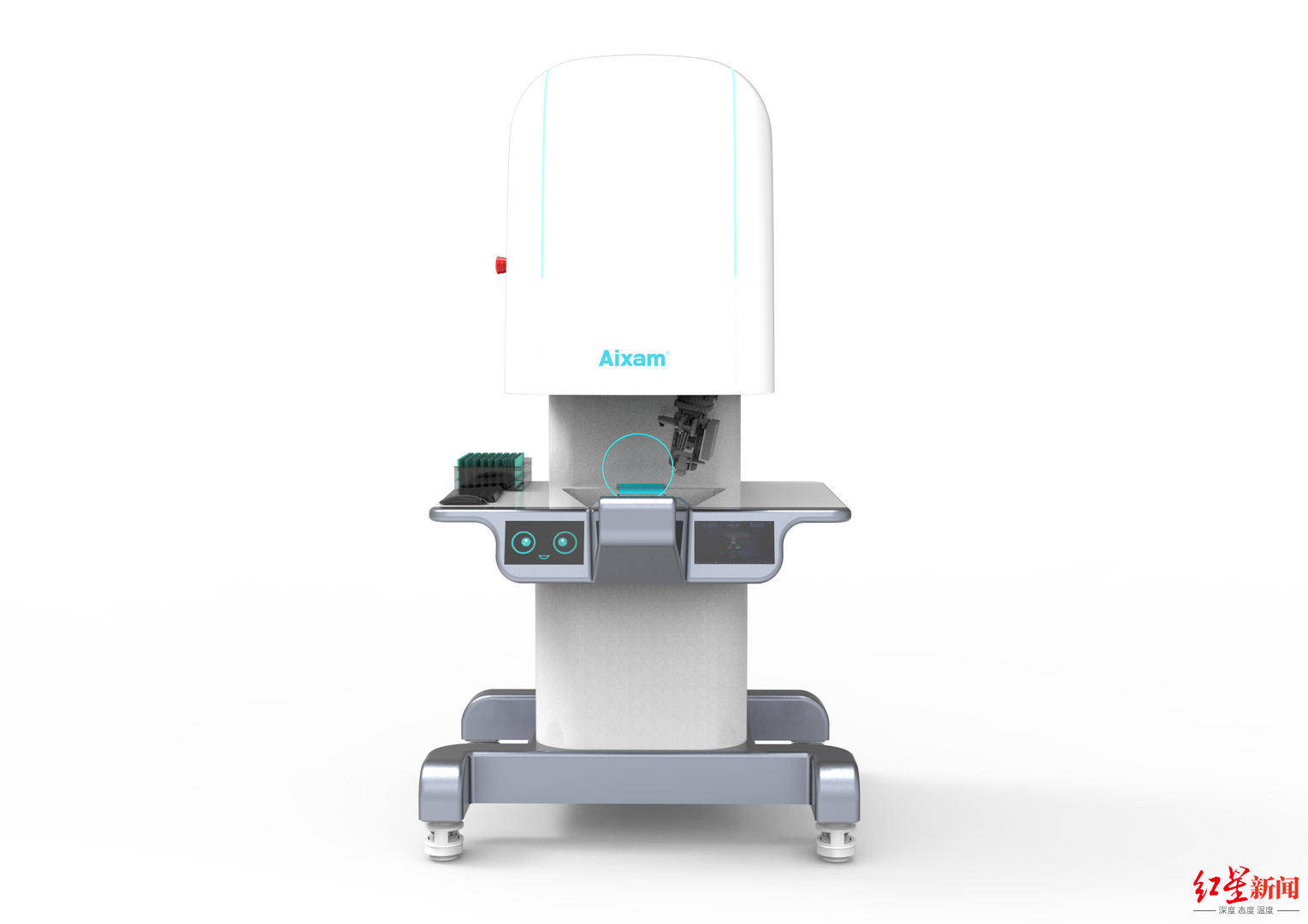
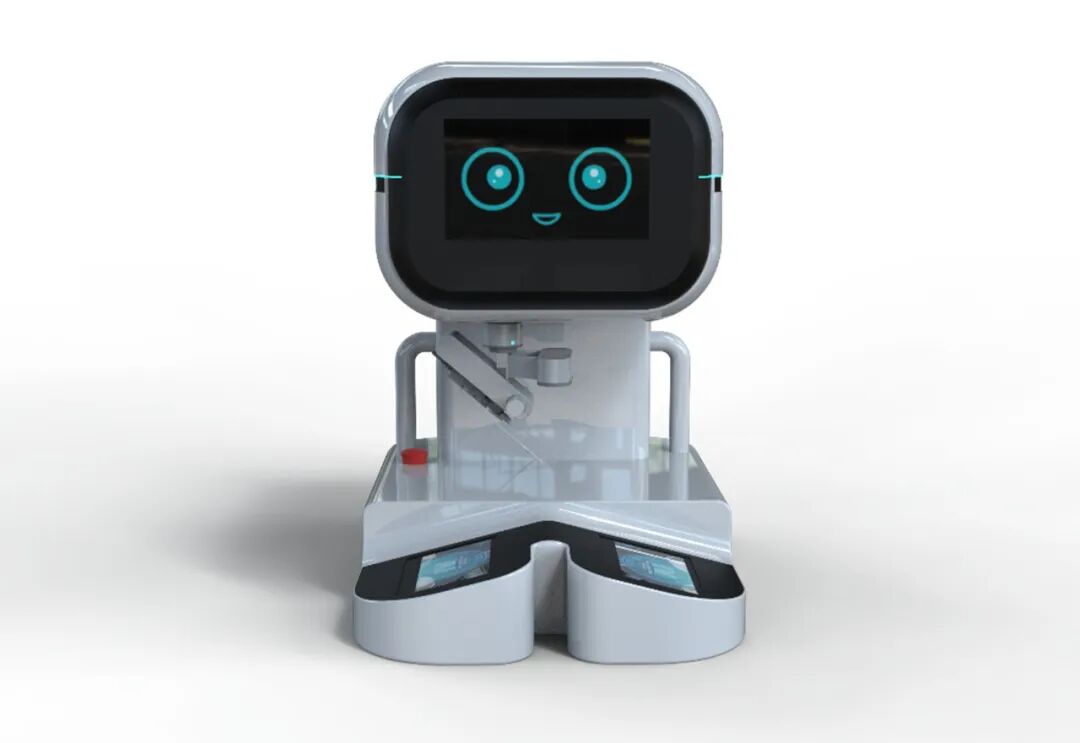
Core Insights - Chengdu Kairui Medical Technology Co., Ltd. has completed a Pre-A+ round of financing, with a valuation exceeding 250 million yuan, following a previous investment from Luzhou Shuanggang Industrial Investment Development Co., Ltd. [1] - Kairui Medical specializes in multimodal humanoid medical robots, focusing on blood collection, ultrasound, and AI vision, with its core product being the intelligent blood collection robot (M series) [1][2]. Industry Pain Points and Market Opportunities - Blood collection is a critical operation in clinical diagnostics, providing key insights for over 70% of medical decisions, yet the industry faces a supply-demand imbalance with a market size exceeding 200 billion yuan [2]. - The industry relies heavily on manual operations, lacking mature products, and has a low penetration of automation, presenting a significant opportunity for technological advancements [2]. Product Features and Technology - Kairui Medical's blood collection robot aims to reduce pain and improve the speed and smoothness of the blood collection process, completing the procedure in approximately 90 seconds [4]. - The robot utilizes dual infrared and ultrasound technology to achieve high precision in blood vessel targeting, with a focus on sub-millimeter accuracy in puncture [5]. Data Accumulation and Product Optimization - The company is expanding its AI vision technology into multiple applications, including a collaboration with Beijing Scar Hospital to develop the S1 scar intelligent detection system, which quantifies scar characteristics [6]. - The recent financing will be used to establish clinical demonstration centers and accelerate data accumulation and product optimization, aiming for a new efficient medical scenario with self-service blood collection and rapid reporting [6]. User Acceptance and Comfort - Kairui Medical is addressing user concerns about robotic blood collection by incorporating engaging elements for children, such as playing cartoons during the procedure, and aims to develop a "pain-free needle" to enhance comfort [8]. - Research indicates that both adults and children generally report lower pain levels and higher acceptance after their first experience with robotic blood collection [8]. Future Prospects and Investment Outlook - Kairui Medical's technology has been validated at top international robotics conferences, reinforcing its reliability and cutting-edge status [9]. - Investors see significant potential in the automation of blood collection, which not only enhances medical efficiency but also improves patient experience, contributing to the broader development of smart healthcare ecosystems [9].
36氪首发丨「凯瑞医疗」完成Pre-A+轮融资,泸州国资体系半年内再次加注
3 6 Ke· 2025-09-16 06:29
Group 1 - Chengdu Kairui Medical Technology Co., Ltd. has completed a Pre-A+ round of financing, with a valuation exceeding 250 million yuan after this round [1] - The investment was exclusively made by Huaxi Silver Peak Investment Co., Ltd., a wholly-owned subsidiary of Luzhou Laojiao Group [1] - Kairui Medical focuses on multimodal humanoid medical robots, addressing pain points in repetitive and high-intensity tasks in the medical field [1][3] Group 2 - The company's core product is the intelligent blood collection robot (M series), with the first product M1Pro having completed clinical trials and currently undergoing the registration process for Class III medical devices [1][3] - The portable blood collection robot (M1mini) is in the research and development phase, targeting a significant market space of over 200 billion yuan globally [3][5] Group 3 - Kairui Medical's blood collection robots aim to reduce pain and improve efficiency in blood collection, with a full process time of approximately 90 seconds [3][5] - The robots utilize dual infrared and ultrasound technology to enhance precision in blood vessel targeting, achieving sub-millimeter accuracy [5][6] Group 4 - The company is expanding its AI vision technology to various applications, including a collaboration with Beijing Scar Hospital to develop the S1 scar intelligent detection system [5][6] - The S1 system assists in monitoring scar treatment through multi-dimensional quantitative assessments [5] Group 5 - The recent financing will primarily be used for establishing clinical demonstration centers and accelerating data accumulation and product optimization [5][6] - Kairui Medical plans to promote a new medical scenario combining self-service blood collection and rapid report generation [5][6] Group 6 - The company aims to address public concerns about robot-assisted blood collection by enhancing user experience and comfort, including the development of a "pain-free needle" [6] - Kairui Medical emphasizes precision as a core technology, showcasing strong clinical adaptability across different age groups [6][7] Group 7 - Huaxi Silver Peak expressed confidence in the potential of intelligent puncture technology in medical automation, highlighting its social value and commercial potential [7]
第七届科技创新大赛(机器人医疗应用场景)决赛在京举行
Yang Shi Wang· 2025-09-15 10:44
Core Insights - The event highlighted the importance of medical robots, particularly surgical robots, as a key indicator of a country's medical technology innovation level [1] - The competition showcased the integration of robotics in various medical applications, aligning with national development plans for robotics and health [2] - The winning projects demonstrated significant advancements in robotic technology and its application in clinical settings [3] Group 1: Event Overview - The 7th Technology Innovation Competition focused on "robotic medical application scenarios" and was held alongside the 2025 China International Service Trade Fair [1][2] - The competition featured 92 high-level projects from hospitals in Beijing, with 10 projects advancing to the finals after rigorous evaluations [2] Group 2: Key Projects and Innovations - The first prize was awarded to the "MIRACQ Surgical Coordination Robot" from Beijing Anzhen Hospital, which integrates various medical imaging technologies for enhanced surgical support [3] - Other notable projects included a "Smart Pelvic Fracture Reduction Robot" from Beijing Jishuitan Hospital, showcasing innovative solutions in minimally invasive surgery [3] Group 3: Industry Implications - The Beijing Municipal Health Commission emphasized the need for collaboration in robot development, focusing on clinical needs and policy improvements to unlock technological potential [1] - The Beijing Hospital Management Center is actively promoting the application of advanced surgical robots and has connected with 85 robotic products for clinical trials [4]
长木谷“AI+手机机器人”5G智慧手术方案亮相服贸会
Bei Jing Shang Bao· 2025-09-13 06:13
Core Insights - The 2025 China International Service Trade Fair highlighted the focus on healthcare services, particularly showcasing medical robots as a key attraction [1] - Changmugu's innovative product, the "AI + Surgical Robot 5G Remote Diagnosis Integration Platform," was unveiled, enabling real-time surgery broadcasting, guidance, and international consultations through 5G technology [1][2] Group 1: Industry Challenges - Traditional orthopedic surgery faces multiple bottlenecks, including reliance on paper-based patient information, disconnection between surgical planning, execution, and post-operative evaluation, and high radiation exposure from frequent X-ray imaging [1][2] - The surgical process is heavily dependent on the surgeon's experience, leading to limited precision, prolonged surgery times, slow recovery, and higher risks of complications [1] Group 2: Innovative Solutions - Changmugu's smart orthopedic operating room creates an integrated closed-loop system covering data management, surgical planning, robotic-assisted execution, post-operative evaluation, and 5G remote collaboration [2] - The platform enhances surgical precision and safety, reduces radiation exposure, and minimizes reliance on human experience, effectively breaking the limitations of traditional orthopedic surgery [2]
2025服贸会|长木谷“AI+手机机器人”5G智慧手术方案亮相服贸会
Bei Jing Shang Bao· 2025-09-13 06:08
Core Viewpoint - The 2025 China International Service Trade Fair showcased innovative medical robots, with a focus on the "AI + Surgical Robot 5G Remote Diagnosis and Treatment Integrated Platform" by Changmu Valley, which aims to enhance surgical precision and safety while addressing traditional orthopedic surgery challenges [1][2] Group 1: Industry Trends - The health and hygiene service sector is increasingly integrating advanced technologies like AI and 5G to improve surgical procedures and patient care [1] - Leading companies such as Siemens Medical, GE Healthcare, and United Imaging also presented their latest innovations, indicating a competitive landscape in the medical robotics field [1] Group 2: Company Innovations - Changmu Valley's platform addresses multiple pain points in traditional orthopedic surgery, including reliance on paper-based patient information, disjointed surgical processes, and high radiation exposure [1][2] - The integrated system covers the entire surgical process from data management to post-operative evaluation, significantly improving surgical accuracy and reducing reliance on human experience [2] - The platform aims to promote Chinese orthopedic technology globally and establish a new model for medical service trade [2]
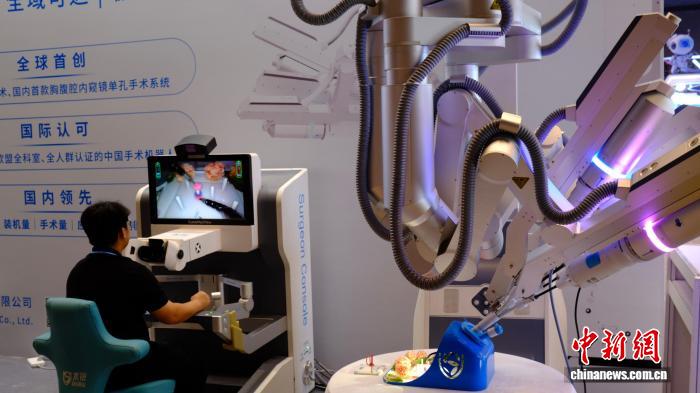
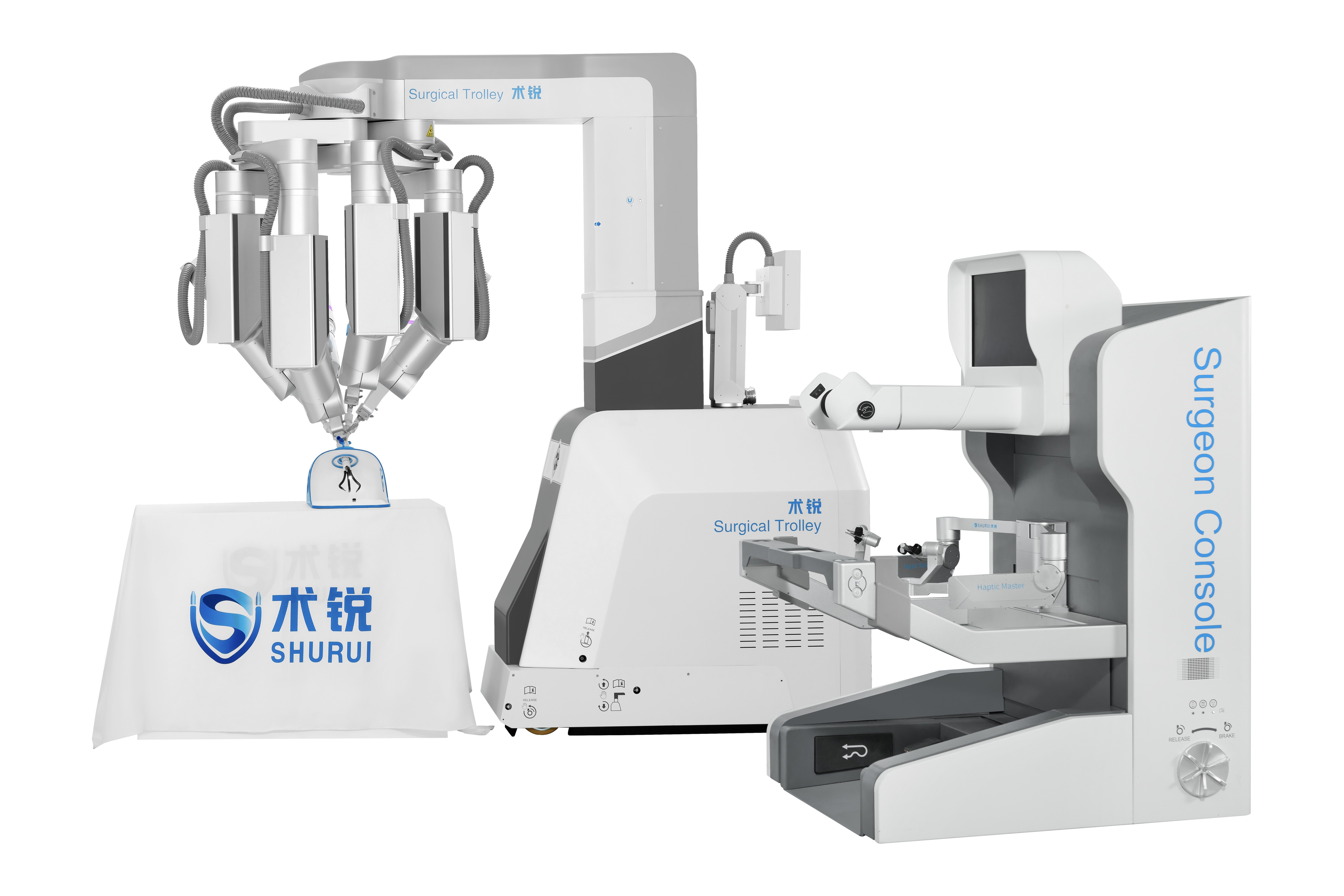
术锐单孔机器人获批CE:覆盖全科室、全人群——中国自主原创、全球盛大启航!
Zhong Guo Chan Ye Jing Ji Xin Xi Wang· 2025-09-05 11:20
Core Viewpoint - Shurui Robotics has successfully obtained CE certification for its snake-arm single-port surgical robot, marking a significant milestone in its international expansion and establishing itself as a leader in minimally invasive surgical technology [1][6][15] Group 1: Product Development and Innovation - The snake-arm single-port surgical robot represents a breakthrough in surgical technology, allowing for high degrees of freedom and precision through a single small incision, thus reducing patient trauma and recovery time [5][6] - The robot has surpassed the capabilities of traditional multi-port surgical robots, enabling complex surgeries that previously required multiple incisions to be performed through a single small incision [5][6] Group 2: Clinical Applications and Achievements - The robot is approved for use in various surgical fields, including urology, gynecology, general surgery, thoracic surgery, and pediatric surgery, making it the first Chinese surgical robot approved for all demographics in the EU [1][8] - Shurui Robotics has established clinical partnerships with over 70 hospitals in mainland China and nearly 10 in Europe, completing over 2,000 surgeries and validating its performance in safety, adaptability, and precision [8][9] Group 3: International Expansion and Collaboration - The company has begun to actively expand into the European market, forming collaborations with experts in Germany, Spain, France, and Italy, and establishing a clinical excellence center in partnership with IRCAD [9][10] - A landmark event occurred when a renowned thoracic surgeon in Spain successfully performed the world's first remote single-port thoracic surgery using the Shurui robot, showcasing its advanced capabilities [10] Group 4: Future Vision and Goals - Shurui Robotics aims to promote its original technology globally, focusing on expanding its registration and clinical applications in more countries and regions, thereby providing more patients with minimally invasive and precise surgical solutions [15]
思哲睿:手术机器人创新发展论坛暨康多机器人全球代理商年会圆满举办
Zheng Quan Shi Bao Wang· 2025-09-01 05:29
Core Insights - The forum on surgical robot innovation and the global agent annual meeting for Kando Robot was successfully held in Harbin, featuring around 60 medical experts and business representatives from nearly 20 countries and regions discussing the future development of surgical robots [1] Group 1: Company Developments - The company introduced the global business progress and technological achievements of Kando Robot, along with a future technology blueprint [2] - Strategic signing ceremonies were held with new partners from Europe, Asia, and Latin America, marking a significant step in the internationalization of "Made in China" surgical robots [2] - Kando Robot has been recognized for its innovative laparoscopic surgical system, which integrates a multi-modal high-performance imaging navigation platform [2] Group 2: Technological Advancements - The Kando Robot system features a multi-screen doctor control console that allows real-time integration of various surgical information, enhancing the quality of medical procedures [2] - The company has achieved significant milestones in remote surgery, including the world's first remote surgery under 5G conditions in 2018 and the introduction of dual-master and dual-robot surgical techniques planned for 2024 [4] Group 3: Market Recognition and Impact - Kando Robot has been awarded multiple international design awards, including the Red Dot Award, iF Design Award, and IDEA Award, highlighting its commitment to innovation in medical robotics [4] - The company has established itself as a leader in minimally invasive surgery, with its products recognized for their operational experience, service response, and cost-effectiveness [5] - Kando Robot has conducted nearly 10,000 surgeries across nearly 100 hospitals in China, demonstrating its widespread clinical application and acceptance [4]
思哲睿:手术机器人创新发展论坛暨康多机器人 全球代理商年会圆满举办
Zheng Quan Shi Bao Wang· 2025-09-01 02:13
Core Insights - The forum on surgical robot innovation and the global agent annual meeting for SIZHIREI Medical was successfully held in Harbin, featuring around 60 medical experts and business representatives from nearly 20 countries and regions across four continents [1] Group 1: Innovation and Development - SIZHIREI Medical presented a comprehensive overview of the global business progress and technological achievements of the Kando robot, along with a future technology blueprint [2] - Medical experts from various countries shared insights on the innovative development paths of Kando robots and the globalization of surgical robots [2] - The Kando robot's laparoscopic surgical system features a multi-modal high-performance image navigation platform, which integrates real-time information from multiple sources through an open multi-screen doctor control console [2] Group 2: Market Expansion and Partnerships - Representatives from countries such as Russia, Mexico, Poland, and Saudi Arabia shared their market expansion experiences and clinical application results [2] - A strategic signing ceremony was held, marking new partnerships with companies from Europe, Asia, and Latin America to advance the global layout of Kando robots [2] Group 3: Technological Demonstrations - Attendees witnessed live surgeries performed by top urology experts, showcasing the Kando robot's performance in complex procedures [3] - Participants experienced remote surgical simulation operations at the SIZHIREI Medical training center, highlighting breakthroughs in 5G remote surgery technology [3] Group 4: Achievements and Recognition - SIZHIREI Medical is recognized as a national high-tech enterprise and has received multiple international design awards, including the Red Dot Award, iF Design Award, and IDEA Award [4] - The Kando robot has been applied in various surgical fields, with nearly 10,000 surgeries performed across almost 100 hospitals in China [4] - The company has pioneered several remote surgery techniques, including the world's first remote surgery under 5G conditions in 2018 and plans for further innovations in the coming years [4] Group 5: Future Vision - Experts emphasized the advantages of SIZHIREI's products in operational experience, service response, and cost-effectiveness, aiming to benefit more patients with advanced medical technology [5] - The conference served as a high-level international exchange platform to explore the technological frontiers of surgical robots and promote a collaborative global medical ecosystem [6]
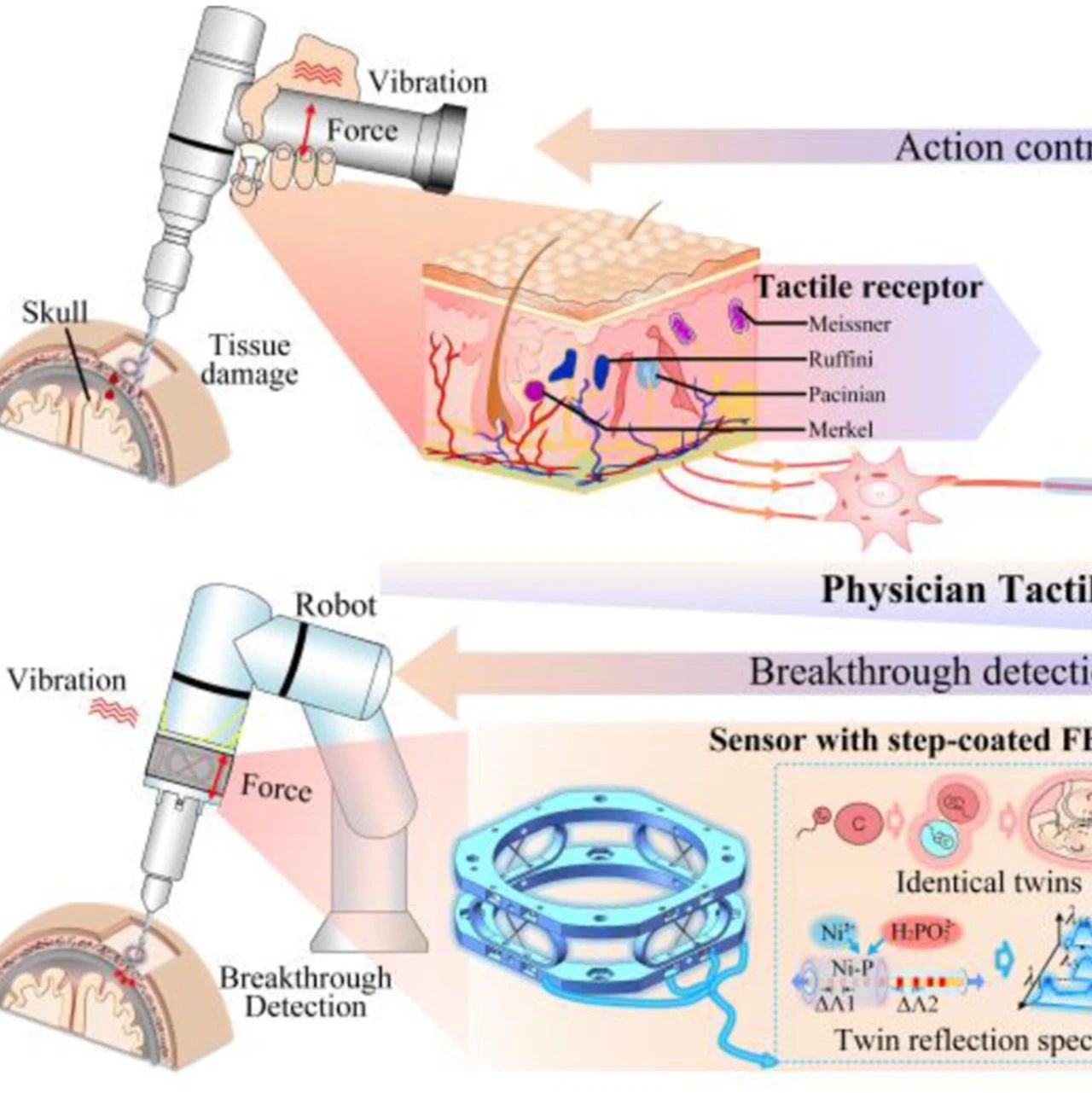
从“盲操”到精准力触感知!中国团队光纤力感知技术突破,让手术机器人“手感”媲美外科医生!
机器人大讲堂· 2025-08-29 09:06
Core Viewpoint - The article emphasizes the importance of in-situ force sensing and feedback technology in minimally invasive surgical robots, highlighting its critical role in enhancing surgical safety, precision, and efficiency [1][3]. Group 1: Technological Advancements - The Da Vinci 5th generation laparoscopic surgical robot, integrating a force feedback system in 2024, reduced peak interaction forces in the surgical area by 43%, significantly improving safety thresholds [1]. - The research team developed a novel Bragg grating (FBG) sensor technology that addresses existing challenges in multi-dimensional force measurement, achieving a 50% reduction in force-temperature coupling errors compared to traditional sensors [3][8]. - The FBG sensor can withstand 180°C sterilization and is designed for repeated use, reducing costs by over 80% compared to traditional adhesive packaging methods [4][11]. Group 2: Clinical Applications and Testing - The research team successfully integrated the FBG sensor into spinal endoscopic and orthopedic surgical robots, demonstrating its effectiveness through rigorous testing on pig spine models and human cadaver skulls [6][17]. - In laparoscopic simulations, the force feedback system maintained average tissue lifting forces below 3N, compared to 5.6N without feedback, indicating a significant improvement in safety [20]. - In live animal experiments, the FBG sensor effectively monitored interaction forces, ensuring that maximum operational forces remained below 2N, showcasing its advantages in minimally invasive procedures [22]. Group 3: Research Publications - Two significant research papers were published, detailing the advancements in FBG technology for surgical robots, with Zhao Chen as the first author and Professor Li Tianliang as the corresponding author [7].