住宿业

Search documents
青旅推4元特价房,禁止40岁以上男性、30岁以上女性预定!门店回应:有权不接待特定群体,律师:涉嫌侵害消费者权益
新浪财经· 2025-10-15 09:12
Core Viewpoint - The recent practice of youth hostels in Chengdu offering special price rooms with age restrictions has sparked significant attention and concern regarding potential discrimination against consumers based on age and gender [2][9]. Summary by Sections Special Price Rooms and Age Restrictions - Some youth hostels are offering special price rooms as low as 4 yuan, but with age restrictions: men over 40 and women over 30 or 35 are prohibited from booking these rooms [2][7][8]. Justification for Age Restrictions - Staff members indicated that the age restrictions were implemented to reduce conflicts with customers who previously misunderstood the booking rules, leading to disputes and even police involvement [7]. Legal Implications and Consumer Rights - Legal expert Tan Mintao stated that the age restrictions constitute dual discrimination based on age and gender, violating consumer rights. The justification of "reducing trouble" is deemed subjective and insufficient for imposing such broad restrictions [9][10]. - The practice violates Article 16 of the Consumer Rights Protection Law, which mandates fair and reasonable trading conditions and prohibits forced transactions [10]. - Market regulatory authorities can impose penalties on businesses that set unfair trading conditions, including warnings, confiscation of illegal gains, and fines [10]. Consumers who face age-based denial of service are encouraged to retain evidence and report the issue to regulatory bodies [10].


马化腾亲自下场!巨头携“标准”杀入,住宿业“大洗牌”开始,我
Sou Hu Cai Jing· 2025-10-14 09:08
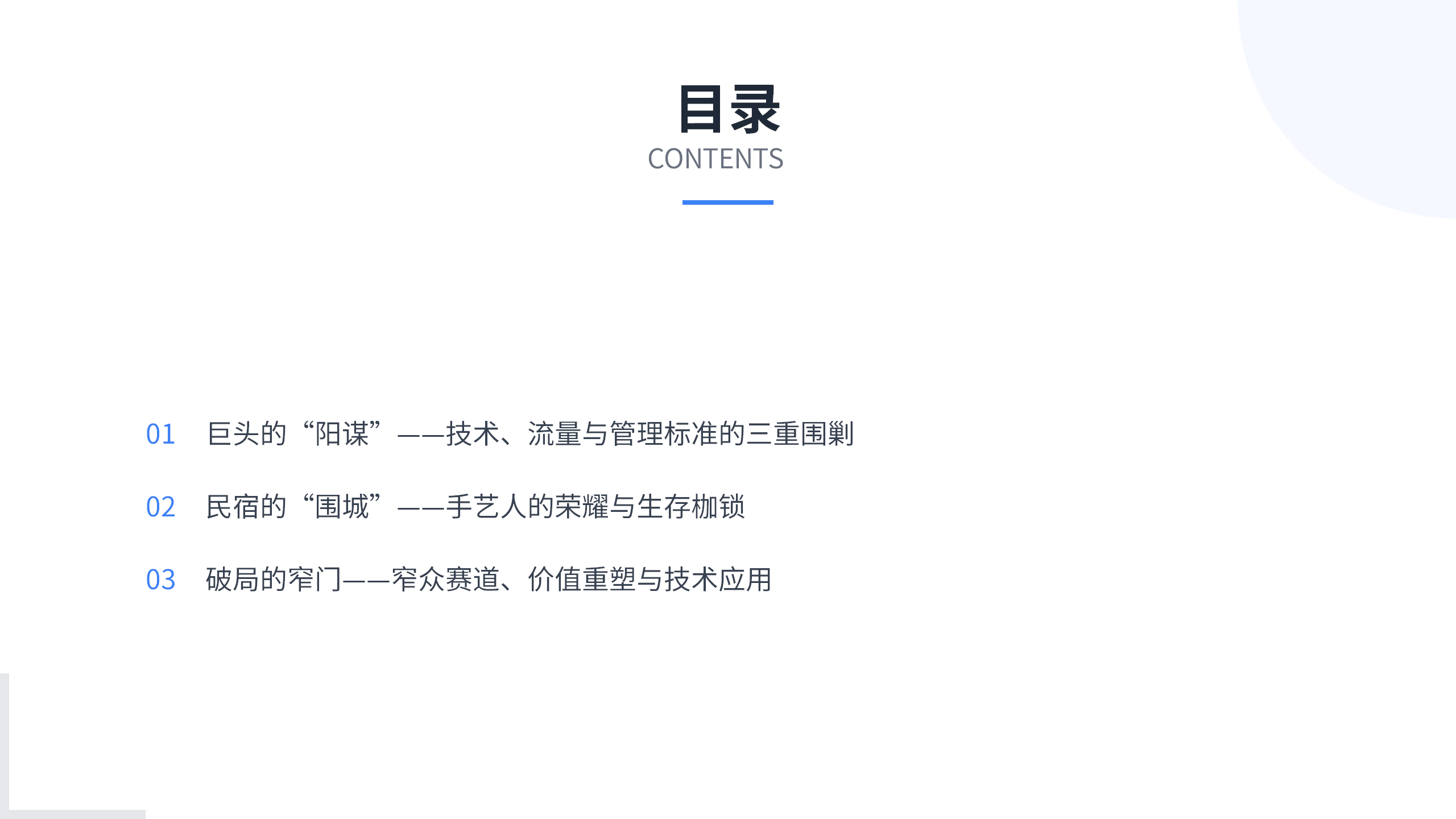
Core Viewpoint - The entry of Tencent's founder, Ma Huateng, into the hotel management industry signals the beginning of a "giant era" in the accommodation sector, introducing a set of standards that will reshape the industry [1][3]. Group 1: Standards Introduced by Giants - The "standards" brought by giants are not merely upgrades to hotel SOPs but a comprehensive operating system derived from internet logic, encompassing three main aspects: technology, traffic, and management [3][4]. Technology Standards - The shift from intuition-based decision-making to algorithm-driven processes will revolutionize operations, utilizing SaaS systems and data platforms for decision support in site selection, pricing, and marketing [4]. - AI-generated marketing content and smart services will permeate every service aspect, aiming to provide standardized services at minimal marginal costs [4]. Traffic Standards - Giants like Tencent create a "traffic black hole," where the entire consumer journey is contained within their ecosystem, making it difficult for traditional OTAs to compete [7]. - The use of social media for viral marketing through social connections allows for nearly zero-cost customer acquisition [7]. Management Standards - The giants view accommodation as a "product" that needs to be standardized and replicable, focusing on opening numerous locations with consistent quality and controllable experiences [10]. - Professional managers will replace individual hosts, prioritizing efficiency and financial metrics over unique hospitality experiences [11]. Group 2: Identity Crisis in the Industry - The accommodation industry faces a profound identity crisis, torn between the artisanal spirit of individual hosts and the efficiency-driven approach of giants [15][16]. - The unique charm of artisanal accommodations lies in their personal touch and storytelling, but this uniqueness also limits scalability and consistency in quality [15]. Group 3: Finding a Path Forward - Opportunities exist in niche markets that giants overlook, focusing on hyper-segmented customer bases that require personalized experiences [20][23]. Niche Market Strategies - Catering to "hardcore" digital nomads who prioritize stability and community over trendy amenities presents a viable path [25]. - Providing specialized services for high-level outdoor enthusiasts and unique local healing experiences can differentiate offerings from standardized services [29][31]. Relationship Building - The personal brand of hosts and the emotional connections formed with guests are irreplaceable assets that can create loyal customer bases [33]. - Establishing community-focused spaces for like-minded individuals can enhance customer loyalty and engagement [33]. Conclusion - The entry of giants into the accommodation sector is not necessarily detrimental; it can help filter out low-quality offerings and highlight those with genuine value [38][39]. - The path forward lies in embracing the unique, intangible aspects of hospitality that giants cannot replicate, allowing smaller players to thrive in their niches [38][39].

堵住网约房监管漏洞
Ren Min Wang· 2025-10-13 00:54
Core Viewpoint - The rapid development of online rental housing has led to significant issues, including inadequate verification of guests and the improper accommodation of minors, creating an environment conducive to crime [1][2]. Group 1: Issues Identified - In 2023, the Ganyu District Procuratorate in Lianyungang City handled five cases of crimes involving minors occurring in online rental properties, with one minor suffering harm [1]. - Investigations revealed that some online rental properties allowed entry via passwords without proper identity verification, leading to issues such as unregistered guests and mismatched identities [1]. - Many online rental properties failed to meet safety standards, lacked necessary electronic identification, and did not transmit guest information to public security authorities, resulting in regulatory delays and harm to minors [1]. Group 2: Actions Taken - On June 23, the Ganyu District Procuratorate issued recommendations to the public security bureau for a comprehensive inspection and rectification of online rental properties, addressing issues like lack of real-name registration and failure to report guest information [2]. - The Ganyu District Public Security Bureau adopted all recommendations and conducted inspections of over 500 online rental properties, identifying and clearing more than 50 non-compliant units [2]. - Community police were mobilized to educate online rental operators on relevant laws and regulations, and a reporting mechanism for violations involving minors was established [2]. Group 3: Stakeholder Responses - The Ganyu District Public Security Bureau emphasized the importance of addressing regulatory gaps in online rental housing and committed to enhancing legal education for operators [3]. - Local representatives acknowledged the supervisory role of the procuratorate and called for the inclusion of online rental properties under hotel industry regulations, advocating for improved safety measures [3].
国庆暖心“栖”居,从妥善保管涉税资料开始
蓝色柳林财税室· 2025-10-05 02:53
Core Viewpoint - The article emphasizes the importance of maintaining proper accounting records for businesses, particularly in the hospitality sector, to ensure compliance with tax regulations and foster long-term trust with customers [8]. Group 1: Accounting Practices - Businesses are required to keep accounting records, including ledgers and tax-related documents, for a minimum of 10 years as per the tax regulations in China [8]. - Properly maintained accounting records not only ensure compliance but also reflect the integrity and reliability of the business, which is crucial for long-term development [8]. Group 2: Invoice Management - There are four methods for dynamically determining the total invoice quota for taxpayers: monthly adjustments, temporary adjustments, periodic adjustments, and manual adjustments [13]. - Monthly adjustments involve automatic updates to the invoice quota at the beginning of each month based on the taxpayer's usage [13]. - Temporary adjustments can occur when a taxpayer with good credit reaches a certain percentage of their quota, triggering an automatic increase [13]. - Periodic adjustments are made based on the taxpayer's actual business performance and previous usage [14]. - Manual adjustments can be requested by taxpayers when their business circumstances change, subject to approval from tax authorities [15]. Group 3: Tax Exemptions and Special Invoices - Small-scale taxpayers with monthly revenues below 100,000 can opt to issue special invoices by waiving their tax exemption on that portion of sales [19]. - For example, a small-scale taxpayer can choose to issue a special invoice for a portion of their sales while maintaining tax exemptions on the remaining sales [19].

景德镇一酒店国庆房价暴涨十倍!当地市场监管局通报:涉嫌违法,立案调查
第一财经· 2025-09-18 10:18
Core Viewpoint - The article discusses the significant price increase of hotel rooms at the Space Hotel in Jingdezhen, Jiangxi, during the National Day holiday, raising concerns about potential violations of the Price Law of the People's Republic of China [2][5]. Group 1: Price Increase Investigation - The Jingdezhen market supervision authority has initiated an investigation into the Space Hotel for allegedly violating pricing regulations, following reports of room rates skyrocketing from approximately 90 yuan to around 1000 yuan [2][5]. - The hotel has been reported to have room prices for October 1st at 1051 yuan, while similar rooms were priced between 80 to 100 yuan just days prior [6][8]. Group 2: Hotel's Pricing Strategy - Hotel staff indicated that the high prices were not final and that customers could book at the listed price, with adjustments made at check-in based on actual pricing, which they estimated would be around 500 to 600 yuan [6]. - The hotel explained that the pricing strategy was influenced by market conditions, suggesting that setting prices too low or too high could be problematic [6]. Group 3: Hotel Background - The Space Hotel was established in October 2022, with its operator changing from Sun Si to Zhang Xuewen in June 2025, indicating a relatively new business in the hospitality sector [16].

四部门:增加优质消费供给 加大信贷支持力度
Zhong Guo Zheng Quan Bao· 2025-09-18 00:22
Core Viewpoint - The Chinese government is implementing policies to enhance service consumption by increasing quality supply and financial support, focusing on innovative consumption models and improving consumer experiences [1][2][3] Group 1: Policy Measures - The government plans to select around 50 pilot cities with large populations and strong development potential to enhance quality consumption supply through competitive evaluation [1][2] - A series of policy documents will be introduced to promote high-quality development in the accommodation industry and integrate railway and tourism sectors [1][3] - The "Artificial Intelligence +" initiative will be implemented to accelerate AI applications in service consumption [1][2] Group 2: Service Supply Enhancement - The Ministry of Commerce aims to address the shortfall in quality supply by fostering new consumption models and enhancing diverse consumption scenarios [2] - Key areas such as childcare, elderly care, housekeeping, and tourism will see the implementation of a "Credit +" project to improve service quality and consumer trust [2] - Efforts will be made to create a fair market environment by eliminating market access barriers, particularly benefiting small and medium-sized enterprises [2] Group 3: Financial Support - The People's Bank of China has introduced multiple policies to expand high-quality credit supply, with a focus on first loans, renewals, credit loans, and medium to long-term loans for the consumption sector [3] - As of the end of July, the loan balance in key service consumption areas reached 2.79 trillion yuan, a year-on-year increase of 5.3%, with new loans in the first seven months exceeding those of the entire previous year by 630 billion yuan [3] - The Ministry of Culture and Tourism plans to implement actions to enhance tourism service quality and consumer experience, including initiatives to attract more international tourists [3]
基本面的驱动效应有望增强
Qi Huo Ri Bao Wang· 2025-09-17 23:43
Economic Overview - In August, the national industrial added value increased by 5.2% year-on-year, with a slight month-on-month growth of 0.37%, supported by high growth in equipment manufacturing and high-tech manufacturing [1] - The total retail sales of consumer goods reached 39,668 billion yuan in August, growing by 3.4% year-on-year, while the growth rate of commodity retail decreased by 0.4 percentage points to 3.6% [1] - Fixed asset investment from January to August was 326,111 billion yuan, with a year-on-year growth of 0.5%, reflecting a decline in real estate development investment and a slight decrease in infrastructure and manufacturing investment [1] Foreign Trade - In August, exports grew by 4.4% year-on-year, down from 7.2% in the previous month, with strong performance in electromechanical products and ship exports [2] - High-tech products, integrated circuits, and ship exports contributed 4.1 percentage points to the overall export growth [2] Policy Measures - A comprehensive policy initiative was announced on September 16 to stimulate service consumption, including 19 specific measures aimed at enhancing supply and demand [3] - The initiative focuses on increasing the supply of high-quality services and reducing consumption barriers through fiscal incentives and innovative credit options [3] - The Ministry of Commerce has introduced over 30 policies to establish a "1+N" policy system for service consumption, with plans for further targeted documents to promote high-quality development in the accommodation sector and integration of railways and tourism [3] Real Estate and Fiscal Policy - Major cities like Beijing, Shanghai, and Shenzhen have implemented new policies to relax purchase and loan restrictions in the real estate sector, with more measures expected to stabilize the market [4] - The Ministry of Finance emphasized maintaining continuity and stability in fiscal policy while enhancing flexibility and foresight to support high-quality economic development [4] Market Outlook - The stock index has shown a fluctuating upward trend driven by valuation, with economic fundamentals and corporate earnings not significantly impacting the index [4] - Future improvements in economic fundamentals and A-share profitability are anticipated, supported by coordinated policy efforts and a low base effect from the previous year [4]
增加优质消费供给、加大信贷支持力度 四部门详解扩大服务消费政策措施
Zhong Guo Zheng Quan Bao· 2025-09-17 23:25
Core Viewpoint - The Chinese government is implementing a series of policies to enhance service consumption, focusing on the development of new consumption models and improving the quality and capacity of service supply [1][2][3]. Group 1: Policy Measures - The government plans to select around 50 pilot cities with large populations and strong development potential to promote new consumption models and increase quality supply [1][2]. - Policies will be introduced to support high-quality development in the accommodation industry and integrate railway and tourism sectors [3]. - The "Artificial Intelligence+" initiative will be implemented to accelerate the application of AI in service consumption [1][2]. Group 2: Service Supply Enhancement - The Ministry of Commerce aims to stimulate innovation and enhance service levels in key areas such as childcare, elderly care, housekeeping, and tourism through the "Credit+" project [2]. - A unified national market will be promoted to create a fair market environment, especially for small and medium-sized enterprises [2]. Group 3: Financial Support - The People's Bank of China has introduced multiple policies to expand high-quality credit supply, with a loan balance in key service consumption areas reaching 2.79 trillion yuan, a year-on-year increase of 5.3% [3]. - The government will work with various departments to ensure the effective implementation of these financial policies to enhance consumer experience and support service consumption [3]. Group 4: Tourism and Cultural Consumption - The Ministry of Culture and Tourism plans to launch initiatives to improve tourism service quality and consumer experience, including the "Strong Foundation Renewal Action" for tourist attractions [3]. - The "Buy Now, Return Immediately" policy will be promoted to attract more international tourists to China [3].
四部门详解扩大服务消费政策措施 增加优质消费供给 加大信贷支持力度
Zhong Guo Zheng Quan Bao· 2025-09-17 20:54
Core Viewpoint - The Chinese government is implementing a series of policies to enhance service consumption, focusing on the development of new consumption models and improving the quality of service supply to meet the diverse needs of consumers and support high-quality economic growth [1][2]. Group 1: Policy Measures - The government plans to select around 50 pilot cities with large populations and strong development potential to promote new consumption models and increase quality supply [1][2]. - Policies will be introduced to support high-quality development in the accommodation sector and integrate railway and tourism [3]. - The "Artificial Intelligence +" initiative will be implemented to accelerate the application of AI in service consumption [1][2]. Group 2: Service Supply Enhancement - The Ministry of Commerce aims to stimulate innovation and enhance service levels in key areas such as childcare, elderly care, housekeeping, and tourism through the "Credit +" project [2]. - Efforts will be made to create a fair market environment by eliminating market access barriers, particularly benefiting small and medium-sized enterprises [2]. Group 3: Financial Support - The People's Bank of China has introduced multiple policies to expand high-quality credit supply, with a focus on supporting the service consumption sector [3]. - As of July, the loan balance in key service consumption areas reached 2.79 trillion yuan, a year-on-year increase of 5.3% [3]. - Future actions will include improving tourism service quality and consumer experience through initiatives like the "Strong Foundation Renewal Action" for tourist attractions [3].
多部门解读扩大服务消费“19条”!
券商中国· 2025-09-17 12:19
Core Viewpoint - The article discusses the recent policies introduced by the Chinese government to expand service consumption, highlighting the importance of enhancing service supply and stimulating consumer demand through various measures and financial support [2][3][8]. Group 1: Policy Measures - Approximately 50 pilot cities will be selected nationwide based on population size, strong driving effects, and development potential to explore new consumption formats and scenarios [2][7]. - As of the end of July, the balance of loans in key service consumption areas reached 2.79 trillion yuan, a year-on-year increase of 5.3%, with an addition of 164.2 billion yuan since the beginning of the year [2][8]. - The People's Bank of China is actively supporting qualified financial institutions to issue financial bonds and asset-backed securities to broaden funding sources and enhance consumer credit supply capacity [2][8]. Group 2: Financial Support - The article emphasizes the importance of financial policies in supporting service consumption, including the establishment of structural monetary policy tools for service consumption and elderly care [8]. - The financial support for service industry entities, particularly small and medium-sized enterprises, has significantly increased, with a notable rise in credit allocation [8][9]. - In the first seven months of the year, financial bonds worth 21.5 billion yuan and asset-backed securities worth 48.4 billion yuan were issued by automotive finance companies [8]. Group 3: Future Directions - The Ministry of Commerce plans to introduce a series of policy documents focusing on high-quality development in the accommodation industry and the integration of railways and tourism, forming a comprehensive policy approach [5][6]. - The upcoming policies aim to enhance the quality of service supply and stimulate consumer demand, addressing the evolving needs of the growing middle-income group in China [7].