医疗信息化

Search documents
卫宁健康:蚂蚁集团为公司第四大股东,双方在多领域持续合作
Sou Hu Cai Jing· 2025-12-24 04:18
Group 1 - The core viewpoint of the article is that Weining Health has a strategic partnership with Ant Group, which has been in place since June 2018, and this partnership is focused on integrating advanced technologies in the healthcare sector [1] - Ant Group, through its wholly-owned subsidiary Shanghai Yunxin, holds approximately 4.23% of Weining Health's shares as of September 30, 2025, making it the fourth largest shareholder [1] - The collaboration aims to leverage Ant Group's capabilities in big data, artificial intelligence, biometrics, blockchain, and mobile payments alongside Weining Health's strengths in medical information technology to promote the development of "Internet + Healthcare" [1] Group 2 - Weining Health has engaged in a series of cooperative efforts with Ant Group in various fields since the signing of the framework cooperation agreement, which is not limited to a single product [1] - For detailed information on the specific cooperation and progress, stakeholders are encouraged to refer to the company's regular reports, public accounts, and interactive platforms [1]

清华城市健康指数2025:北京领跑,杭州升至第二
Jing Ji Guan Cha Wang· 2025-12-23 12:03
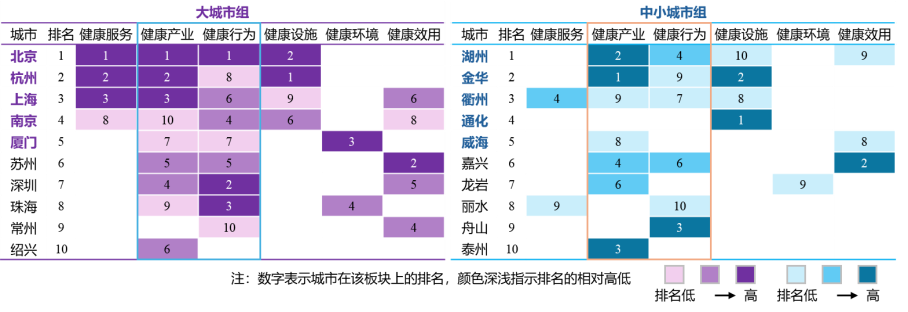
Core Insights - The "Tsinghua Urban Health Index 2025" report categorizes cities into large (89 cities) and medium-small (207 cities) groups based on population size, utilizing multi-source health big data for evaluation [1] - The evaluation framework includes six primary indicators: health services, health industry, health behavior, health facilities, health environment, and health outcomes, with higher scores indicating better urban health status [1] - High-quality development in health industry and health behavior is a common characteristic among leading cities in both large and medium-small groups [1] Large Cities Group - The top cities in the large group are Beijing, Hangzhou, Shanghai, Nanjing, and Xiamen, with Hangzhou excelling in health facilities, services, and industry, surpassing Shanghai to rank second [1] - The report highlights that the Yangtze River Delta, Pearl River Delta, and other major city clusters remain in the top tier [1] Medium-Small Cities Group - The leading cities in the medium-small group are Huzhou, Jinhua, Quzhou, Tonghua, and Weihai [1] Thematic Research Areas - The report explores three themes: "medical informationization," "ice and snow sports," and "Su Super" events, aiming to address challenges in health city construction [5] - In medical informationization, major cities like Beijing, Shanghai, Chengdu, Shenyang, and Urumqi account for over half of the projects, while provinces like Zhejiang, Sichuan, Guangdong, Beijing, and Shandong show high activity in intelligent health projects [5] - The ice and snow sports industry exhibits a "south needs, north supplies" pattern, with southern cities like Nanjing and Shenzhen showing strong demand, while northern cities like Harbin and Zhangjiakou have supply advantages [5] International Comparison - The report compares 36 international cities, including London and New York, with 16 domestic cities like Beijing and Shanghai across five aspects: medical services, lifestyle behaviors, urban greening, environmental quality, and health outcomes [6] - Chinese cities excel in health outcomes, medical services, and urban greening, with Hong Kong, Shenzhen, and Hangzhou showing outstanding health outcomes, while Beijing, Shanghai, and Hangzhou rank among the top five globally in medical services [6] Future Research Directions - The research team will continue to monitor and evaluate the implementation of the "health priority development" strategy during the 14th Five-Year Plan period, focusing on tracking research, effectiveness assessment, and policy studies to promote high-level health city construction [8]

“医保影像云”为“医检结果互认”注入新动能
Xin Lang Cai Jing· 2025-12-22 20:23
Core Viewpoint - The introduction of the "Medical Insurance Imaging Cloud" aims to address the challenges faced by patients in cross-hospital medical imaging, such as repeated examinations and data incompatibility, by establishing standardized protocols for image upload, storage, retrieval, and quality control [1][2][3] Group 1: Challenges in Medical Imaging - Patients often experience repeated examinations due to inconsistent imaging equipment standards and incompatible data formats across hospitals, leading to wasted medical resources and increased economic burden [1] - Existing policies for "result recognition" have been ineffective due to a lack of unified technical standards and quality supervision, resulting in limited implementation and low public satisfaction [1] Group 2: Implementation of "Medical Insurance Imaging Cloud" - The "Medical Insurance Imaging Cloud" will enable real-time access to patients' historical imaging data by authorized doctors, facilitating better clinical decision-making and reducing unnecessary repeat examinations [1][2] - The initiative emphasizes "quality control first," ensuring that imaging data is clinically readable and diagnostically reliable through established quality requirements for data collection, transmission, and storage [2] Group 3: Broader Implications - The "Medical Insurance Imaging Cloud" represents a significant step towards modernizing medical insurance governance, allowing for more precise fund supervision and the identification of excessive examinations and fraudulent treatments [2] - Accumulated data will provide valuable resources for clinical research, disease prediction, and policy formulation, promoting a shift from passive treatment to proactive health management [2] Group 4: Challenges and Considerations - The implementation process must address challenges such as data privacy protection, willingness of medical institutions to participate, and the technical capabilities of grassroots organizations [2] - There is a need for enhanced policy guidance and financial support, as well as a balanced approach to public awareness and data security to build social trust in the system [2]
联想智算生态之旅走进循上医疗 AI工厂开启智慧医疗新范式
Zheng Quan Ri Bao· 2025-12-22 10:08
Core Insights - The seminar titled "Intelligent Computing Collaborative Medical Ecosystem Links the Future" was held in Chengdu, focusing on the innovative applications of intelligent computing technology in the AI + healthcare sector, organized by Lenovo in collaboration with Intel and other ecosystem partners [1] Group 1: AI Integration in Healthcare - AI technology is rapidly integrating with the healthcare industry, driven by policies promoting digital and intelligent upgrades, yet healthcare institutions face challenges such as information silos, inefficient management, and the inability to meet the growing demand for high-quality, personalized services [2] - Xunshang Medical has implemented AI in various applications, including AI doctor assistants for rapid decision-making and AI health advisors for precise tracking, aiming to create a new path for innovative development in smart healthcare [2] Group 2: Lenovo's Solutions - Lenovo has developed a scene-based smart healthcare solution for Xunshang Medical, centered around "AI large models + RPA + integrated platforms," which helps hospitals consolidate and standardize data from various systems, creating a unified "360-degree patient view" [2] - Lenovo's infrastructure is crucial for the stable and efficient operation of medical intelligent applications, with a focus on providing effective computing power to enhance healthcare resource accessibility [3] Group 3: Collaboration with Intel - Intel is committed to promoting the accessibility of computing power in key sectors like smart healthcare, collaborating with Lenovo to build an innovative ecosystem for the future [4] - The Xunshang Pengruili scene-based AI application solution exemplifies Lenovo's systematic advantages, addressing challenges such as high data labeling costs and limited sample sizes through advanced algorithmic concepts [4][5] Group 4: Enhancements in Healthcare Operations - The AI applications significantly improve patient experience, internal management efficiency, and data analysis capabilities, facilitating the transition of hospitals towards intelligent and refined management [5] - Various AI tools, such as AI doctors and AI nurses, enhance patient interactions, while RPA robots automate repetitive tasks, leading to improved operational efficiency [5]

看病将告别胶片!“医保影像云”系列规范公开征意见
Xin Lang Cai Jing· 2025-12-19 16:22
Core Viewpoint - The National Medical Insurance Administration has released four basic standards for "Medical Insurance Imaging Cloud" to address the challenges of carrying film and managing it, aiming to enhance the quality and accessibility of medical imaging data across the country [1] Group 1: Standards and Objectives - The four standards include quality control for imaging, software application, infrastructure technology, and personnel and equipment specifications [1] - The core objective of these standards is to accelerate the high-quality construction of the Medical Insurance Imaging Cloud, creating a digital service platform for nationwide storage, retrieval, and access to imaging data [1] Group 2: Current Status and Future Goals - Currently, 20 provinces have uploaded nearly 200 million records to the Medical Insurance Imaging Cloud [1] - The National Medical Insurance Administration aims to expand the cross-province sharing of imaging data and achieve a unified national Medical Insurance Imaging Cloud by the end of 2027 [1] Group 3: Pricing and Regulations - The recently issued guidelines have separated physical film from the pricing structure, allowing patients to purchase it as needed, with zero markup on sales [1] - Digital imaging processing, uploading, and cloud storage will be included in the pricing of radiological examinations, and institutions failing to provide cloud storage will face reduced fees [1]
“北肿临床试验”小程序上线了!医渡科技(02158)助力开启临床试验服务新体验
智通财经网· 2025-12-19 09:37
智通财经APP获悉,如何让复杂的临床试验对参与者更"友好",对管理者更"高效"?动动手指,临床试 验的访视安排、报销进度、用药服务即可一键掌握——这已不再是设想。近日,医渡科技(02158)与北 京大学肿瘤医院联合打造的临床试验管理体系(CTMS)移动端——"北肿临床试验"小程序正式上线。这 不仅将"以患者为中心"的理念落到了实处,更标志着临床试验管理在参与者体验、数据安全与执行效率 上实现了全面升级。 体验三大升级:让临床试验参与"省心又安心" 本次新上线的CTMS小程序是以试验参与者体验为出发点,实现从"管理导向"向"服务导向"的升级突 破,其深度融入微信生态,在移动端场景下为试验参与者带来了诸多便利: 在此坚实而广泛的合作基础上,CTMS临床研究管理系统作为一个符合GCP标准的全链路数智化管理平 台,为北肿提供了从项目立项、执行到结题的一站式解决方案。其价值已在实践中得到充分验证:通过 系统的流程标准化与全周期精细管控,北肿临床试验项目的平均立项启动时间显著缩短,效率优于行业 平均水平。 这一系列以参与者为中心的改进,标志着临床试验数字化从侧重机构内部流程管理,向兼顾外部参与者 服务体验的成功延伸。 该 ...
医疗信息化板块12月19日涨0.57%,海南海药领涨,主力资金净流出3.74亿元
Sou Hu Cai Jing· 2025-12-19 09:21
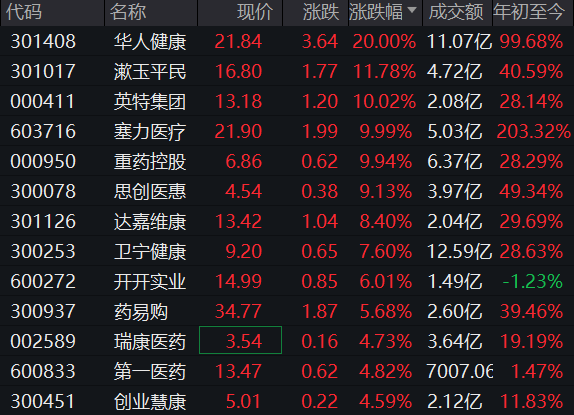
Core Insights - The medical information technology sector experienced a rise of 0.57% on December 19, with Hainan Haiyao leading the gains [1] - The Shanghai Composite Index closed at 3890.45, up 0.36%, while the Shenzhen Component Index closed at 13140.22, up 0.66% [1] Sector Performance - The following companies in the medical information technology sector saw significant price increases: - Hainan Haiyao (000566) closed at 7.24, up 10.03% with a trading volume of 1.3259 million shares and a transaction value of 914 million [1] - Wanma Technology (300698) closed at 42.66, up 7.56% with a trading volume of 137,400 shares and a transaction value of 582 million [1] - Anbiping (688393) closed at 24.95, up 5.63% with a trading volume of 66,900 shares and a transaction value of 168 million [1] - Jiayuan Technology (301117) closed at 55.39, up 4.91% with a trading volume of 120,520 shares and a transaction value of 1.133 billion [1] Capital Flow - The medical information technology sector saw a net outflow of 374 million from institutional investors, while retail investors contributed a net inflow of 420 million [2][3] - The following companies had notable capital flows: - Hainan Haiyao had a net inflow of 1.57 million from institutional investors but a net outflow of 98.3 million from retail investors [3] - Wanma Technology experienced a net inflow of 65.66 million from institutional investors but a net outflow of 22.79 million from retail investors [3] - Jiashi Media (601929) had a net inflow of 61.58 million from institutional investors and a net outflow of 37.74 million from retail investors [3]


SPD概念爆发4股涨停!医药供应链变革加速,政策助力千亿市场启航
Jin Rong Jie· 2025-12-18 02:34
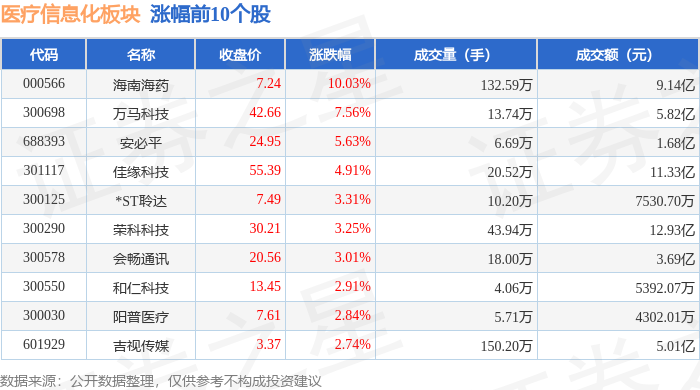
Core Viewpoint - The SPD (Supply, Processing, Distribution) concept sector is experiencing significant market activity, with multiple stocks reaching their daily limit up, driven by the demand for upgraded pharmaceutical supply chain management services [1][2]. Group 1: Stock Performance - The SPD concept sector saw three stocks hit the daily limit up, including 华人健康 (China Health) at 20% increase, 英特集团 (Yingte Group) at 10.02%, and 塞力医疗 (Saili Medical) at 9.99% [1][2]. - Other notable performers include 漱玉平民 (Shuyupingmin) with an 11.78% increase, 思创医惠 (Sichuang Medical) at 9.13%, and 达嘉维康 (Dajia Weikang) at 8.40% [1][2]. Group 2: Market Dynamics - The core logic behind the market's interest in the SPD concept is the increasing demand for pharmaceutical supply chain management services, driven by policies aimed at controlling medical insurance costs and improving pharmaceutical distribution efficiency [1][3]. - The SPD model integrates procurement, warehousing, distribution, and settlement processes, helping medical institutions reduce operational costs and optimize inventory management, thus enhancing transparency and efficiency in the flow of pharmaceuticals and consumables [1][3]. Group 3: Impacted Sectors - The promotion of the SPD model is expected to reshape the pharmaceutical distribution industry, allowing companies with SPD service qualifications and resource advantages to expand their client base among medical institutions, transitioning from traditional distribution to full-process services, thereby increasing revenue scale and gross margins [3]. - The medical information technology sector will benefit from the SPD system's reliance on digital platforms, with companies providing medical supply chain information solutions likely to receive more orders, positioning technology leaders favorably in market competition [3]. - In the medical device consumables sector, the SPD model will lead to more centralized and efficient procurement and distribution, allowing production companies that collaborate closely with SPD service providers to reduce distribution costs and secure stable hospital channel orders, enhancing market share and profitability [3].


医疗信息化板块12月17日涨1.18%,卫宁健康领涨,主力资金净流出2.21亿元
Sou Hu Cai Jing· 2025-12-17 09:25
Core Viewpoint - The medical information technology sector experienced a rise of 1.18% on December 17, with Weining Health leading the gains [1] Group 1: Market Performance - The Shanghai Composite Index closed at 3870.28, up by 1.19% [1] - The Shenzhen Component Index closed at 13224.51, increasing by 2.4% [1] Group 2: Capital Flow - The medical information technology sector saw a net outflow of 221 million yuan from institutional investors and a net outflow of 204 million yuan from retail investors, while individual investors contributed a net inflow of 425 million yuan [1]

“投行+投资”联动 协同赋能科技企业成长——证券行业服务科技创新调研之中国银河证券样本
Shang Hai Zheng Quan Bao· 2025-12-15 19:19
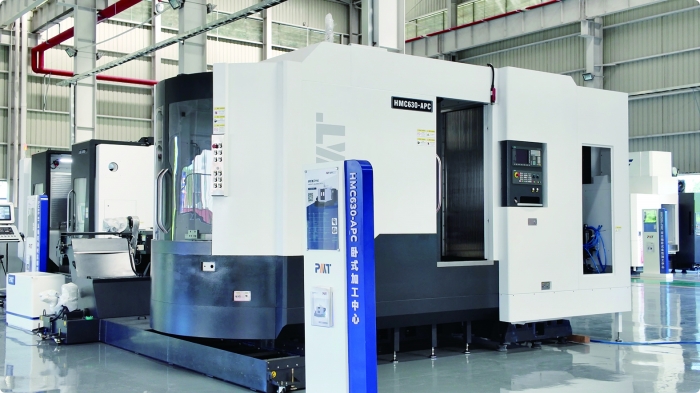
Core Viewpoint - The article highlights the importance of financial support and innovative investment strategies in fostering the growth of high-tech enterprises like Boruspan, emphasizing the role of China Galaxy Securities in providing not just capital but also strategic resources and industry connections [6][7][9]. Group 1: Company Overview - Boruspan Precision Machine Tool Co., Ltd. has successfully transitioned from facing financing challenges to achieving mass production and stable delivery of high-end CNC machine tools, gaining traction in international markets [6]. - The company emphasizes the significance of foundational technology research, as articulated by its chairman, who believes that neglecting basic research hinders revolutionary advancements [7]. Group 2: Financial Support and Investment Strategies - China Galaxy Securities has adopted a "bank + investment" model, providing equity and bond financing while also connecting enterprises with industry resources, thus facilitating comprehensive solutions for high-tech companies [6][9]. - The firm participated in Boruspan's D-round financing of 250 million yuan in April 2023, extending support beyond financial investment to include strategic guidance and market connections [7]. - The issuance of technology innovation bonds by private equity institutions, such as Junlian Capital, demonstrates the positive impact of financial instruments on the venture capital landscape, encouraging investment in technology innovation [8]. Group 3: Market Trends and Future Outlook - The securities industry is increasingly focusing on early-stage investments in hard technology sectors, with a reported 2.4% year-on-year growth in the scale of private equity investment funds, reaching 635.14 billion yuan [13]. - China Galaxy Securities aims to enhance its service offerings for technology enterprises by integrating investment, banking, and research functions, thereby creating a comprehensive financial service ecosystem [12][15]. - The ongoing reforms in the capital market are expected to further support the growth of high-tech industries, with a focus on long-term investments and the development of diverse funding channels [15].