
食品制造业

Search documents
海南封关首日见闻:政策红利惠外企
Zhong Guo Xin Wen Wang· 2025-12-18 09:10
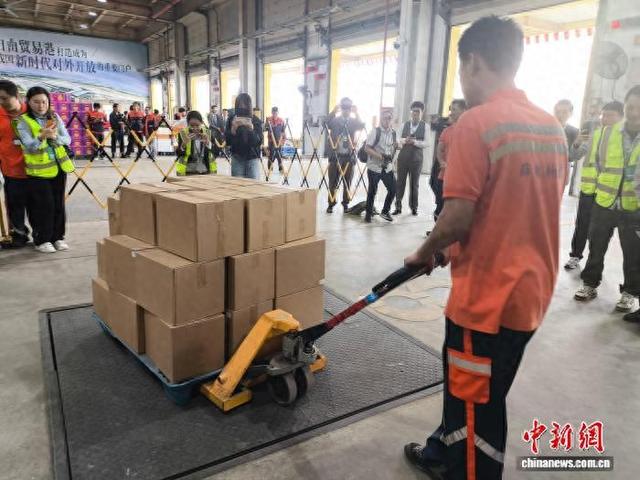
Group 1 - A batch of 3,300 boxes of chocolate produced in Hainan successfully passed through the "second line port" at Haikou Meilan Airport, marking the first goods to enjoy the 30% processing value-added domestic tax exemption policy since the full closure operation of Hainan Free Trade Port [1][3] - The chocolate manufacturer, Agile Chocolate Manufacturing (Hainan) Co., Ltd., has utilized the tax exemption policies effectively, reducing operational costs and enhancing market competitiveness [3] - The company has established three automated production lines since its establishment in Hainan Free Trade Port in 2021, achieving an annual output value of 80 million yuan and offering over 100 product varieties [3] Group 2 - The customs at Haikou Meilan Airport has integrated regulatory processes into the production and operation workflows of enterprises, allowing for real-time identification of customs-supervised goods, thus avoiding congestion and achieving "zero delay" in customs clearance [4] - The airport has improved customs efficiency by approximately 30% through the integration of electronic documentation, reducing the time required for cargo owners to complete procedures [3][4] - A batch of endoscope parts and accessories from Hong Kong also became the first imported goods to benefit from the "relaxed trade control" policy after the closure of Hainan Free Trade Port [4]

深圳报业记者直击:海南自贸港首批货物查验通关
Sou Hu Cai Jing· 2025-12-18 05:42
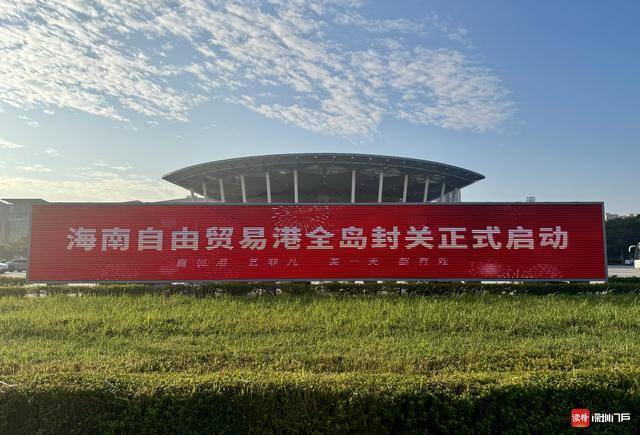
Core Points - The Hainan Free Trade Port officially commenced its full island closure operation on December 18, enhancing customs efficiency and trade management [1][11] - The first batch of enterprises benefiting from the new policies includes those in medical devices, food, pharmaceuticals, and latex products, enjoying tax exemptions and reduced operational costs [3][5][7] Group 1: Medical Industry - Hainan Weili Medical Technology Development Co., Ltd. exported 410,000 units of a medical device, saving nearly 4 million yuan in tariffs since 2023 due to the "processing value-added exemption" policy [5] - Qilu Pharmaceutical (Hainan) Co., Ltd. has benefited from tax reductions totaling 28.31 million yuan, which has been reinvested into intelligent upgrades and R&D [5] - Hainan Asia Pharmaceutical Co., Ltd. successfully exported 36,000 yuan worth of medication, showcasing the policy's support for the pharmaceutical sector [5] Group 2: Food Industry - Agreen Chocolate Manufacturing Co., Ltd. exported 209 boxes of high-end chocolate, leveraging tax exemptions to reduce operational costs [7] - Hainan Jianweixian Food Co., Ltd. exported 10,000 kilograms of macadamia nuts, benefiting from a tax exemption of 31,500 yuan, filling a gap in the local nut processing industry [7] Group 3: Maintenance Services - CRRC International Vehicle Industry (Hainan) Co., Ltd. conducted bonded maintenance on four heavy-duty diesel engines, valued at approximately 885,000 yuan, under the new "two ends outside" bonded maintenance policy [9] - Akili Biomedical Technology (Hainan) Co., Ltd. completed its first medical device maintenance project, valued at about 49,000 USD, marking a significant step in high-level bonded maintenance services [9] Group 4: Future Outlook - The steady progress of the Hainan Free Trade Port's closure operation is expected to provide more enterprises with policy benefits, enhancing the flow of quality products in domestic and international markets [11]
盐津铺子:拟向激励对象授予300万股限制性股票
Mei Ri Jing Ji Xin Wen· 2025-12-17 12:56
(记者 王晓波) 2025年1至6月份,盐津铺子的营业收入构成为:食品制造业占比100.0%。 每经AI快讯,盐津铺子(SZ 002847,收盘价:70.7元)12月17日晚间发布2025年限制性股票激励计划 (草案)的公告称,本激励计划授予的激励对象总人数157人,涉及的标的股票来源为公司从二级市场 回购的股票;因本激励计划拟向激励对象授予300万股限制性股票,公司所有在有效期内的股权激励计 划所涉及的标的股票总数累计约540.32万股,约占本激励计划草案公告日公司股本总额的1.98%;限制 性股票的授予价格为每股35.18元,即满足授予条件后,激励对象可以每股35.18元的价格购买公司A股 普通股股票,有效期自限制性股票授予登记完成之日起至激励对象获授的限制性股票全部解除限售或回 购注销之日止,最长不超过48个月。 每经头条(nbdtoutiao)——海南封关政策红利全解析:零关税、低个税、投资准入放宽、跨境资金自 由、创业扶持…… 截至发稿,盐津铺子市值为193亿元。 ...
盐津铺子:拟回购不低于260万股且不超过300万股公司股份
Sou Hu Cai Jing· 2025-12-17 12:55
每经头条(nbdtoutiao)——海南封关政策红利全解析:零关税、低个税、投资准入放宽、跨境资金自 由、创业扶持…… (记者 王晓波) 免责声明:本文内容与数据仅供参考,不构成投资建议,使用前请核实。据此操作,风险自担。 每日经济新闻 每经AI快讯,盐津铺子(SZ 002847,收盘价:70.7元)12月17日晚间发布公告称,公司拟使用自有资 金或自筹资金(含股票回购专项贷款资金等)以集中竞价方式回购部分公司已发行的人民币普通股(A 股)股票。本次回购股份的价格为不超过109.32元/股(不超过董事会审议通过本次回购股份决议前三 十个交易日公司股票交易均价的150%),拟回购数量不低于260万股(含本数)且不超过300万股(含 本数),具体回购数量以回购期满时实际回购的股份数量为准。回购期限为自公司董事会审议通过本次 回购方案之日起不超过6个月。本次回购股份后续将用作股权激励计划。 2025年1至6月份,盐津铺子的营业收入构成为:食品制造业占比100.0%。 截至发稿,盐津铺子市值为193亿元。 ...
盐津铺子:12月17日召开董事会会议
Mei Ri Jing Ji Xin Wen· 2025-12-17 12:48
截至发稿,盐津铺子市值为193亿元。 每经AI快讯,盐津铺子(SZ 002847,收盘价:70.7元)12月17日晚间发布公告称,公司第四届第二十 一次董事会会议于2025年12月17日采取通讯表决的方式召开。会议审议了《关于提请召开2026年第一次 临时股东会的议案》等文件。 2025年1至6月份,盐津铺子的营业收入构成为:食品制造业占比100.0%。 每经头条(nbdtoutiao)——海南封关政策红利全解析:零关税、低个税、投资准入放宽、跨境资金自 由、创业扶持…… (记者 王晓波) ...
厦门海福盛食品工业有限责任公司成立,注册资本1200万人民币
Sou Hu Cai Jing· 2025-12-16 16:16
天眼查显示,近日,厦门海福盛食品工业有限责任公司成立,法定代表人为CHEN QUAN FU,注册资 本1200万人民币,由厦门海福盛食品集团有限公司全资持股。 企业名称厦门海福盛食品工业有限责任公司法定代表人CHEN QUAN FU注册资本1200万人民币国标行 业制造业>食品制造业>其他食品制造地址厦门市同安区美禾二路9号之十二企业类型有限责任公司(外 商投资企业法人独资)营业期限2025-12-16至无固定期限 序号股东名称持股比例1厦门海福盛食品集团有限公司100% 来源:市场资讯 经营范围含许可项目:食品生产;道路危险货物运输;道路货物运输(网络货运);食品互联网销售; 乳制品生产;酒制品生产;粮食加工食品生产;调味品生产;食品销售;餐饮服务;食盐批发。(依法 须经批准的项目,经相关部门批准后方可开展经营活动,具体经营项目以相关部门批准文件或许可证件 为准)食品互联网销售(仅销售预包装食品);食品销售(仅销售预包装食品);通用设备制造(不含 特种设备制造);电力设施器材制造;机械设备销售;农副食品加工专用设备销售;通用加料、分配装 置销售;机械电气设备制造;装卸搬运;机械设备研发;互联网设备销售;农、 ...
保龄宝:12月15日召开董事会会议
Mei Ri Jing Ji Xin Wen· 2025-12-15 10:22
Group 1 - The core point of the article is that Baolingbao (SZ 002286) announced a board meeting to discuss the election of a new chairman and reported its revenue structure for the first half of 2025, which is entirely from the food manufacturing industry [1][1][1] - As of the report, Baolingbao has a market capitalization of 3.4 billion yuan [1][1][1] Group 2 - The article also highlights concerns regarding the financial practices of Jiangsu Wuzhong, where related parties have questionable registration statuses, leading to shareholder inquiries about missing funds [1][1][1] - The annual sales of a product referred to as "Tongyan Needle" reached 300 million yuan, raising further scrutiny on the company's financial integrity [1][1][1]

安琪酵母:2025年12月31日将召开2025年第五次临时股东会
Zheng Quan Ri Bao Wang· 2025-12-15 10:11
Core Viewpoint - Anqihome (600298) announced the convening of its fifth extraordinary shareholders' meeting on December 31, 2025, to discuss several key proposals related to its manufacturing projects [1] Group 1 - The shareholders' meeting will take place at 14:00 in the company's first-floor conference room [1] - The agenda includes the proposal for the implementation of the yeast extract compound intelligent manufacturing project at the Liuzhou company [1] - Another proposal on the agenda is for the annual production of 60,000 tons of flexible intelligent manufacturing and supporting projects for food raw materials at the park factory [1]

华资实业:12月14日召开董事会会议
Mei Ri Jing Ji Xin Wen· 2025-12-14 08:15
截至发稿,华资实业市值为57亿元。 每经头条(nbdtoutiao)——美股AI突变!OpenAI沦为"股价毒药",硅谷八巨头一夜蒸发3.8万亿元市 值,专家:看好谷歌,其拥有两项致胜"法宝" 每经AI快讯,华资实业(SH 600191,收盘价:11.8元)12月14日晚间发布公告称,公司第九届第二十 二次董事会会议于2025年12月14日在公司二楼会议室以现场加通讯表决方式召开。会议审议了《关于公 司与关联方2026年度日常关联交易预计的议案》等文件。 2024年1至12月份,华资实业的营业收入构成为:食品制造业占比89.34%,农副食品加工业占比 9.61%,其他业务占比1.05%。 (记者 王晓波) ...

华资实业:盛泰创发累计质押股数约为7250万股
Mei Ri Jing Ji Xin Wen· 2025-12-11 08:06
2024年1至12月份,华资实业的营业收入构成为:食品制造业占比89.34%,农副食品加工业占比 9.61%,其他业务占比1.05%。 每经AI快讯,华资实业(SH 600191,收盘价:11.66元)12月11日晚间发布公告称,截至本公告日,盛 泰创发累计质押股数约为7250万股,占其所持股份比例为50%。 截至发稿,华资实业市值为57亿元。 (记者 王瀚黎) 每经头条(nbdtoutiao)——白金信用卡权益大缩水:贵宾厅限次、酒店减量⋯⋯银行吐槽没赚头,"羊 毛党"薅了个寂寞 ...