Autonomous Driving

Search documents
Baidu to bring robotaxi services to London via Uber and Lyft
Invezz· 2025-12-22 11:02
London is set to become the next testing ground for global autonomous driving firms after Chinese tech group Baidu confirmed plans to introduce robotaxis in the UK capital from next year. The move, an... ...



DiffusionDriveV2核心代码解析
自动驾驶之心· 2025-12-22 03:23
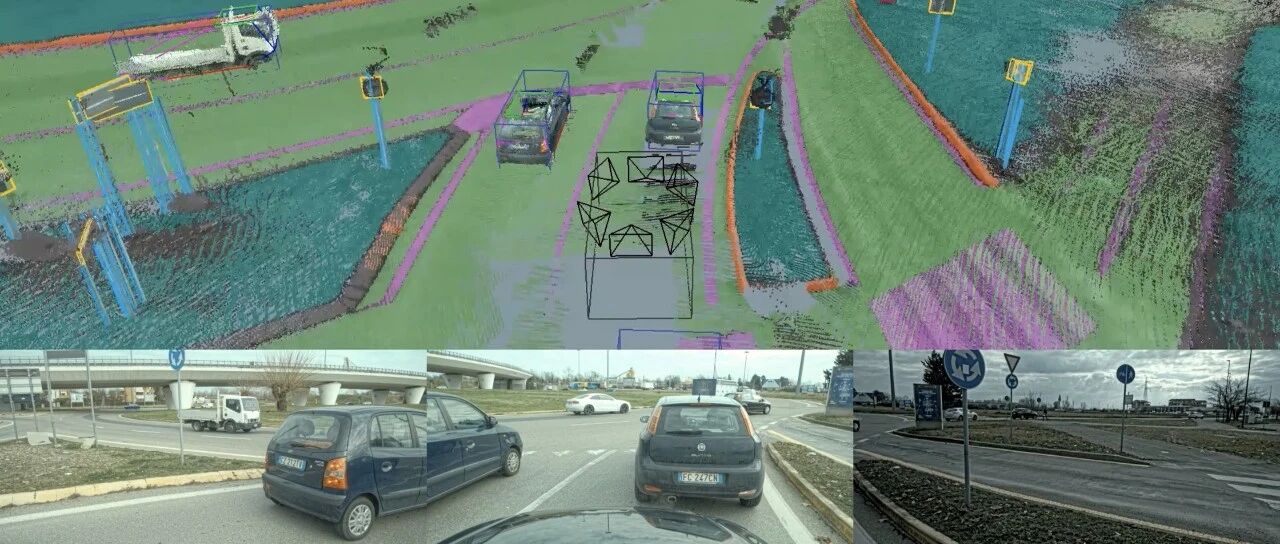
Core Viewpoint - The article discusses the DiffusionDrive model, which utilizes a truncated diffusion approach for end-to-end autonomous driving, emphasizing its architecture and the integration of reinforcement learning to enhance trajectory planning and safety [1]. Group 1: Model Architecture - DiffusionDriveV2 incorporates reinforcement learning constraints within a truncated diffusion modeling framework for autonomous driving [3]. - The model architecture includes environment encoding through bird's-eye view (BEV) features and vehicle status, facilitating effective data processing [5]. - The trajectory planning module employs multi-scale BEV features to enhance the model's ability to predict vehicle trajectories accurately [8]. Group 2: Trajectory Generation - The model generates trajectories by first clustering true future trajectories of the vehicle using K-Means to create anchors, which are then perturbed with Gaussian noise to simulate variations [12]. - The trajectory prediction process involves cross-attention mechanisms that integrate trajectory features with BEV features, enhancing the model's predictive capabilities [15][17]. - The final trajectory is derived from the predicted trajectory offsets combined with the original trajectory, ensuring continuity and coherence [22]. Group 3: Reinforcement Learning and Safety - The Intra-Anchor GRPO method is proposed to optimize strategies within specific behavioral intentions, enhancing safety and goal-oriented trajectory generation [27]. - A comprehensive scoring system evaluates generated trajectories based on safety, comfort, rule compliance, progress, and feasibility, ensuring robust performance in various driving scenarios [28]. - The model incorporates a modified advantage estimation approach to provide clear learning signals, penalizing trajectories that result in collisions [30]. Group 4: Noise and Exploration - The model introduces multiplicative noise to maintain trajectory smoothness, addressing the inherent scale inconsistencies between proximal and distal trajectory segments [33]. - This approach contrasts with additive noise, which can disrupt trajectory integrity, thereby improving the quality of exploration during training [35]. Group 5: Loss Function and Training - The total loss function combines reinforcement learning loss with imitation learning loss to prevent overfitting and ensure general driving capabilities [39]. - The trajectory recovery and classification confidence contribute to the overall loss, guiding the model towards accurate trajectory predictions [42].
业内团队负责人对Waymo基座模型的一些分析
自动驾驶之心· 2025-12-22 00:42
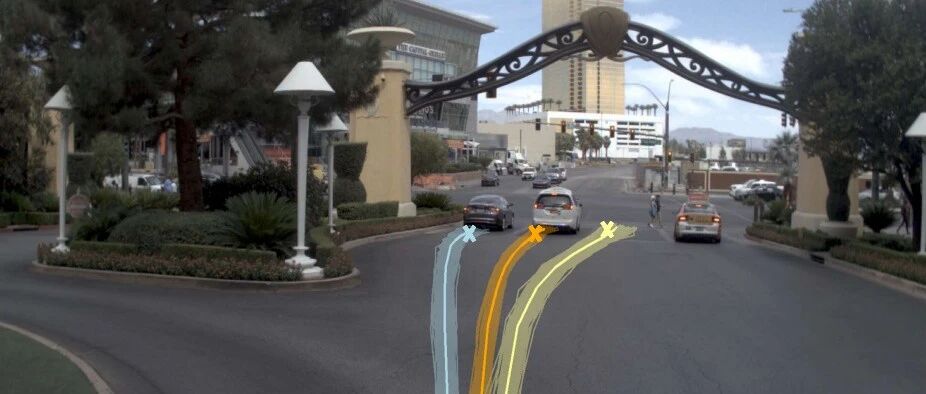
Core Insights - Waymo's latest blog discusses advancements in safety validation and explainability methods under a new end-to-end paradigm, the operational framework of its large-scale driving model, and the data flywheel concept [2][4][8] Group 1: Safety Validation and Explainability - The safety validation and explainability methods are closely tied to Waymo's foundational model, which operates on a dual system: a fast system focused on perception and a slow system based on a Vision-Language Model (VLM) [2][4] - The VLM is designed for complex semantic reasoning, utilizing rich camera data and fine-tuned on Waymo's driving data to handle rare and complex scenarios, such as navigating around a vehicle on fire [4][5][7] Group 2: Data Flywheel Concept - Waymo's data flywheel consists of an inner loop based on reinforcement learning for simulation-validation-vehicle integration and an outer loop based on real vehicle testing [8][11] - The insights from the data flywheel emphasize the importance of vehicle data mining and the reliance on world model-based generative simulations [12] Group 3: Foundation Model Applications - The foundational model serves three main purposes, including vehicle data extraction, cloud simulation, and evaluation for safety and explainability under the new paradigm [6][11] - The model's architecture allows for the transformation of vehicle trajectory prediction into a next-token prediction task, leveraging large language models for enhanced performance [5][11]

Weekend Round-Up: GM's CEO Succession, Tesla's FSD Boost, Trump's Air Taxi Strategy Waymo's Funding Round And Ford's EV Pivot
Benzinga· 2025-12-21 18:01
Group 1: General Motors - General Motors Co. is considering Sterling Anderson, its current Chief Product Officer and former Tesla Autopilot executive, as a potential successor to CEO Mary Barra [2] - Anderson's focus would be on enhancing hardware and software integration for GM's vehicles [2] Group 2: Tesla - Tesla's Full Self-Driving (FSD) system received positive feedback from South Korean lawmaker Lee So-young, who praised it as a game-changer [3] - The FSD system recently launched in South Korea, and there are plans for a European rollout [3] Group 3: Waymo - Alphabet Inc.'s autonomous driving unit, Waymo, is in discussions for a funding round that could exceed $10 billion, potentially valuing the company at $100 billion or more [5] Group 4: Ford - Ford Motor Company is reportedly shifting its focus away from electric vehicles (EVs) due to lower-than-expected demand [6] - RBC Capital Markets analyst Tom Narayan maintained a Sector Perform rating on Ford, commending the company's strategic restructuring [6] Group 5: Air Taxi Strategy - The Trump administration's strategy to initiate air taxi operations in the U.S. was unveiled by Transportation Secretary Sean Duffy, emphasizing the emergence of eVTOL aircraft and drones [4] - The strategy aims to position the U.S. as a leader in aviation and to compete with China [4]


凯文・凯利:意外之美|我们的四分之一世纪
Jing Ji Guan Cha Bao· 2025-12-19 09:58
Group 1 - The core theme of the article revolves around the unexpected developments in technology and innovation over the past 25 years, categorized into three main insights: "unexpected joy," "unexpected slowness," and "unexpected paths" [2] Group 2 - "Unexpected joy" refers to the rapid and extensive adoption of smartphones, which have redefined various industries by integrating multiple functionalities into a single device, driven by technological convergence [3] - The smartphone revolution was not merely a result of a single technological breakthrough but rather a combination of advancements in communication, chips, and software, which collectively addressed the demand for instant connectivity [3] Group 3 - "Unexpected slowness" highlights the slower-than-anticipated development of virtual reality (VR) technologies, which have not yet achieved the expected breakthrough despite high hopes, including from major companies like Apple [4][5] - The article emphasizes that the speed of technology adoption is influenced by the maturity of the entire system rather than isolated technological advancements, as seen in the case of VR and autonomous driving [5] Group 4 - "Unexpected paths" discusses the emergence of large language models (LLMs) as a surprising development in AI, which diverged from traditional AI approaches and demonstrated unexpected capabilities in logical reasoning through language [6][7] - The article also mentions the rise of the sharing economy, exemplified by companies like Airbnb and Uber, which transformed consumer habits and demonstrated that innovation often arises from cross-industry integration rather than conventional paths [7] Group 5 - The article concludes with reflections on Japan's past economic trajectory, suggesting that internal factors, rather than external pressures, were responsible for its stagnation, which serves as a cautionary tale for future developments in other countries, including China [8][9] - Looking ahead, the article posits that China's growth will be driven by open-source practices, confidence among tech innovators, and a culture that embraces global perspectives and innovation [9]

Chinese Self-Driving Tech Firm CiDi Lists in HK
Yahoo Finance· 2025-12-19 05:39
CiDi, a provider of autonomous driving technology for commercial vehicles, has listed its shares in Hong Kong. Its CEO Albert Sibo Hu discusses the company's growth and international expansion strategy. He speaks with Yvonne Man on "Bloomberg: The China Show." ...
Wayve最近的GAIA-3分享:全面扩展世界模型的评测能力......
自动驾驶之心· 2025-12-19 00:05
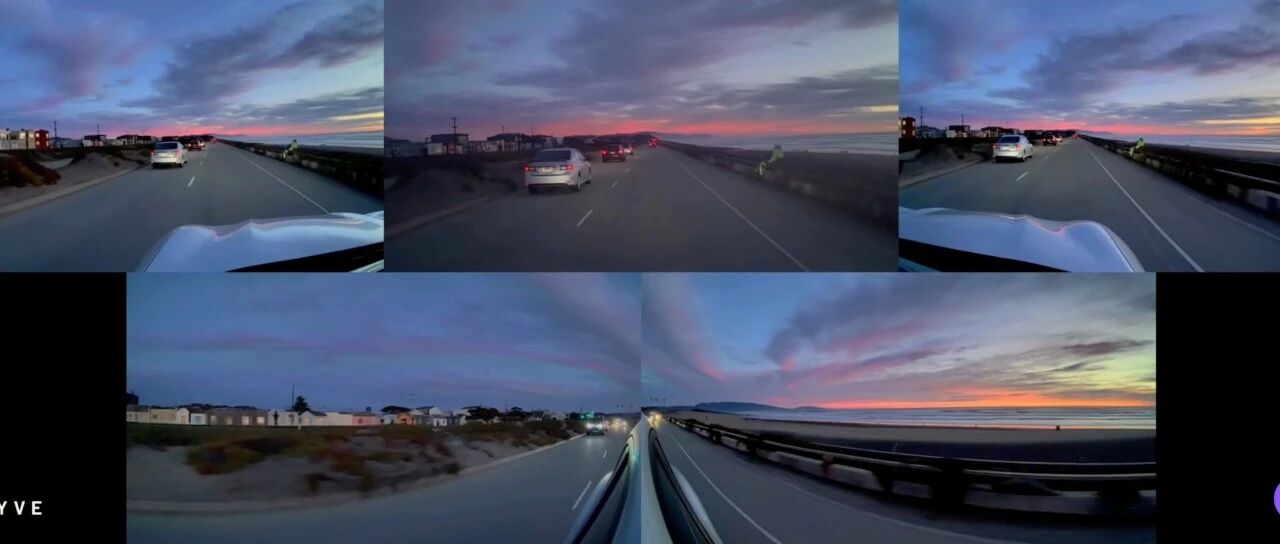
Core Insights - GAIA-3 represents a significant advancement in the evaluation of autonomous driving systems, transitioning world modeling from a visual synthesis tool to a foundational element for safety assessment [4][20] - The model combines the realism of real-world data with the controllability of simulations, enabling the generation of structured and purposeful driving scenarios for safety validation [6][20] Group 1: GAIA-3 Features - GAIA-3 is a powerful testing tool that can modify vehicle trajectories, weather conditions, and adapt to different sensor configurations [3] - It is built on a latent diffusion model with 15 billion parameters, doubling the video tokenizer size compared to its predecessor GAIA-2 [3][19] - The model allows for the generation of controlled variants of real-world driving sequences, maintaining consistency in the environment while altering vehicle behavior [6][8] Group 2: Safety and Evaluation - GAIA-3 addresses the limitations of traditional testing methods by generating systematic variations of critical safety scenarios, such as collisions, using real-world data metrics [7][8] - The model enables offline evaluation of autonomous systems by recreating unexpected events, allowing for quantitative testing of recovery capabilities in edge cases [9][20] - It emphasizes consistency in generated scenarios, ensuring that changes in vehicle behavior do not disrupt the physical and visual coherence of the environment [8][11] Group 3: Data Enrichment and Robustness - GAIA-3 enhances data coverage by generating structured variants from rare failure modes, facilitating targeted testing and retraining [12][13] - The model supports controlled visual diversity, allowing for measurable changes in appearance while keeping the underlying structure consistent, thus improving robustness assessments [11] - It can transfer scenarios across different sensor configurations, enabling data reuse across various vehicle projects without the need for paired collection [10] Group 4: Technical Advancements - The advancements in GAIA-3 are driven by increased scale, with training compute five times that of GAIA-2 and a dataset covering eight countries across three continents [16][19] - The model captures critical spatial and temporal structures, enhancing the fidelity of generated scenarios and improving the understanding of causal relationships in driving behavior [19][18] - GAIA-3's capabilities provide a reliable framework for structured, repeatable testing, marking a significant step towards scalable evaluation of end-to-end driving systems [20]
特斯拉再一次预判潮水的方向
自动驾驶之心· 2025-12-18 09:35
Core Viewpoint - Tesla's AI leader Ashok Elluswamy revealed the technical methodology behind Tesla's Full Self-Driving (FSD) in a recent article, emphasizing the choice of an end-to-end neural network model and addressing the challenges faced in practice [4][6]. Group 1: End-to-End Neural Network Model - Tesla's decision to adopt an end-to-end neural network model is driven by the need to address complex driving scenarios that cannot be pre-defined by rules, such as the "trolley problem" and second-order effects [6][10]. - The end-to-end model is described as a complete overhaul of previous architectures, fundamentally changing design, coding, and validation processes, leading to a more human-like driving experience [11][19]. - The model outputs driving instructions alongside interpretable "intermediate results," utilizing technologies like generative Gaussian splatting to create dynamic 3D models of the environment in real-time [8][17]. Group 2: VLA and World Model Concepts - VLA (Vision-Language-Action) is an extension of the end-to-end model that incorporates language information, allowing for a more visual representation of driving behavior [12][14]. - The world model aims to establish a high-bandwidth cognitive system based on video/image data, addressing the limitations of language models in understanding complex, dynamic environments [15][19]. - The relationship between end-to-end, VLA, and world models is clarified, with end-to-end serving as the foundation, VLA as an upgrade, and the world model as the ultimate form of understanding spatial dynamics [12][19]. Group 3: Industry Perspectives and Trends - The industry is divided into three main technical routes: end-to-end, VLA, and world model, with companies like Horizon Robotics and Bosch primarily adopting end-to-end due to lower costs and higher stability [13][19]. - VLA has faced criticism from industry leaders who argue that its reliance on language models may not be essential for effective autonomous driving, emphasizing the need for spatial understanding instead [16][19]. - Tesla's recent publication has reignited discussions in the industry, positioning the company at the forefront of current technological directions and providing a systematic analysis of practical applications [20].
Holiday rush: Hong Kong IPO market sparkles with busiest December in years
Yahoo Finance· 2025-12-18 09:30
Hong Kong's initial public offering (IPO) market is heading for its busiest month in four years, as a late rush of listings gathers pace despite the traditional slowdown around the Christmas and New Year holidays. At least 15 companies were set to go public by the end of December, with drug-discovery firm Insilico Medicine planning one of the largest deals in the final stretch of the year, according to data compiled by the Post. A total of 12 companies had already made their market debuts between December ...
从具身到自驾,VLA和世界模型的融合趋势已经形成......
自动驾驶之心· 2025-12-18 00:06
Core Insights - The article discusses the convergence of two leading directions in autonomous driving technology: Vision-Language-Action (VLA) and World Model, highlighting their distinct functionalities and potential for integration [1][2]. Summary of VLA - VLA, or Vision-Language-Action, is a multimodal model that integrates visual input, language commands, and action decisions, enabling vehicles to understand and execute driving instructions while providing explanations [4][5]. - The architecture of VLA consists of three layers: input (multimodal perception), middle (unified reasoning and decision-making), and output (vehicle control commands) [5][6]. - VLA aims to create a seamless interaction between human commands and driving actions, enhancing the interpretability and responsiveness of autonomous systems [6][11]. Summary of World Model - World Model is a generative spatiotemporal neural network that compresses high-dimensional sensor data into a compact internal state, allowing for future scenario predictions through internal simulations [8][9]. - Its architecture also follows a three-layer structure: input (multimodal temporal observations), core (state encoding and generative prediction), and output (future state representations) [9][10]. - The primary goal of World Model is to enable vehicles to simulate potential future scenarios, thereby improving decision-making and safety in complex driving environments [10][12]. Comparison of VLA and World Model - VLA focuses on human-vehicle interaction and interpretable end-to-end driving, while World Model emphasizes building a predictive and simulation-based system for future scenario analysis [11]. - The input for VLA includes sensor data and explicit language commands, whereas World Model relies on temporal sensor data and vehicle state assumptions [11]. - VLA outputs direct action control signals, while World Model provides future state representations rather than immediate driving actions [11]. Integration Potential - Both VLA and World Model share a common technical origin, aiming to address the fragmentation of traditional autonomous driving systems and enhance reasoning capabilities [12][16]. - The ultimate goal of both technologies is to equip autonomous systems with human-like cognitive and decision-making abilities [12][16]. - They face similar challenges in addressing corner cases and improving robustness, albeit through different methodologies [14][16]. Future Directions - The article suggests that the future of autonomous driving may lie in the deep integration of VLA and World Model, creating a comprehensive system that combines perception, reasoning, simulation, decision-making, and explanation [16][47]. - Companies like Huawei and XPeng are already exploring these integration paths, indicating a competitive landscape in the development of advanced autonomous driving technologies [47].