Batteries

Search documents
广发基金全面布局ETF核心赛道,邀您共享投资盛宴!
Sou Hu Cai Jing· 2025-12-15 02:20
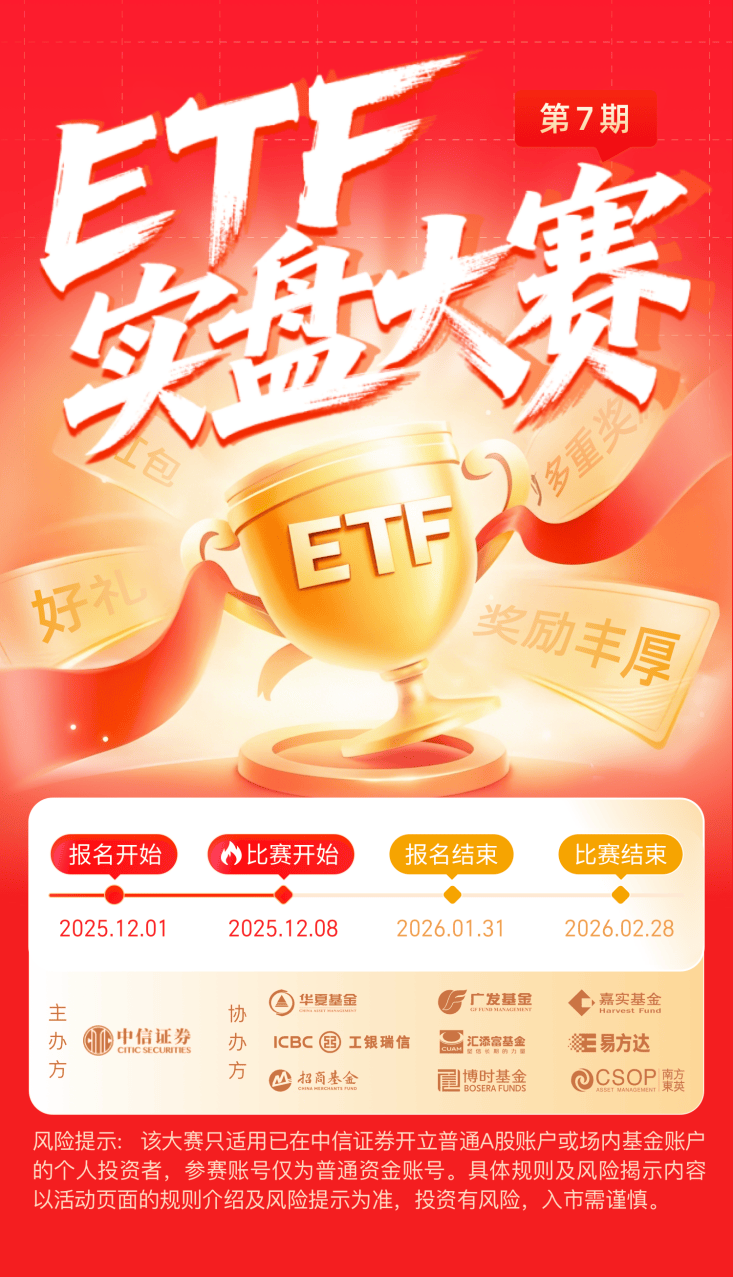
Core Viewpoint - Guangfa Fund has developed a comprehensive index product line since 2008, focusing on ETF products since 2011, covering multiple markets including A-shares, Hong Kong stocks, and US stocks [1] Group 1: ETF Competition - Guangfa Fund collaborates with CITIC Securities to participate in the 7th ETF live competition, which started registration on December 1, 2025, and will run until January 31, 2026, with the competition commencing on December 8, 2025 [1] - The competition provides a platform for investors to showcase their practical skills, exchange investment strategies, and compete for substantial rewards [1] Group 2: Featured ETF Products - Guangfa Fund selected four key products to support participants in the competition: 1. Hong Kong Stock Connect Technology ETF (159262) closely tracks the Hang Seng Stock Connect Technology Index, focusing on the TMT sector, with major weights in Tencent Holdings, Alibaba-W, and Xiaomi Group-W, accounting for nearly 45% of the index [4] 2. Hong Kong Innovative Drug ETF (513120) tracks the CSI Hong Kong Innovative Drug Index, with a 90% weight in biopharmaceuticals and chemical pharmaceuticals, making it one of the purest innovative drug indices available [4] 3. Growth Enterprise Board ETF Guangfa (159952) tracks the Growth Enterprise Board Index, consisting of 100 stocks with high market capitalization and liquidity, focusing on strategic emerging industries [4] 4. Battery ETF (159755) leads in scale among similar products, tracking the National Index for New Energy Vehicle Batteries, focusing on the battery manufacturing and materials sector, with a solid-state content of nearly 60% [5] Group 3: Future Plans - Guangfa Fund aims to continue deepening its focus on index and ETF sectors, collaborating with partners like CITIC Securities to enhance the index investment ecosystem and help investors share in the long-term growth of the capital market [5]

中国电池与新能源 -市场反馈要点(新加坡、吉隆坡、欧洲)-China batteries and new energy - Marketing takeaways – Singapore_KL_Europe_ Marketing takeaways – Singapore_KL_Europe
2025-12-15 01:55
Summary of Key Points from the Conference Call Industry Overview - The focus of discussions was on the lithium battery supply chain, renewable energy (solar, wind, and power grid), and Internet Data Center (IDC) development in China, indicating a growing interest in Energy Storage Systems (ESS) batteries and grid equipment [1][2] Core Insights - **ESS Demand Outlook**: Investors are optimistic about the demand for ESS, particularly for 2026, but express concerns regarding the sustainability of this growth in the mid- to long-term, especially in China where provincial subsidies play a significant role [2] - **CATL's Market Position**: Contemporary Amperex Technology Co., Ltd. (CATL) is viewed as a key beneficiary in the battery supply chain due to its dominant market share in ESS battery cell shipments. Investors are interested in CATL's competition with Korean manufacturers in the US market and the implications of the One Big Beautiful Bill Act (OBBBA) [3] - **Lithium Price Concerns**: There is a rising concern among investors regarding the outlook for lithium prices, especially following recent price increases for lithium carbonate and other battery materials. This has raised worries about potential margin pressures for battery cell manufacturers if they cannot pass on higher costs [3] Company-Specific Insights - **Wuxi Lead Intelligent**: There is heightened interest in battery equipment manufacturers like Wuxi Lead Intelligent, with investors inquiring about capital expenditure plans and trends in unit capex [4] - **Power Grid Equipment**: The power grid equipment sector in China is preferred over renewable energy, driven by strong domestic grid investment growth and overseas expansion opportunities. Investors are cautious about current valuations and are particularly interested in companies with significant overseas exposure [5] - **China IDC Market**: While there is long-term interest in the China IDC market, investors recognize that chip access is a near-term bottleneck for AI spending by Chinese Cloud Service Providers (CSPs). The demand for faster data center delivery has resulted in lower order visibility for third-party IDC operators [6] Additional Considerations - **Investor Queries**: Investors are curious about the order book, customer mix, and future equity financing timelines for DayOne, an unlisted entity in which GDS Holdings holds a 35.6% stake [8] - **Valuation Methodologies**: Target prices for various companies are based on different methodologies, including P/E ratios and market cap assessments, reflecting the analysts' expectations for future earnings growth [14][20][23][27] Risks Highlighted - **General Risks**: Potential risks affecting target prices include oversupply in the EV battery market, intensified competition, and regulatory changes impacting the e-cigarette market in China [15][20][23] - **Specific Risks for GDS Holdings**: Risks include lower-than-expected data center demand related to AI, slower overseas expansion, and supply chain disruptions due to geopolitical tensions [27] This summary encapsulates the key points discussed in the conference call, highlighting the current landscape and future outlook for the battery and energy sectors, as well as specific company insights and associated risks.




Dear QuantumScape Stock Fans, Mark Your Calendars for December 22
Yahoo Finance· 2025-12-11 18:27
Core Insights - QuantumScape, valued at a market cap of $7.5 billion, specializes in solid-state lithium-metal batteries for electric vehicles and will transition from the New York Stock Exchange to Nasdaq on December 23 [1][2] Company Developments - The move to Nasdaq is framed as an opportunity to better serve shareholders and aligns QuantumScape with tech-focused companies like Tesla [2][4] - QuantumScape has achieved a significant milestone by unveiling its first real-world vehicle application and generating $12.8 million in customer billings during the third quarter, marking the first time the company has invoiced customers [5][8] - The company showcased its QSE-5 battery technology in the Ducati V21L electric race motorcycle at IAA Mobility in Munich, indicating a shift from laboratory testing to real-world applications [6][7] Production and Future Goals - QuantumScape shipped Cobra-based QSE-5 B1 sample cells during the quarter, indicating progress toward automotive-grade production standards [7] - The company is collaborating with PowerCo to achieve series production in a vehicle by the end of the decade, specifically by December 2029 [7]

QS Narrows 2025 Loss Outlook: What's Driving the Improvement?
ZACKS· 2025-12-11 16:41
Core Insights - QuantumScape Corp. has narrowed its full-year 2025 adjusted EBITDA loss forecast to $245-$260 million from a previous range of $250-$270 million, indicating improved cost control and execution [1] - The company generated over $12 million in customer billings, marking its first step into monetization after extensive R&D efforts [2] - Operating expenses in Q3'25 decreased to $115 million from $130 million year-over-year, while capital expenditures remained low at $9.6 million [3] - QuantumScape's new high-throughput Cobra separator process has been successfully implemented, supporting shipments of Cobra-based QSE-5 cells [4] - With $1 billion in cash, QuantumScape's financial runway extends through 2029, aided by an expanded partnership with Volkswagen's PowerCo [5] - The narrowed loss guidance reflects the company's increasing discipline and progress towards scaling its capital-light model [6] Competitive Context - Competitors like Solid Power and SES AI are also making strides in cost control and early commercialization [7] - Solid Power reduced its Q3 operating expenses to $29 million from $33.4 million, narrowing its operating loss to $24.4 million [8] - SES AI raised its 2025 revenue outlook to $20-25 million and improved its cost structure, with Q3 operating expenses falling to $22.3 million from $34.2 million [9] Market Performance - QuantumScape's shares have increased approximately 145% year-to-date, contrasting with a 2% decline in the industry [10] - The company has an average brokerage recommendation of 3.64 on a scale of 1 to 5, indicating a mixed outlook from analysts [13]

美股三大指数开盘涨跌不一,甲骨文跌超14%
Feng Huang Wang Cai Jing· 2025-12-11 14:36
Market Overview - The U.S. stock market opened mixed with the Nasdaq down 0.60%, the Dow Jones up 0.19%, and the S&P 500 down 0.38% [1] - Oracle's stock fell over 14% as the company's Q2 revenue and cloud business income did not meet market expectations [1] - Disney's stock rose 0.4% following the announcement of a $1 billion equity investment in OpenAI [1] - Most popular Chinese stocks declined, with the Nasdaq Golden Dragon China Index down 0.43%, and Alibaba, iQIYI, and Xpeng Motors each falling over 2% [1] Company News - Microsoft plans to release a new AI model that aims to elevate the capabilities of intelligent agents [2] - Oracle's CEO stated that external estimates of the company's project spending are overestimated, with actual funding needs expected to be significantly lower than the projected $100 billion [3] - Samsung is ramping up preparations to produce Tesla's AI5 chips in the U.S. by recruiting experienced engineers to address complex wafer fabrication challenges [3] - The European Commission approved €623 million ($729.16 million) in state aid for Germany to support the construction of two semiconductor manufacturing plants [4] - SK On and Ford have agreed to terminate their joint venture structure in the U.S., with both companies independently operating their respective BlueOval SK production facilities [5] - Novo Nordisk's stock has fallen back to levels seen in 2021, with analysts cautiously optimistic about the company's valuation recovery despite a 50% drop this year [6]


South Korea's SK On, Ford Motor to end US battery joint venture
Reuters· 2025-12-11 07:23
Core Viewpoint - SK On has decided to terminate its joint venture with Ford Motor for two battery factories in the United States [1] Company Summary - SK On is a South Korean battery manufacturer [1] - The joint venture with Ford was focused on establishing battery production facilities in the U.S. [1] Industry Summary - The decision reflects a significant shift in the electric vehicle battery manufacturing landscape [1] - The termination of the joint venture may impact the supply chain and production capabilities for electric vehicle batteries in the U.S. [1]

固态电池_中试线样品测试进行中;专家电话会要点
2025-12-10 12:16
Summary of Key Points from the Conference Call on Solid-State Batteries Industry Overview - The focus is on the solid-state battery (SSB) industry, particularly in China, where companies are participating in the Ministry of Industry and Information Technology's (MIIT) Rmb6 billion SSB project [2][38]. Core Insights and Arguments - **Market Performance**: Chinese solid-state battery thematic stocks have surged by 50-110% since August 1, 2025, outperforming the CSI300 index, which increased by 17% [2]. - **Testing Challenges**: Pilot line sample testing is currently underway, but results may not be satisfactory. An industry expert indicated that many samples may not pass safety tests due to issues with sulfide electrolytes, which decompose at around 200°C and can ignite [4][10][12]. - **Safety Concerns**: The safety features of all-solid-state batteries (ASSB) are under scrutiny. The expert noted that ASSBs may not provide significant safety advantages over traditional liquid lithium batteries, raising questions about their necessity for electric vehicles (EVs) [4][12]. - **Production Viability**: The commercialization of ASSBs is viewed as a distant goal, with material costs being over ten times higher than liquid-based systems. The expert predicts limited deployment in premium EVs by 2027, with widespread adoption unlikely before 2030 [12][40]. - **Government Support**: There are concerns that government support for SSB research may decline following the initial Rmb6 billion project due to emerging challenges [6][12]. Key Players - **CATL**: Identified as the leading domestic contender in ASSB technology, with over 2,000 dedicated researchers and a focus on addressing various failure modes. CATL's innovations include a condensed battery with an energy density of 500 Wh/kg and self-forming anode technology that could increase energy density by up to 60% volumetrically and 50% gravimetrically [6][12][16]. - **Other Participants**: Companies involved in the MIIT's ASSB program include BYD, Geely, and FAW for sulfide-based ASSB, and SAIC Qingtao and Welion for polymer-based ASSB [10][12]. Regulatory Developments - **Emerging Standards**: The China Automotive Engineering Society published a standard for all-solid-state batteries in May 2025, aiming to clarify definitions and testing methods for different battery types [6][30][31]. - **Technical Requirements**: The MIIT's SSB program has set comprehensive metrics for participating companies, including energy density targets of 400 Wh/kg and safety tests that must withstand temperatures above 200°C [11][44]. Market Trends - **Shift to Semi-Solid-State Batteries**: Many companies are pivoting towards semi-solid-state solutions, which face lower technical barriers but do not significantly improve energy density compared to liquid batteries [12]. - **Anode-Free Technology**: CATL's self-forming anode technology is highlighted as a significant advancement, allowing for higher energy densities and flexibility across various battery systems [16][24]. Conclusion - The solid-state battery industry in China is experiencing rapid developments, but significant technical and safety challenges remain. While government support and market enthusiasm are present, the path to widespread commercialization is fraught with obstacles, and the future of ASSBs in the EV market remains uncertain.
Enovix Announces December Investor Events
Globenewswire· 2025-12-09 21:15
Core Viewpoint - Enovix Corporation is actively engaging with investors through upcoming events, showcasing its advancements in high-performance battery technology and recent product shipments [1]. Group 1: Investor Events - Enovix will participate in a Fireside Chat with CEO Dr. Raj Talluri on December 10, 2025 [1]. - The company will also be featured at the Annual Jefferies Virtual Battery Tech Conference on December 12, 2025, discussing various business topics including smartphone engagement [1]. Group 2: Product Development - Enovix has successfully shipped its latest AI-1 battery samples to its lead customer, marking a significant advancement in its product offerings [1]. Group 3: Company Mission and Innovation - Enovix aims to deliver high-performance batteries that enhance the potential of various technology products, including IoT, mobile, and computing devices [2]. - The company employs a materials-agnostic approach to battery development, focusing on performance and safety [2]. Group 4: Company Background - Enovix is headquartered in Silicon Valley and has facilities in India, Korea, and Malaysia [3].


中国为何会扩大全球制造业出口的领先优势-Asia Economics-Why China will widen its lead in global manufacturing exports
2025-12-08 02:30
Summary of Key Points from the Conference Call Industry Overview - **Industry**: Global Manufacturing - **Company**: Morgan Stanley Asia Limited Core Insights and Arguments 1. **China's Dominance in Global Manufacturing**: China accounts for 15% of global exports and 28% of global manufacturing GDP, maintaining a trade surplus with 177 out of 225 economies [2][111] 2. **Projected Export Market Share**: China's global export market share is projected to increase to 16.5% by 2030, up from 15% currently, driven by its strengths in advanced manufacturing and emerging sectors like EVs, batteries, and robotics [1][4][92] 3. **Export Growth in Key Segments**: From 2019 to 2024, China's export growth outpaced global growth in 11 out of the 15 fastest-growing export segments, capturing 19% of the incremental export market revenue in these categories [2][23] 4. **Geopolitical Concerns and Diversification Efforts**: Trade partners are concerned about China's dominance, leading to efforts to diversify supply chains away from China, particularly by the US and EU [3][4] 5. **China's Strategic Industrial Policies**: China's industrial policy is characterized by robust execution, financial backing, and regulatory support, enabling rapid scaling of new industries [9][10] 6. **Talent Pool and Education**: The number of university graduates in China has increased by 42% from 2019 to 2024, with a significant share in STEM fields, enhancing the country's manufacturing capabilities [10][18] 7. **Automotive Sector Evolution**: China has transformed from a net importer of auto parts to the world's largest exporter of autos, with a trade surplus in this sector growing from US$40 billion in 2017 to US$116 billion in 2025 [56] 8. **Innovation in EVs**: Chinese companies are leading in EV production and battery manufacturing, with over 50% of global EVs sold being from China [56][57] 9. **Impact of Global Industrial Policies**: A resurgence in global industrial policies has been noted, with 75% of major economies implementing trade and industry-oriented interventions [58][59] Additional Important Insights 1. **China's Export Market Share Dynamics**: While China's share in US imports has decreased, its global export market share (excluding the US) has risen from 13.2% in 2017 to 17% currently [75][111] 2. **Challenges and Risks**: Risks include persistent deflationary pressures due to overcapacity and the effectiveness of protectionist measures that may hinder China's ability to maintain its market share [106][110] 3. **Regional Implications**: Countries like Japan and Korea face increased competitive pressure, while Vietnam, Malaysia, and India may benefit from supply chain diversification but remain dependent on China for critical inputs [96][98][99] This summary encapsulates the key points discussed in the conference call regarding China's position in global manufacturing and the implications for the industry and other economies.
聚焦高质量发展|科技创新成果涌现 福建加速拓宽转化路径
Xin Hua Wang· 2025-12-05 02:14
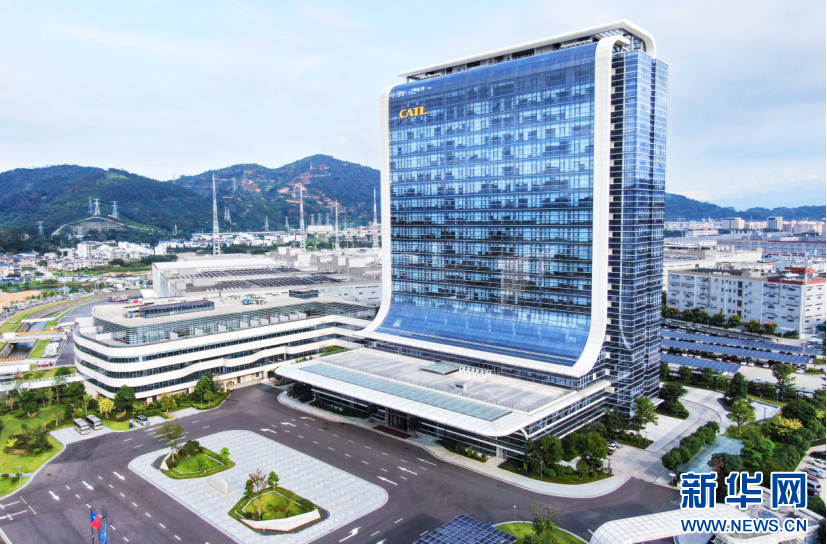
Core Insights - Fujian is focusing on building a national technology innovation province during the 14th Five-Year Plan, implementing an innovation-driven development strategy to enhance high-quality technology supply and accelerate the integration of technological and industrial innovation [1][5] Group 1: Role of Private Enterprises - Private enterprises are the most active pioneers in Fujian's technology innovation landscape, exemplified by CATL's mass production of its fifth-generation lithium iron phosphate battery, which has led to significant technological advancements and economic contributions [2][4] - Since 2020, CATL has overcome 54 core technologies and applied for 2,178 patents, generating a production value of 22 billion yuan [2] - Over 60% of R&D funding from large-scale private enterprises in Fujian is directed towards research and experimental development, with private enterprises leading or participating in over 70% of provincial technology projects [4] Group 2: Innovation Platforms - Fujian has established a robust technology innovation platform system, investing over 12 billion yuan to build eight provincial innovation laboratories since 2019, which have become core strategic technology forces [5][6] - The national-level innovation platforms have significantly enhanced the province's technological capabilities, with 13 national key laboratories and 31 national enterprise technology innovation centers established during the 14th Five-Year Plan [7] Group 3: Technology Transfer and Application - The province is actively addressing challenges in technology transfer, with successful collaborations between universities and construction firms leading to the development of new materials that enhance construction durability [8] - Collaborative innovation mechanisms have proven effective, with significant investments and new production values generated from partnerships between research institutes and local enterprises [9] - The total transaction volume of technology contracts in Fujian reached 38.784 billion yuan in 2024, marking a 111% increase since 2020, indicating a rapid acceleration in technology transfer [9]