
二手物品交易

Search documents
杭州一家“以物易物”的小店走红,90后老板:交换比交易更有温度
Sou Hu Cai Jing· 2025-12-25 14:10
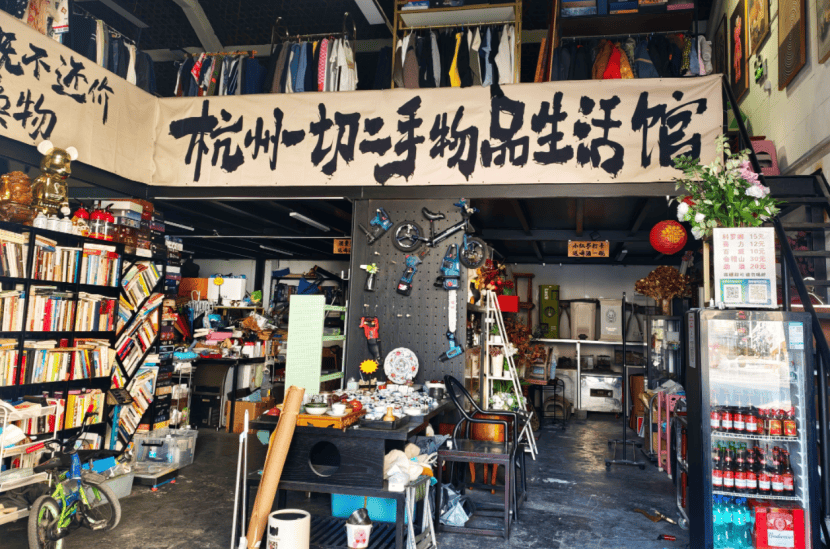
Core Viewpoint - The store "Everything Secondhand" in Xiaoshan District, Hangzhou, has gained popularity on social media for its unique trading method of "bartering" secondhand goods, which has sparked discussions among consumers [1][10]. Group 1: Business Model and Goals - The store offers over 2,000 categories of secondhand items, allowing customers to either purchase or exchange goods [1][3]. - The owner, A Jie, aims to accumulate 10,000 types of secondhand products to create a unique "circular kingdom" that reflects the daily life of Hangzhou residents [3][10]. - A Jie transitioned from selling luxury secondhand goods to a broader range of secondhand items, believing that every item has its own value and can serve a greater purpose [3][10]. Group 2: Popular Items and Consumer Behavior - Popular items in the store include practical goods like power strips, eyelash stickers, and various household items, with a dedicated section for low-cost items priced between 1-5 yuan [5][7]. - Consumers are attracted to the uniqueness of secondhand items, with some customers expressing interest in specific pieces like handmade teapots [7][10]. - The store's "bartering" model appeals to two main customer groups: those seeking a fun experience and those who support eco-friendly practices by exchanging unused items [10][12]. Group 3: Bartering Process - The bartering process involves A Jie assessing the value of items brought in by customers, allowing them to select equivalent items from the store [10]. - The store has seen a variety of exchanges, including clothing, household appliances, and books, indicating a diverse customer base and interest in sustainable practices [10][12].

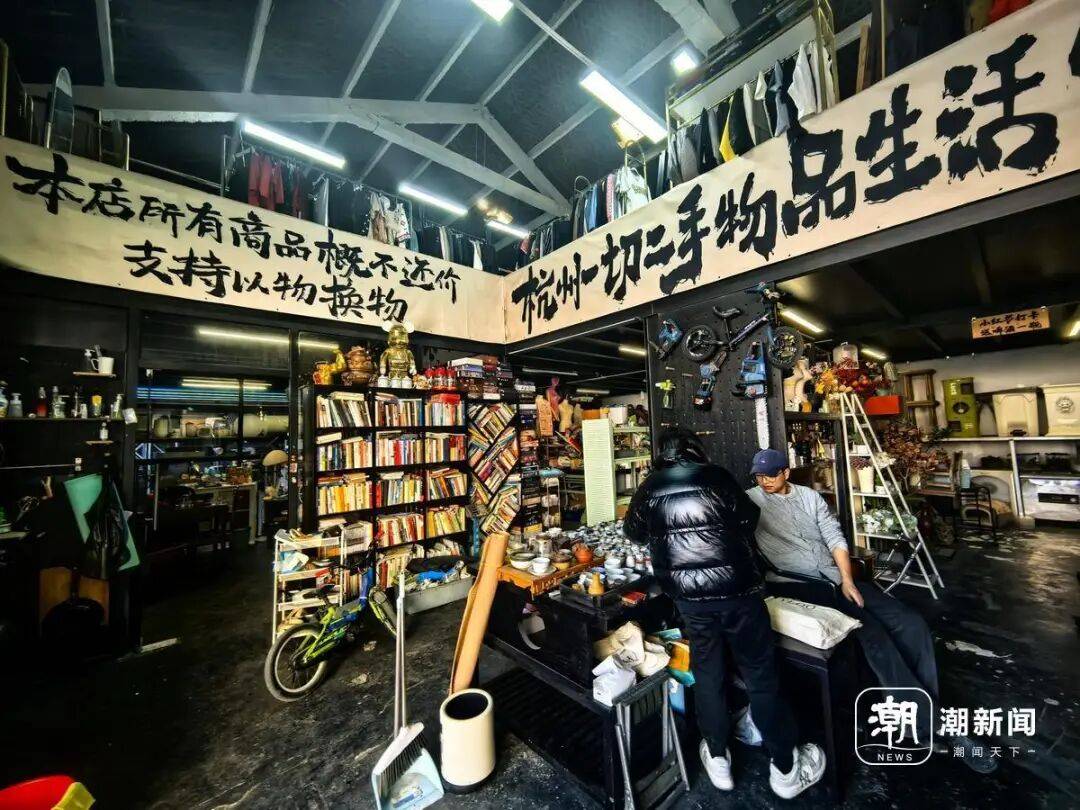
杭州90后小伙创二手王国:1800余个品类旧物撑起循环消费 梦想是为残疾人搭“就业桥”
Sou Hu Cai Jing· 2025-12-23 14:18
Core Insights - The article highlights the unique business model of "Hangzhou Everything Second-hand Goods Living Museum," which combines second-hand goods trading with a strong social mission to employ disabled individuals [1][9] Group 1: Business Model - The store operates on a "circular economy" philosophy, focusing on reusing and recycling items rather than traditional waste disposal [3][5] - The founder, Zhao Jinji, emphasizes that each item has value and should not be discarded, aiming to create a marketplace where resources can flow and be reused [3][5] - The store features a diverse range of over 1,800 second-hand items, from furniture to children's shoes, all priced based on practical value rather than brand [5][10] Group 2: Social Impact - The business aims to employ over half of its workforce from disabled individuals, providing them with meaningful job opportunities [9] - Zhao Jinji plans to replicate the "second-hand + charity" model in other cities and engage communities in environmental education [9][10] - The store also facilitates a barter system, allowing customers to exchange items based on their condition and demand, promoting resource sharing [7][9] Group 3: Market Position - In a market dominated by trendy cafes and retail stores, "Everything Second-hand" stands out by attracting customers through authenticity and a commitment to environmental sustainability [10] - The store has gained popularity as a "resource hub," where customers not only find affordable goods but also connect with a broader environmental mission [7][10]
欧洲成为南京第三大投资来源地,百余家经贸组织再聚南京
Nan Jing Ri Bao· 2025-09-18 03:10
Group 1: Event Overview - The fifth Innovation Fair in Nanjing focuses on cross-border trade, investment, and cooperation in key sectors such as smart manufacturing, software information, artificial intelligence, and biomedicine [1][2] - Over 100 trade organizations from 14 countries, including Germany, the Netherlands, Spain, Italy, and the UK, participated in the event [1] - Europe has become the third-largest source of investment in Nanjing, with a total of 1,224 investment projects from European companies [1][8] Group 2: European Companies' Objectives - European companies are seeking diverse opportunities, including market access, technology collaboration, and supply chain integration, reflecting China's growing strategic importance in the global economy [2] - Neways, a leading electronic manufacturing service provider from the Netherlands, aims to expand its presence in China, particularly in industrial, medical, and semiconductor sectors [2] - Hungarian company ZhiGu Medical Technology is developing AI products for medical diagnostics, planning to establish distribution channels in China ahead of its 2026 product launch [2] Group 3: Innovative Business Models - Spanish company Obosonin, a second-hand goods trading platform, is exploring partnerships with local suppliers in Nanjing to enhance its circular economy model [3] - Greek company e-restaurants is looking for joint venture opportunities with Chinese firms to expand its online food ordering system in the digital dining market [3] - Asclepius Digital Health from Greece is interested in integrating traditional Chinese medicine with modern health services, aiming to expand its market presence in China [4] Group 4: Industry Insights - The event highlights the shift in trade dynamics, where foreign companies are increasingly seeking to enter the Chinese market, contrasting with the past when Chinese brands aimed to expand abroad [3] - The complexity of establishing partnerships is noted, with communication and trust-building often taking one to two years, emphasizing the importance of direct engagement through events like this [5] - Experts suggest that while the European market presents high-value opportunities for Chinese companies, they must enhance their cross-cultural collaboration skills to navigate differences in business models and cultural perspectives [5] Group 5: Future Prospects - The event underscores the deepening ties between Nanjing and Europe, with Nanjing having established friendly relations with 43 cities across 22 European countries [8] - Nanjing invites European companies to consider it as a key destination for investment and market expansion, leveraging its solid industrial foundation and innovative resources [8] - The city aims to position itself as a crucial hub for European companies looking to enter the Chinese market and connect globally [8]