
插排

Search documents
额敏县农资“护春耕”、消费“保新春”市场监管在行动
Zhong Guo Shi Pin Wang· 2026-02-11 11:39
Core Viewpoint - The article emphasizes the importance of ensuring the quality of agricultural materials and consumer goods ahead of the Spring Festival, aiming to protect the safety of rural consumers and enhance their awareness of product quality and rights protection [1][2]. Group 1: Agricultural Materials Quality Assurance - The market supervision administration in Emin County initiated the "Entering Thousands of Enterprises to Assist Tens of Thousands of Households" campaign to promote quality safety of agricultural materials [1]. - The campaign focused on educating farmers about quality identification techniques and standards for purchasing agricultural products such as agricultural film, drip irrigation belts, and fertilizers [1]. - Key points highlighted include checking product certificates, testing reports, production dates, and trademarks to prevent the purchase of unqualified or substandard agricultural materials [1]. Group 2: Consumer Goods Safety Awareness - The initiative also addressed consumer goods frequently purchased during the Spring Festival, such as toys and power banks, emphasizing the importance of 3C certification, safety warning labels, and quality assurance [1]. - Parents were advised to be cautious of toys without safety labels and low-quality materials, which pose potential risks [1]. - The campaign included distributing promotional materials, face-to-face Q&A sessions, and case studies to provide comprehensive consumer guidance [1]. Group 3: Consumer Rights Protection - The program aimed to enhance the rights protection capabilities of rural consumers, encouraging them to retain shopping receipts and report quality issues or disputes through the 12315 complaint hotline [1][2]. - The overall goal was to create a safe, reliable, and orderly market environment for rural consumers, ensuring a joyful Spring Festival and smooth agricultural activities for farmers [2].
春节回家行李怎么打包?哪些东西不能带?一份攻略说明白
Yang Shi Xin Wen· 2026-02-06 05:16
Group 1 - The article discusses the regulations regarding what items can be brought on trains during the Spring Festival travel season, including specific allowances for items like cigarettes and fishing rods [1][2][4] - Passengers are allowed to carry up to 50 cigarettes and two lighters, while fishing rods must not exceed 130 cm for high-speed trains and 200 cm for regular trains [1][2] - Various food items, such as edible oils and seafood, are permitted as long as they are properly sealed and packaged, while flammable substances like gasoline and paint are prohibited [5][7][9] Group 2 - Tips for packing efficiently for travel are provided, emphasizing the use of space in luggage and techniques for rolling clothes to maximize capacity [10][12][14] - Specific packing methods for bulky items like winter coats are outlined, including folding techniques to save space [20][22] - Guidelines for carrying oversized or special items, such as wheelchairs and strollers, are mentioned, indicating that these do not count towards standard luggage limits [24][26] Group 3 - Regulations on carrying sharp objects are specified, with a maximum blade length of 6 cm for knives, while larger tools should be checked in [28][29] - The article highlights the importance of adhering to battery regulations for power banks, which must be under 100Wh and clearly labeled [32] - It is advised to seal strongly scented foods to prevent odors during travel, with restrictions on carrying such items on planes [33]


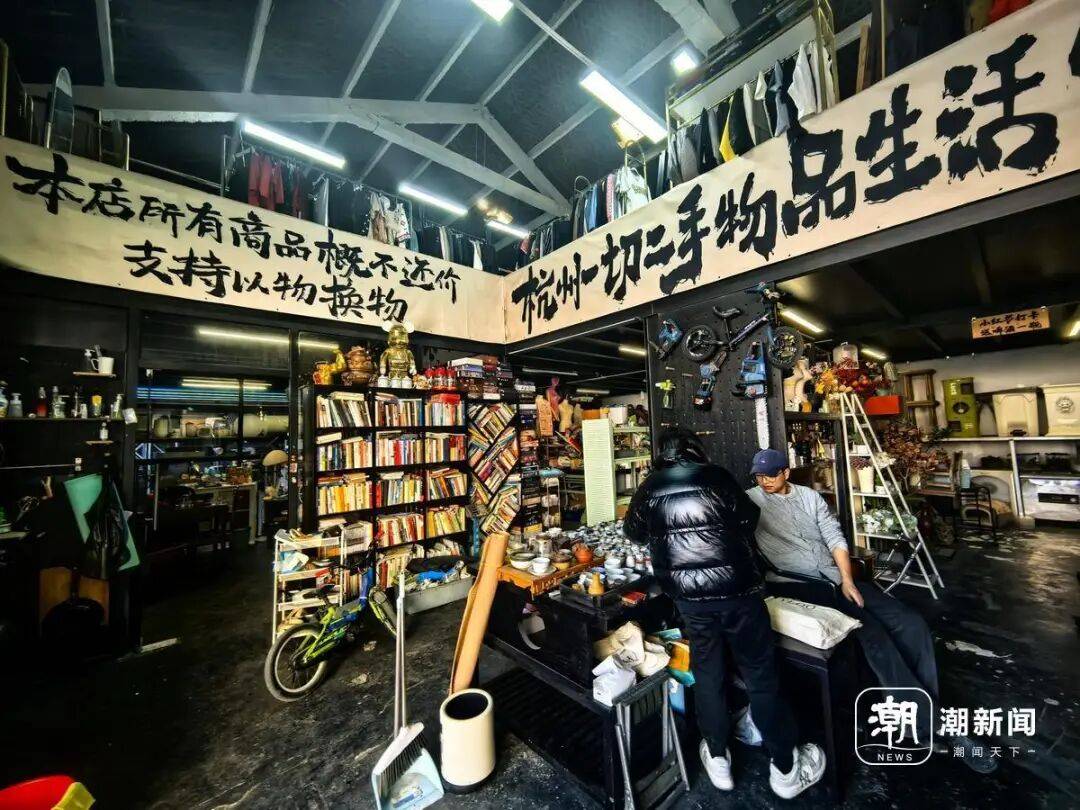
杭州一家“以物易物”的小店走红,90后老板:交换比交易更有温度
Sou Hu Cai Jing· 2025-12-25 14:10
Core Viewpoint - The store "Everything Secondhand" in Xiaoshan District, Hangzhou, has gained popularity on social media for its unique trading method of "bartering" secondhand goods, which has sparked discussions among consumers [1][10]. Group 1: Business Model and Goals - The store offers over 2,000 categories of secondhand items, allowing customers to either purchase or exchange goods [1][3]. - The owner, A Jie, aims to accumulate 10,000 types of secondhand products to create a unique "circular kingdom" that reflects the daily life of Hangzhou residents [3][10]. - A Jie transitioned from selling luxury secondhand goods to a broader range of secondhand items, believing that every item has its own value and can serve a greater purpose [3][10]. Group 2: Popular Items and Consumer Behavior - Popular items in the store include practical goods like power strips, eyelash stickers, and various household items, with a dedicated section for low-cost items priced between 1-5 yuan [5][7]. - Consumers are attracted to the uniqueness of secondhand items, with some customers expressing interest in specific pieces like handmade teapots [7][10]. - The store's "bartering" model appeals to two main customer groups: those seeking a fun experience and those who support eco-friendly practices by exchanging unused items [10][12]. Group 3: Bartering Process - The bartering process involves A Jie assessing the value of items brought in by customers, allowing them to select equivalent items from the store [10]. - The store has seen a variety of exchanges, including clothing, household appliances, and books, indicating a diverse customer base and interest in sustainable practices [10][12].
一季度广东外贸进出口同比增4.2% 高于全国2.9个百分点 实现良好开局
Nan Fang Ri Bao Wang Luo Ban· 2025-04-18 07:37
Core Insights - Guangdong's foreign trade in Q1 2023 reached 2.14 trillion yuan, a 4.2% increase year-on-year, outperforming the national growth rate of 2.9% [1] - Exports amounted to 1.34 trillion yuan, growing by 1.4%, while imports were 798.15 billion yuan, increasing by 9.3% [1] Group 1: Trade Performance - The import and export scale achieved a historical high for the same period, contributing 65.2% to the national growth [2] - Private enterprises showed enhanced vitality, with their import and export value reaching 1.36 trillion yuan, a growth of 4.8%, accounting for 63.4% of Guangdong's total [2] - Foreign-invested enterprises also performed well, with a 5.3% increase in import and export value to 677.03 billion yuan [2] Group 2: Trade Partners - Guangdong achieved positive growth in trade with its top five partners, including ASEAN, Hong Kong, EU, USA, and Taiwan, with ASEAN leading at a 6.9% increase [5] - The relationship with ASEAN has strengthened since it became China's largest trading partner in 2020, with many Guangdong enterprises actively seizing opportunities in the ASEAN market [5][6] Group 3: Product Export Performance - Mechanical and electrical products exports reached 904.27 billion yuan, a growth of 6.6%, making up 67.5% of total exports [7] - Notably, electric vehicle exports surged by 107.9%, reflecting the ongoing trend of electrification and intelligence in the automotive sector [7] - Guangdong customs have implemented measures to facilitate the export of automotive parts, significantly reducing costs and improving efficiency [8] Group 4: Government Support - The Guangdong government has introduced 13 measures to stabilize and enhance foreign trade, providing support for overseas exhibitions, financing, and export credit insurance [4] - During the Canton Fair, Guangzhou launched ten tax service measures to facilitate enterprises' international operations [4] Group 5: Innovation and Future Outlook - The Canton Fair showcased a variety of innovative mechanical and electrical products, highlighting Guangdong's strengths in the global supply chain [9] - The Guangdong Provincial Department of Commerce plans to host a global expo for smart machinery and electronic products, leveraging the advantages of the Guangdong-Hong Kong-Macao Greater Bay Area [9]