
代糖行业

Search documents
代糖行业深度报告-阿洛酮糖开启功能代糖新时代
2026-03-20 02:27
Summary of the Conference Call on the Allulose Industry Industry Overview - The report focuses on the **allulose industry**, highlighting its potential as a functional sugar substitute and its regulatory journey in various markets, particularly in the U.S., Europe, and China [1][2][3]. Key Points and Arguments Allulose Characteristics and Market Advantages - Allulose exhibits **Maillard reaction properties**, allowing it to replicate caramel color and aroma, addressing distortion issues in baked goods and candies, with broader application boundaries than stevia and erythritol [1]. - The FDA excluded allulose from the "added sugars" label in 2019, setting a market explosion point, leading to a **200% increase** in new products in North America [1]. - By 2025, China is expected to approve allulose as a new food ingredient, with a projected **7 trillion yuan** market for sugar-sweetened beverages transitioning to sugar substitutes [1][3]. - Production costs have decreased from **$65,000/ton** to approximately **20,000 yuan/ton**, making it commercially viable in the **5-10 yuan** premium beverage price range [1]. Regulatory Pathways and Challenges - The U.S. is the first country to complete allulose compliance, primarily through the **GRAS** (Generally Recognized as Safe) pathway, which allows for market entry based on consensus rather than direct FDA certification [4][5]. - The approval process in Europe is more stringent, with the **EFSA** (European Food Safety Authority) requiring extensive toxicological data, leading to delays in market entry [6][7]. - The approval process in China began in 2020, with allulose expected to be officially approved by **July 2025**, although production licenses are still pending [8]. Market Dynamics and Growth Potential - The global allulose market is currently valued at approximately **$350 million**, with the U.S. being the most mature market [9]. - The market in China is anticipated to grow rapidly post-approval, with major brands like **Nai Xue** and **Mengniu** already integrating allulose into their products [15]. - The market for sugar substitutes is expected to expand significantly due to rising health consciousness and government initiatives to reduce sugar consumption [2][3]. Production and Cost Factors - Key factors influencing allulose production costs include raw material costs, primarily derived from corn syrup, which significantly impacts profit margins [18]. - Companies are focusing on improving conversion rates and optimizing extraction technologies to enhance production efficiency and reduce costs [19]. - The price of allulose has decreased from **$26,900/ton** to **$20,600/ton**, indicating a downward trend in production costs [19]. Competitive Landscape - Leading companies in the allulose market include **Bailong Chuangyuan**, **Sanyuan Bio**, and **Baolingbao**, which have established significant production capacities and technological advantages [20]. - Concerns exist regarding potential oversupply and the impact of new production technologies, such as microbial fermentation, on existing production methods [21][22]. Additional Important Insights - The allulose market is characterized by high customer loyalty, with established companies maintaining strong relationships with clients through customized solutions and extensive supplier certification processes [22]. - The report emphasizes the importance of ongoing research and development to address regulatory challenges and enhance product offerings in the competitive landscape of sugar substitutes [22].
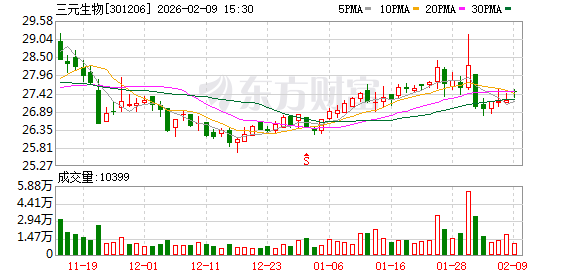
美对华赤藓糖醇“双反”终裁落地!税率从超450%骤降至约94%仍处高位 三元生物如何破局?
Mei Ri Jing Ji Xin Wen· 2026-02-09 15:09
Core Viewpoint - The trade friction between China and the U.S. regarding erythritol has reached a critical point, with significant tariffs imposed on Chinese products, impacting market access and prompting companies to diversify their strategies to mitigate risks [2][3][4]. Group 1: Tariff Implications - The U.S. Department of Commerce announced final anti-dumping and countervailing duties on Chinese erythritol products, with a countervailing duty of 8.63% and an anti-dumping duty of 84.95%, resulting in a combined tariff of 93.58% [2][3]. - This combined tariff, although reduced from a previous rate of 450.64%, still poses a significant barrier for Chinese companies seeking to enter the U.S. market [2][3][4]. Group 2: Market Dynamics - The initial investigation began in December 2024, initiated by U.S. producer Cargill, leading to a significant drop in Chinese erythritol exports to the U.S. due to high tariffs [3]. - The competitive landscape in the sugar substitute industry remains challenging, with nearly 94% tariffs creating a heavy burden for companies relying solely on raw material exports [4]. Group 3: Strategic Responses - In response to the tariffs, the company is accelerating the production of allulose, a promising new product, with plans for a 20,000-ton annual production capacity, which is expected to meet growing demand in the U.S. and other markets [7][8]. - The company is also diversifying its product offerings by developing high-value products such as rebaudioside M and sweet tea glycosides, as well as cosmetic raw materials, to reduce reliance on erythritol [8]. - To counteract the challenges in the U.S. market, the company is expanding into neighboring markets like Canada and Mexico, and is also addressing raw material cost issues by building a corn processing line [8].


2026年度策略:先抑后扬启动周期配置,优选成长拥抱新赛道
GOLDEN SUN SECURITIES· 2025-12-24 14:18
Group 1: Livestock Industry - The pig industry is currently in a phase of deep losses, with supply contraction expected to continue into the first half of 2026, leading to a significant reduction in production capacity. The average pig price for 2025 is projected to be below the cost line, with quarterly estimates of 15.5 CNY/kg, 13.5 CNY/kg, 16.4 CNY/kg, and 17.7 CNY/kg, resulting in an annual average of approximately 13.4 CNY/kg [11][25][26] - The white chicken market is experiencing a cautious outlook, with a projected supply growth of less than 5% for 2026. The decline in the sales of commodity broiler chicks indicates a more conservative price expectation within the industry [30][35] - The yellow chicken sector remains stable, with production capacity not significantly affected. The prices are expected to follow trends in other protein sources, with a focus on seasonal price increases [39] - The beef market is anticipated to see a price increase due to a clear reduction in both domestic and international supply. The wholesale price of beef has been rising, reaching 66.21 CNY/kg in December, reflecting a year-on-year increase of 9.1% [42][70] Group 2: Agricultural Inputs and Other Sectors - The feed industry is showing signs of recovery, with a 6.6% year-on-year increase in feed production for the first three quarters of 2025, indicating improved demand from the livestock sector [71][76] - The edible mushroom sector is witnessing a rebound, particularly with the reversal of the predicament faced by enoki mushrooms and the potential growth of new products like Cordyceps [3][80] - The pet industry continues to thrive, with a notable trend towards high-end domestic products, as evidenced by the performance of brands like Guibao Pet and Zhongchong Co. [4][63] - The natural sweetener market is expected to grow as consumer awareness of sugar reduction increases, with companies like Bailong Chuangyuan and Baolingbao positioned to benefit from this trend [4][71]


赤藓糖醇过剩改善,代糖股业绩回暖,新代糖又现扩产潮
Di Yi Cai Jing· 2025-05-06 08:11
Core Viewpoint - The new round of expansion in the sugar substitute industry is emerging, driven by the recovery of erythritol supply and the introduction of new sugar substitutes like allulose [1] Group 1: Erythritol Market Recovery - The financial reports of companies such as Sanyuan Biological and Baolingbao indicate a recovery in performance, attributed to the improvement in the erythritol market in 2024 [2] - Sanyuan Biological reported total revenue of 710 million yuan, a year-on-year increase of 42.7%, and a net profit of 110 million yuan, up 87.5% [2] - Baolingbao's total revenue for 2024 was 2.4 billion yuan, a decrease of 4.8%, but its net profit increased by 106% [2] - The revenue from erythritol for Sanyuan Biological reached 520 million yuan, a growth of 26.4%, with gross margin rising from 1.1% in 2023 to 8.3% in 2024 [2] - Baolingbao's erythritol sales revenue grew by 52.6%, with a gross margin increase of 7.8 percentage points [2] Group 2: Industry Dynamics and Challenges - The competition in the erythritol industry is easing, but prices remain low, leading to potential closures or shifts in production among some companies [3] - The U.S. has initiated anti-dumping and countervailing investigations against Chinese erythritol products, adding uncertainty to exports [3] - Sanyuan Biological is exploring diversification in global markets, focusing on Southeast Asia, India, and regions along the Belt and Road [3] - Baolingbao plans to invest 620 million yuan in a functional sugar factory in the U.S. to meet growing international demand [3] Group 3: Allulose Development - Allulose, a new sugar substitute, is gaining attention due to its similar taste and texture to sucrose, low caloric content, and potential health benefits [4] - Allulose has been approved for use in over ten countries, and its approval as a new food ingredient in China is pending [4] - The market for sugar substitutes is expected to grow significantly, driven by health trends and innovation [4] Group 4: Production Capacity and Market Concerns - Allulose is currently being tested in beverages, with a production cost around 30,000 yuan per ton, while selling prices in Europe and the U.S. range from 30,000 to 40,000 yuan per ton [5] - The high price of allulose results in a higher gross margin compared to erythritol, with Sanyuan Biological's allulose gross margin at 14.2% [5] - Concerns exist regarding potential overproduction of allulose similar to erythritol, as companies are rapidly expanding capacity [6] - Baolong Chuangyuan plans to increase its allulose production capacity significantly, while Sanyuan Biological also has expansion plans [6]
