
供水和污水处理

Search documents
菲律宾10月失业率升至5.0%
Zhong Guo Xin Wen Wang· 2025-12-10 09:20
Core Viewpoint - The unemployment rate in the Philippines rose to 5.0% in October, marking an increase of 1.2 percentage points from September, with the unemployed population reaching 2.54 million [1]. Employment Data - The unemployment rate in October was 5.0%, up from 3.8% in September, with an increase of 580,000 unemployed individuals [1]. - The labor force participation rate decreased to 63.6%, down by 0.9 percentage points from September, indicating a weakening labor market [1]. Sector Analysis - The services sector employed the most individuals, with 29.46 million jobs, accounting for 60.6% of total employment [1]. - Agriculture and industry represented 21.5% and 17.9% of total employment, respectively [1]. - Employment in professional and technical activities, water supply and sewage treatment, and other service activities saw significant declines both year-on-year and month-on-month [1]. Employment Quality - The underemployment rate increased to 12.0%, rising by 0.9 percentage points from September, indicating that workers are seeking more hours or better job opportunities [1]. Youth Employment - The unemployment rate for the youth aged 15 to 24 reached 14.1%, an increase of 2.5 percentage points from September and higher than the 12.5% recorded in the same period last year [1].
粤海投资:2025年中期净利润26.82亿港元 同比增长11.23% 拟每股派息0.2666港元
Sou Hu Cai Jing· 2025-08-26 10:53
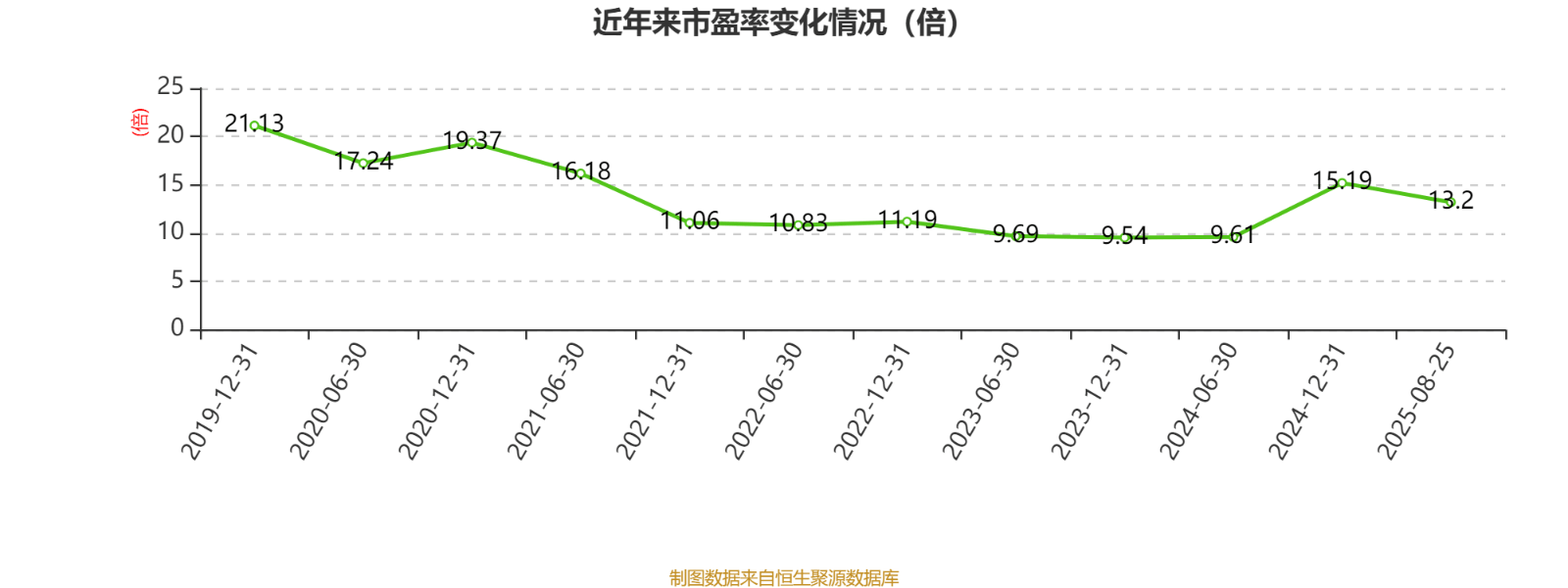
Core Viewpoint - The company operates in water supply and sewage treatment, with multiple business segments contributing to its revenue, including water resources, property investment, retail, power generation, hotel management, and toll road operations [9]. Revenue and Profit Growth - The company has shown fluctuations in revenue and net profit growth rates over the years, with a notable increase in revenue in 2023 compared to previous years [11][14]. - The revenue composition for the first half of 2025 indicates that water resources remain the largest segment, contributing 71.531 billion HKD, followed by property investment and power generation [15]. Financial Ratios - As of the first half of 2025, the company's average return on equity was 6.4%, an increase of 0.72 percentage points from the previous year [19]. - The company’s asset turnover ratio has shown variations, with a notable increase in 2025 compared to previous years [21]. Asset and Liability Changes - Significant changes in assets include a 100% decrease in assets classified as held for sale, while intangible assets decreased by 0.71% [25]. - On the liabilities side, long-term borrowings decreased by 1.68%, while deferred tax liabilities increased by 4.67% [28]. Liquidity Ratios - The company reported a current ratio of 1.18 and a quick ratio of 1.15 in the first half of 2025, indicating a stable liquidity position [31].

越南二季度经济:工业景气维持高位
国泰君安国际· 2025-08-13 05:19
Economic Growth - Vietnam's GDP growth rate accelerated to 7.96% in Q2 2025, slightly below the 8.56% growth rate in Q2 2022 post-pandemic[5] - The industrial and construction sectors experienced the highest growth at 8.97%, while the service sector grew by 8.46%[5][10] Sector Performance - The agricultural sector's contribution to GDP decreased to 9.6%, with a growth rate of 3.89%[9] - The industrial sector accounted for 36.5% of GDP, with manufacturing leading at a growth rate of 10.75%[10][14] Foreign Direct Investment (FDI) - FDI registered a total of approximately $21.5 billion, marking a 41.7% increase compared to the same period in 2024[21] - The FDI disbursement rate improved by 8.12% year-on-year, reaching $11.72 billion in H1 2025[21] Trade and Retail - Total trade volume in Q2 reached $229.1 billion, a 10% increase year-on-year, with a trade surplus of $2.9 billion in June[25] - Retail sales in June grew by approximately 8.3%, with goods retail growth slowing to 6.7%[17] Inflation and Economic Risks - Inflation rose to 3.56% in June, with healthcare and housing costs contributing significantly to price increases[27] - Economic risks include potential declines in demand from major economies and uncertainties in trade policies[12][30]