充电行业

Search documents
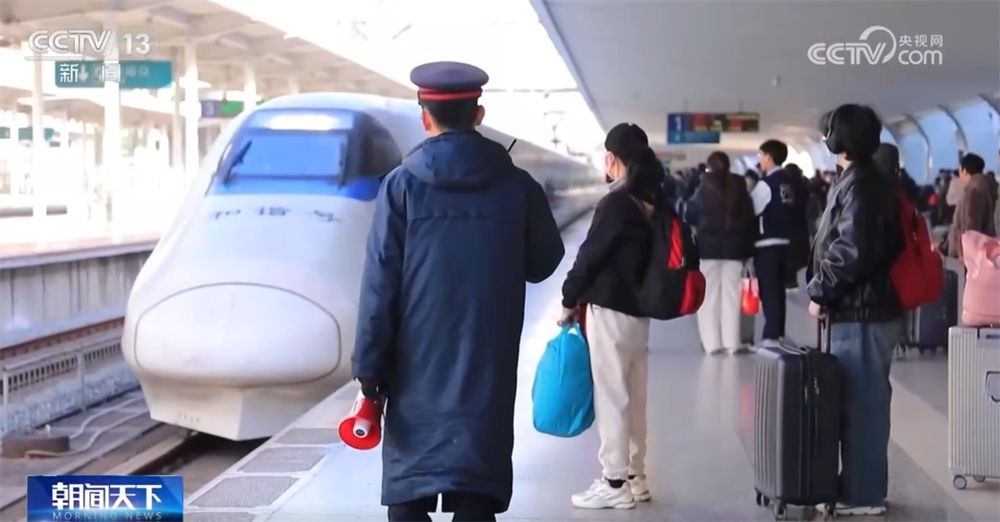
“交通枢纽”变身“消费引擎” 春运“新”变化拼出中国经济的活力与韧性
Yang Shi Wang· 2026-02-13 01:48
Group 1 - The Spring Festival travel rush in China has introduced new services that enhance customer experience and create business opportunities [1][4] - The railway sector has expanded its pet transportation service to 110 stations and 170 trains, tapping into the growing pet economy [3][6] - The "light travel" service allows passengers to send luggage door-to-door, covering 111 stations, which integrates passenger and logistics services for mutual benefits [4][6] Group 2 - The pet transportation service is projected to drive a market worth over 310 billion yuan by 2025, linking various industries such as pet carriers and insurance [6] - Airports have launched food markets and delivery services, transforming waiting times into consumption opportunities and enhancing airport revenue [6][10] - The expected travel volume of new energy vehicles during the Spring Festival is 380 million trips, presenting significant opportunities for the charging industry [8] Group 3 - The rise of "reverse tourism," where parents travel to cities where their children reside, is revitalizing local economies in major cities [10] - The direct consumption generated by this year's Spring Festival travel is anticipated to exceed 1.5 trillion yuan, showcasing the resilience and vitality of the Chinese economy [10]

国家能源局召开2025年推进高质量充电基础设施体系建设座谈会
国家能源局· 2025-12-29 12:06
Core Viewpoint - The meeting emphasized that 2025 will be a year of comprehensive quality improvement in the development of charging infrastructure in China, highlighting the rapid growth and health of the charging industry as a strong support for green travel and high-quality economic development [2][3] Group 1: Current Status of Charging Infrastructure - As of the end of November, a total of 19.322 million charging facilities have been built nationwide, with 70,500 charging facilities established in highway service areas [2] - 19 provinces have achieved "full coverage" of charging facilities in all towns, indicating a significant expansion in coverage [2] - The average charging power at public stations has increased by 30%, reflecting improvements in charging service efficiency [2] Group 2: Trends and Changes in the Charging Industry - The main contradiction in the layout of charging facilities has shifted from insufficient supply to uneven distribution, indicating a need for better planning [2] - Industry competition is transitioning from "expanding scale" to "emphasizing service," highlighting a focus on service quality [2] - There is an increasing trend of cross-domain integration in the development of the charging industry [2] Group 3: Future Action Plans - The next steps include enhancing facilities, improving services, and strengthening safety to effectively implement the "three-year doubling" action plan for electric vehicle charging service capacity [3] - There will be a focus on improving the coverage of charging facilities in key areas such as residential and rural regions [3] - The plan includes optimizing the efficiency of charging infrastructure and enhancing the quality of charging operation services to protect consumer rights [3]