光伏组件回收

Search documents
光伏组件退役回收行业遇“饥荒”,小作坊、贵金属贸易商争抢货源 乱局何解?
Mei Ri Jing Ji Xin Wen· 2025-10-16 10:05
Core Insights - The photovoltaic (PV) component recycling industry in China is facing a dual dilemma of idle capacity and a shortage of sources for recycled materials, despite a projected market worth of hundreds of billions in the coming decades [2][3] Group 1: Market Potential and Current Challenges - The International Renewable Energy Agency (IRENA) predicts that by 2030, retired PV components in China will reach 1.5 million tons, increasing to 7 million tons by 2040 and over 20 million tons by 2050 [2] - The cumulative market size for PV recycling in China is expected to reach 26 billion yuan by 2030 and exceed 420 billion yuan by 2050 [2] - Currently, qualified recycling companies are struggling to operate at full capacity, with many facing challenges in sourcing retired components [2][3] Group 2: Supply Chain Issues - The core issue limiting the development of the recycling industry is the scarcity of retired components, with projections indicating that the volume of retired components in 2025 may not exceed 80,000 tons [3] - Regions like Inner Mongolia, Xinjiang, and Qinghai have abundant retired components, but logistical challenges hinder their flow to recycling companies [3] - The lack of standardized valuation for the residual value of retired components complicates the recycling process, as these components are often considered state assets [3] Group 3: Recycling Methods and Technologies - The industry has adopted a "cascade utilization + disassembly and regeneration" approach to maximize the value of retired components [5] - For intact and efficient retired components, companies prefer cascade utilization, exporting them to markets in Africa, Asia, and Latin America [5] - Damaged components are processed through disassembly, with companies like Ruise Environmental Technology employing advanced methods such as high-pressure jet milling and pyrolysis for material recovery [5][6] Group 4: Economic Factors and Pricing - The price of recycled materials significantly impacts company profits, with glass making up 70% of component weight and its recycling price dropping from 1,300 yuan/ton to 380 yuan/ton recently [8] - The current price of raw polysilicon is below 50 yuan/kg, making recycled silicon economically unviable unless raw prices rise to 90 yuan/kg [8] - Silver, aluminum, and copper from components are also key profit sources, with fluctuating market prices affecting recovery economics [8] Group 5: Regulatory and Market Dynamics - The presence of small workshops and cross-industry precious metal traders is creating market chaos, as they often lack proper environmental certifications and can offer higher prices for materials [9][10] - The absence of comprehensive standards for PV component recycling is a significant barrier to industry development, with only a few national standards currently in place [10] - Recommendations include establishing a lifecycle traceability platform and a whitelist for qualified recycling companies to ensure compliance and reduce illegal operations [12]

深度丨光伏组件退役回收行业遇“饥荒”,小作坊、贵金属贸易商争抢货源 乱局何解?
Mei Ri Jing Ji Xin Wen· 2025-10-16 09:56
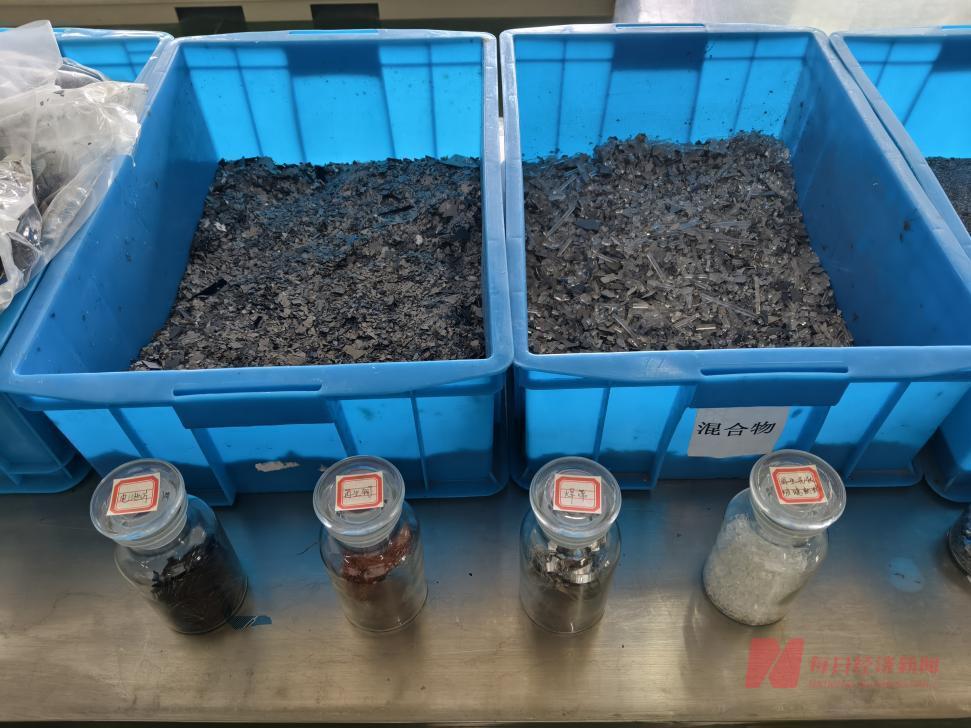
Core Insights - The photovoltaic recycling industry in China faces a dual challenge of underutilized capacity and a shortage of sources for retired components, despite a projected market worth hundreds of billions in the coming decades [1][2][10] - The government is urged to implement policies to regulate recycling qualifications and manage small workshops that disrupt the market [1][10] Group 1: Market Potential and Challenges - The International Renewable Energy Agency (IRENA) predicts that by 2030, retired photovoltaic components in China will reach 1.5 million tons, increasing to over 2 million tons by 2050 [1] - The cumulative market size for photovoltaic recycling in China is expected to reach 26 billion yuan by 2030 and exceed 420 billion yuan by 2050 [1] - The number of qualified recycling companies in the Jiangsu-Zhejiang-Shanghai region is limited, with many unable to operate at full capacity [2] Group 2: Supply Chain Issues - The retired component supply issue is a core challenge for the recycling industry, with the expected volume of retired components in 2024 being around 80,000 tons, while existing capacity far exceeds this amount [2] - Factors contributing to the reduced supply include low operational rates of production companies and a slowdown in ground station construction due to incomplete infrastructure [2][4] Group 3: Recycling Methods and Technologies - The industry is adopting a "cascade utilization + dismantling and regeneration" approach to maximize the value of retired components [5][6] - For intact components, companies prefer cascade utilization, exporting to markets in Africa, Asia, and Latin America, where second-hand components are in demand [5] - For damaged components, dismantling is necessary, with companies like Ruise Environmental Technology employing advanced methods such as high-pressure jet milling and pyrolysis to recover materials [6][7] Group 4: Economic Factors and Pricing - The price of recycled materials significantly impacts company profits, with glass making up 70% of component weight and its price dropping from 1,300 yuan/ton to 380 yuan/ton recently [9] - The current price of raw polysilicon is below 50 yuan/kg, making recycled silicon economically unviable unless raw prices rise to 90 yuan/kg [9] - Silver, which constitutes about 4‰ of component weight, remains a key profit source for recycling companies due to its high market price [9] Group 5: Regulatory and Market Dynamics - Small workshops are identified as major disruptors in the industry, lacking proper environmental assessments and using harmful methods that pollute the environment [10][11] - The absence of standardized pricing and regulations complicates the market, with companies relying on experience for pricing estimates [11][12] - Recommendations include establishing a lifecycle traceability platform and a whitelist for qualified recycling companies to ensure compliance and reduce illegal operations [12]
大规模设备更新带来什么(深度观察)
Zheng Quan Shi Bao Wang· 2025-09-03 04:44
Core Insights - The implementation of a new round of large-scale equipment updates is a crucial measure for promoting high-quality development, expanding effective investment, facilitating industrial upgrades, promoting green development, and improving people's lives [10][18]. Investment and Financial Support - The investment subsidy funds supported by ultra-long-term special government bonds have backed approximately 8,400 projects, leading to a total investment exceeding 1 trillion yuan [10]. - The support for equipment updates in key industrial sectors can reach up to 15% of the total investment, with energy-using equipment support potentially reaching 20% [12][13]. - The central government provides interest subsidies of 1.5 percentage points on bank loans for eligible entities, with local and central finances sharing the burden for the scrapping and updating of old vehicles and agricultural machinery [13]. Policy Implementation and Accessibility - The application process for subsidies has been streamlined, allowing companies to receive funds quickly; for instance, one company received 1.8 billion yuan in subsidies within two months of application [16][17]. - Local governments have creatively adapted policies to suit regional needs, such as Jiangsu's "transport loan" fiscal interest subsidy, which has significantly reduced financing costs for transportation companies [15]. Industry Transformation and Upgrades - The equipment update policy has led to a notable increase in investment and growth, with the total number of equipment updates in key sectors expected to exceed 20 million units in 2024 [18]. - Companies have reported significant improvements in production efficiency and cost savings due to equipment upgrades, such as a 10% increase in production efficiency and annual cost savings of 20 million yuan [19]. Environmental and Social Impact - The equipment updates also focus on green initiatives, with significant progress in replacing old transformers and vehicles with energy-efficient models, contributing to reduced energy consumption and emissions [21][23]. - The policy has extended to public services, with funding supporting the replacement of aging infrastructure like elevators, benefiting nearly 1.7 million households [23]. Circular Economy and Standards Enhancement - The promotion of large-scale equipment updates is linked to the development of a circular economy, with the remanufacturing industry seeing an annual output value of nearly 200 billion yuan [25][26]. - The enhancement of standards is crucial for guiding equipment updates towards high-end, intelligent, and green directions, with numerous national standards being revised to support this transition [28].