TOPCon光伏组件

Search documents
银价推涨光伏组件报价,下游企业承压涨价至近1元/瓦
第一财经· 2026-02-01 05:21
Core Viewpoint - The price of TOPCon photovoltaic modules has been raised again, with the average domestic price reaching 0.739 yuan/watt, influenced by rising silver prices and increased production costs [3][4]. Price Trends - The current price range for distributed photovoltaic modules in China is between 0.8 yuan/watt and 0.88 yuan/watt, with actual transaction prices between 0.75 yuan/watt and 0.8 yuan/watt [3]. - Leading integrated module companies, such as Trina Solar, have raised their component prices three times this month, with a price range set between 0.88 yuan/watt and 0.92 yuan/watt [3]. Cost Influences - As of January 28, the silver price exceeded 29,000 yuan/kg, an increase of over 6,000 yuan compared to the previous week, leading to a corresponding rise in battery costs by 0.05 yuan/watt [4]. - The willingness of companies to raise prices has increased due to significant cost hikes, with initial quotes expected to be above 0.8 yuan/watt [4]. Market Dynamics - Despite the price increases, the sustainability of this price rise and actual transaction conditions remain uncertain as the Chinese market approaches the Spring Festival, with a noted decrease in project installations and purchasing volumes [5]. - The market is currently experiencing a cautious purchasing attitude due to seasonal demand fatigue, with a decline in the execution of existing ground project orders and limited visibility for new orders [5].


特朗普称正与伊朗进行对话;部分国内品牌金饰价格继续回调|21早新闻
2 1 Shi Ji Jing Ji Bao Dao· 2026-01-31 23:27
Regulatory Updates - A series of new regulations will take effect starting February, including the "Encouragement of Foreign Investment Industry Catalog (2025 Edition)" and the "Regulations on Stopping the Abuse of Administrative Power to Exclude and Restrict Competition" [1] Macroeconomic Indicators - In January, the Manufacturing Purchasing Managers' Index (PMI) was reported at 49.3%, a decrease of 0.8 percentage points from the previous month. The Non-Manufacturing PMI was at 49.4%, also down by 0.8 percentage points, indicating a decline in economic activity [3] - The Composite PMI Output Index fell to 49.8%, down 0.9 percentage points, reflecting a seasonal slowdown in manufacturing and insufficient market demand [3] Investment News - A-share listed companies are entering a busy earnings disclosure period for 2025, with over 70 companies having released their annual reports and more than 2200 companies providing earnings forecasts. The overall performance shows a "polarized" trend, with some sectors thriving while others, like real estate and photovoltaics, face challenges [6] - Domestic gold jewelry prices have seen a decline due to international gold price fluctuations, with significant price drops reported by various brands [6] - The global AI computing power market is experiencing rapid growth, with expectations for the domestic transformer market to grow over 20% year-on-year by 2025, driven by AI computing and ultra-high voltage products [7] Company Developments - Nvidia's CEO Jensen Huang announced the company's intention to invest in OpenAI, potentially marking its largest investment to date, although the amount will be significantly lower than previously reported figures [9] - ZTE Corporation and JD.com have signed a strategic cooperation agreement aiming for ZTE to achieve over 10 billion yuan in sales through JD.com channels over the next three years [9] - Beijing Qingwei Intelligent Technology Co., Ltd. has completed a name change to Beijing Qingwei Intelligent Technology Co., Ltd., focusing on reconfigurable computing chips and preparing for an IPO [9]
银价推涨光伏组件报价,下游企业承压涨价至近1元/瓦
Di Yi Cai Jing· 2026-01-31 05:38
Core Viewpoint - The recent price increase of photovoltaic (PV) modules is primarily driven by the rising silver prices, leading to a collective pressure on downstream manufacturers to raise prices [1][3]. Group 1: Price Adjustments - The average price of TOPCon photovoltaic modules in China has been raised to 0.739 yuan per watt, with some high-power modules exceeding 1 yuan per watt [1]. - The current price range for distributed photovoltaic modules is between 0.8 yuan per watt and 0.88 yuan per watt, with actual transaction prices between 0.75 yuan per watt and 0.8 yuan per watt [3]. - Leading company Trina Solar has raised its module prices three times this month, with a price range set between 0.88 yuan per watt and 0.92 yuan per watt [3]. Group 2: Cost Influences - The silver price has significantly impacted production costs, with a noted increase of over 6,000 yuan per kilogram, leading to an increase in battery costs by 0.05 yuan per watt [3]. - The willingness of integrated enterprises to raise prices has strengthened due to the substantial rise in costs, with initial quotes expected to be above 0.8 yuan per watt [3]. Group 3: Market Dynamics - Despite the upward trend in prices, the sustainability of this price increase and actual transaction conditions remain uncertain as the Chinese New Year approaches [4]. - There is a declining willingness among end projects to accept high-priced modules, and the installation of distributed projects is expected to decrease as the year-end approaches [4]. - The market is currently exhibiting a cautious purchasing attitude due to seasonal demand fatigue, with a gradual decline in the execution of existing ground project orders [4].
深度报道:另一场硅基战争
财富FORTUNE· 2026-01-24 13:02
Core Viewpoint - The article discusses the challenges and transformations within the Chinese photovoltaic (PV) industry, particularly focusing on Longi Green Energy as a case study of the industry's struggle with overcapacity and the need for technological innovation to survive and thrive in a competitive market [1][3]. Industry Overview - The Chinese PV industry is experiencing a significant downturn due to overcapacity, leading to widespread losses across the sector [3][8]. - Longi Green Energy, a leading player in the industry, has faced substantial challenges, including a record loss of 8.6 billion yuan in 2024, prompting a reevaluation of its strategies and operations [8][9]. Technological Innovation - Longi has historically been known for its commitment to high-efficiency monocrystalline technology, which has set industry standards and driven down costs [10]. - The company is now pivoting towards a new battery technology called "BC (Back Contact)" that aims to enhance efficiency and aesthetics, despite the high costs and complexity associated with its production [11][12]. Market Dynamics - The PV market is characterized by cyclical patterns, with the current phase being a downturn where supply significantly exceeds demand, leading to price drops and financial strain on companies [8][18]. - Longi's decision to halt production of its first-generation BC products and focus on upgrading to a second generation reflects the urgency to adapt to market conditions and improve product competitiveness [13][14]. Financial Performance - Despite ongoing losses, Longi has shown signs of recovery with a narrowing of losses and positive cash flow in 2025, indicating a potential turnaround [15][41]. - The company has managed to maintain a strong cash reserve of 50 billion yuan, positioning itself as a financially stable player amidst industry turmoil [15][41]. Strategic Shifts - Longi is shifting its focus from purely manufacturing to becoming an energy service provider, integrating energy storage and hydrogen production into its business model [29][30][34]. - The company has made strategic investments in energy storage, recognizing the importance of this segment in the evolving energy landscape [29][32]. Environmental and Social Impact - The article highlights the ecological benefits of PV installations in desert areas, where solar panels have contributed to ecological restoration and sustainable land use [2][46]. - Longi's initiatives reflect a broader trend in the industry towards balancing commercial success with social and environmental responsibilities [47].

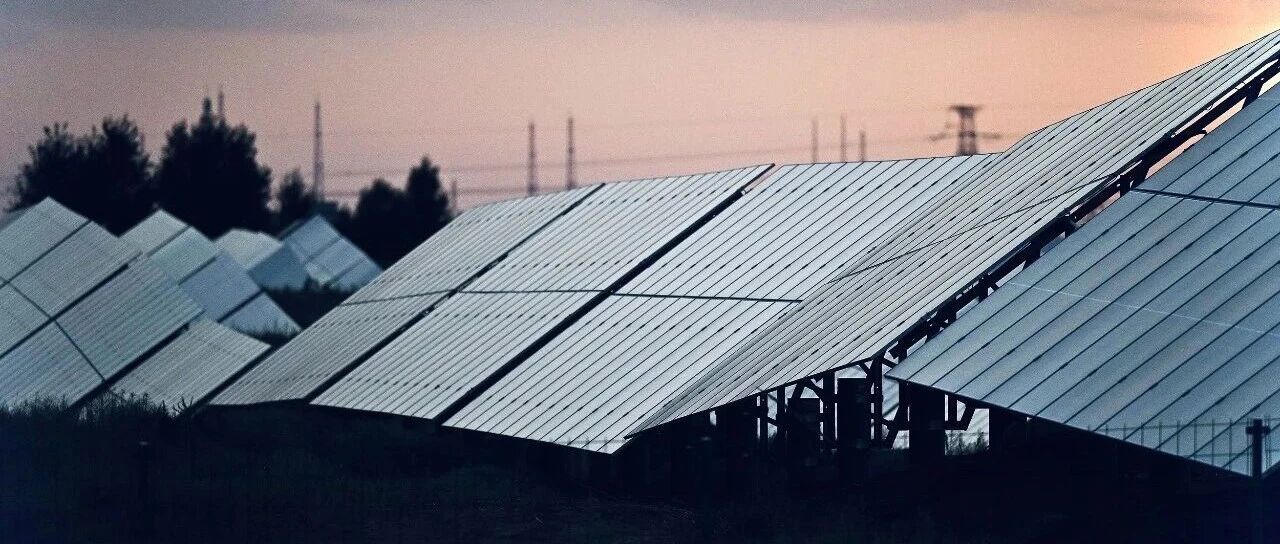
光伏组件退役回收行业遇“饥荒”,小作坊、贵金属贸易商争抢货源 乱局何解?
Mei Ri Jing Ji Xin Wen· 2025-10-16 10:05
Core Insights - The photovoltaic (PV) component recycling industry in China is facing a dual dilemma of idle capacity and a shortage of sources for recycled materials, despite a projected market worth of hundreds of billions in the coming decades [2][3] Group 1: Market Potential and Current Challenges - The International Renewable Energy Agency (IRENA) predicts that by 2030, retired PV components in China will reach 1.5 million tons, increasing to 7 million tons by 2040 and over 20 million tons by 2050 [2] - The cumulative market size for PV recycling in China is expected to reach 26 billion yuan by 2030 and exceed 420 billion yuan by 2050 [2] - Currently, qualified recycling companies are struggling to operate at full capacity, with many facing challenges in sourcing retired components [2][3] Group 2: Supply Chain Issues - The core issue limiting the development of the recycling industry is the scarcity of retired components, with projections indicating that the volume of retired components in 2025 may not exceed 80,000 tons [3] - Regions like Inner Mongolia, Xinjiang, and Qinghai have abundant retired components, but logistical challenges hinder their flow to recycling companies [3] - The lack of standardized valuation for the residual value of retired components complicates the recycling process, as these components are often considered state assets [3] Group 3: Recycling Methods and Technologies - The industry has adopted a "cascade utilization + disassembly and regeneration" approach to maximize the value of retired components [5] - For intact and efficient retired components, companies prefer cascade utilization, exporting them to markets in Africa, Asia, and Latin America [5] - Damaged components are processed through disassembly, with companies like Ruise Environmental Technology employing advanced methods such as high-pressure jet milling and pyrolysis for material recovery [5][6] Group 4: Economic Factors and Pricing - The price of recycled materials significantly impacts company profits, with glass making up 70% of component weight and its recycling price dropping from 1,300 yuan/ton to 380 yuan/ton recently [8] - The current price of raw polysilicon is below 50 yuan/kg, making recycled silicon economically unviable unless raw prices rise to 90 yuan/kg [8] - Silver, aluminum, and copper from components are also key profit sources, with fluctuating market prices affecting recovery economics [8] Group 5: Regulatory and Market Dynamics - The presence of small workshops and cross-industry precious metal traders is creating market chaos, as they often lack proper environmental certifications and can offer higher prices for materials [9][10] - The absence of comprehensive standards for PV component recycling is a significant barrier to industry development, with only a few national standards currently in place [10] - Recommendations include establishing a lifecycle traceability platform and a whitelist for qualified recycling companies to ensure compliance and reduce illegal operations [12]