养生养老

Search documents
北京大学教授李玲:发展“健康+”新范式 开启全球产业新蓝海
Zhong Guo Jing Ji Wang· 2026-01-16 07:13
Core Viewpoint - China is transitioning from a "disease-centered" approach to a "people's health-centered" model, aiming to improve public health and reduce illness [1][3]. Group 1: Health System Reform - The Chinese government is implementing systematic reforms in the healthcare service system, focusing on integrated management of rural healthcare institutions [3]. - The payment system is being reformed, with health insurance funds being allocated to "health communities," linking hospital and physician income to residents' health levels [3]. - The "health community" model, known as the "Sanming Model," is being promoted nationwide, with a goal of achieving full coverage within four years [3]. Group 2: New Development Opportunities - The health sector in China faces challenges such as an aging population but also presents new development opportunities [4]. - The country is entering a "health+" development phase, integrating various industries such as healthcare, pharmaceuticals, green food, wellness, and smart health to create a new health industry covering the entire life cycle [4]. - The demand for this new health industry is continuous and substantial, serving both domestic needs and potential global markets [4]. Group 3: Innovation and Technology - China is leveraging the integration of agriculture, industry, commerce, and information technology to drive innovation in the health sector [4]. - With the empowerment of artificial intelligence and new production capabilities, the country aims to achieve comprehensive health management through platforms like personal health codes and health information networks [4]. - The integration of systematic, informational, and intelligent approaches is expected to create a high-quality, low-cost, and scalable health system [4].

北京大学国发院李玲:“健康中国”或将为人类健康做出中国式原创贡献
Xin Lang Cai Jing· 2026-01-15 04:29
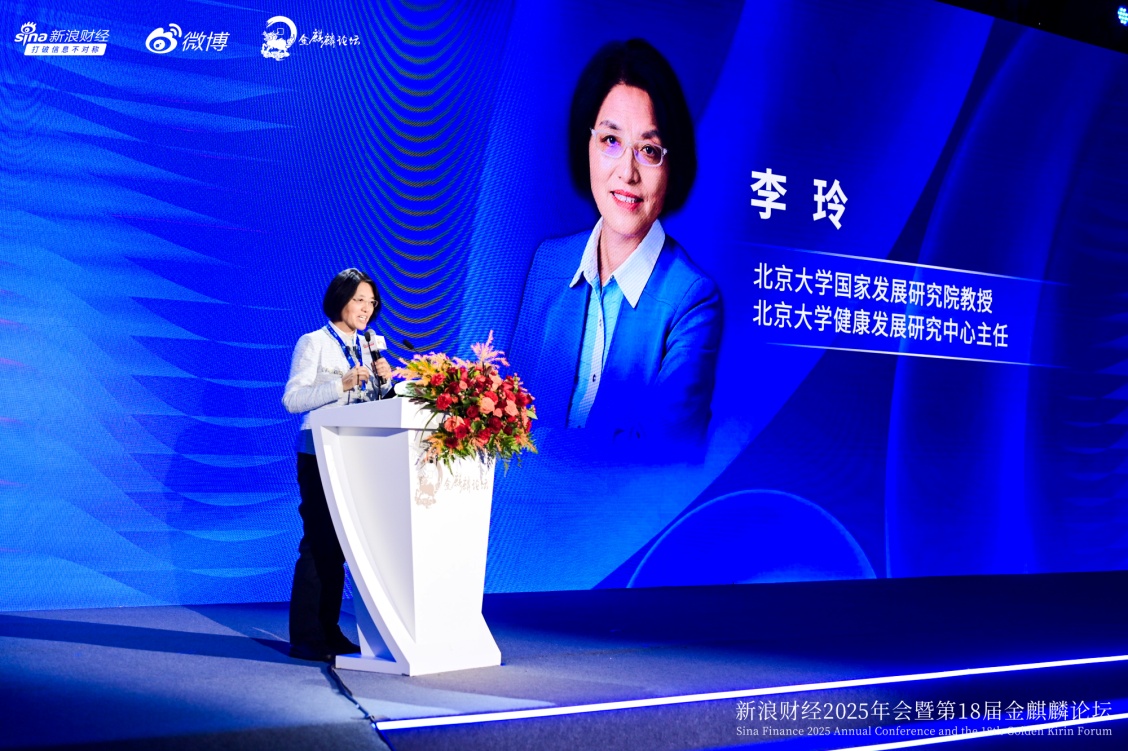
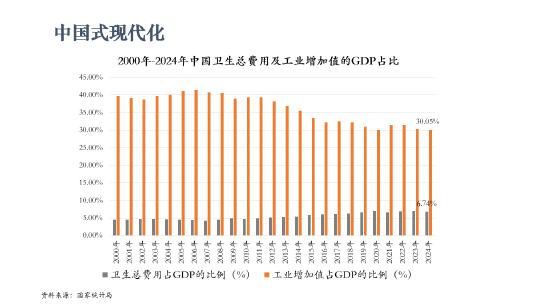
Core Insights - The "Sina Finance 2025 Conference and the 18th Golden Unicorn Forum" will be held on January 15, 2026, in Beijing, focusing on the theme of "Starting the 14th Five-Year Plan, New Economic Voyage - Reshaping Growth Paradigms, Creating Future Prosperity" [1][9] - Li Ling, a prominent figure in China's economic and health sectors, highlighted the achievements and challenges of China's healthcare system, emphasizing the need for a shift from a disease-centered approach to a health-centered paradigm [4][12] Healthcare Spending - In 2024, China's total health expenditure is estimated at 90,895.5 billion yuan, with government spending accounting for 24.9%, social spending for 47.6%, and personal spending for 27.5% [1][9] - The per capita health expenditure is 6,454.4 yuan, and the total health expenditure as a percentage of GDP is 6.7%, marking a significant decline below 7% for the first time [1][9] Challenges and Opportunities - The aging population presents significant challenges, necessitating a focus on disease prevention rather than treating aging as a disease [4][12] - The "Healthy China" national strategy prioritizes health as a key indicator of socialist modernization, advocating for a preventive approach to health [4][12] Systemic Changes in Healthcare - The government is promoting a systemic approach to healthcare, integrating county, township, and village services into a cohesive "health community" model, moving away from hospitals competing for patient revenue [5][13] - The "Sanming Model" aims to incentivize hospitals and doctors to manage patients' health proactively, with a nationwide rollout planned within four years [5][13] Emerging Health Industry - The integration of healthcare, pharmaceuticals, green food, wellness, and elderly care is expected to create a new "big health" industry, which could surpass the real estate sector in scale [5][13] - This industry is seen as a lifelong necessity for individuals, with potential benefits extending beyond China to serve global health needs [5][13] Future Health Management - The envisioned future health model includes a personal health code system, supported by AI for continuous health management throughout an individual's life [6][14] - The "Healthy China" and "Smart Health" initiatives are positioned as new development models that will contribute significantly to global health, leveraging China's historical wisdom and modern technological advancements [6][14]
李玲详解“三明模式”:让医院“老百姓越健康越赚钱”而非“病人越多越赚钱”
Xin Lang Cai Jing· 2026-01-15 04:23
Group 1 - The core theme of the "2025 Sina Finance Annual Conference and the 18th Golden Unicorn Forum" is "Fifteen Five Opening, Economic New Voyage - Reshaping Growth Paradigms, Co-creating Future Prosperity" [1][12] - Li Ling, a prominent figure in the economic committee, emphasized that China is currently the world's strongest industrialized nation and has made significant progress in healthcare reform [3][14] - The total national health expenditure for 2024 is preliminarily estimated at 90,895.5 billion yuan, with government health spending at 24.9%, social health spending at 47.6%, and personal health spending at 27.5% [3][14] Group 2 - The aging population presents a significant challenge, necessitating a shift from treating diseases to preventing them [6][17] - The "Healthy China" national strategy is prioritized as it signifies the modernization of socialism, focusing on health rather than illness [7][18] - The government is integrating health into all policies, addressing various factors affecting health, including lifestyle, environment, and healthcare systems [7][18] Group 3 - The healthcare system is transitioning to a more integrated model, promoting a "health community" approach where hospitals work collaboratively rather than independently [7][19] - The "Sanming Model" is being promoted nationwide within four years, incentivizing healthcare providers to focus on disease prevention [7][19] - The aging population also presents opportunities for a new "health+" development paradigm, merging healthcare, wellness, and technology into a large health industry [8][19] Group 4 - The future health model includes a personal health code system managed by AI, ensuring comprehensive health management throughout an individual's life [10][21] - The "Healthy China" initiative is seen as a new development model and a significant contribution to global health, leveraging China's historical wisdom and modern technology [10][21] - The challenges faced by the U.S. in healthcare present an opportunity for China to lead in health solutions, integrating various advantages to contribute to global health [10][22]

扎实做好金融“五篇大文章” 助力陕西经济社会高质量发展
Jing Ji Ri Bao· 2025-12-28 22:02
Core Viewpoint - Agricultural Bank of China Shaanxi Branch actively supports various financial initiatives to enhance economic development in Shaanxi Province, focusing on technology finance, green finance, inclusive finance, pension finance, and digital finance [4][5][7][8][11]. Group 1: Technology Finance - Agricultural Bank of China Shaanxi Branch has issued nearly 200 million yuan in loans to a specialized "little giant" enterprise, supporting its technological upgrade projects [5]. - The bank has introduced innovative financial products like "Kejie Loan" and "Torch Innovation Points Loan" to address the unique challenges faced by technology enterprises [5]. - As of November 2025, the number of technology enterprise loan accounts and loan balances increased by 671 accounts and 4.2 billion yuan year-on-year, leading the industry in growth [6]. Group 2: Green Finance - The bank emphasizes green finance to support sustainable economic development, aligning with carbon peak and carbon neutrality goals [7]. - It provided over 10 billion yuan in financing for a leading coal chemical project, setting a historical approval record for the bank [7]. - The bank's green loan balance and growth rate are among the highest in Shaanxi Province, supporting various projects in renewable energy and resource recycling [7]. Group 3: Inclusive Finance - Agricultural Bank of China Shaanxi Branch has implemented nine policy measures to enhance the accessibility and satisfaction of inclusive financial services [8]. - The bank quickly responded to a small aluminum technology company's financial needs by providing a seamless loan renewal process within five days [8]. - The inclusive loan balance increased by 15.6 billion yuan since the beginning of the year, ranking high among peers [8]. Group 4: Pension Finance - The bank is developing a high-quality pension finance service system to address the challenges of an aging population [9]. - It provided 5 million yuan in loans to a well-known health service company to expand its pension service scale [9]. - The bank has established a "Golden Years" service area to cater to elderly clients, enhancing their overall experience [10]. Group 5: Digital Finance - The bank is advancing its digital transformation to create a high-level digital financial service system [11]. - It has launched a smart campus payment system that serves over 1,000 schools, benefiting more than 440,000 students and parents [12]. - The bank introduced a multi-functional credit card that integrates financial services with transportation and daily life, promoting convenience for the public [12].