
养老金投资

Search documents
38万亿美元债务警报拉响!你的养老金正悄悄投向国债风险与机遇如何把握
Sou Hu Cai Jing· 2025-12-02 18:56
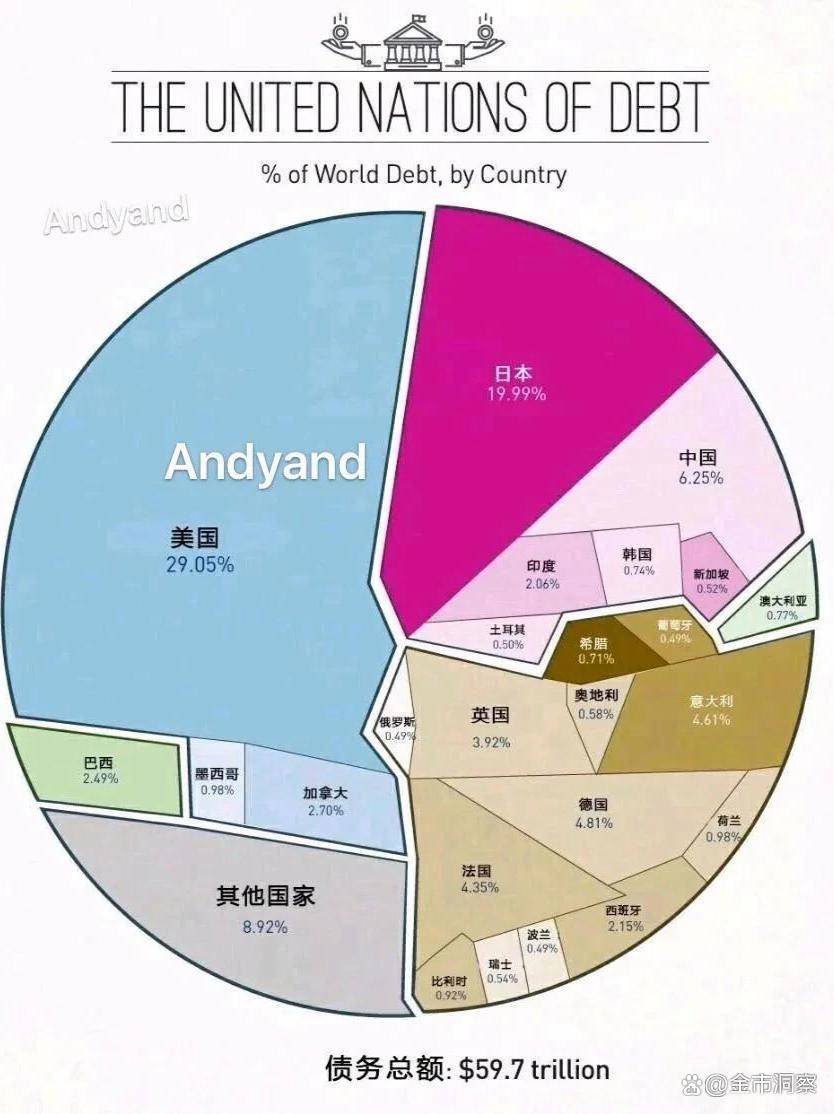
Core Insights - Global public debt is projected to exceed $111 trillion by December 2025, with U.S. federal debt reaching $38 trillion, highlighting the unsustainable nature of current debt levels [1] - Pensions are increasingly invested in government bonds, creating a cycle where citizens are both borrowers and lenders, with their retirement funds tied to government debt [3][4] - The structure of China's national debt is predominantly held by domestic banks and the central bank, with foreign investors holding only 2.4%, contrasting sharply with the U.S. where foreign investors hold 30% [4] Debt and Interest Payments - The U.S. government is expected to pay $1 trillion in debt interest in the 2025 fiscal year, which will escalate to $13.8 trillion over the next decade, significantly impacting taxpayers [8] - Interest payments are projected to consume 3.3% of GDP by 2025, surpassing defense spending, indicating a critical financial imbalance [8] - China's debt interest pressure is manageable, but local government debt poses structural risks, with some counties spending 40% of their revenue on interest payments [11] Pension Fund Performance - The national social security fund's investment portfolio includes 40% in equity funds and over 20% in government bonds, exposing pensions to interest rate fluctuations [6] - A significant drop in bond prices due to rising interest rates could lead to substantial losses in pension funds, affecting retirees' financial stability [6][13] - Historical data indicates that a 1% decline in average returns over the next decade could reduce pension replacement rates significantly, impacting retirees' income [13] Systemic Risks and Future Adjustments - Systemic risks are increasing due to political gridlock over debt ceilings in the U.S., high debt levels in Japan, and slow progress in addressing local government debt in China [11] - The potential for a debt crisis is heightened by interconnected global financial markets, reminiscent of the 2008 financial crisis [11] - Future adjustments to the debt system may manifest as gradual inflation or sudden welfare cuts, impacting the purchasing power of pensions [14] Strategies for Individuals - Individuals are advised to build "anti-debt asset portfolios" by investing in gold and REITs, which typically have a negative correlation with government bonds [15] - Increasing the proportion of non-monetary assets in investment portfolios can help mitigate risks associated with interest rate fluctuations [15] - Developing skills in recession-resistant sectors can provide more stable income during economic downturns, as evidenced by lower unemployment rates in certain professions during past crises [15]

【环球财经】西方养老金机构撤出巴西市场 中资机构有望扩大区域布局
Xin Hua Cai Jing· 2025-07-03 07:24
Group 1 - The core viewpoint of the article is that CPP Investments is initiating a global investment strategy adjustment, gradually closing private equity operations in Latin America, including Brazil, due to various macroeconomic challenges [1] - CPP Investments had previously viewed Latin America as a high-growth potential region, investing in infrastructure, consumer, and fintech projects, particularly in Brazil's energy and transportation sectors [1] - The tightening global liquidity and sustained high interest rates by the Federal Reserve have led to valuation pressures and increased uncertainty in emerging markets, prompting CPP Investments to reassess its asset portfolio [1] Group 2 - Some analysts suggest that the withdrawal of international long-term capital may create opportunities for other types of capital, particularly from Asian sovereign funds and policy financial instruments, to enter the Latin American market [2] - Chinese enterprises and policy banks have been increasing their investments in Latin America, establishing a robust investment network in sectors such as energy, infrastructure, agriculture, and telecommunications [2] - The collaboration between Chinese capital and Latin American countries is based on long-term strategic alignment, project integration, and innovative local currency settlement paths, which may provide resilience against economic cycles [2]