
攻击型无人机

Search documents
原油,突然拉升!科威特附近海域一艘油轮发生爆炸
证券时报· 2026-03-05 04:25
Core Viewpoint - International oil prices have surged, with NYMEX WTI crude oil rising over 3% and ICE Brent crude oil increasing nearly 3% [1]. Group 1: Oil Price Movements - NYMEX WTI crude oil reached a price of $76.94, with an increase of $2.28 or 3.05% from the previous close [2]. - The highest price for NYMEX WTI during the session was $77.42, while the lowest was $75.56 [2]. - ICE Brent crude oil opened at $83.60, up by $2.20 or 2.70% [3]. - The highest price for ICE Brent was $83.92, and the lowest was $82.13 [3]. Group 2: Military Actions and Geopolitical Tensions - The U.S. Central Command reported that over 20 Iranian vessels have been struck or sunk, with the latest action targeting a "Suleimani-class" warship [4]. - The U.S. military has targeted over 2000 sites, destroying numerous missiles, launch systems, and drones, and sinking more than 20 Iranian vessels, including a submarine [5]. - The U.S. expects to achieve "complete control" over Iranian airspace in the coming hours, with no Iranian naval activity reported in the Persian Gulf, Strait of Hormuz, and Gulf of Oman [5]. - The Iranian Revolutionary Guard announced successful strikes against Israeli targets, claiming to have destroyed advanced radar systems, leaving the U.S. and Israel "blind" in the region [7].


伊军袭击以色列国防部大楼和机场,摧毁7套雷达系统
第一财经· 2026-03-04 23:59
Group 1 - The core viewpoint of the article highlights that Iran's Islamic Revolutionary Guard Corps successfully launched hypersonic missiles and attack drones that breached the U.S. THAAD system, targeting the Israeli Ministry of Defense building and Ben Gurion International Airport [1] - The announcement indicates that over 7 advanced radar systems were destroyed by Iran, leading to a situation where the U.S. and Israel are "blind" in the region [1] - The article mentions that reconnaissance and strikes against aggressors will continue, with an expectation of increased intensity and range of attacks in the coming days [2]

俄称控制四村镇 乌称港口铁路遭袭
Xin Hua She· 2026-02-14 06:55
Core Insights - The Russian Defense Ministry reported that Russian forces have controlled or occupied four villages in Ukraine over the past week, while Ukrainian officials reported drone attacks on Odesa, resulting in casualties [1][2]. Group 1: Military Actions - From February 7 to 13, Russian forces conducted a series of intensive strikes using various weapons against Ukrainian positions, including six group attacks targeting military industrial enterprises, energy and transportation facilities, ammunition depots, military airports, and drone production sites [1]. - Russian forces have reportedly captured two villages in Kharkiv and Sumy regions, specifically Chuhunivka and Sydorivka, and one village in Zaporizhzhia region, Zaliznychne [1]. - During the same period, Russian air defense systems intercepted multiple Ukrainian missiles and drones, including five Ukrainian "Firebird" cruise missiles, 28 guided aerial bombs, 39 rockets from the U.S. "HIMARS" system, four Ukrainian "Neptune" missiles, and 1,243 fixed-wing drones [1]. Group 2: Casualties and Damage - The drone attack on Odesa resulted in one death and six civilian injuries, damaging port facilities, fertilizer warehouses, and transportation vehicles [2]. - In Dnipropetrovsk region, Russian forces targeted railway facilities with drones, but there were no casualties or impact on railway operations [2]. - The Ukrainian State Emergency Service reported that the attacks led to significant damage to energy, residential, and industrial facilities in Odesa, with several high-rise residential buildings directly hit [2].
去年一场北约演习中,乌克兰军队轻松“摧毁”英国旅
Guan Cha Zhe Wang· 2026-02-14 02:48
Core Insights - The NATO joint military exercise "Hedgehog 2025" in Estonia revealed vulnerabilities in NATO forces, as a British battalion was reportedly "destroyed" by Ukrainian troops during the simulation [1][3] - The exercise involved over 16,000 soldiers from 12 NATO countries and aimed to test soldiers' adaptability under fire pressure, simulating an intense battlefield environment similar to the early stages of the Russia-Ukraine conflict [1][3] Group 1: Military Exercise Details - The exercise included a scenario where a combat group, consisting of thousands of soldiers including a British battalion, was defeated by Ukrainian forces, highlighting a "painful" lesson for NATO [1] - A Ukrainian team utilized an advanced battlefield management system called "Delta" to gather real-time intelligence and coordinate strikes, successfully simulating the destruction of 17 armored vehicles in half a day [3][4] - The exercise demonstrated the effectiveness of drones, which analysts estimate caused about 70% of casualties in the ongoing conflict, prompting European allies to ramp up drone production and training [4] Group 2: Technological Advancements - Ukrainian President Zelensky showcased a new attack drone developed jointly with Germany, emphasizing its modern technology and AI capabilities for strike, reconnaissance, and soldier protection [4] - The UK announced a £2 billion investment in drones to enhance its army's combat readiness, reflecting the growing recognition of drones as an essential component of land warfare [4] Group 3: Diplomatic Context - U.S. President Trump indicated that Ukraine must take action to seize opportunities for peace, while U.S. Secretary of State Rubio's absence from a key meeting on the Russia-Ukraine conflict raised concerns among European officials [5]
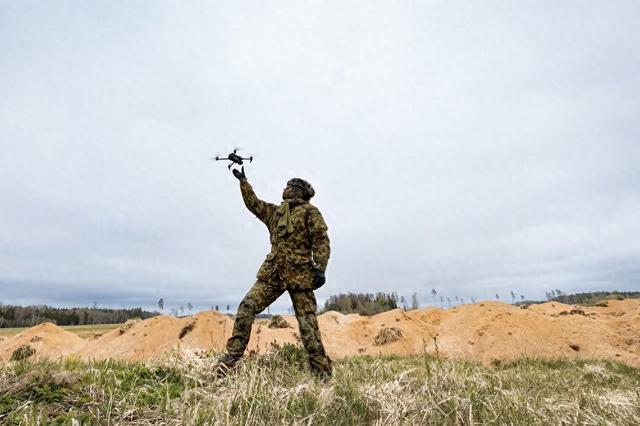
Stark防务在新一轮融资中估值超10亿欧元
Xin Lang Cai Jing· 2026-02-13 08:31
Core Insights - Stark Defense, a German startup and drone manufacturer, has recently completed a new round of financing, raising its overall valuation to over €1 billion (approximately $1.2 billion) [1][2] - The Founders Fund, founded by Peter Thiel, has invested several million euros in Stark Defense, along with participation from various European investment institutions [1][2] - The German government plans to procure attack drones worth €536 million from Stark Defense and another German defense company, Helsing [1][2] Company Summary - Stark Defense has achieved a significant milestone with its valuation surpassing €1 billion, indicating strong investor confidence and market potential [1][2] - The involvement of high-profile investors like the Founders Fund suggests a strategic interest in the defense technology sector, particularly in drone manufacturing [1][2] - The upcoming procurement deal with the German government highlights the company's role in national defense and its potential for future growth in the military technology market [1][2]
地缘技术|“武士精神”正在重回硅谷
Xin Lang Cai Jing· 2026-01-06 23:41
Core Insights - Palantir Technologies, founded by Peter Thiel, has established itself as a significant player in the U.S. military-industrial complex, surpassing traditional defense contractors like Raytheon [3] - The company signed a $10 billion long-term contract with the U.S. Army in August 2025 to provide data support and software services over the next decade, marking the largest digital military contract awarded to a tech company [3] - The relationship between Silicon Valley and U.S. military security strategy has deep historical roots, with technological advancements often driven by military needs [5][6] Group 1: Company Overview - Palantir is a software and big data technology company based in Silicon Valley, co-founded by Peter Thiel, who is also known for his book "Zero to One" [1] - The CEO, Alexander Karp, is a notable figure with a Ph.D. from Goethe University and has been actively involved in public debates on technology and ethics [3] Group 2: Military Contracts and Collaborations - The $10 billion contract with the U.S. Army is a significant milestone for Palantir, emphasizing its role in modern military operations [3] - The U.S. Department of Defense has increasingly relied on Silicon Valley for technological advancements, with companies like Palantir benefiting from military contracts [6][7] Group 3: Technological Innovation and Defense Strategy - The emergence of new technologies such as artificial intelligence and quantum computing is central to U.S. military strategy, particularly in response to China's advancements [8][9] - The U.S. military is focusing on creating a "data-driven, AI-enabled army" to counter challenges posed by China, with initiatives like the "Replicator" project aimed at deploying low-cost autonomous systems [8][9] Group 4: Impact of Global Conflicts - The ongoing Russia-Ukraine conflict has accelerated the adoption of emerging technologies in military operations, benefiting companies like Palantir and Anduril [10] - The U.S. Department of Defense's Project Maven aims to leverage AI for military applications, with Palantir playing a crucial role in developing the necessary data integration platforms [12] Group 5: Geopolitical Context - The U.S. government's strategic focus on countering China's military capabilities has led to increased investments in defense technology, with Palantir positioned to capitalize on this trend [14] - The narrative of a "China threat" is being utilized by Silicon Valley companies to secure funding and contracts, with Palantir's software being used to monitor Chinese activities [14]


俄称91架乌无人机袭击普京官邸 乌方驳斥:“纯属捏造”
Yang Shi Xin Wen Ke Hu Duan· 2025-12-29 23:34
Group 1 - The Russian Ministry of Defense reported that Ukrainian forces attempted to attack President Putin's residence using 91 drones, all of which were intercepted by Russian air defense [2] - The Russian air defense intercepted 49 drones over Bryansk region and 1 drone over Smolensk region during the night of December 28 to 29, followed by intercepting 18 drones before 7 AM and 23 drones between 7 AM and 9 AM on December 29 [2] - Ukrainian officials, including President Zelensky, denied the claims, labeling them as fabrications and provocations aimed at justifying future attacks on Ukraine and undermining peace efforts [5] Group 2 - Ukrainian Foreign Minister Kuleba stated that the Russian claims are provocative and serve as a false pretext for further aggression against Ukraine [5] - The spokesperson for the Ukrainian Foreign Ministry criticized the Russian assertions as absurd, emphasizing that the Kremlin's residence is protected by a highly sophisticated air defense system, making any attack on it pointless [5]
9万亿!再创新高!日本刚刚批准防卫预算!
Zheng Quan Shi Bao Wang· 2025-12-27 02:36
Core Viewpoint - Japan's government has approved a record defense budget exceeding 9 trillion yen for the fiscal year 2026, indicating a significant shift in its defense strategy towards "proactive deterrence" and enhancing its military capabilities, which may impact regional security dynamics [1][2][3]. Group 1: Defense Budget Details - The approved defense budget for fiscal year 2026 is over 9 trillion yen, marking a continuous increase in Japan's defense spending, which has surpassed 6 trillion, 7 trillion, and 8 trillion yen in previous years [2]. - The budget will fund the acquisition of long-range missiles and the development of a coastal defense system centered around attack drones, with an investment of approximately 100.1 billion yen for the latter [2]. - Japan plans to increase its total defense spending to about 43 trillion yen from 2023 to 2027, as outlined in the new "security three documents" approved in late 2022 [2]. Group 2: Strategic Implications - Experts suggest that the increase in defense spending signifies a transformation in Japan's military posture from "defensive" to "proactive deterrence," potentially redefining its post-war military identity and affecting regional security [3]. - Japan is also pursuing the development of nuclear-powered submarines, with plans to advance to the next generation of propulsion systems and possibly acquire nuclear submarines to enhance its defense capabilities [3]. - The country is collaborating with the UK and Italy to develop a next-generation fighter jet, with an investment of over 160 billion yen planned for this initiative, expected to be deployed by 2035 [3]. Group 3: Domestic and International Reactions - The increase in defense spending has raised concerns among various sectors in Japan, with public protests against military expansion and warnings from scholars about the economic burden on ordinary citizens [4][5]. - The Chinese Foreign Ministry has criticized Japan's military expansion, suggesting it reflects a dangerous trend towards militarism and a departure from its historically peaceful development path [4][5].
9万亿!日本,刚刚批准!
券商中国· 2025-12-27 01:31
Core Viewpoint - Japan's defense budget has exceeded 9 trillion yen for the fiscal year 2026, marking a historic high and indicating a shift from a "defensive" to a "proactive deterrence" military strategy, which could significantly alter the regional security landscape [2][3][4]. Group 1: Defense Budget Details - The Japanese government approved a budget that includes a defense budget surpassing 9 trillion yen, which is part of a broader plan to increase total defense spending to approximately 43 trillion yen from 2023 to 2027 [3]. - The budget will fund long-range missiles and the development of a coastal defense system centered around attack drones, with an investment of about 100.1 billion yen for the "SHIELD" project [3]. - The Japan Air Self-Defense Force will be renamed the Japan Aerospace Self-Defense Force, and a new "Space Operations Group" will be established with around 880 personnel [3]. Group 2: Strategic Implications - The increase in defense spending signifies a fundamental change in Japan's military posture, moving towards capabilities for long-range operations and offensive capabilities, which could destabilize post-war military positioning [4]. - Japan's plans to develop nuclear-powered submarines and engage in joint development of next-generation fighter jets with the UK and Italy, with an investment of over 160 billion yen, further illustrate its shift towards a more aggressive military stance [4]. Group 3: Domestic and International Reactions - There is growing domestic opposition to the military expansion, with protests against the government's defense spending plans, highlighting concerns over the economic burden on ordinary citizens [6]. - The Chinese government has criticized Japan's military developments, suggesting they reflect a dangerous trend towards militarization and a revival of militaristic policies [5][6].

俄军称击毁乌军工企业与设施 乌方说俄袭击致人员死伤
Xin Hua She· 2025-11-22 01:21
Group 1 - The Russian Ministry of Defense reported significant military actions against Ukrainian military-industrial facilities and infrastructure from November 15 to 21, including the destruction of multiple military transport infrastructures and drone assembly sites [1] - During the week, Russian armed forces conducted one large-scale attack and six smaller cluster assaults, resulting in the destruction of parts of eight Ukrainian brigades, one regiment, and one battalion in Sumy Oblast [1] - Russian forces captured a total of 16 Ukrainian cities and towns during the reported period, with significant gains in Kharkiv Oblast [1] Group 2 - An airstrike by Russian forces on Zaporizhzhia city resulted in at least five fatalities and ten injuries, with damage reported to local supermarkets, shops, and residential buildings [2] - Rescue operations continued throughout the night following the airstrike, indicating ongoing humanitarian concerns in the region [2]