
卡牌产业

Search documents
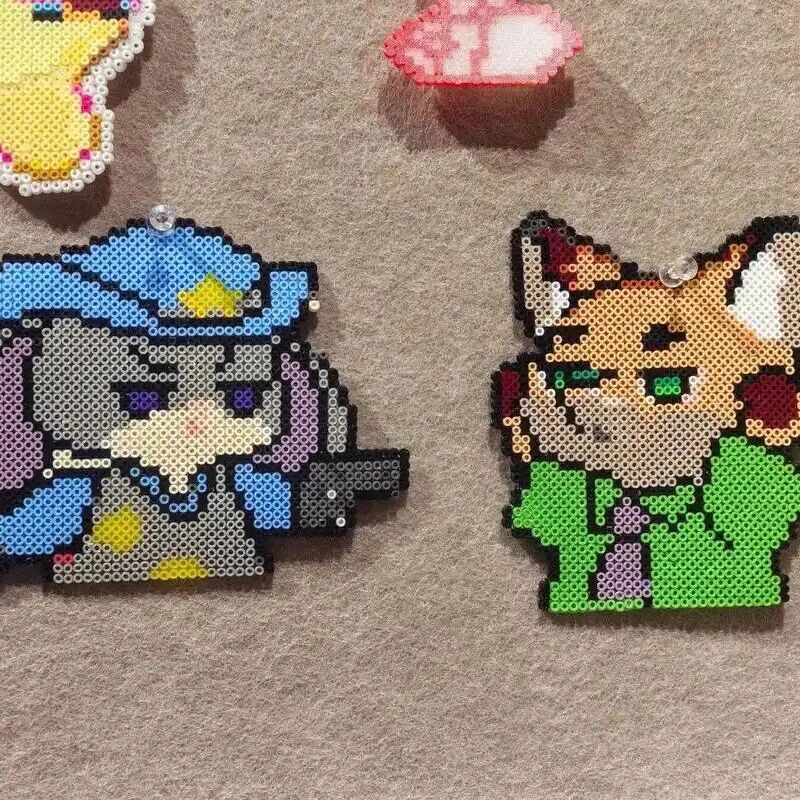
爱潮玩更爱拼豆,“狐兔CP”背后的新情绪经济
创业邦· 2025-12-11 04:50
Core Viewpoint - The article discusses the rising popularity and economic potential of pixel art beads (拼豆) as a creative and therapeutic hobby, particularly among young people, driven by the success of IPs like "Zootopia 2" and the influence of social media and celebrity endorsements [5][7][22]. Group 1: Market Dynamics - "Zootopia 2" has generated significant box office revenue of 31 billion in China, contributing to a broader trend in IP-related merchandise, including pixel art beads [5][7]. - The pixel art bead market is projected to reach nearly 1 billion by 2026, with a current average price of 50 yuan per hour for DIY experiences, benefiting around 18,000 DIY craft stores nationwide [7][12]. - The online market for pixel art beads is thriving, with platforms like Taobao and Pinduoduo seeing monthly sales exceeding 10,000 units for popular stores, especially those linked to "Zootopia" [7][28]. Group 2: Consumer Behavior - Pixel art beads have evolved from a children's toy to a form of emotional therapy for adults, becoming a popular stress-relief activity [13][21]. - The trend has gained traction on social media, with over 520 million discussions on Xiaohongshu and 5.9 billion views on Douyin related to pixel art beads [15][28]. - The low barrier to entry and high satisfaction from creating pixel art make it an appealing hobby for many, with users reporting significant emotional benefits [20][21]. Group 3: Celebrity Influence - The popularity of pixel art beads surged after a mention by celebrities during a live stream, leading to increased interest and participation from new fans [22][25]. - The commercial viability of pixel art beads has expanded from individual hobbies to a structured business model, with high profit margins reported by craft stores [25][26]. Group 4: Economic Model - The pixel art bead economy operates on a clear profit model, attracting users with low-cost experiences while maintaining engagement through continuous IP-related designs and materials [32]. - Craft stores report that pixel art projects can account for up to 60% of total revenue, with some generating over 2 million in sales [26][32]. - The market's growth is supported by a strong repeat purchase rate for materials, as enthusiasts frequently buy supplies to create new designs [28][32]. Group 5: Challenges and Future Outlook - Despite the market's growth, the pixel art bead industry faces significant challenges related to IP rights and copyright issues, which could hinder its scalability [36][39]. - The lack of legal authorization for many designs limits the potential for brand development and large-scale investment, keeping the industry in a precarious position [42][47]. - There is a call for more structured copyright solutions and a focus on original content to ensure sustainable growth in the pixel art bead market [47].

卡牌产业深度报告:全球娱乐文化轻量级增长引擎
Shanghai Aijian Securities· 2025-09-23 05:40
Investment Rating - The report rates the card industry as "Outperform" [3] Core Insights - The card industry is identified as a "lightweight" growth engine within the global entertainment and cultural sector, integrating entertainment, collection, and culture [3][7] - The unique value logic of trading card games (TCGs) is based on their tactical value and scarcity, distinguishing them from ordinary cards [3][8] - The Chinese trading card market has rapidly grown, becoming the largest globally, with a market size projected to reach RMB 263 billion by 2024, reflecting a compound annual growth rate of 56.6% from 2019 [42][77] Summary by Sections 1. Card Industry Overview - Cards are categorized into game cards and collectible cards, with trading cards being a significant focus due to their strategic gameplay and community engagement [7][9] - Trading cards combine rule-based gameplay, cultural content, social attributes, and collectible aspects, creating a high-engagement player ecosystem [3][8] 2. Market Dynamics - The consumer base for card products is primarily elementary school students, with 70% of offline purchasers falling into this category [35] - The report highlights a strong purchasing habit among consumers, with 42% maintaining stable monthly purchases, indicating high user loyalty [37] 3. Regional Market Analysis - The U.S. market is characterized by a mature event system and a strong player base, while Japan leverages its anime IPs for card development, showcasing unique entertainment and social aspects [42][62] - The Chinese market has evolved from imitation to innovation, with local companies developing unique paths and capturing significant market share [79][81] 4. Business Model and Growth Logic - The card industry's business model is driven by IP, diverse products, and a multi-channel sales approach, with a focus on building an IP matrix and enhancing user engagement through events and online communities [84] - The average direct material cost for trading cards is projected to be RMB 0.25 per pack, with an average selling price of RMB 1.70 per pack, resulting in a gross margin of 71.3% [3]