
收藏卡

Search documents
虚拟IP变纸上黄金,Suplay逆袭全球前五,IPO能否解死循环?
Sou Hu Cai Jing· 2026-01-14 15:20
Core Viewpoint - Suplay is attempting to go public in Hong Kong, aiming to become the first publicly listed company in the collectible card industry, leveraging its partnership with miHoYo for significant profits, but faces challenges as its core IP license is set to expire soon [1] Group 1: Company Overview - Suplay has submitted its IPO application to the Hong Kong Stock Exchange, with CICC and JPMorgan as joint sponsors [1] - The company has achieved a gross margin exceeding 60%, comparable to luxury goods, but its reliance on IP has surged to 77.7% [1][11] - Suplay's flagship brand, Kaka Wo, utilizes premium materials and traditional craftsmanship, with individual card prices reaching up to 69,900 yuan [4] Group 2: Market Position and Performance - Suplay has positioned itself as a leader in the collectible non-battle card market in China and is among the top five brands globally [11] - The company has registered over 1.3 million users, with 99.5% being adults, creating a complete ecosystem around scarcity and value verification [6] - In 2024, Suplay's revenue is projected to be 280 million yuan, achieving a 30.5% adjusted net profit margin, significantly outperforming industry leader KaYou, which reported a loss of 1.242 billion yuan despite higher revenue [8][9] Group 3: Challenges and Risks - Suplay's dependency on licensed IP has increased dramatically, with its own IP revenue dropping from 40.6% to 4.1% [11] - The core IP that contributed 32.3% of revenue in the first three quarters of 2025 is set to expire, with negotiations for renewal ongoing, raising concerns about future revenue stability [13] - Out of 22 signed IPs, only three are exclusive, indicating a potential competitive disadvantage as other companies, like Pop Mart, pursue partnerships with major players [13]

“消费者约99.5%为成年人”,这种卡片9个月卖了2个亿
Xin Lang Cai Jing· 2026-01-09 05:23
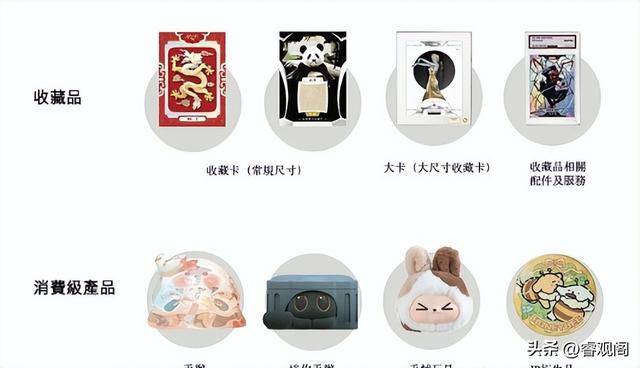
Core Insights - Suplay, the company behind the collectible card brand "Kakawo," has submitted a listing application to the Hong Kong Stock Exchange, having achieved over 400 million RMB in revenue from collectible cards and IP toys between 2023 and 2024 [1][12]. Market Overview - The global market for collectible non-combat cards is projected to grow from 12 billion USD in 2024 to 25.7 billion USD by 2029, with China’s market expected to increase from 6.2 billion RMB in 2024 to 16.5 billion RMB by 2029, reflecting a compound annual growth rate of 21.4% [2][13]. - Suplay ranks first in the Chinese collectible non-combat card market and is the only Chinese brand among the top five globally [2][13]. Company Development - Founded in 2019, Suplay experienced significant milestones in 2021, including an 8 million USD investment from miHoYo and the acquisition of the toy brand "Heyfen" [2][12]. - The company launched its collectible card product line in 2022, focusing on non-sport IPs to attract a broader audience, particularly women [3][14]. Product Lines - Suplay operates two main product lines: collectibles and consumer products, with collectibles centered around IP and limited editions [5][16]. - The pricing for collectible cards ranges from 59.9 RMB to 89.9 RMB per pack, while consumer products are priced between 19.9 RMB and 89 RMB [6][17]. Financial Performance - Suplay's revenue grew from 146 million RMB in 2023 to 281 million RMB in 2024, marking a 92.5% increase, with net profits rising from 2.95 million RMB to 49.11 million RMB in the same period [7][18]. - The share of revenue from collectibles increased significantly, accounting for 32.9% in 2023, 41.8% in 2024, and 70% in the first three quarters of 2025 [7][18]. Profit Margins - The gross margin for collectibles was higher than that of consumer products, with margins of 57.9%, 65.4%, and 69.5% for collectibles compared to 33.7%, 31.8%, and 19.3% for consumer products over the same periods [8][19]. IP Dependency - Suplay heavily relies on third-party licensed IPs, with licensed products contributing 54.2%, 85.1%, and 95% of total revenue from 2023 to the first three quarters of 2025 [9][20]. - The company has agreements with 22 IP licensors, but the non-exclusive nature of most agreements increases competition and market saturation [10][21]. Future Plans - Suplay plans to invest in extending existing IP licenses and acquiring new IPs to support global expansion, including entering markets in Asia, North America, and Europe [10][21].
收藏卡玩家Suplay闯关港交所:「保价控量」的生意该如何做大?
Hua Er Jie Jian Wen· 2026-01-06 01:55
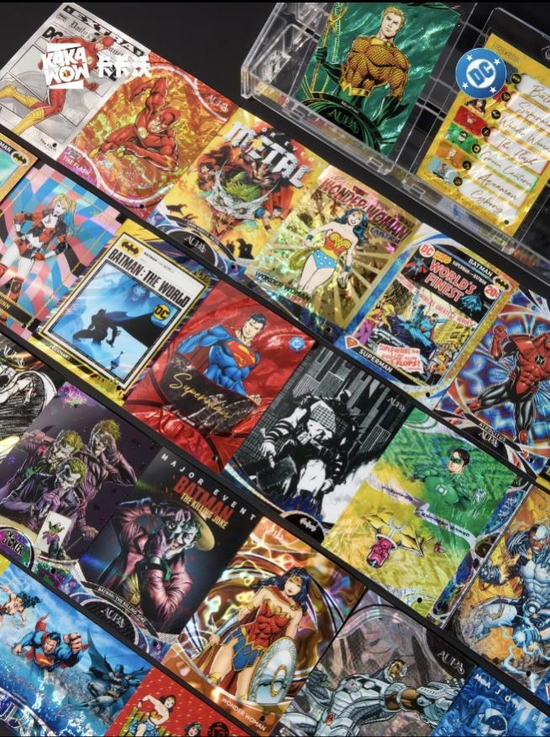
Core Viewpoint - Suplay, a trendy IP consumer goods company, has submitted its IPO application to the Hong Kong Stock Exchange, aiming to expand its presence in the collectible card market, particularly through its brand "Kakawow" [2][3]. Company Overview - Suplay has established three main brands: "Kakawow" for collectible cards, "Heyfen'er" for trendy toys, and "Letao Valley" for derivatives [2]. - Kakawow is positioned as the core brand, focusing on classic collectible card operations rather than mass distribution [3]. Market Position and Performance - Suplay is the only Chinese brand to enter the global top five in the non-battle collectible card market by GMV [3]. - In 2024, Suplay's revenue is projected to grow by 92.5% to 280 million yuan, which is still less than one-thirtieth of its competitor, Card Game [5]. - Revenue growth slowed to 40% in the first three quarters of 2025, with total revenue reaching 280 million yuan [6]. Product and Brand Strategy - The secondary market's trading heat and transaction prices are key indicators of brand recognition in the collectible card sector [6]. - Kakawow's first successful series, the PHANTOM Disney 100th Anniversary collection, demonstrated significant demand, with cards purchased at lower domestic prices selling at multiples on platforms like eBay [7]. - Kakawow has established strategic partnerships with global rating agencies, enhancing its brand's credibility and market activity [7]. Financial Metrics - Suplay's collectible products have a gross margin exceeding 60%, significantly higher than consumer-grade products [7]. - By the first three quarters of 2025, the gross margin for Suplay's collectible products reached 54.5%, with an adjusted net profit margin of 30.5% [8]. Marketing and Distribution - Suplay effectively controls marketing costs through collaborations with KOLs/KOCs, using product exchanges instead of cash payments, resulting in marketing expenses accounting for only about 1% of revenue [10]. - The company has established partnerships with 22 IP licensors, although most are non-exclusive [17]. Future Growth Plans - Suplay plans to expand its revenue sources by focusing on internationally recognized IPs and enhancing its global presence [19]. - The company aims to extend its product line and explore new consumer segments, including TCG cards and consumer-grade cards [23]. - Suplay is also working on localizing product designs to cater to different market preferences and regulatory environments [20]. Challenges and Considerations - The company faces challenges in scaling up and competing with established brands in the collectible card market [24]. - Suplay's self-owned IP business has been declining, with revenue dropping from nearly 60 million yuan in 2023 to 11.72 million yuan in the first three quarters of 2025 [23].
对谈Hitcard:在IP依赖型赛道,如何建起卡牌护城河?
Hua Er Jie Jian Wen· 2025-12-10 10:08
Core Insights - The collectible card market, particularly the adult segment, presents significant business opportunities, with Hitcard being a notable player considering capital market options [1] - Hitcard achieved approximately 400 million yuan in revenue in 2024, reflecting a year-on-year growth of over 600% [1] - The company differentiates itself by collaborating with a diverse range of IPs and focusing on limited production runs, contrasting with traditional card companies that often rely on mass production of popular IPs [1][4] Business Model and Strategy - Hitcard's core philosophy is to create a unique card for every individual, emphasizing product quality and craftsmanship [2] - The company has pioneered the "double-sided card" printing technique, enhancing the tactile experience and durability of cards [3] - Hitcard employs a limited production model, releasing over 10 products monthly, each strictly limited in quantity, which helps maintain a vibrant secondary market [4] Operational Challenges and Management - The complexity of Hitcard's business model necessitates extensive foundational work and execution capabilities [5] - The company initially adopted a strategy of "more people, fewer products" to ensure product quality, and has since expanded its team to maintain clarity in product direction [7] - Hitcard has established a clear set of operational guidelines to avoid producing low-quality or environmentally harmful products [7] Supply Chain and Production - Hitcard has opted to build its own factory to support its diverse product lines and IP collaborations, which allows for greater control over production quality [8] - The company’s production costs are higher than competitors due to small batch sizes and frequent line changes, with single card costs exceeding one yuan [8] Sales Channels and Market Presence - Over 60% of Hitcard's sales come from the Douyin platform, with offline stores accounting for more than 30% [9] - The company is exploring the potential for offline retail but has not yet identified a suitable format for physical stores [9] Competitive Advantages - Hitcard's supply chain capabilities and innovative IP interpretation create significant competitive barriers [17] - The brand has established a strong presence on platforms like Douyin, benefiting from the "Matthew effect" in traffic distribution [18] - Hitcard's collaboration with IP owners focuses on mutual growth, making it a preferred partner for many IP rights holders [20] Future Outlook - Hitcard anticipates that its production capacity will not fully meet its performance targets for the upcoming year, despite achieving 100% self-production and sales [16] - The company believes that its diverse user base and commitment to product quality will enable it to thrive in a competitive landscape where popular IP resources are becoming scarce [24]