
数字身份

Search documents
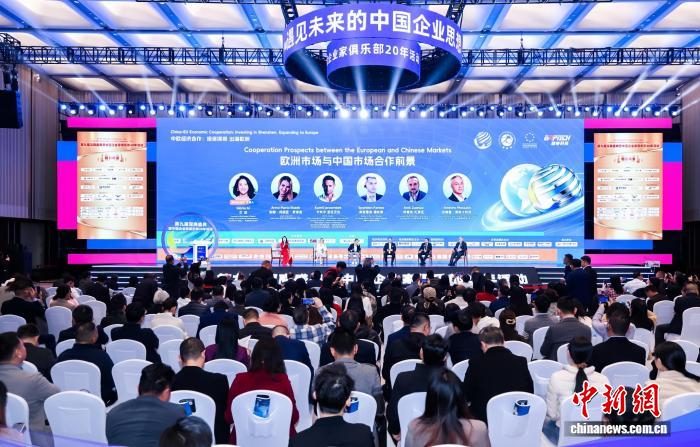
中欧经济合作论坛在深圳举行 探讨双向合作路径
Zhong Guo Xin Wen Wang· 2026-01-11 16:10
Core Insights - The forum focused on "Investing in Shenzhen, Going to Europe," discussing bilateral investment and cooperation in emerging industries such as new energy, fintech, life health, cultural tourism, and digital economy [1][3] Trade and Economic Data - In the first 11 months of 2025, the total trade volume between China and Europe reached $749.34 billion, marking a 4.6% year-on-year increase [1] - Shenzhen's exports to the EU totaled 589.35 billion yuan, a 4.7% increase year-on-year, with significant growth in lithium batteries, electric vehicles, and photovoltaic products, which saw a 31.2% increase [3][5] - The Shenzhen-Europe freight train service operated 202 export trains in 2025, a 49.6% increase, with a total cargo value of 6.87 billion yuan, covering 47 countries and regions [1] Strategic Initiatives - Shenzhen has become a key hub for China-Europe cooperation, facilitating technology exchange and industrial chain collaboration [3] - Nanshan District has established a comprehensive support platform for enterprises going abroad, providing 24-hour full-process responses and fostering collaborative ventures [3][5] Industry Perspectives - The forum highlighted the importance of integrating technology and local culture in global manufacturing, emphasizing corporate social responsibility [5] - The EU's investment in China has seen a historical shift, with R&D centers and regional headquarters now accounting for over 35% of projects [5]

日媒:GDP超全球一半,欢迎来到“亚洲世纪”
Huan Qiu Shi Bao· 2025-07-24 22:50
Core Insights - The concept of "Asian Century" has evolved, with Asia expected to contribute nearly 55% of global GDP by 2024, surpassing earlier predictions [1] - The narrative of Asia's rise is shifting from dominance to balance, focusing on local adaptation and inclusive growth [1] - The re-evaluation of the "Galapagos Syndrome" highlights the importance of localized innovations, which are now seen as advantages rather than limitations [1] Group 1: Localized Innovations - The model of "localized innovation" is thriving across Asia, with mobile-centric platform designs and inclusive fintech infrastructure [2] - Super apps, such as WeChat and Alipay, are emerging as ecosystems that integrate various functions and are being emulated in regions like Africa and Latin America [2] Group 2: Financial Services and Digital Infrastructure - Asia is reshaping global perceptions of "scale, innovation, and inclusivity" in financial services and public digital infrastructure [3] - India's Unified Payments Interface is a global benchmark in digital payments, processing billions of low-cost, secure transactions monthly [3] - Southeast Asia's QR code payment networks are inspiring developments in the U.S. and Europe due to their compatibility and rapid adoption [3] Group 3: Diverse Economic Landscape - Asia's transition from "technology adopters" to "innovation sources" is complex, characterized by diverse economic conditions and challenges [3] - Japan's use of robotics and AI to address labor shortages in healthcare and eldercare serves as a model for other nations facing similar issues [3] - Challenges in Asia often act as catalysts for innovation rather than obstacles [3] Group 4: Global Perspective Shift - The focus has shifted from whether Asia can "Westernize" to what the next adoptable Asian model will be, indicating the true arrival of the Asian Century [4]