
文体商旅

Search documents
拼挖潜!2026年各地促进服务消费这样干
Xin Hua Wang· 2026-02-07 03:29
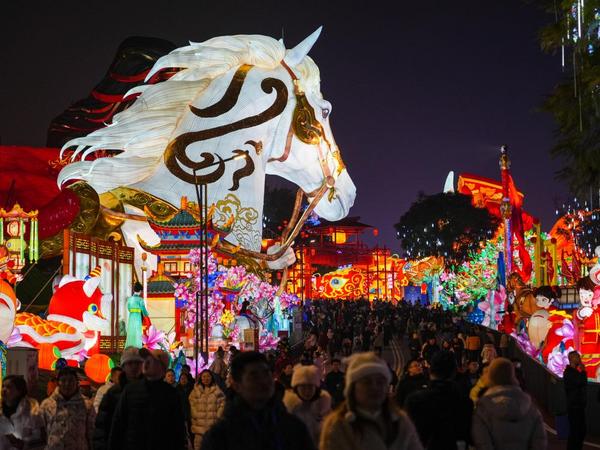
Group 1 - The core focus of local government reports is on "service consumption," with various initiatives proposed to accelerate the growth of this sector by 2025 [1] - Significant achievements in service consumption by 2025 include Beijing hosting 2,295 large events (up 25.8%), Shandong seeing over 10% growth in tourist numbers and revenue, and Chongqing receiving over 500 million tourists with inbound tourism increasing by 68.2% [1] - By 2026, local governments plan to enhance service consumption through investments in diverse sectors such as elderly care, health, and cultural services, with specific initiatives like creating convenient living circles and upgrading traditional service sectors [1][2] Group 2 - The integration of culture, sports, and tourism is seen as a fertile ground for expanding service consumption, with various regions reporting successful initiatives [2] - Jiangsu's "football+" initiative and Chongqing's "viewing and touring" plan are examples of how localities are leveraging cultural events to drive consumer traffic [2] - By 2026, regions like Zhejiang and Tianjin aim to innovate in the cultural and tourism sectors to enhance consumer experiences and expand service offerings [2] Group 3 - New business models such as low-altitude tourism and aviation sports are emerging, with suggestions for regulatory reforms to foster these sectors [3] - There is a shift in consumer demand from material satisfaction to experiences that offer cultural and social value [3] Group 4 - Enhancing emotional, experiential, and self-satisfying service offerings is a key strategy for expanding service consumption [4] - Events like the fourth Zhengjia Datang Lantern Festival in Guangzhou are designed to boost interaction and experience for visitors, leading to increased foot traffic and sales [4] - Various regions are focusing on personalized service offerings and expanding event-driven economies to stimulate consumer spending [4] Group 5 - The youth demographic is becoming a significant force in the service consumption market, driving trends through events like drama, anime, and music festivals [5] - Recommendations include collaboration between business and cultural sectors to enhance consumer experiences and introduce new consumption formats [5] Group 6 - The concept of "youth economy" has been officially recognized in government reports, with proposals for targeted electronic consumption vouchers for young people to stimulate engagement in various social and cultural activities [6] Group 7 - Digital technologies and artificial intelligence are reshaping service consumption landscapes, with local governments emphasizing tech-driven enhancements to improve consumer experiences [7] - Initiatives include the development of smart tourism platforms and AI-driven data analysis to optimize consumer interactions and service delivery [7] - The focus is on transitioning consumer behavior from purchasing goods to enjoying services and experiences, which is expected to invigorate the economy [7]

经济大省新亮点丨江苏:“足球+”撬动全域消费新增长
Xin Hua Wang· 2025-07-29 05:16
Group 1 - The "Football+" effect in Jiangsu has significantly boosted overall consumption, with a single match attracting over 60,000 attendees and generating more than 38 billion yuan in related spending since May [1][2] - Jiangsu's total retail sales of consumer goods reached 23,949 billion yuan in the first half of the year, marking a 5% year-on-year increase, accounting for 9.8% of the national total [1][2] - The success of the "Su Super" league reflects Jiangsu's continuous efforts to optimize the business environment and meet market demands, leading to innovative economic practices [1][3] Group 2 - The "Su Super" league has created new consumption opportunities, with local businesses adapting to the influx of visitors, such as extending operating hours and enhancing service offerings [2][3] - Jiangsu's third industry value added grew by 5.9% in the first half of the year, with a notable increase in service sector electricity consumption by 15.5% since the league's inception [3][4] - The integration of sports, culture, and tourism has led to innovative marketing strategies, such as free access to attractions for ticket holders and themed events to attract visitors [4][5] Group 3 - The "Su Super" league has not only attracted sports fans but also business interests, with companies like BMW establishing operations in Nanjing, leveraging the league's popularity for investment opportunities [5][6] - Local governments are focusing on transforming the league's popularity into sustainable economic growth by enhancing city image and optimizing the business environment [5][7] - The league has fostered community engagement, with various local initiatives encouraging participation from all demographics, thus broadening the economic impact [7]